Modi Turns Minister Meet Into a Reform Reset
PM Modi used a rare four-and-a-half-hour ministerial meeting to push speed, reform and discipline — while fuelling reshuffle speculation.
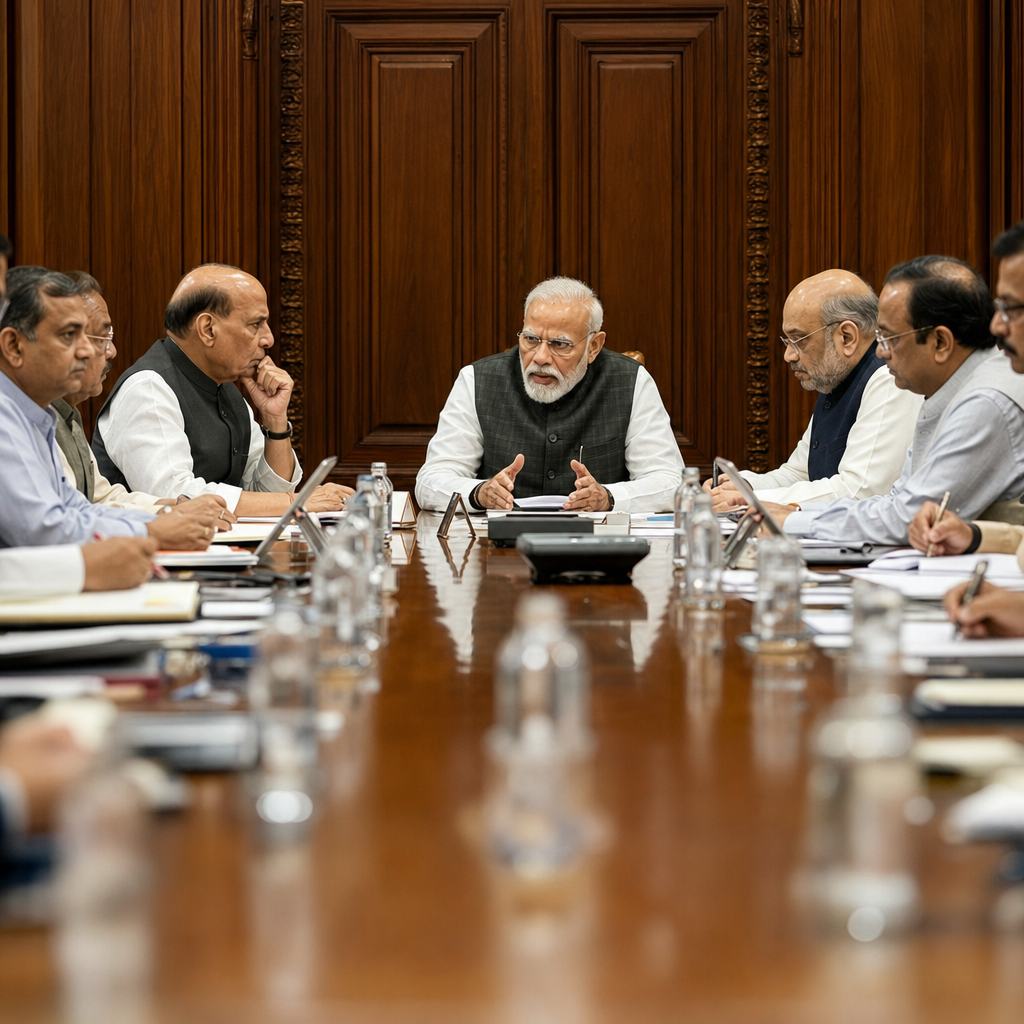
Prime Minister Narendra Modi told ministers to “forget what happened in the past, focus on the future” at a closed-door, marathon Council of Ministers meeting on Thursday, according to  NDTV. The signal is straightforward: Modi is using process to project control. He wants ministries moving faster, files cleared with less friction, and the government’s next phase framed around “Viksit Bharat 2047,” not internal score-settling.
Reform message, personnel subtext
The meeting lasted four-and-a-half hours and came after nearly eleven months without a full Council gathering, NDTV reported. Nine departments — including agriculture, labour, road transport, corporate affairs, external affairs, commerce and power — made presentations, alongside a review of achievements over the past 12 years. NDTV also said the prime minister pressed ministers to maximize productivity, cut bureaucratic delay and take the government’s welfare and reform record directly to the public. That is less a policy speech than a management order.
The subtext matters because this was not an ordinary coordination exercise. NDTV noted the meeting came amid buzz about a possible cabinet reshuffle before June 9, when Modi’s government marks 12 years at the Centre and two years of its third term. A ministerial meet at this moment serves two functions: it reminds the cabinet that performance will be watched, and it signals that any changes will be framed as part of a reform agenda, not a response to drift.
Why the timing matters
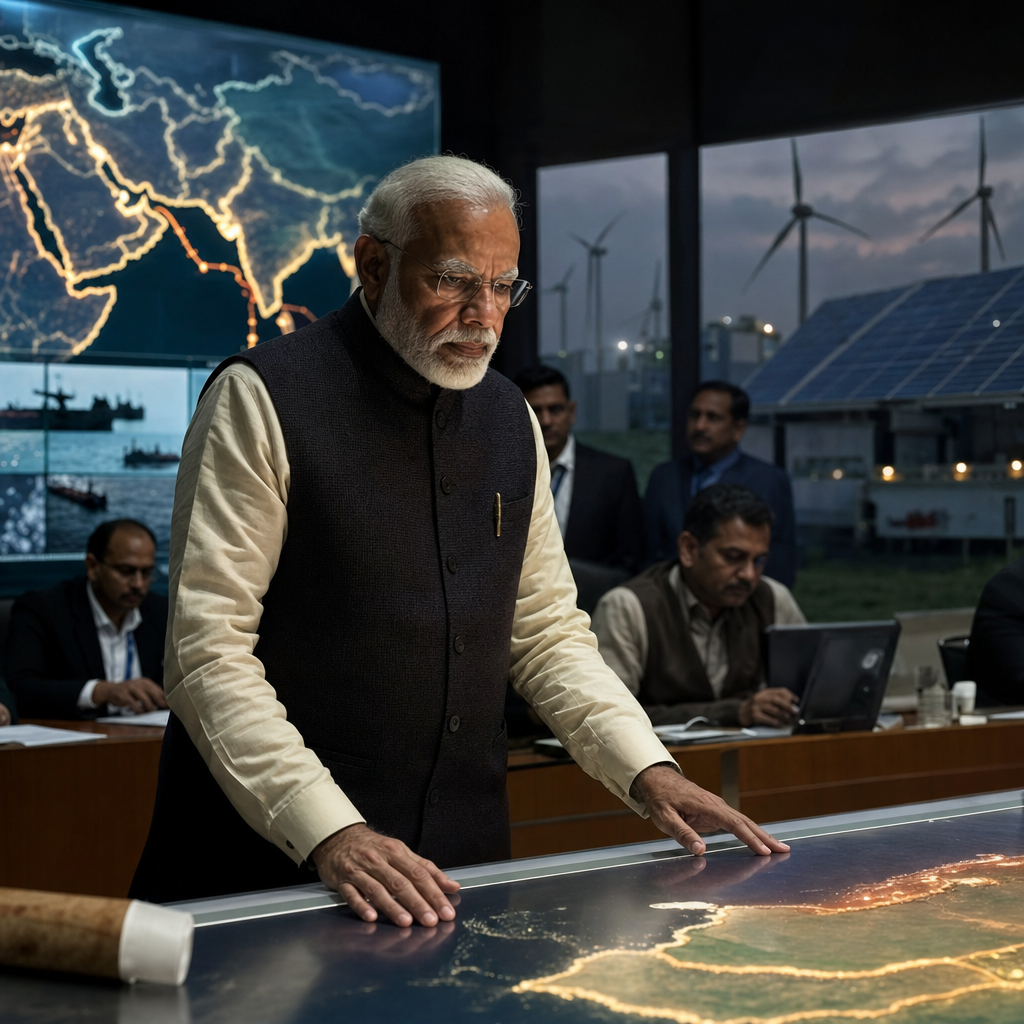
The broader context, however, is more than internal politics.  The Hindu reported that Modi pushed ministers to carry forward reforms in the backdrop of the U.S.-Iran war and the risk of a tougher economic environment. That matters because India’s current policy challenge is not just growth, but resilience: oil prices, inflation and supply disruptions can quickly turn governance from a political talking point into a macroeconomic problem.
The Hindu also reported that ministries including labour, power, commerce, finance, agriculture and railways, plus NITI Aayog, presented past work and future plans. That lineup is revealing. These are the portfolios that can influence inflation, investment, logistics and welfare delivery — the hard edges of political legitimacy. Modi’s message to them was not ideological; it was operational. In a period of external uncertainty, the government wants to show it can still move on domestic execution.
The political beneficiary is the prime minister’s office. A high-level meeting that emphasizes speed and simplification reinforces Modi’s central brand: strong direction, low tolerance for institutional slippage, and a government that claims to translate slogans into administration. The losers are ministers who prefer visibility without scrutiny, and bureaucracies that can no longer rely on delay as insulation.
For more on how New Delhi is packaging its governing model, see  India and Global Politics.
What to watch next
The next decision point is June 9, when the government completes 12 years and the reshuffle chatter gets tested against actual personnel moves. Watch whether Modi keeps the cabinet intact, trims portfolios, or shifts key ministries to sharpen delivery before the next policy cycle. Also watch whether the government turns this meeting into a public reform campaign — or leaves it as an internal warning shot.