Modi Blames Opposition for Bill Failure
Analyzing the political strategy behind the bill's failure
Model Diplomat9 min readIndia
Modi Blames Opposition for Bill Failure — But the Defeat Was the Plan
Modi's women's quota bill lost 298–230 on April 17, 2026. Within three weeks, two of the four opposition parties he named had lost power.
The Constitution (131st Amendment) Bill fell 62 votes short of the two-thirds majority India's constitution requires — the first amendment bill defeated on the floor of the Lok Sabha in Prime Minister Narendra Modi's twelve years in power. His response, a televised address the next evening blaming the Congress, DMK, Trinamool Congress and Samajwadi Party for "committing foeticide" against women's representation, was not the reaction of a leader outmanoeuvred. It was the second act of a legislative gambit designed to work either way: pass the bill and take the credit; lose it and take the wedge into two state elections then in their final days. Three weeks later, the BJP had won West Bengal 207–80 and the DMK had been routed in Tamil Nadu, suggesting the second option was the one his strategists had priced in.
The vote — and the trap inside it
The special three-day session convened between April 16 and 18 was formally about implementing the Nari Shakti Vandan Adhiniyam of 2023, which reserved one-third of seats in the Lok Sabha and state assemblies for women. The 2023 law, however, tied that reservation to a fresh census and delimitation — a sequencing constraint the Carnegie Endowment described as effectively binding "two distinct reforms together," so that women's reservation cannot take effect until after the census is completed and delimitation carried out.
Modi's government packaged three bills together: the 131st Amendment to enable women's reservation, a Delimitation Bill establishing the framework for redistribution, and a Union Territories Laws Amendment. The Delimitation Bill would have raised the Lok Sabha's cap from 550 to 850 seats and, per the drafting, based the allocation on the 2011 census. According to Al Jazeera's coverage of the introduction, the NDA held 293 seats in a house where 360 was needed — the arithmetic was unworkable without opposition support, and the government knew it.
That is the point analysts keep returning to. "The government knew they didn't have a two-thirds majority, but politics is a game of possibilities," senior journalist Vijay Trivedi told the BBC's Hindi service, adding that the intent was "to build the narrative that the opposition is against women." Sharad Gupta, a veteran commentator quoted in the same piece, was blunter: the government "tagged the women's bill with delimitation" precisely so it could extract "political benefit at election time."
Why the south — and Bengal — could not vote yes
The bill's fatal freight was the delimitation half. India has not redrawn parliamentary constituencies since the 1971 census; the freeze was extended by the 84th Amendment in 2002 because states that had successfully lowered fertility feared losing seats to those that had not. The BBC's explainer on the row noted that Tamil Nadu, Kerala, Karnataka and Telangana had sought a further 25-year extension of the freeze.
The government's answer was a pro-rata expansion. In his Lok Sabha intervention on the day of the vote, Home Minister Amit Shah insisted the Delimitation Commission Act had been replicated "down to the full stops and commas" and that no state, "especially in the south," would be disadvantaged, with a uniform 50% seat increase preserving each state's share. Per the Press Information Bureau readout, Tamil Nadu's 39 seats would rise to 58, Kerala's 20 to 30, and the southern bloc's overall share would remain around 24%.
That reassurance did not survive first contact with the text. Arghya Sengupta of the Vidhi Centre for Legal Policy told the BBC that the bill's raising of the cap to 850 had no clear proportional formula, and that the absence of any parallel expansion of state assemblies would produce "a mismatch: fast-growing states could gain more MPs without a corresponding rise in MLAs." Congress leader Rahul Gandhi, quoted by the BBC's Hindi service, framed the bill as an "attempt to seize power through delimitation and gerrymandering" that would weaken southern and northeastern states.
The timing sharpened the objection. As the NUS Institute of South Asian Studies noted, the government convened the session "days before the assembly election in Tamil Nadu" and West Bengal, when it could have waited for the monsoon session. Kalyan Banerjee of the TMC, arguing on the floor, put the opposition's read of intent plainly: when the prime minister thinks he will lose elections, he changes the rules.
The blame speech — a campaign document, not damage control
On April 18, Modi addressed the nation. "Despite our best efforts we could not succeed. The Nari Shakti Vandan Adhiniyam could not be amended. I apologise to all mothers and sisters," he said, before pivoting: "Women never forget their humiliation. The opposition has committed a sin by opposing women's reservation and will surely be punished for this." The line about "foeticide" — that opposition parties had killed the bill in the womb — was picked up on every front page, including NDTV's coverage of the address.
The speech named four parties: Congress, DMK, TMC and Samajwadi Party — precisely the constellation running or contesting the state votes then in play. Congress president Mallikarjun Kharge, quoted by the BBC, accused Modi of turning an address to the nation into "a political speech filled with lies and mudslinging," and pointed to a discrepancy that dogs the government's narrative: if the Congress had voted with the BJP for the 2023 women's reservation act, and Modi thanked them publicly for it, why was the party suddenly a saboteur when the amendment was noticed on April 16 with elections underway?
The answer, according to the Institute of Strategic Studies Islamabad's India Monitor, is that the exercise "in the backdrop of several state elections, [was] seen as an affront to federalism" — and by that measure, working exactly as designed as a wedge. Sharad Gupta again, to the BBC: the BJP wanted "to secure more votes from women in West Bengal by raising this issue at the height of the election campaign."
What actually happened next
The state results, counted on May 4, deliver the second-order effect Modi's opponents feared and his strategists likely wanted.
In West Bengal, the BJP won 207 of 294 seats with 46% of the vote, more than doubling its 2021 tally and dethroning Mamata Banerjee's TMC after fifteen years. The BBC's post-election analysis attributed the swing to Hindu consolidation, anti-incumbency, a controversial Special Intensive Revision of electoral rolls that removed roughly 12% of the state's voters, and — critically — the BJP's promise of doubling monthly cash transfers to women, "denting Mamata's support among women voters." The party ran, in short, on the exact women-and-welfare terrain Modi had scorched from Delhi on April 18.
In Tamil Nadu, actor Vijay's Tamilaga Vettri Kazhagam won 108 of 234 assembly seats and 35% of the vote, reducing the DMK to 59 seats and Chief Minister M.K. Stalin to defeat in his own Kolathur constituency, according to ISAS's post-poll assessment. Two of the four parties Modi named in his blame speech — the TMC and the DMK — lost office within twenty days of his address. That is not causation; the SIR row, decade-long anti-incumbency, and Vijay's celebrity all did more work. But it is a political correlation the BJP will monetise for the rest of the current Lok Sabha.
The historical parallel that reframes it
India's women's reservation bill has been the country's most durable piece of legislative theatre. First tabled in 1996, reintroduced in 1998, 1999 and 2008, and finally passed as an unimplemented promise in 2023, the bill has repeatedly collapsed less over gender than over intersectional and federal fights — OBC and Muslim sub-quotas, seat-share arithmetic, sharing of political turf.
What is new in 2026 is the packaging. Every previous attempt failed because parties would not surrender their own seats. This one failed because the government tried to bundle the surrender with a redraw that would have shifted the balance of federal power northward. The Takshashila Institution's post-mortem is worth quoting: the amendments were "seen as an affront to federalism and were defeated." The women's quota, in other words, was used as a delivery vehicle for delimitation, not the reverse — and the opposition read it that way.
The mechanics also confirm the design. The government's own Ministry of Parliamentary Affairs summary of the Budget Session records that once the 131st Amendment failed under Article 368(2), "the two dependent Bills namely the Union Territories Laws (Amendment) Bill, 2026, and the Delimitation Bill, 2026 were not proceeded further." No fallback. No stripped-down women's quota tabled separately. The package was all-or-nothing because the package was the point.
Winners, losers, and the ceiling above the ceiling
The clearest winner is the BJP's national narrative machinery. It has a fresh, dated grievance — a specific vote, four named villains, and a viral phrase — to deploy in every state contest until 2029. It also has, courtesy of Bengal, empirical vindication that the women-and-welfare pitch travels even into TMC country.
The clearest loser is the 2023 Nari Shakti Vandan Adhiniyam itself. As Carnegie's analysis makes clear, women's reservation cannot be operationalised without a fresh census and delimitation. Both are now politically radioactive. The census is only in its house-enumeration phase; the Election Commission cannot proceed to a redraw before results are published; and any redraw the BJP proposes will now be filtered through the memory of April 2026. The Observer Research Foundation's tally makes the cost concrete: women hold 13.6% of Lok Sabha seats,
below the global average of 27% and lower than in 2019. That number is now frozen for the 2029 general election.
A quieter loser is the government's own coalition management. The NUS-ISAS paper flagged that the bill was introduced "without any prior consultation with opposition parties or floor management" — a habit that the BJP could afford when it held 303 seats but which, as
Japanese analyst Toru Ito noted for SPF, has been exposed since the 2024 election left the party at 240 and dependent on the TDP and JD(U). Chandrababu Naidu's Andhra Pradesh gains from a southern-friendly delimitation; Nitish Kumar's Bihar gains from a northern-heavy one. That the government tabled a bill straddling that split without whipping its allies visibly is a data point about how much strategic room it still has.
What to watch next
- The census timeline. Amit Shah told the Lok Sabha that the ongoing census will include caste enumeration and that its results — the trigger for both women's reservation and delimitation — are expected post-2026. Any slippage past mid-2027 puts the 2029 election on the current 543-seat map.
- A stripped-down bill. The BJP has not signalled reintroduction. The
Ministry of Parliamentary Affairs record shows the 131st Amendment was not taken up again in the remainder of the Budget Session. A stand-alone women's quota bill — without delimitation attached — would call the opposition's bluff. That the government has not tabled one is itself a signal.
- The Bihar assembly election later in 2026 and the 2027 Uttar Pradesh vote. Both will test whether Modi's "opposition betrayed women" line moves votes outside Bengal.
Diplomat View
The 298–230 vote will be read as a rare Modi defeat. It should be read as a rare Modi manoeuvre. The evidence — the timing days before Bengal and Tamil Nadu voted, the deliberate bundling of an implementable women's quota with an unimplementable seat redraw, the failure to proceed with a stripped-down bill after the loss, and the televised address that named four opposition parties by state rather than by ideology — points to a government that priced defeat into its plan and collected the return in Bengal on May 4.
The forecast: expect the BJP to campaign on the April 17 vote through 2027, but do not expect it to actually reintroduce the 131st Amendment in a form the opposition could pass. The bill is more useful as a wound than as a law. What would revise this call is a stand-alone women's reservation bill, tabled without delimitation, in the winter or 2027 budget session — an act of legislative sincerity the government's post-defeat behaviour so far suggests is not coming. If that bill appears, treat the April failure as accidental. Until it does, treat it as strategy.
The bottom line: Modi did not lose the women's reservation bill on April 17. He spent it. The opposition that voted no in Delhi lost two state governments within three weeks — and the women's quota it ostensibly defended remains stranded behind a census that will not deliver its numbers before 2029.
Discover more

India
Modi's Nari Shakti Gambit
Modi's Varanasi speech redefines women's empowerment as a Nari Shakti gambit, blending appeals for women's votes with the contentious delimitation debate.
India
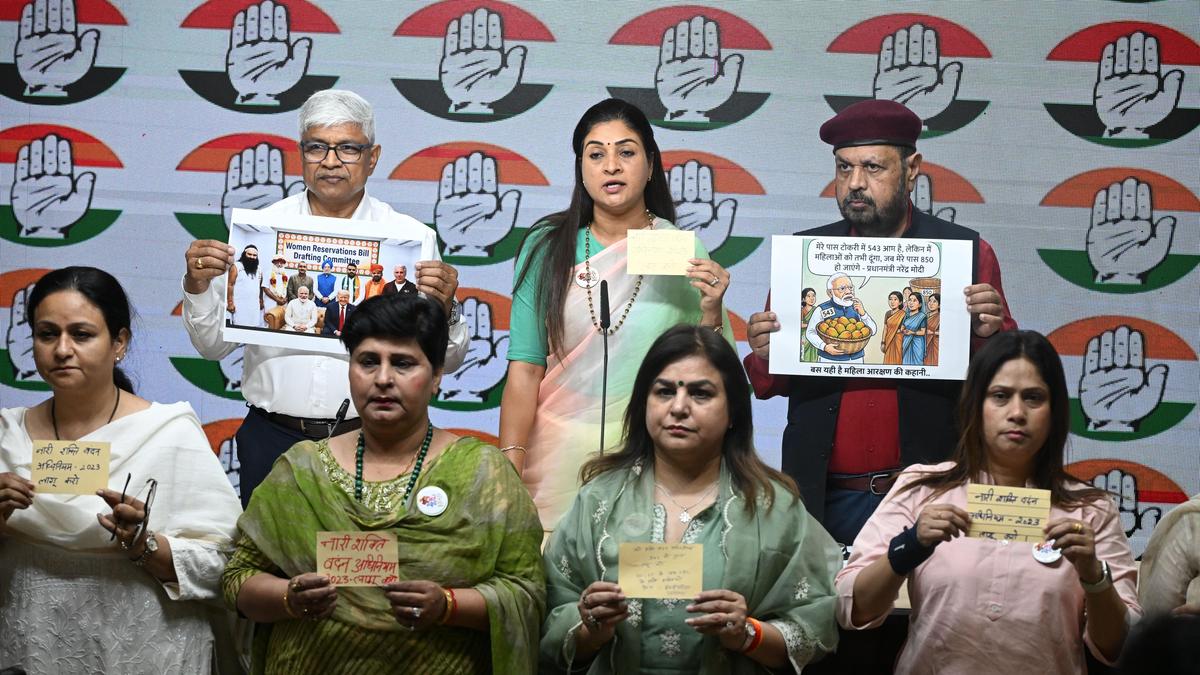
Mahila Congress Postcard Push for Women's Quo
The Mahila Congress launches a postcard campaign to demand immediate implementation of the 33% women's reservation in India's Lok Sabha, targeting PM Modi.
India
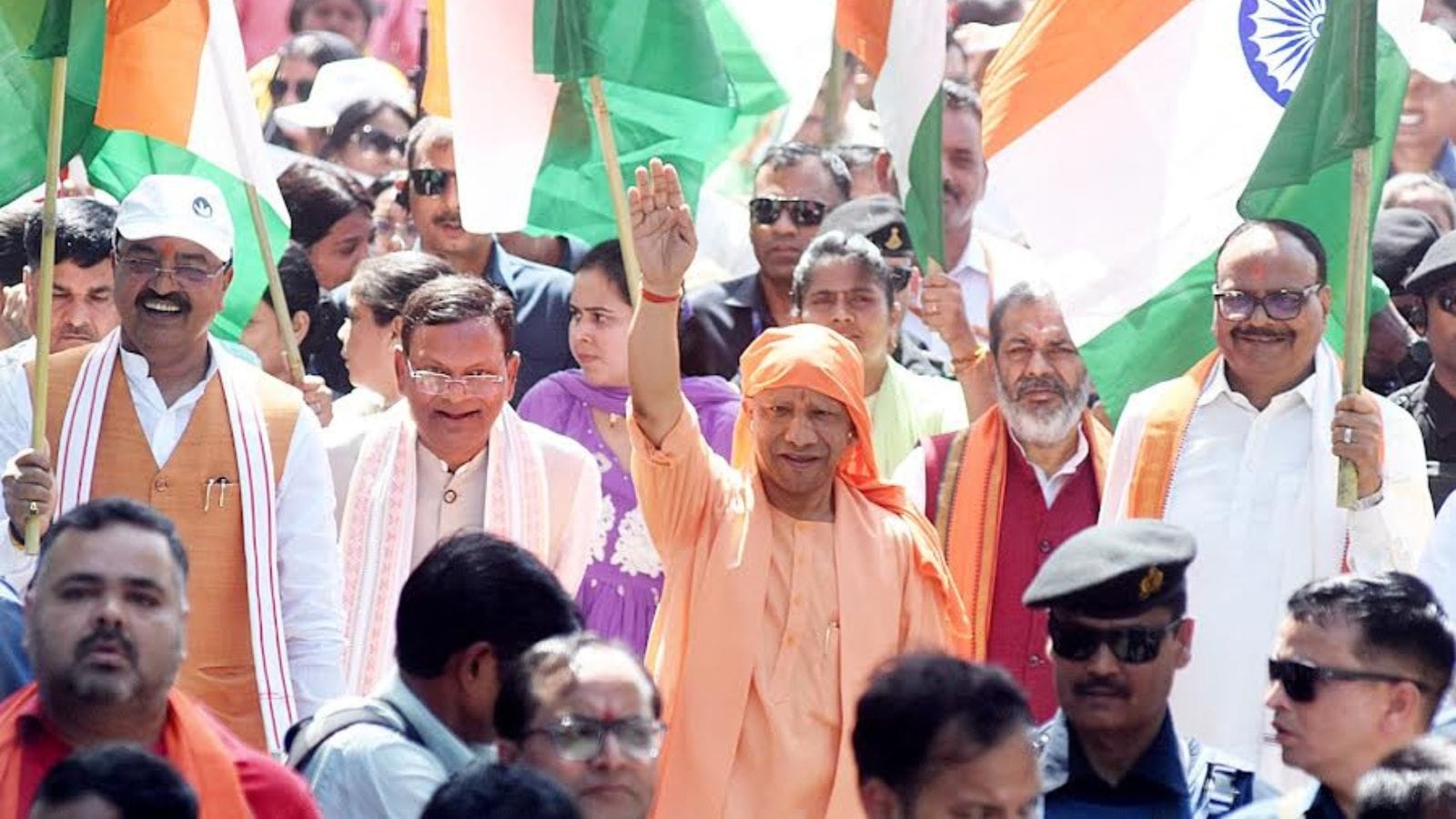
Yogi Adityanath's BJP March on Women's Bill
Yogi Adityanath's padyatra after the women's bill defeat aims to reshape UP's 2027 elections, targeting women's votes against the SP.
India
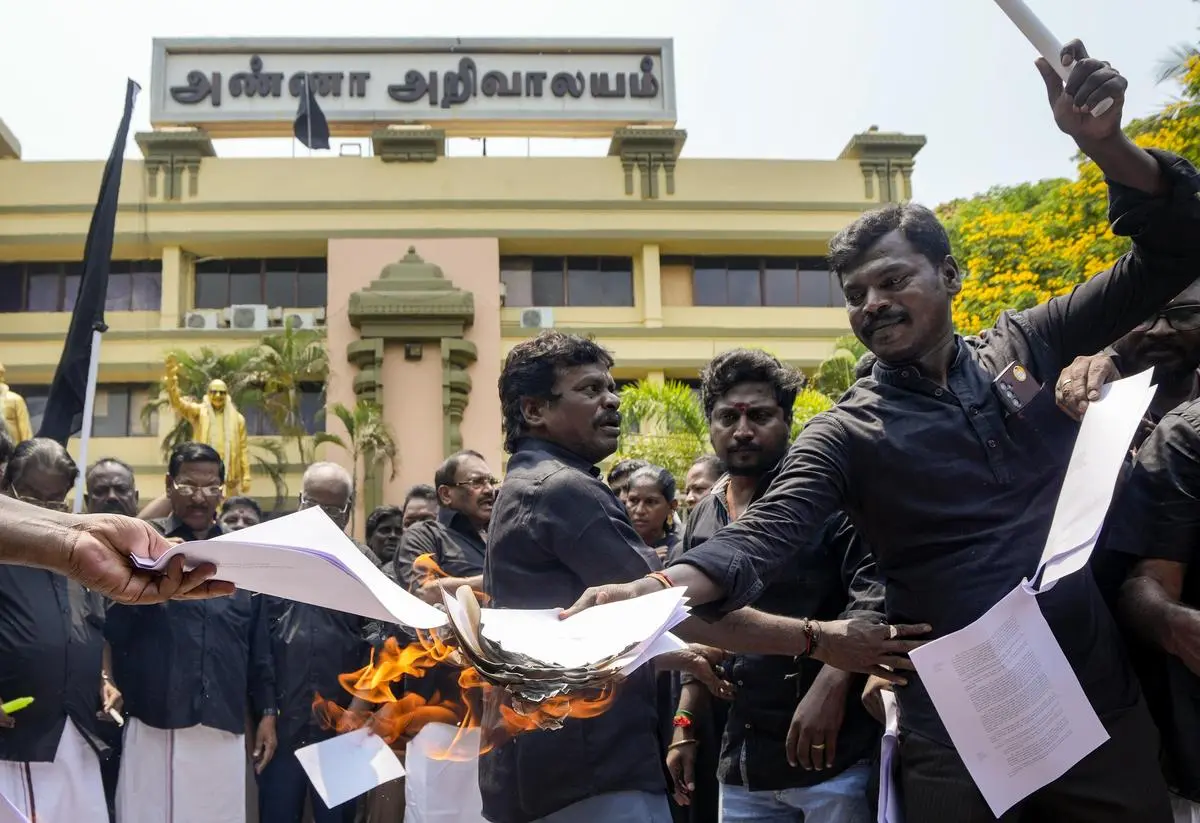
Women’s Reservation Bill 2026
The Constitution (131st Amendment) Bill, 2026 was defeated in Lok Sabha, revealing deeper political conflicts over women's reservation and delimitation.