Modi Blames Congress for Women’s Bill Failure
A deeper look at the women's reservation bill failure
Model Diplomat8 min readIndia

Modi Blames Congress for Women's Bill Failure — But the Real Fight Was About the South
Modi accused Congress, DMK, TMC and SP of "foeticide" after the women's reservation bill fell 298–230 in Lok Sabha. The vote was really about delimitation.
Prime Minister Narendra Modi's address to the nation on April 18, 2026 — pinning the defeat of the Constitution (131st Amendment) Bill on Congress, the DMK, Trinamool Congress and Samajwadi Party — reframes a specific federal fight as a betrayal of India's women. The bill did not fall because the opposition opposes a 33% quota. It fell because Modi's government yoked that quota to a redraw of parliamentary boundaries that would have shifted power decisively from south to north, and asked the opposition to vote for both in one motion. The "foeticide" line is a campaign weapon, not a diagnosis — and the state election results two weeks later show it did not travel the way the BJP hoped.
What actually happened on April 17
At the end of a three-day special session convened between April 16 and 18, 2026, the Lok Sabha voted 298 in favour and 230 against the 131st Amendment, according to the NUS Institute of South Asian Studies. A constitutional amendment needs a two-thirds majority of members present and voting. The government fell roughly 60 votes short. Modi's National Democratic Alliance holds 293 Lok Sabha seats against a 360-vote threshold, as
Al Jazeera noted going in — the numbers were never there without opposition support.
ISAS calls it "the first time that under Prime Minister Narendra Modi a constitutional amendment bill failed to receive the required numbers." In twelve years, no Modi-era constitutional amendment had lost on the floor. This one did.
The package the government put on the table was three bills, not one. The Press Information Bureau records Home Minister Amit Shah listing them in his reply: the Delimitation Bill, 2026; the Constitution (131st Amendment) Bill, 2026; and the Union Territories Laws (Amendment) Bill, 2026. Together, they proposed expanding the Lok Sabha from 543 seats to 850, redrawing constituencies using 2011 census data, and operationalising the 2023 women's reservation law — which cannot take effect until a fresh census and delimitation are completed, as the
Carnegie Endowment for International Peace explains in its post-mortem.
The address that reframed the defeat
Speaking from Delhi on April 18, Modi told the country he had failed. "Despite our best efforts, we could not succeed. The Nari Shakti Vandan Act could not be amended. I seek forgiveness from all mothers and sisters," he said, in remarks reported by BBC Hindi. He then went further: "Women never forget their humiliation. By opposing women's reservation, the opposition has committed a sin, and they will surely be punished for it."
The Marathi edition of the BBC rendered the sharper line: the opposition had committed the "foeticide" of women's empowerment. Congress, the DMK, TMC and SP, Modi said, had chosen "selfish politics" over "national interest." The list is precise — every party named is a live electoral opponent in Tamil Nadu, West Bengal, or Uttar Pradesh.
Congress president Mallikarjun Kharge called the broadcast a political misuse of an address to the nation, according to BBC Hindi. Rahul Gandhi, Leader of the Opposition, put the counter-charge in one sentence: "They wanted to change the number of seats going to every state. They wanted to weaken southern states, northeastern states and other small states. The Prime Minister is attacking our Constitution."
That is the real quarrel.
The gender bill was a vehicle for a federal reset
Read the text and the arithmetic, and the fight is transparent. Under the government's proposal, the Lok Sabha would grow by roughly 50%, with the new seats meant to satisfy the one-third reservation for women, per Carnegie's Milan Vaishnav. But those new seats would be apportioned on the basis of 2011 population — a distribution that rewards Uttar Pradesh, Bihar and Madhya Pradesh at the expense of the south, which has better controlled fertility since the 1971 freeze.
BBC Tamil, working through the 2011 numbers, projected that Tamil Nadu would gain 16 seats in absolute terms — but its share of the Lok Sabha would drop from 7.18% today to 5.5%. Amit Shah told Parliament that no state's share would fall; the government insisted the increase would be "pro-rata." The
Vidhi Centre for Legal Policy's Arghya Sengupta told the BBC the draft "does not appear to be proportionate" and the underlying formula was never spelled out. Carnegie is blunter: "the legal text contained no such guarantee."
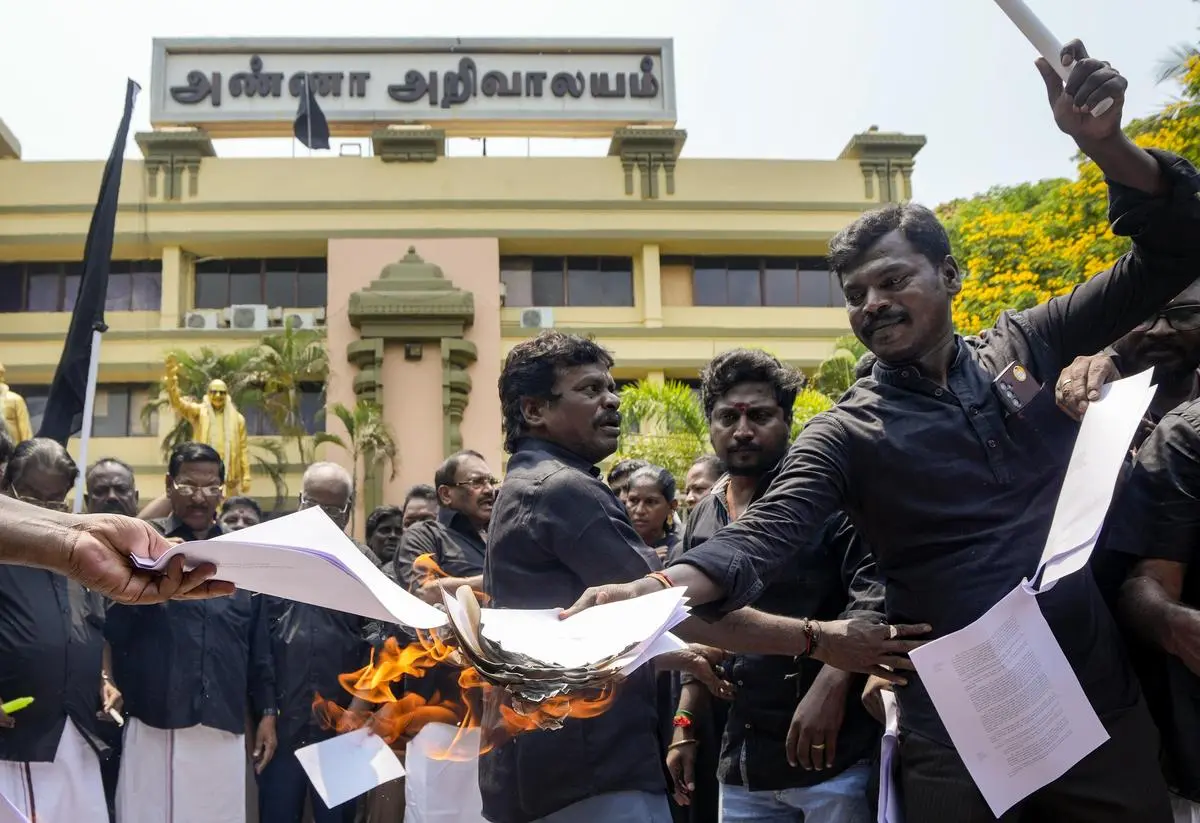
That gap between political assurance and legislative text is what killed the bill. Tamil Nadu Chief Minister M K Stalin burned a copy of the legislation on the House floor and called the plan a "massive historic injustice," per Al Jazeera. Kerala's chief minister had earlier called delimitation "a sword of Damocles" over the south. Members from four southern states arrived in black. On the substance of women's reservation itself,
John Brittas of the CPI(M) told the BBC, the opposition was fine: "We support reserving 33% seats for women based on the current strength of parliament."
The opposition's offer, in other words, was to reserve one-third of the existing 543 seats for women immediately. The government refused, because the point of the exercise was never only the quota.
What the numbers show about representation
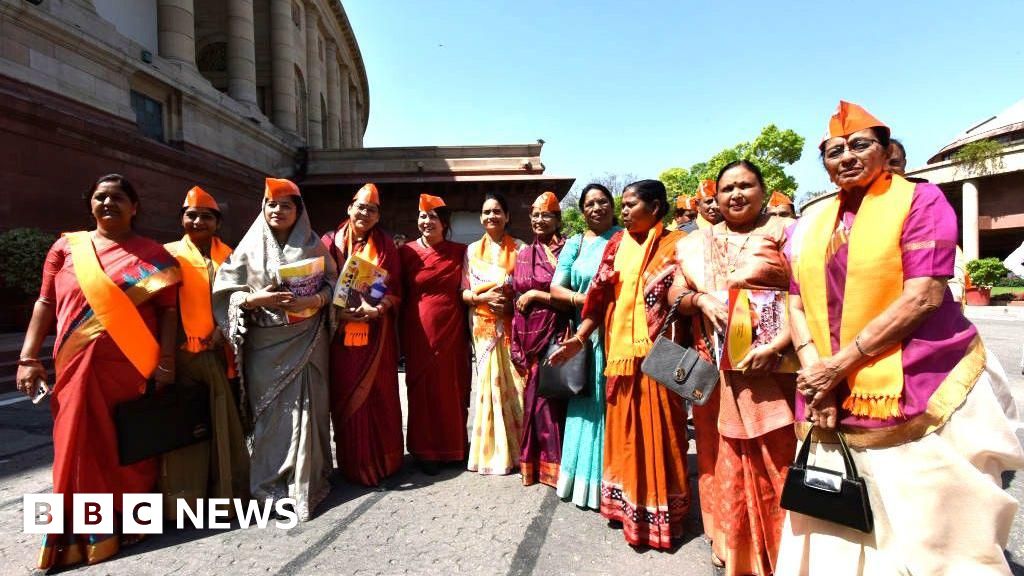
The gender-democratic deficit Modi invoked is real. Women hold roughly 14% of Lok Sabha seats — 75 of 543 in the 18th Lok Sabha, per Shah's PIB reply. The Congressional Research Service's April 2026 statistics on women in national legislatures rank India 163 out of 181 countries at 9.5% across both houses of Parliament, well below the global average of 27.4%. Rwanda tops the list at 59.4%; India sits below Botswana and Fiji.
State assemblies fare worse. The Observer Research Foundation compiled the 2021 baseline: 5.13% women MLAs in Tamil Nadu, 7.86% in Kerala, 13.7% in West Bengal, 4.76% in Assam. Yet women now outnumber men on the electoral rolls in Tamil Nadu, Kerala and Puducherry. The "pipeline effect" from three decades of one-third reservation in panchayats never delivered to state and national politics — that is the case for a quota. It is not the case for tying the quota to a boundary redraw.
The BJP's own record on nominating women
The prime minister's argument that Congress and its allies denied women representation runs into a data problem this election cycle. In the April 2026 West Bengal campaign, according to ISAS, women made up 11% of the BJP's candidates, compared with 19% for Mamata Banerjee's Trinamool Congress. In Tamil Nadu, the BJP fielded women in 19% of the 27 seats it contested; the DMK's junior partner Congress and its alliance ran in more seats and with a broader gender mix. Both figures are well below the 33% quota the BJP was ostensibly fighting to fast-track.
The verdict from voters, two weeks later
The Modi bet was that the "foeticide" charge would move women voters in Tamil Nadu, West Bengal, Kerala and Assam. Results were declared on May 4, 2026. The message travelled, but not intact.
In West Bengal, the BJP won 207 of 294 seats — a landslide against Banerjee's three-term TMC. ISAS's post-poll analysis attributes the swing to anti-incumbency, Hindu consolidation, the Election Commission's Special Intensive Revision that removed 2.7 million voters, and — critically for the women's vote — a BJP manifesto pledge of ₹3,000 a month to women, double Banerjee's Lakshmir Bhandar transfer. Cash beat quota, not the reservation debate.
In Tamil Nadu, the strategy failed. Film star C. Joseph Vijay's two-year-old Tamilaga Vettri Kazhagam won 108 of 234 seats, ended two decades of DMK rule, and, per the BBC, drew disproportionately from younger voters and women "cutting across caste lines." The BJP won one seat in alliance with the AIADMK. Stalin's DMK crashed to 59 seats. The state most inflamed by the delimitation gambit punished both incumbents, but not by rewarding Modi.
In Kerala, the Congress-led United Democratic Front dislodged the Left. Only in Assam did the BJP hold. On its own terms, the April 18 broadcast did not manufacture a "punishment" of the opposition on the women's-quota question.
The deeper story: constitutional deferral
The Carnegie analysis captures the strategic result: "the opposition can claim a short-term victory in stymieing the government's rushed effort, [but] the underlying issues have merely been deferred." India's next census formally began on April 1, 2026. Until it publishes, the 550-seat cap holds, the 1971 apportionment holds, and the 2023 women's reservation law remains a law that does not yet do anything.
That deferral is the point. The 131st Amendment was Modi's attempt to run apportionment before the census — using the quota as political armour. The armour cracked. Sengupta of Vidhi flagged a further oddity to the BBC: the bill expanded the Lok Sabha but not state assemblies, "creating a mismatch: fast-growing states could gain more MPs without a corresponding rise in MLAs." That is not a drafting error. It is a design.
The Takshashila Institution, a Bengaluru-based think tank, concluded the bills were "seen as an affront to federalism and were defeated" — a phrasing that, from a body sympathetic to reapportionment on principle, is telling.
Diplomat View
The defeat of the 131st Amendment matters not because it exposes Modi's rhetorical range but because it draws a hard limit on his second-term majoritarian project. The BJP-led NDA holds a working majority in the Lok Sabha but no longer a constitutional one — and the price of the 2024 general election, in which the party lost its solo mandate, is now legible on the floor of Parliament. The specific call: the government will not attempt this fusion of delimitation and women's reservation again before the 2027 census publishes. It has no vote-arithmetic path. Expect instead a lower-cost move — a Rajya Sabha resolution, or a bill implementing the quota within the existing 543 seats, calling the opposition's bluff on Brittas's offer. The forecast breaks if the census is fast-tracked and a delimitation commission is constituted by executive notification before mid-2027, allowing the BJP to bypass the amendment route. That would trigger a court challenge from Tamil Nadu and Kerala — the real venue for the next round of this fight.
What to watch
- 2027 census results: Publication triggers delimitation. Timing determines whether the women's quota lands before the 2029 general election or after.
- Monsoon Session 2026: Watch whether the government retables a stripped-down version — quota within current 543 seats — to force Congress and the DMK to vote for or against a bill they publicly claim to support.
- Supreme Court: Any executive notification on delimitation before the census is almost certain to draw a petition from Tamil Nadu; the court's stance on the 42nd and 84th Amendments' freeze logic will shape what follows.
The Bottom Line
Modi's "foeticide" charge against Congress, the DMK, TMC and SP is the political spin on a legislative defeat that was really about federalism, not gender. The 298–230 vote killed a boundary redraw dressed as a women's-empowerment bill — and the May 4 state results show voters in the affected states did not buy the reframing. India's women's reservation law, passed in 2023 with 454 votes, still cannot be implemented until the next census and delimitation, and after April 17 that timeline has moved further out, not closer.
Full context on India coverage on Model Diplomat.
Discover more

India
Modi's Nari Shakti Gambit
Modi's Varanasi speech redefines women's empowerment as a Nari Shakti gambit, blending appeals for women's votes with the contentious delimitation debate.
India
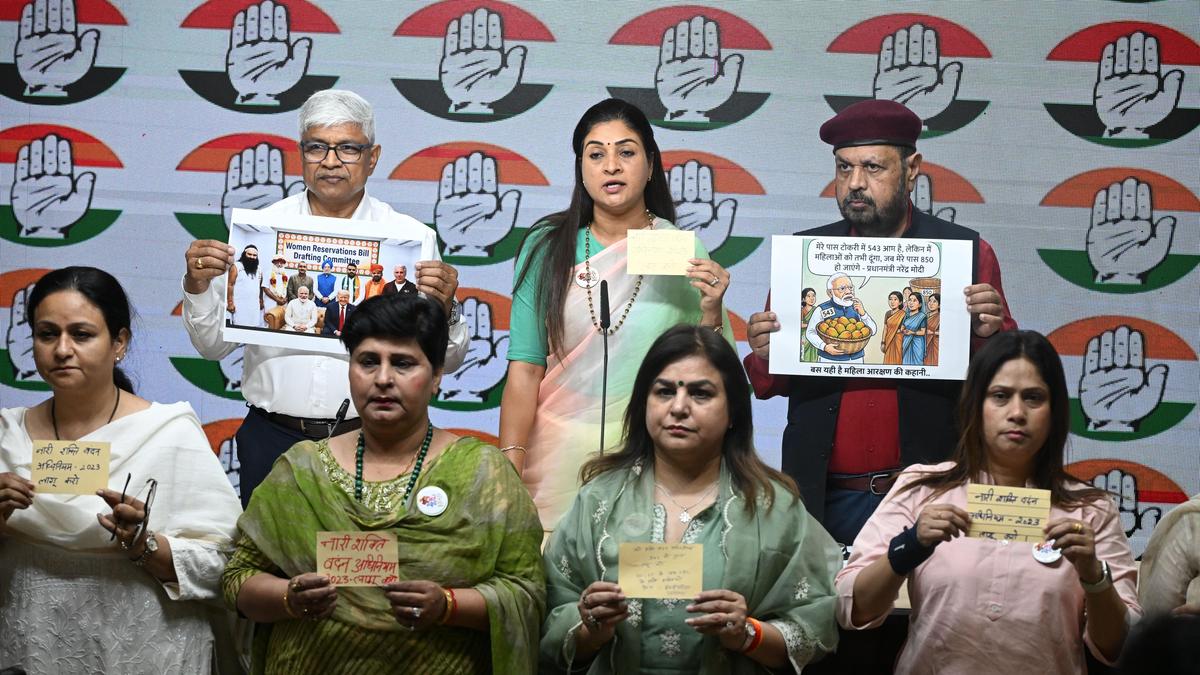
Mahila Congress Postcard Push for Women's Quo
The Mahila Congress launches a postcard campaign to demand immediate implementation of the 33% women's reservation in India's Lok Sabha, targeting PM Modi.
India
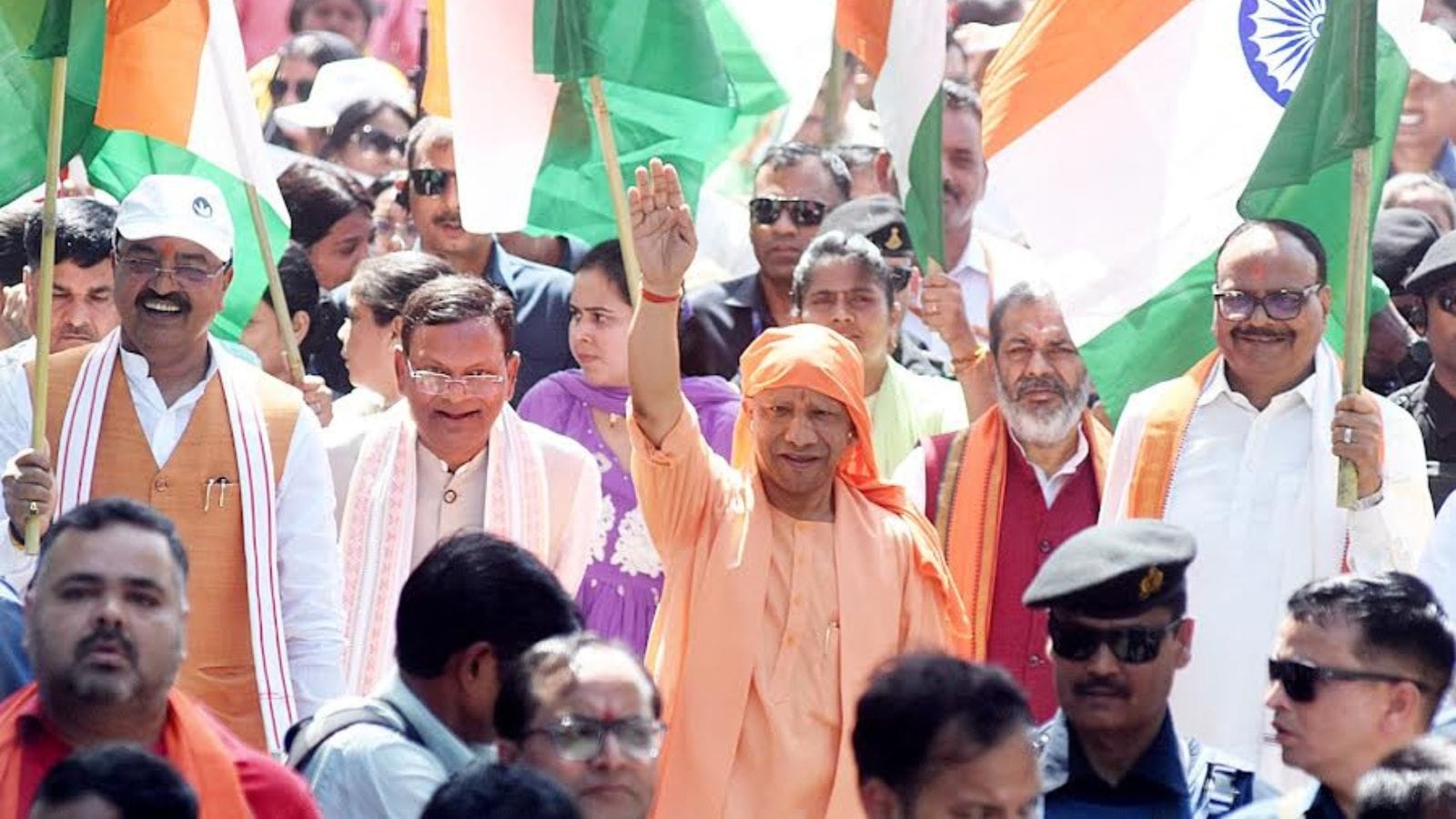
Yogi Adityanath's BJP March on Women's Bill
Yogi Adityanath's padyatra after the women's bill defeat aims to reshape UP's 2027 elections, targeting women's votes against the SP.
India
Women’s Reservation Bill 2026
The Constitution (131st Amendment) Bill, 2026 was defeated in Lok Sabha, revealing deeper political conflicts over women's reservation and delimitation.