Modi Blames Congress, DMK for Bill Failure
Modi's address shifts blame for women's bill defeat.
Model Diplomat7 min readIndia
Modi Blames Congress, DMK for Bill Failure — Delimitation Was Always the Point
Modi's April 18 address blamed Congress and DMK for the women's reservation bill defeat. The real fight was delimitation — and he lost the vote but may have won the war.
The Constitution (131st Amendment) Bill went down 298–230 in the Lok Sabha on April 17, 2026 — the first constitutional amendment ever defeated under Narendra Modi, and by 64 votes short of the 362 needed for a two-thirds majority, according to the NUS Institute of South Asian Studies. Twenty-four hours later, Modi addressed the nation, apologised to "mothers and sisters," and named Congress, the DMK, TMC and Samajwadi Party as the "culprits" who had committed "foeticide" on women's empowerment, per an
NDTV report. The bill was never really about the women's quota. It was a delimitation bill wrapped in the language of women's empowerment — and by losing the vote days before Tamil Nadu and West Bengal went to the polls, Modi extracted a political weapon far more valuable than any constitutional victory would have delivered.
What was actually on the floor
The women's reservation law itself — the 128th (later renumbered 106th) Amendment, branded as the Nari Shakti Vandan Adhiniyam — was already on the statute book. Parliament passed it near-unanimously in September 2023, with the Lok Sabha voting 454–2 and the Rajya Sabha unanimously, as PIB confirmed at the time. Implementation, however, was tied to a fresh census and a subsequent delimitation of constituencies. That linkage was deliberate: as the Carnegie Endowment's Milan Vaishnav has
noted on Grand Tamasha, no incumbent MP wanted to lose a seat before the 2024 general election.
The April 2026 package tried to break that logjam. The 131st Amendment Bill would have raised the Lok Sabha ceiling to 850 seats — 815 for states, 35 for union territories — and, crucially, removed the automatic post-census trigger that ties reapportionment to the decennial count, handing Parliament discretion over which census to use. The companion Delimitation Bill and a Union Territories Bill provided the operational scaffolding. The Press Information Bureau's official summary confirms that once the 131st Amendment failed, "no further action was taken" on the two dependent bills.
The political charge was in the fine print. Takshashila Institution's projections show that a straight pro-rata reapportionment using 2011 census data would hand Uttar Pradesh 11 more seats and Bihar 10, while Tamil Nadu would lose four and Kerala five, according to a Takshashila analysis. Union Home Minister Amit Shah insisted on the floor that no state would lose seats — Tamil Nadu's 39 would grow to 59, Kerala's 20 to 30 — per an
official PIB release. But Arghya Sengupta of the Vidhi Centre for Legal Policy told the
BBC that the bill text contained no such guarantee, and that the absence of a proportional formula meant "outcomes could vary — and favour more populous states."
Why the opposition walked away
Congress leader Rahul Gandhi's line during the debate was blunt: "This has nothing to do with empowering women. It is an attempt to change the country's electoral map, using and hiding behind India's women," ISAS reported. Gandhi wrote on social media before the vote that the package was "merely an attempt to seize power through delimitation and gerrymandering," per
Al Jazeera.
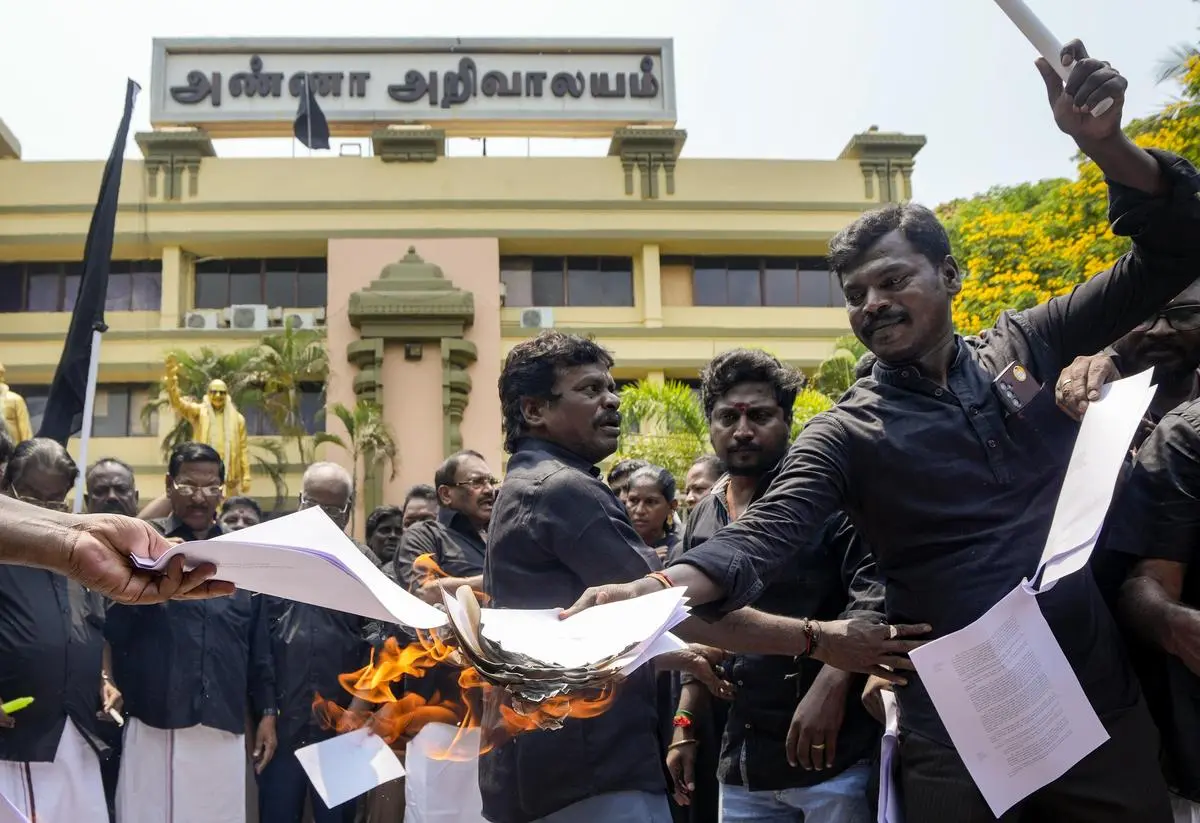
That framing held because the government offered the opposition nothing on process. The three-day special session — April 16 to 18 — was announced days before the Tamil Nadu and West Bengal polls; there was no pre-legislative consultation, no floor management, and southern MPs entered the chamber wearing black. Tamil Nadu Chief Minister M.K. Stalin burned a copy of the bill outside and called the plan a "massive historic injustice." The Carnegie Endowment's post-mortem noted that the package sought to "operationalise" the women's reservation "for a distinctly political purpose: The quota for women functioned as a vehicle to push through a broader reengineering of India's electoral design," Carnegie's Delimitation After Defeat concluded.
The arithmetic never worked. The NDA held 293 seats in the Lok Sabha — 69 short of the 362-vote constitutional threshold, per Al Jazeera's pre-vote tally. Without either Congress or the DMK-led INDIA bloc, the bill was dead on introduction. Which raises the obvious question: why bring it?
The address to the nation
Modi's televised address on April 18 answered that question — indirectly. "Despite our utmost and sincere efforts," he said in a statement carried on the Prime Minister's Office site, the amendment "failed to pass, effectively crushing the legitimate dreams of the female population." He apologised. Then he pivoted:
"Women may forget everything else, but they never forget an insult to their pride." — Prime Minister Narendra Modi, address to the nation, April 18, 2026
He named the "culprits": Congress, DMK, TMC, Samajwadi Party. He accused them of "foeticide." And, as ISAS's post-vote brief documented, he took the argument directly into his final Tamil Nadu and West Bengal rallies. Home Minister Shah, in a follow-up briefing carried by
PIB, told BJP workers the opposition would face "the anger of women" not just in 2029 but "at every level, in every election, and at every place."
The Economic Times noted that Modi's TV pitch reached voters in Tamil Nadu five days before polling and West Bengal ten days before its first phase.
The angle the wires missed
Reading the aftermath charitably to the government, the defeat did three things at once. It moved delimitation — a topic on which the BJP was politically exposed in the south — from the domain of expert seminars to the domain of national television. It handed BJP an emotional grievance to weaponise in Bengal, where 27 percent of the population is Muslim and where the party historically underperformed among women. And it forced the DMK, Congress and TMC to campaign against a "women's" bill days before women voted.
The subsequent state results tell the story. On May 4, the BJP won West Bengal for the first time in its 46-year history, ending Mamata Banerjee's three-term run, per Al Jazeera. In Tamil Nadu, actor Vijay's fledgling TVK — not the DMK or AIADMK — won 108 of 234 seats, with the DMK collapsing from 133 seats to 59 and Chief Minister Stalin himself losing Kolathur,
BBC live coverage confirmed. The BBC and ISAS both attribute the DMK collapse primarily to Vijay's insurgency, not the bill fight — but the DMK entered the campaign wrong-footed on a women's issue, and its recovery never came.
Two caveats sharpen the analysis. First, the BJP was not the direct beneficiary in Tamil Nadu — its AIADMK alliance won just one seat, per ISAS's state-election review. But the DMK's rout, and Congress's decision to join Vijay's incoming government, weakens the INDIA bloc's southern anchor going into 2029. Second, the constitutional wall Modi hit is not going away. As Carnegie noted, "no fresh delimitation exercise can be undertaken until the results of the next census — currently underway — are officially published." The 2027 census, whose house-listing phase began April 1, 2026, is the next hard gate.
The historical parallel
Delimitation freezes have been the third rail of Indian federalism since 1976, when Indira Gandhi's 42nd Amendment paused reapportionment through the 2001 census — later extended to 2026 — precisely to shield family-planning-compliant southern states from losing seats to the fertile Hindi belt. The Observer Research Foundation notes that this freeze was itself a constitutional workaround: it violated Article 81's "one person, one vote, one value" principle in order to preserve federal balance.
Modi's 131st Amendment tried to solve that trade-off by expanding the pie rather than redistributing it. Amit Shah, in his intervention, pointed out that even under the government's own model Tamil Nadu's share of Parliament would have edged up from 7.18 to 7.23 percent, per PIB. The math was defensible. The politics — bringing it during an election, with no consultation, hidden inside a women's-empowerment wrapper — was not.
What to watch next
- Census enumeration phase 2 (2027). The individual-count phase, expected to open in early 2027, will produce the data on which any future delimitation must legally rest. If it includes caste enumeration — a demand the opposition made in 2023 — the political calculus shifts again.
- Monsoon Session 2026. BJP strategists have signalled the government may reintroduce a narrower version of the 131st Amendment, dropped from the delimitation link. Whether Congress and DMK can hold their line without the electoral pressure of state elections is now the test.
- Supreme Court delimitation petitions. Tamil Nadu, Kerala, Karnataka and Telangana passed assembly resolutions in 2025 asking for a 25-year extension of the freeze. A constitutional challenge is expected once any post-census delimitation begins.
Diplomat View
Modi lost the vote and won the frame. By tabling a bill he could not pass, on a timetable that guaranteed opposition rejection, he converted a constitutional defeat into an electoral weapon eleven days before Tamil Nadu polled and fifteen before Bengal — and the results in both states suggest the wager paid. The women's quota was never the object; it was the political vehicle. The real prize is the 2029 Lok Sabha, and specifically whether a delimitation reset, sold as women's empowerment, can crack the southern and Bengali firewalls that have historically blocked BJP majorities. On current evidence, it has already cracked Bengal.
The forecast is falsifiable. If the government reintroduces a narrower women's-reservation-only bill in the Monsoon Session and Congress or the DMK vote against it, this reading is confirmed — the fight is not about women at all. If either party votes in favour of a decoupled version, or if the government declines to reintroduce it, the April episode was a tactical miscalculation dressed up as strategy. Watch the Monsoon Session order paper.
The Bottom Line
The bottom line: Modi's April 18 address blamed Congress and the DMK for a defeat his own arithmetic guaranteed. The 131st Amendment was drafted to be lost — and to hand the BJP a grievance-charged women's-empowerment narrative days before voters in Tamil Nadu and West Bengal reached the booth. On May 4, Bengal fell for the first time and the DMK collapsed in Tamil Nadu. The bill failed. The strategy did not.
Discover more

India
Modi's Nari Shakti Gambit
Modi's Varanasi speech redefines women's empowerment as a Nari Shakti gambit, blending appeals for women's votes with the contentious delimitation debate.
India
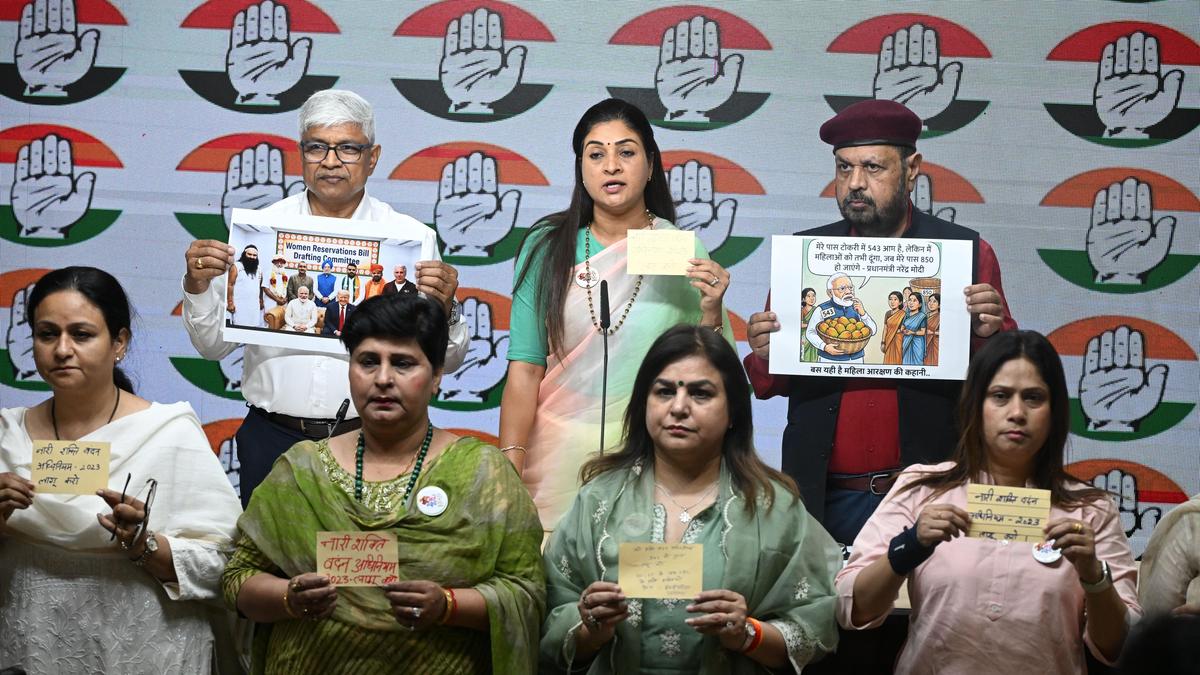
Mahila Congress Postcard Push for Women's Quo
The Mahila Congress launches a postcard campaign to demand immediate implementation of the 33% women's reservation in India's Lok Sabha, targeting PM Modi.
India
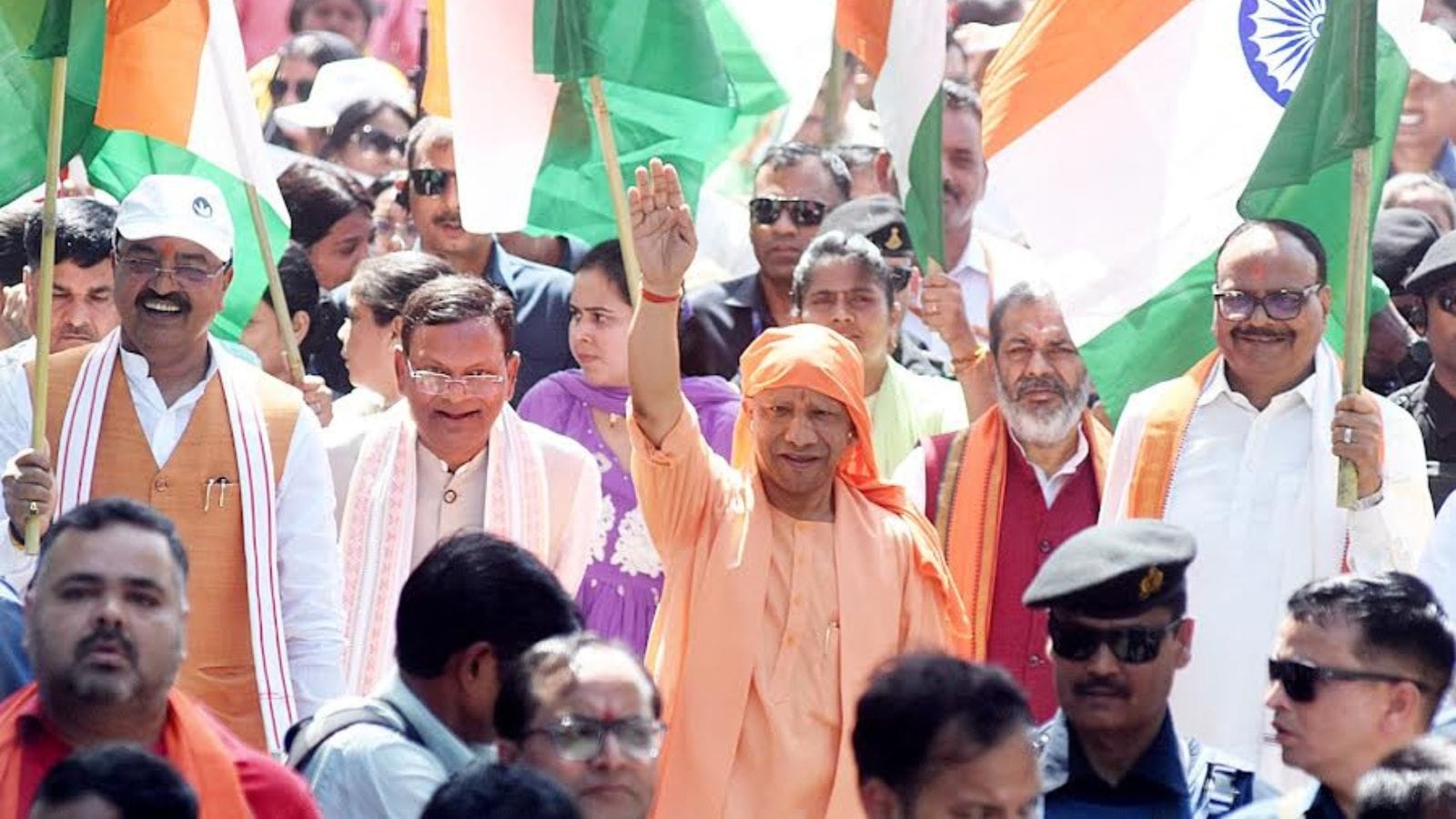
Yogi Adityanath's BJP March on Women's Bill
Yogi Adityanath's padyatra after the women's bill defeat aims to reshape UP's 2027 elections, targeting women's votes against the SP.
India
Women’s Reservation Bill 2026
The Constitution (131st Amendment) Bill, 2026 was defeated in Lok Sabha, revealing deeper political conflicts over women's reservation and delimitation.