Modi's Address After Women's Reservation Bill
Modi's speech reframes legislative defeat into campaign strategy.
Model Diplomat9 min readIndia
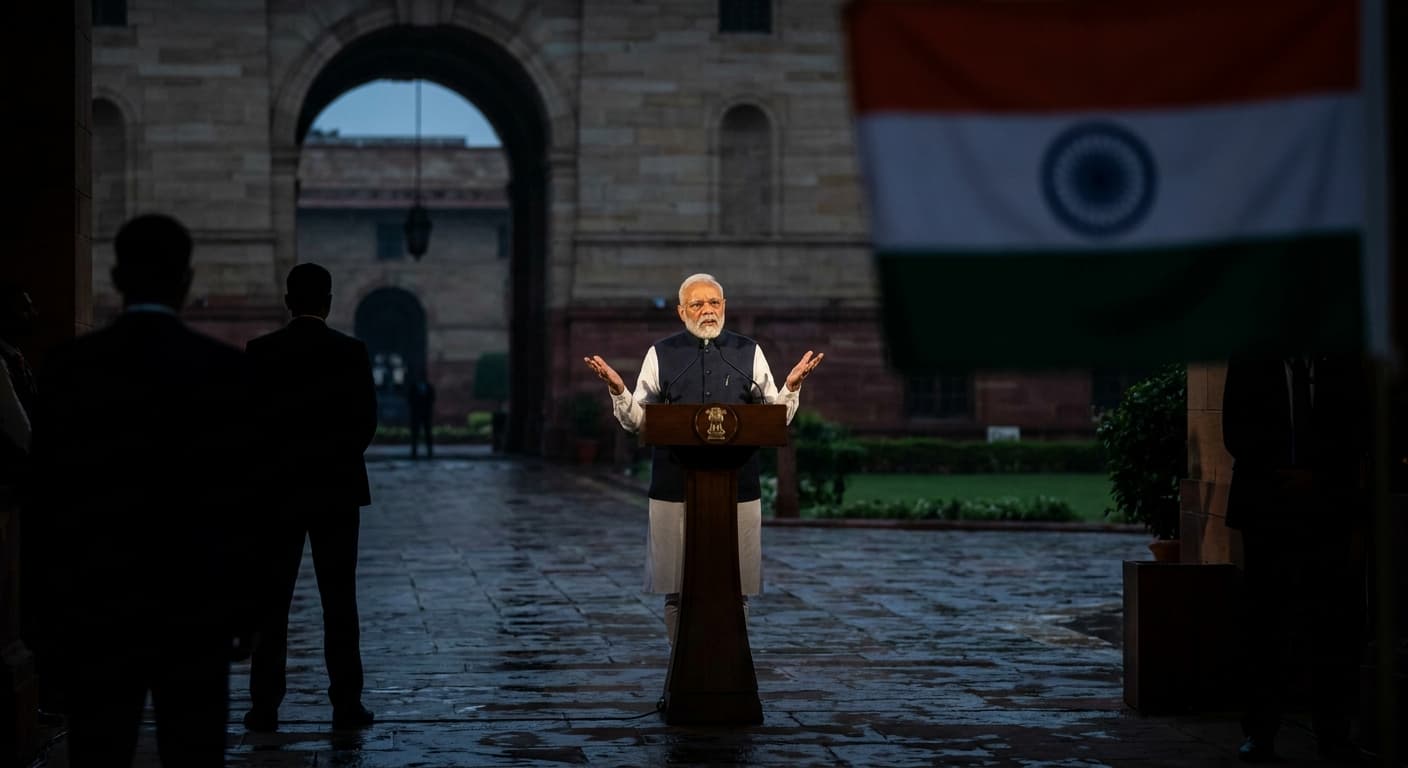
Modi's Address After Women's Reservation Bill: A Defeat Engineered Into a Bengal Sweep
Modi's April 18, 2026 address, after the 131st Amendment fell 298–230 in the Lok Sabha, framed a legislative loss that his party then converted into its first-ever West Bengal victory.
On April 18, 2026, one day after the Lok Sabha rejected the Constitution (One Hundred and Thirty-First Amendment) Bill by 298 votes to 230, Prime Minister Narendra Modi spent 30 minutes on national television seeking "forgiveness" from Indian women and accusing the Congress, DMK, Trinamool Congress and Samajwadi Party of committing "foeticide" on the bill. The address was not a lament — it was the opening speech of the West Bengal campaign, delivered five days before Phase 1 polling began. Sixteen days later, on May 4, the Bharatiya Janata Party (BJP) won Bengal for the first time in its history, along with Assam and Puducherry, while regional welfarist governments fell in Tamil Nadu and Kerala. The women's quota was never going to pass this session; the speech was the point.
The chronology matters. According to the Press Information Bureau, the special session ran from April 16–18 and adjourned sine die immediately after the vote — with the two dependent bills, the Delimitation Bill and the Union Territories Laws (Amendment) Bill, "not proceeded further." Modi's NDA held 293 Lok Sabha seats against the 360-vote threshold required by Article 368(2).
Al Jazeera calculated the gap on the eve of the session, noting the NDA "holds 293 seats in [the] lower house of parliament while a two-thirds majority would require 360 votes." The government tabled a bill it could not pass, timed a national broadcast for the eve of Bengal polling, and used the defeat to reframe every regional opposition party as anti-women. The
NUS Institute of South Asian Studies called the loss the first time under Modi that a constitutional amendment had been blocked in Parliament — and simultaneously observed that "the BJP is taking the issue to voters and targeting the opposition for blocking the legislation on women's reservation."
What Modi actually said
The text released by the Prime Minister's Office is unusually direct. Modi said the women of India were "watching," that opposition parties were "clapping with joy" when the vote fell, and that this would not be forgotten:
"Women forget everything, but they never forget their insult… for opposing women's reservation, the sin committed by the opposition will surely bring punishment to them."
He apologised — "I seek forgiveness from all the mothers and sisters" — before naming Congress, DMK, TMC and Samajwadi Party as "family-oriented parties" guilty of "foeticide" on the amendment. He conceded the arithmetic bluntly: "we did not get the required 66 percent votes." He promised the fight would continue: "we will remove every obstacle in the path of women's reservation." Congress president Mallikarjun Kharge accused Modi of weaponising the format; the BBC Hindi service quoted Kharge saying Modi had "made political use of an address to the nation." Congress veteran Jairam Ramesh, cited by
Livemint, described the broadcast as a "Distress Address rather than a National Address."
Rahul Gandhi's counter, quoted across The Hindu and BBC, was that if Modi genuinely wanted women's reservation, he could implement the existing 2023 law immediately and "the entire opposition will support you 100 percent." That offer went unanswered because it defeated the purpose. The purpose was delimitation, and the vehicle was the quota. Read against the electoral calendar, the speech is a campaign launch: West Bengal Phase 1 voting was on April 23, Tamil Nadu on the same day, Kerala earlier in the month, and Phase 2 in Bengal on April 29. Modi was not addressing legislators. He was addressing the roughly 68 million voters who would decide the country's most politically formidable state within a week.
Why the bill was designed to fail
Three features of the legislative package made passage arithmetically impossible and politically unnecessary. First, the 131st Amendment did not stand alone: it operationalised the 2023 women's quota by binding it to a delimitation using the 2011 census, expanding the Lok Sabha from 543 to as many as 850 seats. The Carnegie Endowment for International Peace noted in its post-defeat analysis that "the quota for women functioned as a vehicle to push through a broader reengineering of India's electoral design." The government's proposal, Carnegie added, would have expanded the Lok Sabha by 50 percent "with all the new seats reserved for women in order to meet the one-third quota" — a design that yoked the two reforms so tightly that opposing one meant opposing both.
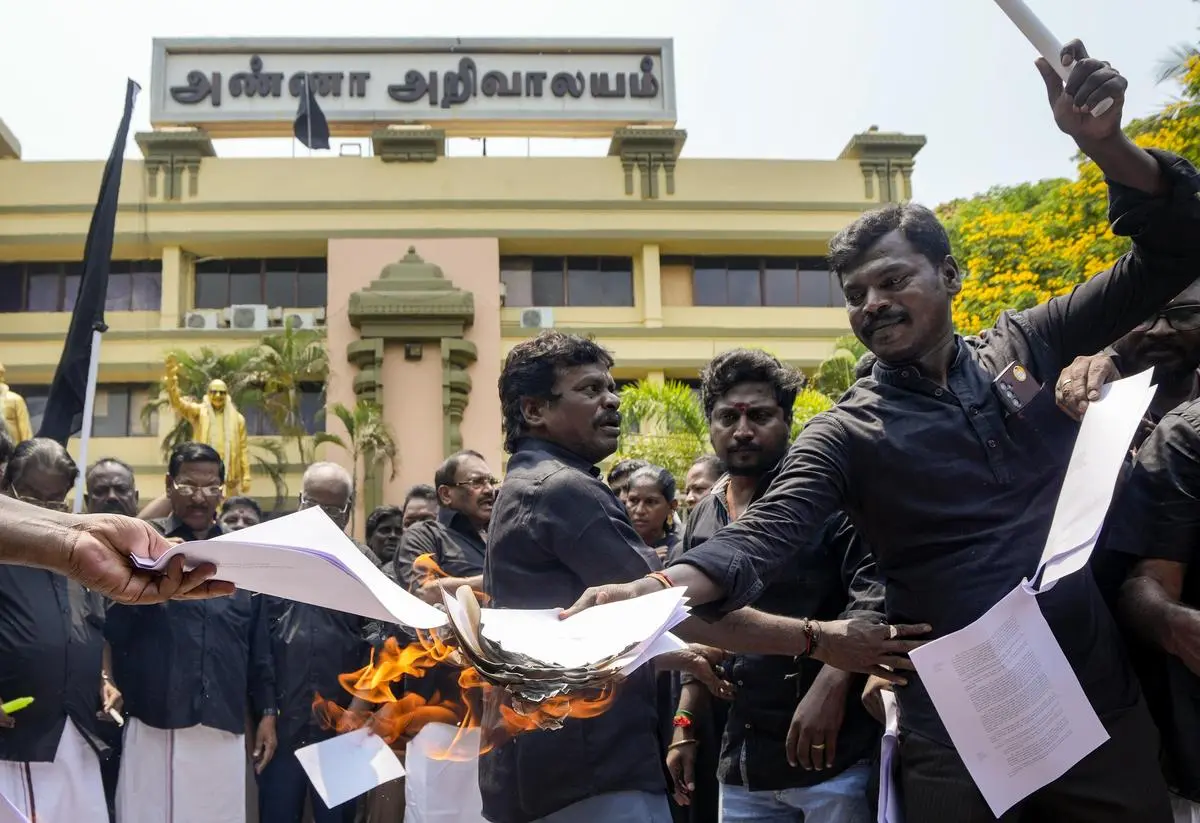
Second, this reengineering threatened southern states with lower population growth — Tamil Nadu, Kerala, Karnataka, Andhra Pradesh, Telangana — which stood to lose relative weight in Parliament. India has not redrawn parliamentary seats since the 1971 census, and the BBC noted that the five southern states "account for about 20% of India's 1.4 billion people" but fear being "punished for having fewer children and generating more wealth." Vidhi Centre for Legal Policy's Arghya Sengupta told the BBC that the "basis for this number [850 seats] is unclear and does not appear to be proportionate to population growth recorded in the 1971 and 2011 census." Tamil Nadu Chief Minister M K Stalin burned a copy of the bill in Chennai; DMK, TMC and Samajwadi Party MPs walked into the House in black. TMC MP Kalyan Banerjee, quoted by
BBC Hindi, said flatly that "when the Prime Minister thinks he will lose an election, he simply changes the rules."
Third, the sequencing was wrong on purpose. The 2023 Nari Shakti Vandan Adhiniyam — the 106th Constitutional Amendment, passed 454-2 in the Lok Sabha — already ties implementation of the 33% women's quota to a completed census and a subsequent delimitation. Carnegie put it plainly: "women's reservation — despite being formally enacted — cannot take effect until after the 2027 census is completed and a new delimitation is carried out." The 131st Amendment tried to shortcut that constraint by falling back on 2011 data, a choice the Takshashila Institution's
post-defeat brief called "an affront to federalism." Senior journalist Sharad Gupta, quoted again by
BBC Hindi, argued the government knew it lacked the numbers but tabled the bill anyway because "they wanted to capture women's votes in West Bengal in greater numbers. Now the BJP will say repeatedly in the campaign that the opposition did not let us work for women."
The Bengal payoff
That is precisely what happened. On May 4, the Election Commission's count showed the BJP leading or winning around 200 of West Bengal's 294 assembly seats, against 87 for Mamata Banerjee's Trinamool Congress — a party that had governed uninterrupted since 2011 and swept 84 of 88 Muslim-majority seats as recently as 2021. According to Al Jazeera, turnout hit a record 92.93%, with nearly 68.2 million ballots cast.
NPR reported that "the outcome in West Bengal is expected to boost Modi's standing and strengthen his position midway through his third term in office" — a term he began in 2024 after his party was forced into coalition dependency for the first time since 2014. The
BBC's post-election feature called it "the completion of the party's long march into eastern India" and "a personal political victory not only for Narendra Modi, but also [Amit] Shah."
The women's vote — the audience for Modi's April 18 speech — was the swing. The 2021 Lokniti-CSDS post-poll survey had put TMC support among Bengali women at 50%, four percentage points higher than among men, reflecting years of female-focused welfare schemes. This time, the BJP explicitly courted that bloc with larger cash-transfer promises and a national narrative that Banerjee's allies in Delhi had killed women's reservation. BJP leader Dharmendra Pradhan told the BBC that "voters, particularly women angered by atrocities and law-and-order failures, had decisively rejected the Trinamool Congress." A parallel BBC analysis of the wider result found that cash transfers alone no longer secure incumbents — meaning identity, grievance and gender framing did more work in 2026 than welfare arithmetic. The
Economist had already noted before polling that "winning over female voters is also crucial in the three other states and a union territory that are holding polls this month."
Two caveats belong on the record. The Election Commission's Special Intensive Revision of Bengal's rolls removed roughly nine million voters — about 12% of the electorate — before polling, and civil society groups allege it disproportionately hit Muslims and migrants; Al Jazeera reported this "snatched their right to cast a ballot in the elections." The Modi government also deployed 2,400 paramilitary companies, a record for a state election. Analysts at the Centre for Policy Research and elsewhere told Al Jazeera the SIR alone could not explain a 44%+ BJP vote share, but it narrowed the field on which the April 18 speech landed.
The historical parallel — and the second-order effect
There is a precedent nobody in Delhi is naming out loud. In March 2010, the UPA government under Manmohan Singh passed the women's reservation bill in the Rajya Sabha, then let it die in the Lok Sabha rather than break with RJD and Samajwadi Party allies demanding an OBC sub-quota. Modi cited that history against Sonia Gandhi during the special session, asking rhetorically: "Don't you have any hurry, Sonia ji? You had the chance." The rhetorical thrust is symmetrical: in 2010 Congress killed the bill quietly to protect allies; in 2026 Modi killed it loudly to expose them. The
ISAS-NUS 2023 brief had already flagged that the BJP delayed passing the quota for a decade in office and then attached it to a "lengthy and uncertain" delimitation trigger — a design that made the reform politically useful long before it became legally operative.
The second-order effect is more consequential than Bengal. The BJP has discovered that a failed constitutional amendment can move more votes than a passed one, because passage requires concessions to southern parties and OBC blocs, while failure lets the party name them as saboteurs. The Indian Express noted that Modi accused the opposition of "female foeticide" — a phrase that will echo in every BJP campaign ad through 2029.
The Hindu reported him blaming Congress specifically as an "anti-reform party." India Today captured his framing in a phrase —
"I'm sorry" — that will function as an evergreen campaign line.
What Modi's speech tells you about 2027 and 2029
The address is a template. It converts a legislative arithmetic problem — no two-thirds majority — into a campaign asset without any of the compromises that would have secured the votes. The BJP could have decoupled women's reservation from delimitation, moved the quota under the 2023 amendment, and passed something unanimously. It did not, because the delimitation is what the party wants. The 2027 census, followed by a redistricting expected to benefit Hindi-belt states over the south, is the prize; the women's quota is the wrapper.
Carnegie's analysis makes the sequencing explicit: no reapportionment can happen "until the results [of the census] are officially published… India's political map will remain frozen." The government is now expected to wait out the census, publish results in 2027–2028, and return with a redrawn delimitation bill ahead of the 2029 general election. The women's quota — with women's Lok Sabha representation still stuck near 14 percent, well below the global average — gives that bill its moral cover. Modi's April 18 promise to remove "every obstacle" is a placeholder for the return engagement.
Diplomat View
The forecast: Modi's April 18 address will be remembered not as the aftermath of a defeat but as the opening shot of the 2029 delimitation fight. The BJP has now discovered that a failed constitutional amendment can move more votes than a passed one, because passage would require concessions to southern parties and OBC blocs, while failure lets the party blame them by name. Expect the government to reintroduce a delimitation bill in the 2028 monsoon session, after the 2027 census figures are published, with the women's quota again bolted on as the political shield. The forecast changes if: (a) the BJP's Hindi-belt seat premium narrows in 2027 UP-adjacent polls; (b) the Supreme Court, hearing likely challenges to the SIR exercise and any 2011-census-based delimitation, imposes procedural limits; or (c) the DMK, TMC and Congress form an early pre-poll pact naming delimitation as the constitutional issue of 2029. Absent one of those three, this April will look, in hindsight, like the moment India's electoral map began to be redrawn — with the women's quota as the crowbar.
What to watch next
- Q4 2026: Enumeration phase of the 2027 census concludes; the Registrar General's office begins releasing preliminary demographic totals that will drive any future delimitation.
- 2028 monsoon session: Likely reintroduction of a delimitation-plus-women's-reservation package. Watch whether the BJP decouples the two bills or repeats the 2026 bundled approach.
- Supreme Court, ongoing: Petitions on the West Bengal Special Intensive Revision and on the constitutional basis for a 2011-census delimitation. A ruling before 2029 would reset the pitch.
Discover more

India
Modi's Nari Shakti Gambit
Modi's Varanasi speech redefines women's empowerment as a Nari Shakti gambit, blending appeals for women's votes with the contentious delimitation debate.
India
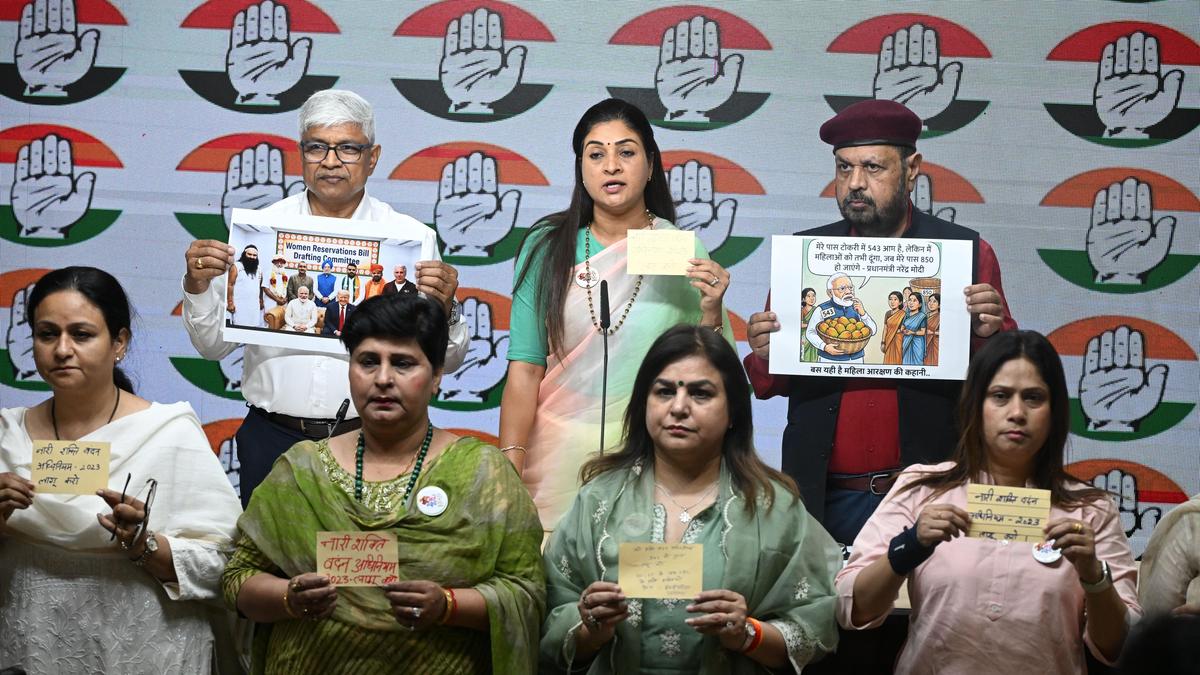
Mahila Congress Postcard Push for Women's Quo
The Mahila Congress launches a postcard campaign to demand immediate implementation of the 33% women's reservation in India's Lok Sabha, targeting PM Modi.
India
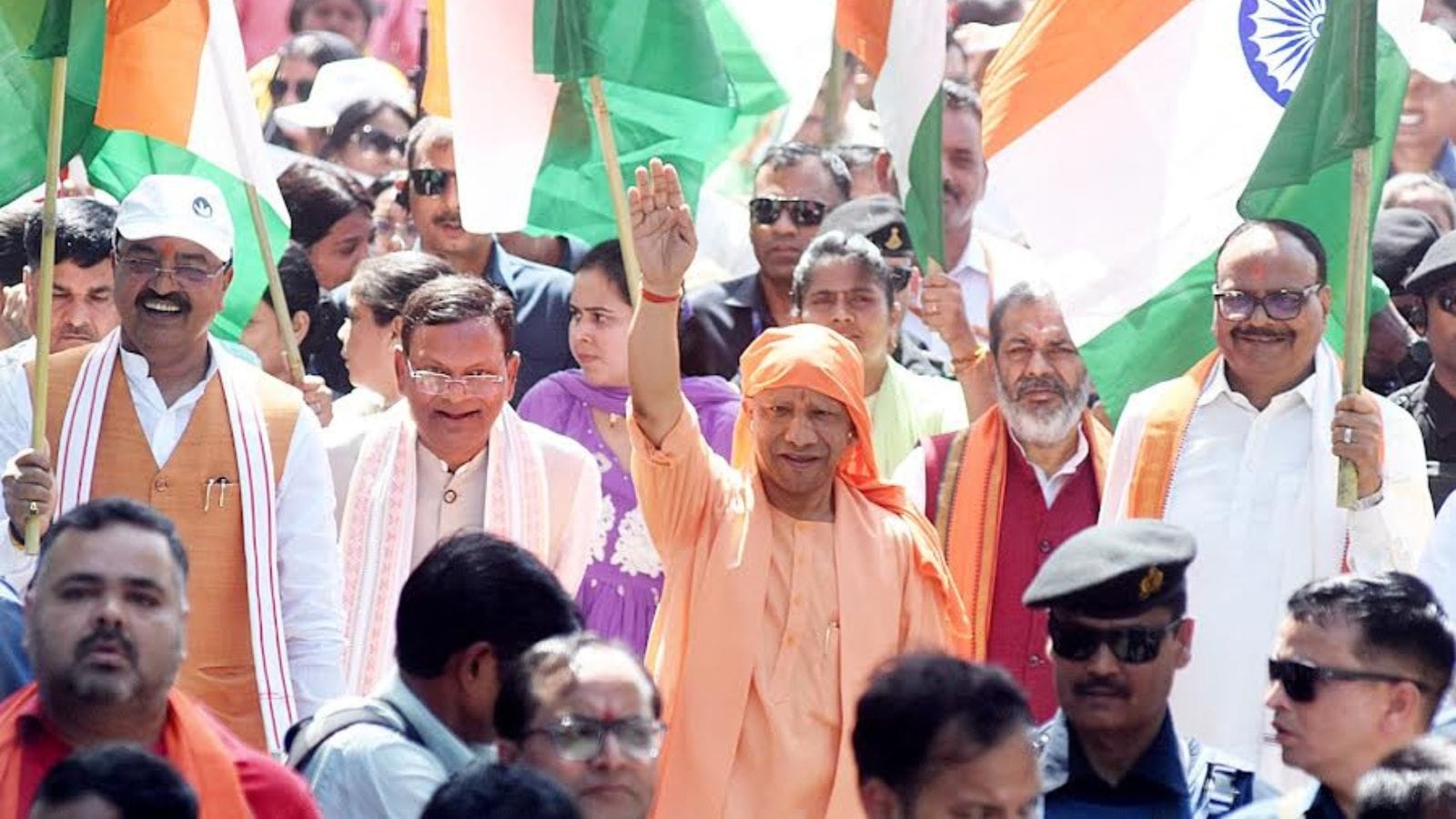
Yogi Adityanath's BJP March on Women's Bill
Yogi Adityanath's padyatra after the women's bill defeat aims to reshape UP's 2027 elections, targeting women's votes against the SP.
India
Women’s Reservation Bill 2026
The Constitution (131st Amendment) Bill, 2026 was defeated in Lok Sabha, revealing deeper political conflicts over women's reservation and delimitation.