Australia's DFAT Issues CNMI Country Brief
Canberra's strategic focus on U.S. territories grows.
Model Diplomat4 min readoceania
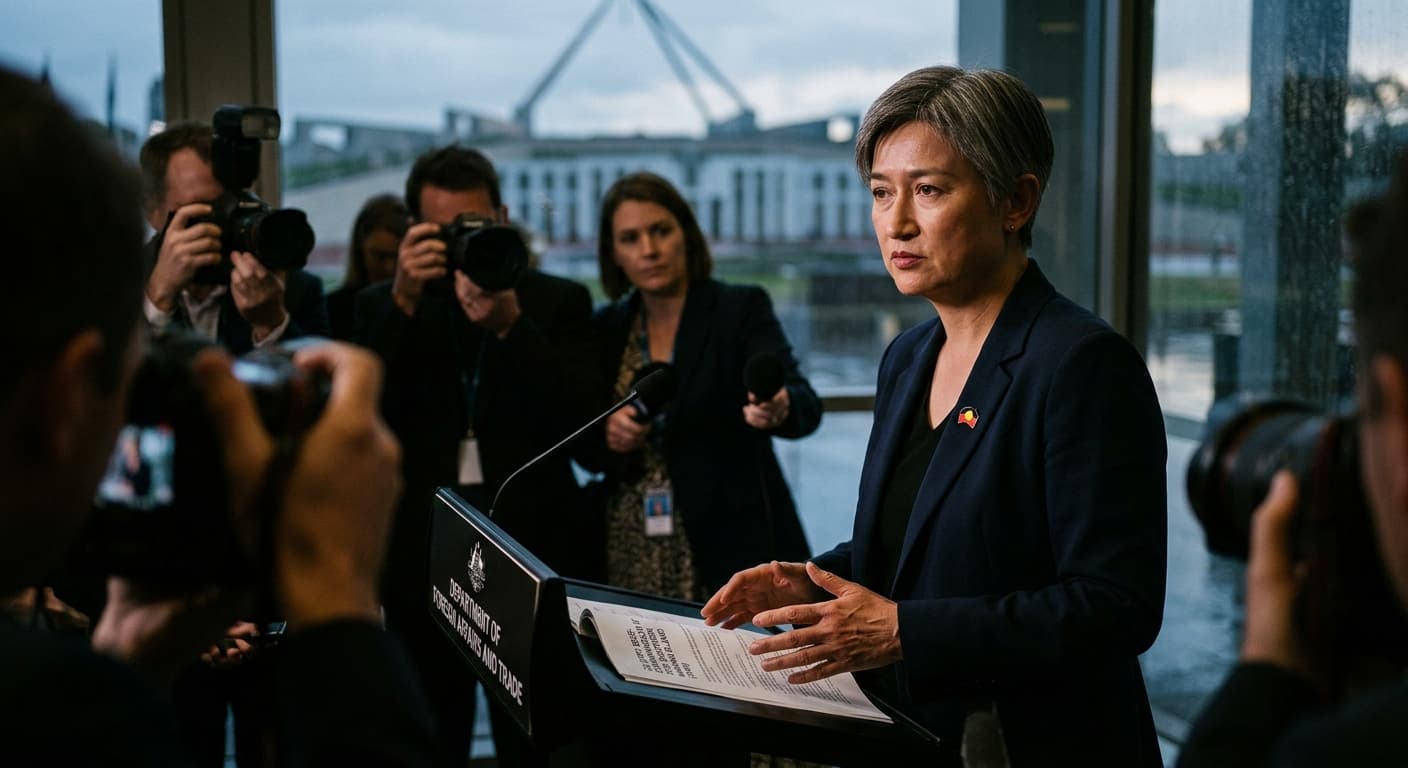
Australia's DFAT Issues CNMI Country Brief — Why a U.S. Territory Just Got Canberra's Attention
Australia's DFAT has published a standalone country brief for the Commonwealth of the Northern Mariana Islands, a U.S. territory of 44,000 people — a bureaucratic move that signals Canberra's expanding strategic aperture in its Pacific neighborhood.
The move
Australia's Department of Foreign Affairs and Trade has published a formal country brief on the Commonwealth of the Northern Mariana Islands (CNMI), detailing the territory's political structure, Covenant relationship with Washington, and governance framework. The brief itself is standard fare — Saipan-based capital, locally elected governor and bicameral legislature, U.S. citizenship without presidential voting rights.
What makes it notable is that it exists at all. CNMI is not a country. It is a self-governing U.S. territory whose foreign affairs and defense are handled entirely by Washington. Canberra does not publish country briefs for Guam, American Samoa, or Puerto Rico. The decision to treat CNMI as a distinct analytical category reflects a deliberate calibration of Australia's Pacific posture — one that increasingly treats U.S. territories in the western Pacific as frontline nodes in strategic competition, not afterthoughts.
Why CNMI matters now
The territory has become an unlikely epicenter of U.S.-China gray-zone contestation. CNMI runs the only visa-waiver program that allows Chinese nationals to enter U.S. territory without a visa — originally 45 days, cut to 14 in 2019 on national security grounds. CSIS analysis documented that between 2022 and 2024, Guam customs reported 118 cases of Chinese citizens illegally or attempting to illegally enter Guam from CNMI. In December 2024, seven Chinese nationals were apprehended near Andersen Air Force Base during a U.S. missile test.
Governor Arnold Palacios has been blunt: "For almost forty years now, the PRC has had a firm foothold in our islands," he said, warning that Chinese investors were "always conveniently there when we needed them." The territory's per capita income sits below $24,000, making it acutely vulnerable to economic leveraging by Beijing. CSIS has called CNMI the "soft underbelly of U.S. defenses" in the Pacific.
Compounding the pressure, Super Typhoon Sinlaku struck in April 2026 with sustained winds of 150 mph, shredding infrastructure across Saipan and Tinian. The territory's only hospital suffered severe flooding; power and water systems were knocked out for weeks. NPR reported that FEMA surged personnel and supplies, but the recovery exposed the fragility of a territory of roughly 45,000 people with limited fiscal bandwidth. Governor David M. Apatang separately requested a $3.9 million emergency appropriation in late 2025 to sustain nutritional assistance benefits, underscoring chronic fiscal strain.
For Australia, this isn't academic. CNMI sits roughly 2,400 km south of Japan and directly north of Guam — inside Canberra's Pacific neighborhood. The U.S. military has been hardening and dispersing assets across the Marianas to reduce vulnerability to Chinese missile threats, as Foreign Affairs noted in a recent assessment of the island-chain contest. What happens in Saipan affects the security architecture in which Australia's own defense planning is embedded.
The Canberra calculus
DFAT's country brief is a small bureaucratic act with an implied message: Australia is watching the Marianas as a distinct strategic entity, not just as an appendage of U.S. Pacific Command. This aligns with the broader deepening of U.S.-Australia development and security coordination in the Pacific Islands. CSIS has proposed a multinational "hub" in CNMI — modeled on Joint Interagency Task Force West — that would coordinate maritime domain awareness and law enforcement with partners including Australia, Japan, and the Philippines.
The Quad, of which Australia is a member, has already identified maritime surveillance and domain awareness as priority cooperation areas. CNMI — with its visa loophole, its typhoon-ravaged economy, and its position astride the second island chain — is a pressure point where Australian diplomatic presence, even at the analytical level, sends a signal.
What to watch
- Visa waiver policy. Whether the Trump administration terminates or further tightens the CNMI visa waiver for Chinese nationals will be the single most consequential near-term decision. Congressional Delegate Kimberlyn King-Hinds has pushed for reform; the tourism-dependent local business sector has resisted.
- Typhoon recovery and Chinese aid offers. Post-Sinlaku reconstruction creates openings for external investment. Beijing has a track record of filling gaps that U.S. federal funding leaves open. Any Chinese aid package for CNMI would test both Washington's responsiveness and Canberra's regional influence.
- DFAT's next brief. If Canberra follows this with similar standalone products on Guam or Palau, it confirms a pattern — Australia is building the analytical infrastructure for a Pacific strategy that no longer delegates territorial questions entirely to Washington.
Discover more

US Politics
SNAP Food Assistance Faces Legal Challenges
In 2026, SNAP faces stricter eligibility rules and mounting legal challenges, threatening food assistance for the millions of Americans who rely on the program.

India
Yamini Aiyar on Modi's Federalism Shift
Yamini Aiyar critiques Modi's shift from equity-based to performance-based federalism, highlighting implications for India's political landscape.

US Politics
Senate Repeals Minnesota Mining Ban for Twin
The Senate's repeal of a 20-year mining moratorium in Minnesota allows Twin Metals to proceed, raising concerns over environmental impacts and foreign ownership.

Conflict & Security
Drone Warfare Killing Aid Workers at Unprec
Over 1,000 humanitarian workers killed in three years as cheap armed drones collapse legal protections. Gaza, Sudan, Ukraine, and DRC see deliberate targeting of aid convoys and hospitals with zero prosecutions.