Yamini Aiyar on Modi's Federalism Shift
Yamini Aiyar critiques the shift in India's federalism under Modi.
Model Diplomat7 min readIndia

Yamini Aiyar on Modi's Federalism Shift: Equity Out, Performance In
Yamini Aiyar argues the Modi government has not merely centralised India — it has quietly swapped the constitution's equity-based federal compact for a performance-based one, and the April 2026 defeat of the 131st Amendment Bill only sharpens the fight.
Yamini Aiyar's argument on Narendra Modi's federalism shift, distilled across a July 2025 Foreign Affairs essay, an April 2026
Hindustan Times column, and her April 2025 piece in
Deccan Herald, is not the familiar one about creeping centralisation. It is sharper: the Modi government is dismantling the redistributive principle that has held India together since 1950 — the idea that richer states subsidise poorer ones and that political representation is decoupled from raw demographic weight — and replacing it, without saying so, with a performance-based federal order that rewards population and pliability. The April 2026 defeat of the 131st Constitutional Amendment Bill did not settle the question. It threw it open.
What Aiyar is actually saying
Aiyar's federalism critique has three moving parts, and it is worth separating them because analysts routinely conflate the first with the whole.
The first is the familiar centralisation story: the 2019 revocation of Jammu and Kashmir's statehood, the 2023 law that stripped Delhi's elected government of powers over bureaucratic postings, the aggressive use of central agencies against opposition chief ministers. Aiyar treats these as symptoms in her Foreign Affairs essay, not the disease.
The second is fiscal. In her 2022 Centre for Policy Research paper "Reviving the spirit of Centre-state alliance", she documents how cesses and surcharges — which sit outside the divisible pool shared with states — have expanded rapidly since 2014, squeezing state finances even as the rhetoric of "cooperative federalism" grew louder. Working papers from the National Institute of Public Finance and Policy show cesses and surcharges climbed to roughly a fifth of net central tax revenue by the early 2020s, a level
NIPFP research treats as structurally destabilising for state budgets.
The third — and this is the load-bearing claim — is that the compact itself is mutating. Writing in Hindustan Times after the 131st Amendment Bill's defeat, Aiyar put it plainly: "The federal balance is slowly tilting away from equity considerations in favour of performance-based federal arrangements." In her Foreign Affairs framing, richer southern states now argue the redistribution formula "penalises them for their economic success"; Karnataka told the 16th Finance Commission it receives 15 paise back for every rupee it sends to the union pool, while Uttar Pradesh receives ₹2.73. The BJP, she argues, has quietly begun to speak the language of the aggrieved rich south while consolidating power through the demographic weight of the north — an incoherent position that can only be resolved by breaking the equity principle.
Delimitation as the load-bearing test
The clearest evidence for Aiyar's thesis arrived in April 2026, when the Modi government convened a three-day special session of the Lok Sabha to pass three linked bills: the Constitution (One Hundred and Thirty-First Amendment) Bill, the Delimitation Bill, and the Union Territories Laws (Amendment) Bill. Together, per the Carnegie Endowment's post-mortem by Milan Vaishnav, they would have expanded the Lok Sabha ceiling from 550 to 850 seats, allocated 815 of them to states, and — critically — used the 2011 census rather than the ongoing 2027 count as the basis for reapportionment. Carnegie called it "Delimitation After Defeat" for good reason: the NDA holds 293 Lok Sabha seats and needed 360 for the two-thirds threshold, as
Al Jazeera reported when the session opened. The bills fell.
Home Minister Amit Shah's Lok Sabha intervention, published on the Press Information Bureau portal on April 17, 2026, framed the exercise as harmless: under a uniform 50% expansion, southern states' seats would rise from 129 to 195, and their share of the house would hold at "approximately 24 percent." The BBC's
analysis quoted Arghya Sengupta of the Vidhi Centre for Legal Policy noting that "the basis for this number is unclear and does not appear to be proportionate to population growth" — and that the bill contained no textual guarantee that any state's share would be preserved.
Aiyar's read, in her Hindustan Times column, is that the women's reservation packaging was a Trojan horse: the 2023 Nari Shakti Vandan Adhiniyam already exists, and could be implemented as a flat 33% carve-out of the current 543 seats without any constitutional surgery. Tying it to delimitation, she wrote, was designed "to make the country swallow delimitation without debate."
The number that reframes the debate
Milan Vaishnav and Jamie Hintson's widely cited 2019 study — which Aiyar leans on — projected that a population-based delimitation would give Uttar Pradesh and Bihar a combined gain of 21 Lok Sabha seats while Tamil Nadu and Kerala together lose 16. A 2025 RSIS Publications paper on the "North-South Divide" projects an even starker redistribution using 2026 population figures: northern states gaining up to 43 seats, southern states losing 24.
That is the arithmetic the Modi government now controls the timetable for. The 2027 census, with a reference date of March 1, 2027, is the first legal trigger since the 84th Amendment for reapportionment; enumeration
began April 1, 2026, and the count concludes March 31, 2027. Until those results are published, Carnegie's Vaishnav notes on the Grand Tamasha
podcast, "the map will remain frozen." After that, delimitation becomes constitutionally due — and, absent a fresh amendment, must be population-based.
The angle everyone is missing
The consensus reading of the 131st Amendment's defeat treats it as a win for federalism — the DMK's M.K. Stalin burning copies of the bill, opposition unity holding, southern states protecting their seats. Aiyar's contribution is to point out this is wrong on the merits.
Her Hindustan Times argument is that the defeat froze the wrong status quo. India is already, per the Takshashila Institution's analysis, among the worst-represented democracies on earth — roughly 2.5 million citizens per MP, versus around a third of that ratio in comparable federations. The original constitution capped it at one MP per 750,000 people. The freeze on delimitation, extended in 1976 and 2002, was defended as temporary. It is now, in Aiyar's phrase in Deccan Herald, the mechanism by which "federal accommodation" is being hollowed out.
The BJP wins either way. If it forces delimitation through after 2027, the north's demographic weight delivers it a structural Lok Sabha majority for a generation — the Foreign Affairs Fiscal Federalism study documents how the vertical imbalance already favours Uttar Pradesh and Bihar. If delimitation is deferred again, southern states remain locked in a compact where they subsidise the north fiscally while northern parties dominate the Lok Sabha politically — and the pressure for a "performance-based" reallocation of the tax pool builds inside the 16th Finance Commission, which will submit its recommendations for 2026–31 to the government under NITI Aayog's
framework.
This is the non-obvious point. The BJP's opponents rallied to save the equity principle by defeating a bill that would have violated it in one direction (representation). But equity is being eroded in the other direction — through cesses, centrally sponsored schemes with ever-tighter conditionalities, and finance commission demands from rich states — while the political conversation is fixated on seat counts. Aiyar is arguing that saving federalism requires renegotiating both simultaneously, and that neither the BJP nor the opposition currently has the incentive to do it.
Diplomat View
Aiyar's diagnosis is defensible, but her prescription — a wholesale renegotiation of the federal compact that reforms the Rajya Sabha, reactivates the Inter-State Council, and delinks women's reservation from delimitation — has almost no political constituency. The forecast: the 131st Amendment's defeat will be remembered not as a federalist victory but as the moment the equity principle became indefensible in its current form. Between now and 2029, expect the BJP to pursue delimitation through a narrower bill after census results publish in mid-2027, cushioned with pro-rata guarantees Amit Shah previewed in April. Expect the 16th Finance Commission, whose recommendations govern 2026–31 devolution, to introduce more performance-linked criteria — a concession to Karnataka and Tamil Nadu that quietly locks in the shift Aiyar warned against. The forecast would flip if the Supreme Court, on a challenge already anticipated by the Vidhi Centre, ruled that Article 82's population mandate can be reconciled with federal equity through degressive proportionality — a "German model" now being floated in academic literature. Absent that, Aiyar's darker call — that "fractious federal politics is likely to define India through the next decade" — is the base case, not the tail risk.
What to watch:
- March 31, 2027 — Second-phase population enumeration concludes. The clock on constitutionally-mandated delimitation starts.
- Late 2026 through 2027 — 16th Finance Commission finalises tax devolution formula for 2026–31. Watch whether performance-based weights displace the "income distance" equity criterion.
- Winter session 2027 or Budget session 2028 — Likeliest window for a slimmer, standalone Delimitation Bill after census results publish. If NDA numbers in the Rajya Sabha improve, the two-thirds threshold becomes reachable.
The Bottom Line
Yamini Aiyar's claim about Modi's federalism shift is not that Delhi is grabbing more power — every Indian prime minister since Nehru has done that. It is that the constitutional principle underneath the grab has changed: equity between states, once the non-negotiable foundation of the Indian union, is being replaced by a performance logic that rewards demographic weight and punishes the states that industrialised, urbanised and stopped having children. The 131st Amendment lost the vote in April 2026. The argument it opened has not lost anything.
Discover more
India
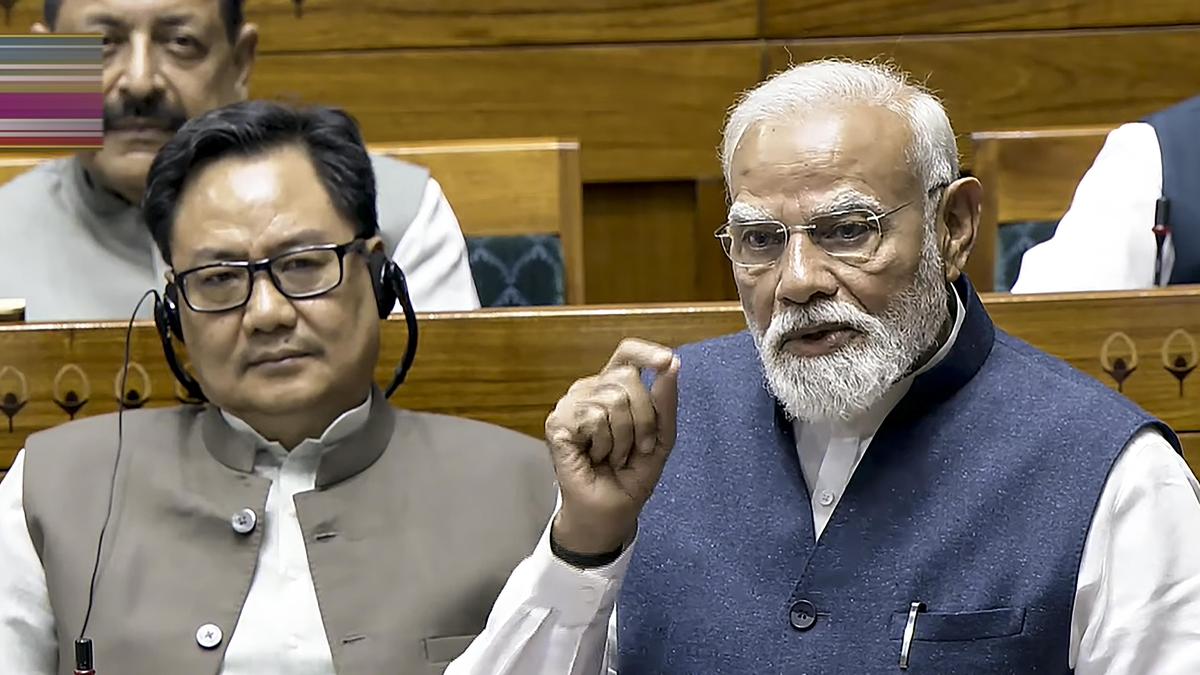
Modi's Delimitation Bill
PM Modi pledged fairness in the 2026 Delimitation Bill, vowing to preserve state representation amid rising political tensions over redrawn seats across India.

India
Modi's Bold Move on Women's Reservation Bill
PM Modi's offer to the Opposition on the Women's Reservation Bill could reshape India's political landscape ahead of the high-stakes 2029 general elections.
India
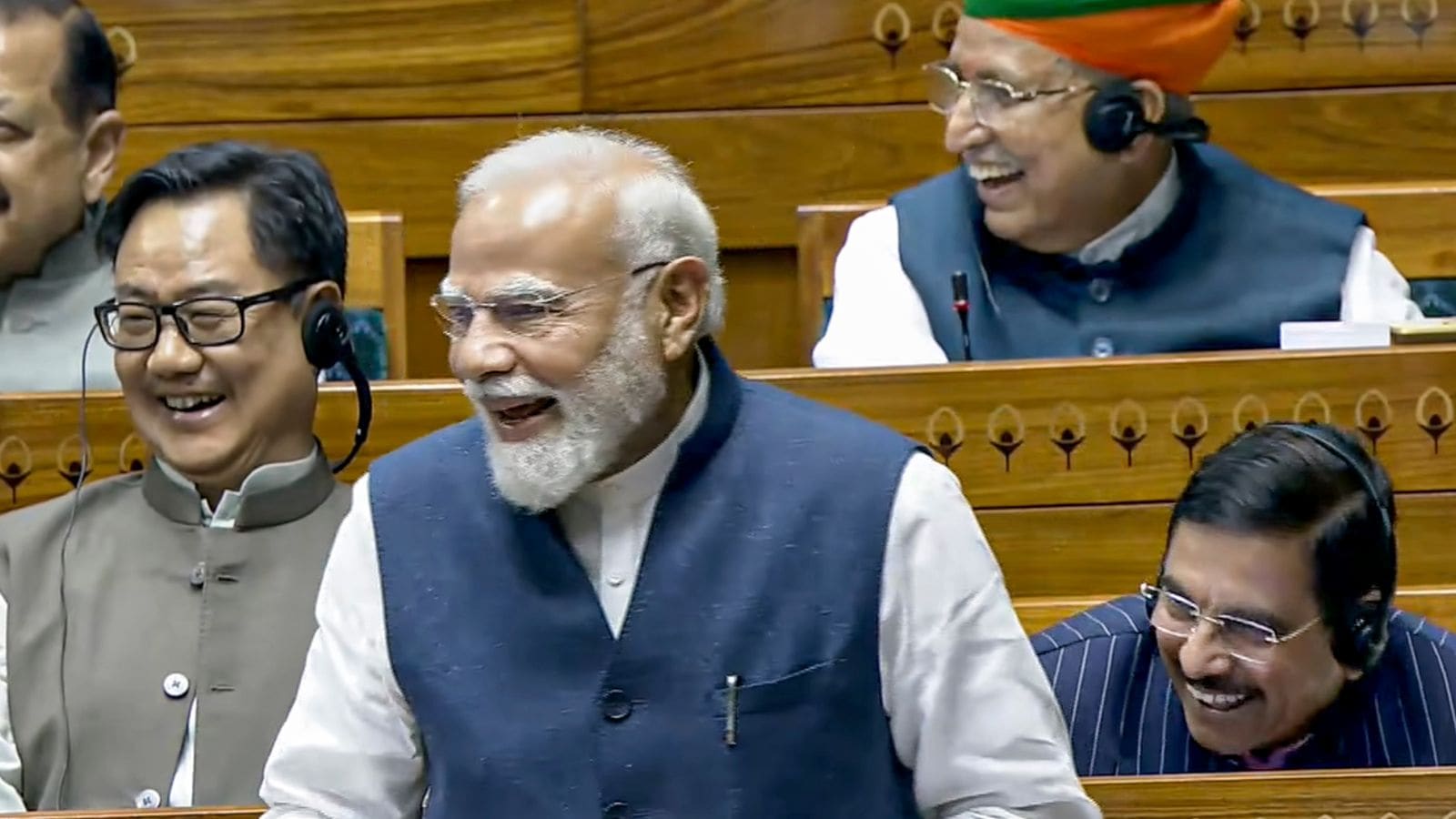
Modi's Women’s Quota and Delimitation Bills
Modi urges Parliament to pass the women's reservation and delimitation Bills, warning the opposition of political fallout in a pivotal moment for gender parity.

Economics
Fed's Amex AML order puts correspondent banking on notice
Federal Reserve's Amex AML order requires board-level controls and a 90-day plan; OCC fined the bank $350 million over enterprise-wide deficiencies.