Sinaloa Security Boost Amid Cartel Violence
Mexico's military deployment aims to counter cartel violence and U.S. pressure.
Model Diplomat9 min readNorth America
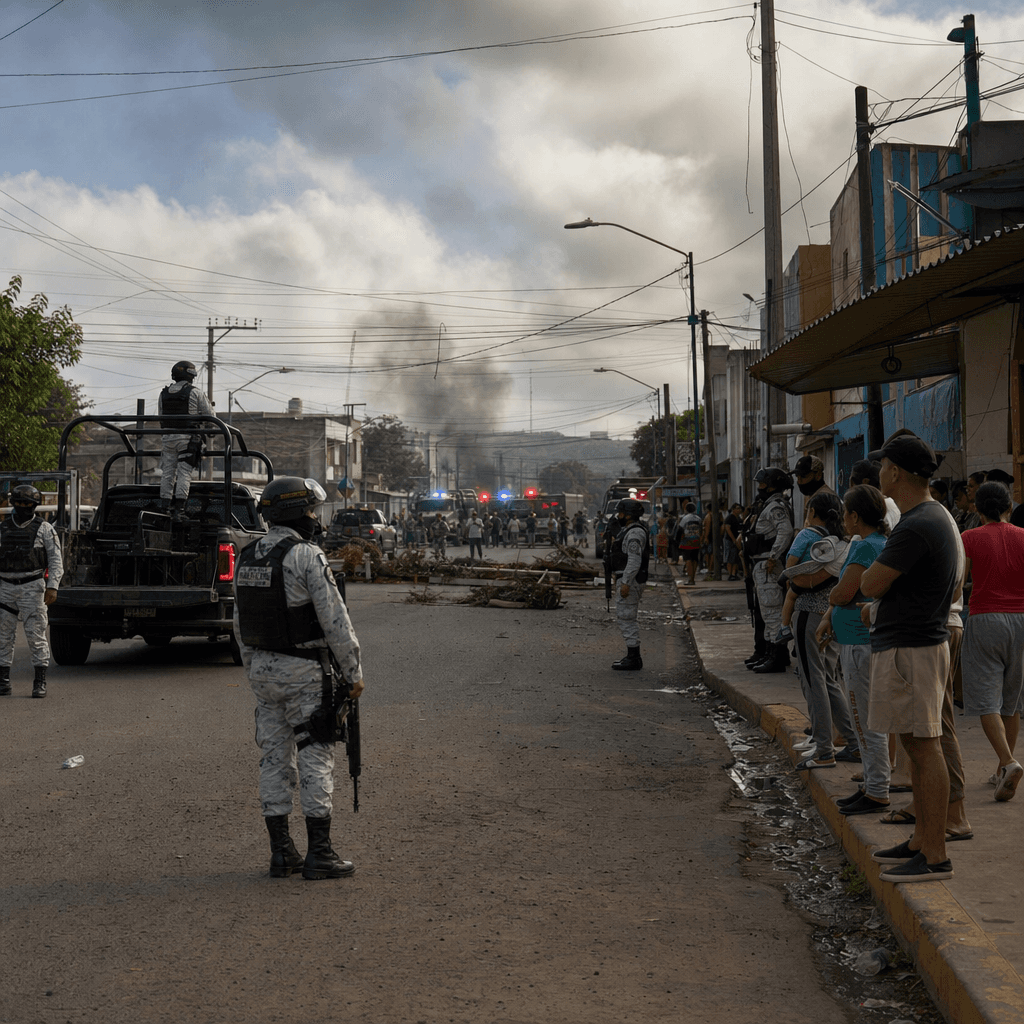
Sinaloa Troop Surge Hits 13,300 as Cartel Civil War Drags On
Mexico sent 1,000 more soldiers to Sinaloa on June 30, 2026, raising federal forces to 13,300 — roughly four times pre-war levels — as the Chapitos–Mayiza feud enters its 22nd month.
The Mexican Army's newest deployment to Sinaloa is a political shield disguised as a security operation. On June 30, 2026, the Secretariat of National Defense (Sedena) dispatched an additional 1,000 troops to reinforce Culiacán and its outskirts, pushing the federal contingent in the state to 13,300 soldiers — up from the 3,200 stationed before the Sinaloa Cartel splintered into civil war in September 2024, according to Foreign Affairs. The surge is aimed less at the "Chapitos" and "Mayiza" factions grinding through Culiacán's neighbourhoods than at the White House: it is the visible receipt President Claudia Sheinbaum needs to keep Donald Trump from making good on repeated threats to strike Mexican soil. Homicides are down. Disappearances are not. And a U.S. indictment of the state's own governor has exposed the political scaffolding that no troop rotation can dismantle. The 13,300 figure now looks less like a peak than a floor.
What was announced
Sedena confirmed on July 1, 2026 that the 1,000 new troops form part of the "National Public Security Strategy," bringing 2026's cumulative reinforcement of Sinaloa to roughly 2,600 personnel, The Mazatlan Post reported. Some 900 soldiers arrived in a single convoy on Saturday, June 28, according to
Sinaloahoy, followed by a second tranche assembling checkpoints along the Culiacán–Mazatlán corridor by July 4, per
Milenio. Sedena chief Gen. Ricardo Trevilla Trejo and National Guard commander Gen. Guillermo Briseño Lobera supervised the deployment personally,
La Voz de la Nación reported — a level of top-brass involvement that Mexico rarely stages for a routine rotation.
The federal government's message was that it will not blink even as the state's political architecture collapses around it. In a joint statement issued after a May 4 cabinet meeting with interim governor Yeraldine Bonilla Valverde, the federal security cabinet said plainly:
"Por instrucciones de la presidenta Sheinbaum, el Estado mexicano, las Fuerzas [Armadas] permanecerán en el Estado de Sinaloa para apoyar en recuperar la paz."
That declaration, published on the Sinaloa state government website, disclosed the precise force composition Sedena had until then withheld: 2,732 of the 13,300 troops now in Sinaloa are Special Forces, operating with more than 2,000 vehicles and 48 aircraft, tasked chiefly with high-value reconnaissance and arrests. That special-operations share — roughly one in five deployed soldiers — is unusually high for a domestic assignment and reveals the operational bet: overwhelm the state with elite units capable of surgical raids while checkpoints and patrols manage territory.
The audience is in Washington, not Culiacán
The scale of the deployment only makes sense against Trump's escalating pressure campaign. On November 17, 2025, Trump told reporters he was open to launching strikes on land targets in Mexico; Sheinbaum publicly replied "no va a suceder" — "it's not going to happen" — at her morning press conference the next day, Al Jazeera reported. Trump followed on January 8, 2026, telling Fox News he intended to move against cartel infrastructure, in comments analysed by
Chatham House. In October 2025, per Al Jazeera, Trump issued a memo to Congress asserting that Latin American cartels were "enemy combatants" in a "non-international armed conflict" — a legal framing that would allow strikes without further congressional authorisation.
The Sheinbaum government's answer has been to trade visibility for sovereignty. On January 21, 2026, Mexico transferred another 37 cartel suspects to U.S. custody, Al Jazeera reported, on top of roughly 60 handed over the previous year. Mexican forces killed CJNG boss Nemesio "El Mencho" Oseguera in a February 2026 raid in Tapalpa, an operation Sheinbaum publicly framed as proof that "todas las operaciones se realizan por las fuerzas federales (mexicanas), no hay participación de las fuerzas de EE.UU.," according to
BBC Mundo. And she has flooded Sinaloa with force under a doctrine that, per Foreign Affairs, one former state prosecutor summarised as "more troops equal more security." The 13,300-troop footprint is the physical form of that bargain.
There is a historical parallel Mexican strategists cannot escape. In December 2006, weeks into his term, President Felipe Calderón deployed 6,500 soldiers and police to his home state of Michoacán, opening a decade in which up to 96,000 troops would eventually be assigned to public-security duty against cartels, Al Jazeera noted. That was the moment "hugs, not bullets" was still 12 years away. Twenty years on,
Foreign Affairs counts more than 160,000 troops now on public-security tasks nationwide — a militarisation ratchet successive governments have proven unable to unwind. Sheinbaum's Sinaloa surge repeats Calderón's opening move under the additional pressure of an American president threatening unilateral action.
The numbers Sheinbaum sells — and the ones she doesn't
Sheinbaum's team has an official metric it repeats relentlessly. According to the Gabinete de Seguridad, the daily average of intentional homicides in Sinaloa fell 50 percent between June 2025 and January 2026 — from 6.90 to 3.42 per day. Between October 1, 2024 and February 15, 2026, federal forces detained 2,225 people for high-impact crimes, seized 33 tonnes of drugs including 2 million fentanyl pills, and confiscated 4,850 firearms — 20 percent of all weapons seized nationwide in that period. Nationally, the daily homicide average fell 28 percent year-on-year through January 2026, and high-impact crimes dropped 31 percent since October 2024, per the same official release.
The gap between those figures and what independent trackers document is the story. Al Jazeera's video desk put the state's death toll at more than 3,000 in nearly two years. Search collective Sabuesos Guerreras estimates 5,800 disappearances since July 2024, per
Al Jazeera's April 2026 investigation, which also documented femicides in the state rising 135 percent — from 31 in 2024 to 73 in 2025. Local outlets in Culiacán tracked well over 3,000 killings against the government's official 2,600, Foreign Affairs reported. NPR's Eyder Peralta, reporting from Culiacán, described civilian search groups pulling five decomposing bodies from a single municipal septic tank in
July 2025 — a form of killing that rarely makes it into homicide ledgers at all.
The BBC's Quentin Sommerville, embedded with paramedics in Culiacán in May 2026, reported that emergency call-outs rose more than 70 percent year-on-year and that violence had "never been so bad or gone on for so long." His paramedic sources described nearly every response ending with a body; the Foreign Affairs assessment concurs that heavy urban troop presence has largely deterred open cartel firefights in Culiacán, but the killing has migrated to rural areas and now takes the form of targeted attacks — the kind that don't always enter state homicide ledgers. Local businesses have paid the price too: the Culiacán chamber of commerce estimated collective losses of $25 million per day in the first two weeks of the war, per
Al Jazeera.
The Rocha indictment changed the game
The deployment surge cannot be separated from a political earthquake. On April 30, 2026, U.S. prosecutors unsealed a New York indictment charging Sinaloa Governor Rubén Rocha Moya and nine other officials — including a sitting Morena senator, Enrique Inzunza Cázarez — with directly aiding the Sinaloa Cartel's Chapitos faction. Prosecutors alleged the cartel stole ballots and intimidated opposition candidates on Rocha's behalf during his 2021 gubernatorial race, in exchange for law-enforcement information and safeguarded trafficking routes, Al Jazeera reported. According to Frank Perez, El Mayo Zambada's lawyer, Zambada himself believed he was being taken to a meeting with Rocha when he was ambushed and flown to Texas in July 2024 — a claim relayed in
Al Jazeera's reporting from Culiacán.
Rocha denied the charges but took temporary leave on May 2, 2026, replaced by lieutenant governor Yeraldine Bonilla Valverde. Culiacán Mayor Juan de Dios Gamez Mendivil, also indicted, stepped aside the same weekend. Sheinbaum publicly demanded "clear and irrefutable evidence" and warned that without it, the indictments looked "political," per Al Jazeera. As
BBC Mundo noted, Rocha was for years Morena's principal operator in Sinaloa — a founding party organiser in the state whom Sheinbaum cannot disown without gutting her own coalition's grip on the region. Vanda Felbab-Brown of the Brookings Institution told Al Jazeera the Sheinbaum administration was "essentially buying time," suggesting evidence for the indictments likely came from plea agreements with Ovidio Guzmán, Joaquín Guzmán López and possibly El Mayo himself. If more serving Mexican officials are named, the political cost compounds.
The May 4 federal security cabinet visit to Culiacán, therefore, was not routine choreography. Harfuch, Trevilla and Navy Secretary Raymundo Pedro Morales flew in to install the interim governor under an explicit federal umbrella. The 13,300 troops are the wall between Bonilla's caretaker administration and what would otherwise be a governance vacuum in the state Washington believes the cartels captured. Meanwhile, the state government of Mexico is quietly building parallel infrastructure: Sedena has begun installing 400 new C5 surveillance cameras in Sinaloa, part of a video system that will exceed 1,000 cameras by year-end,
the state government announced on April 27, 2026.
What the strategy actually delivers — and where it fails
Sheinbaum's "coordinación sin subordinación" doctrine — coordination without subordination — has bought her time and preserved formal sovereignty. Mexican forces, not U.S. ones, killed El Mencho on February 22, 2026 near Tapalpa, in an operation Sedena chief Trevilla briefed personally, BBC Mundo reported. Sedena told Al Jazeera in
March 2026 that a Navy raid in Culiacán killed 11 gunmen and captured Omar Oswaldo "El Patas" Torres, leader of the Mayiza faction — a rare tactical win against the side of the split not being propped up by the indicted governor's networks. The BBC has since noted the Mexican government's claim that fentanyl flows to the United States have been cut by 50 percent, in
Sommerville's May 2026 report.
But three structural problems remain. First, per Foreign Affairs, Sheinbaum's coalition has passed laws expanding warrantless access to communications, geolocation and bank records — a surveillance expansion that will outlast the cartel war and hand Harfuch's yet-unnamed federal investigative unit unprecedented civilian reach. Second, the security architect Harfuch is building a parallel investigative police force under his direct command, concentrating extraordinary power in one civilian official whose grandfather was an army general and whose intelligence and prosecutorial allies now occupy key posts across the federal apparatus. Third, and most damaging: cartel infighting is not political. Removing kingpins doesn't end it; it accelerates it. That is the finding of every serious retrospective on Mexico's kingpin strategy, including Al Jazeera's April longform and NPR's
ground reporting from Culiacán.
Who wins from this configuration? The Los Mayos faction gains from every Chapitos-linked politician indicted in New York, because the U.S. legal net is asymmetrically weighted against Chapo's sons after their extradition-driven cooperation. Harfuch personally wins: he emerges as the indispensable civilian security operator in Mexican politics, positioning himself as the natural presidential successor to Sheinbaum in 2030 if the homicide numbers hold. Sinaloa's ordinary residents lose twice — first to the cartel war, then to a militarisation whose casualties, per collectives like Sabuesos Guerreras, include increasingly young and rural civilians who are neither traffickers nor combatants. And Rocha's political faction of Morena loses the state, at least temporarily, to a caretaker whose only mandate is federal patronage.
Foreign Affairs called Rocha's alleged arrangement a "template" for how organised crime is embedded in Mexican electoral politics: cartel enforcers kidnapped and intimidated opponents in 2021 to help ensure the governor's victory; Rocha allegedly reciprocated with sensitive law-enforcement information, protected routes and safeguarded operations for the Chapitos. If any share of that is proven in a Mexican court under the Attorney General's Office review Sheinbaum has requested, no troop deployment resolves it. The cartel captured the ballot before it captured the streets.
What to watch
- The USMCA/T-MEC renegotiation. Formal talks are advancing in mid-2026; per BBC Mundo, the trade treaty is being renegotiated in parallel to the Rocha case, giving Washington fresh leverage to link tariff schedules to specific cartel-prosecution deliverables.
- Sheinbaum's next Sinaloa cabinet visit. Federal security officials have committed to on-the-ground reviews. A second sitting-official indictment, or a cartel-linked attack on Bonilla's interim government, would force the next escalation.
- Trump's authorisation on cross-border strikes. Trump's October 2, 2025 memo to Congress designated Latin American cartels as "enemy combatants." Foreign Affairs and Chatham House both flag unilateral U.S. drone or special-operations action inside Mexico as an active scenario, not a rhetorical one.
- Ovidio Guzmán's cooperation. Brookings' Felbab-Brown assessed to Al Jazeera that plea agreements with Ovidio and Joaquín Guzmán López likely fed the Rocha indictment. Additional cooperation could name more serving Mexican officials — and force Mexico City to prosecute them or let Washington do it.
The Bottom Line
The 13,300-troop presence in Sinaloa is not a security policy — it is a diplomatic instrument. Sheinbaum is trading maximum visibility of Mexican force for the sovereign right to keep U.S. forces out, while the cartel war she inherited from a captured political class continues largely unabated in rural areas and homes. If Trump concludes the receipts are insufficient, the troop count will not save Mexico from what comes next.
Discover more

Global Politics
US Seizes Iranian Ship, Tensions Surge
The US seizure of the Iranian ship Touska highlights a shift in control over the Strait of Hormuz, favoring Iran's strategic position.
India
Romanian Coalition Party Demands PM Resign
Romania's Social Democrats withdrew from coalition, joining far-right AUR to topple PM Bolojan, risking €10 billion in EU funds by August 2026.

Conflict & Security
Drone Warfare Killing Aid Workers at Unprec
Over 1,000 humanitarian workers killed in three years as cheap armed drones collapse legal protections. Gaza, Sudan, Ukraine, and DRC see deliberate targeting of aid convoys and hospitals with zero prosecutions.

Global
World Normalises Taliban as Afghan Women Eras
UN data shows Afghan women erased from public life as Russia recognises the Taliban, EU hosts officials in Brussels, and ICC warrants for gender persecution go unenforced.