Mexico's Foreign Policy Crisis Under Sheinba
AMLO's insular diplomacy leaves Sheinbaum vulnerable.
Model Diplomat3 min readamericas
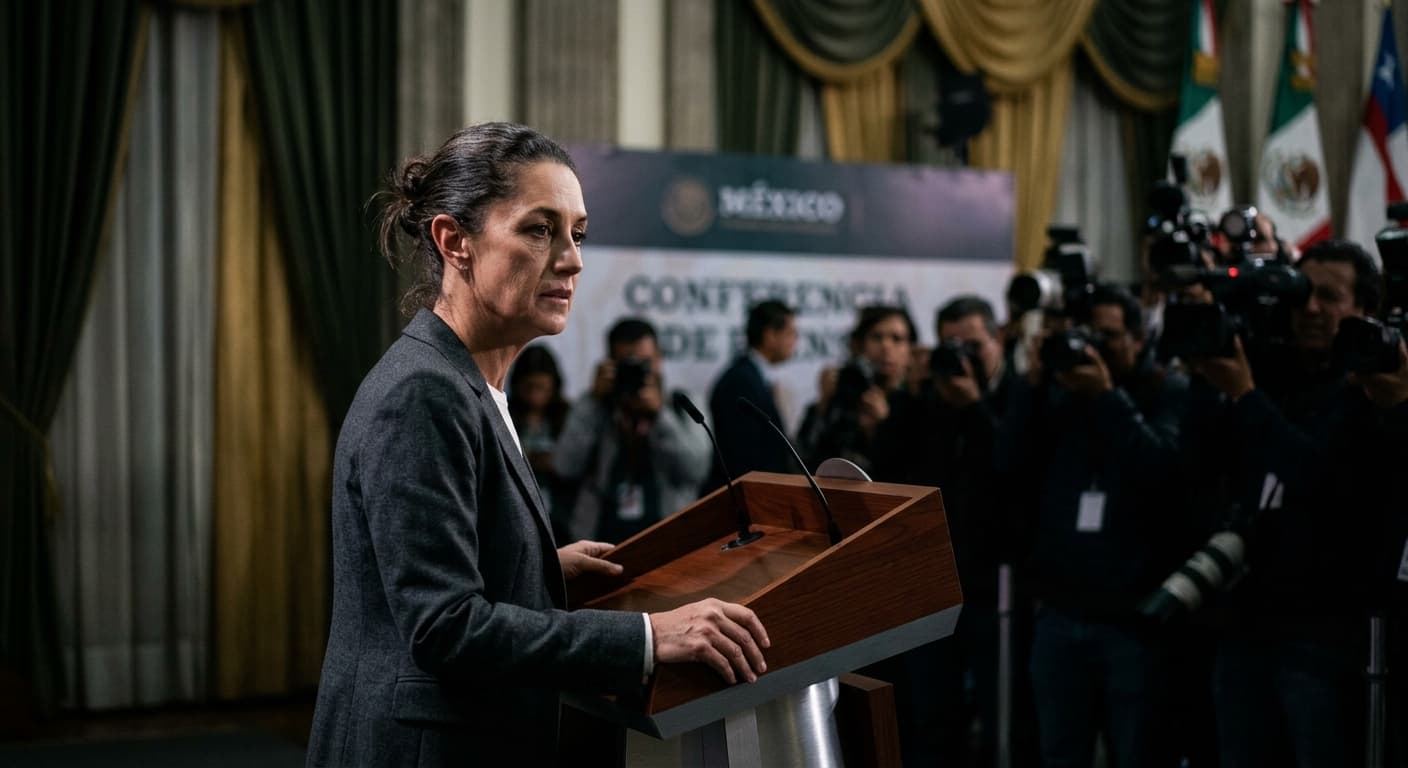
Mexico's Quiet Foreign Policy Left It Exposed — Now Sheinbaum Pays the Price
AMLO's insular diplomacy was a luxury Mexico could afford when Washington wasn't looking. Under Trump's second term, the bill has come due.
When Andrés Manuel López Obrador left office in 2024, he had taken exactly seven foreign trips in six years — none outside the Americas. He skipped G-20 summits, boycotted APEC, and treated the UN General Assembly as optional. His international posture, as Olga Pellicer wrote in Americas Quarterly, was not merely restrained — it was a deliberate retreat. The bet was that Mexico could prosper by tending its own garden. That bet has now been called.
The central dynamic of AMLO's foreign policy was straightforward: manage the U.S. relationship narrowly through migration cooperation, and avoid entanglement everywhere else. Central American partnerships, the most active diplomatic front, were driven almost entirely by the need to curb migrant flows northward — a priority shaped in Washington, not Mexico City. As The Economist noted in late 2023, Mexico's foreign policy was "unambitious and erratic," with the world's 14th-largest economy missing in action from nearly every multilateral table.
The argument then was that this insularity came with opportunity costs — untapped nearshoring potential, absent industrial policy, no regional leadership role while Brazil's Bolsonaro vacated the stage. That was true. But the deeper cost is only visible now: AMLO bequeathed his successor, Claudia Sheinbaum, a depleted diplomatic arsenal precisely when Mexico needed it most.
From "Hugs Not Bullets" to the Threat of U.S. Strikes
The security dimension makes the inheritance concrete. AMLO's "hugs, not bullets" approach to cartels — characterized by Foreign Affairs analyst Arturo Sarukhán as a de facto pax narca — allowed criminal organizations to consolidate territorial control and expand fentanyl production while bilateral security cooperation atrophied. The Mérida Initiative framework was effectively dismantled. By November 2025, President Trump was openly stating he would launch military strikes in Mexico "to stop drugs," Al Jazeera reported, while insisting that cartels, not Sheinbaum, "run" the country.
This is the world Sheinbaum inherited: a Washington willing to invoke the Monroe Doctrine — rebranded by Trump as the "Donroe Doctrine" — and willing to violate international law with military force, as the January 2026 strikes on Venezuela demonstrated. The quiet foreign policy that AMLO could sustain when the Biden administration favored diplomatic engagement became a liability the moment a more coercive counterpart took office.
Sheinbaum's response has been a high-stakes improvisation. She deployed 10,000 National Guard troops to the border to avert 25% tariffs. Her government extradited 29 suspected cartel members in February 2025 and another 26 in August, all framed as sovereign decisions — "cooperation, yes; subordination and intervention, no." In January 2026, Mexico paused oil shipments to Cuba, a longtime AMLO ally, while insisting the move was not made under U.S. pressure, NPR reported. Each concession is carefully sold domestically as autonomy. Each is transparently a response to Washington's demands.
The USMCA Review: July's Reckoning
The next decision point arrives in July 2026, when the USMCA undergoes its first mandated joint review. As a Brookings analysis by Valeria Moy details, two scenarios are in play: formal extension with U.S. concessions extracted, or continuation without extension — a legal gray zone the Trump administration can exploit as strategic leverage. Sheinbaum's government has tried to keep issues on separate tracks — security here, trade there — but the Trump administration treats them as a single negotiation.
Mexico enters that negotiation without the diplomatic reserves that a more engaged foreign policy might have built. There is no deep bench of international relationships to draw on for counter-pressure, no obvious bloc of allies, and limited institutional memory for the kind of multilateral maneuvering that countries like Brazil or India routinely deploy. As Stephanie Brewer of WOLA told Al Jazeera, Sheinbaum is doing "a balancing act on an increasingly thin wire."
The lesson of AMLO's quiet foreign policy is not that Mexico should have been a louder global voice for its own sake. It is that diplomatic capacity is like military capacity — you do not get to build it in a crisis. Sheinbaum is now negotiating with a hostile Washington using tools that weren't maintained, relationships that weren't cultivated, and a foreign policy apparatus that spent six years in low-power mode. Whether that proves sufficient will become clear by July.
Discover more
Global Politics
Trump's Conflicting Messages on Iran War
Trump's mixed messages on Iran reflect a strategy of audience management, benefiting Tehran amid a complex geopolitical landscape.
US Politics
House Ethics Committee Pushes Sexual Miscond.
The House Ethics Committee has shifted responsibility for sexual harassment settlement records to the Office of Congressional Workplace Rights, complicating disclosure efforts.
US Politics
U.S. House Passes Alert Act for Aviation
The House passed the ALERT Act 396–10, replacing the ROTOR Act after Pentagon intervention, impacting aviation safety regulations.

Conflict & Security
Drone Warfare Killing Aid Workers at Unprec
Over 1,000 humanitarian workers killed in three years as cheap armed drones collapse legal protections. Gaza, Sudan, Ukraine, and DRC see deliberate targeting of aid convoys and hospitals with zero prosecutions.

