Marcos Hardens Philippine Line in South China
Philippines shifts defense strategy in South China Sea
Model Diplomat10 min readAsia
Marcos Hardens Philippine Line in South China Sea
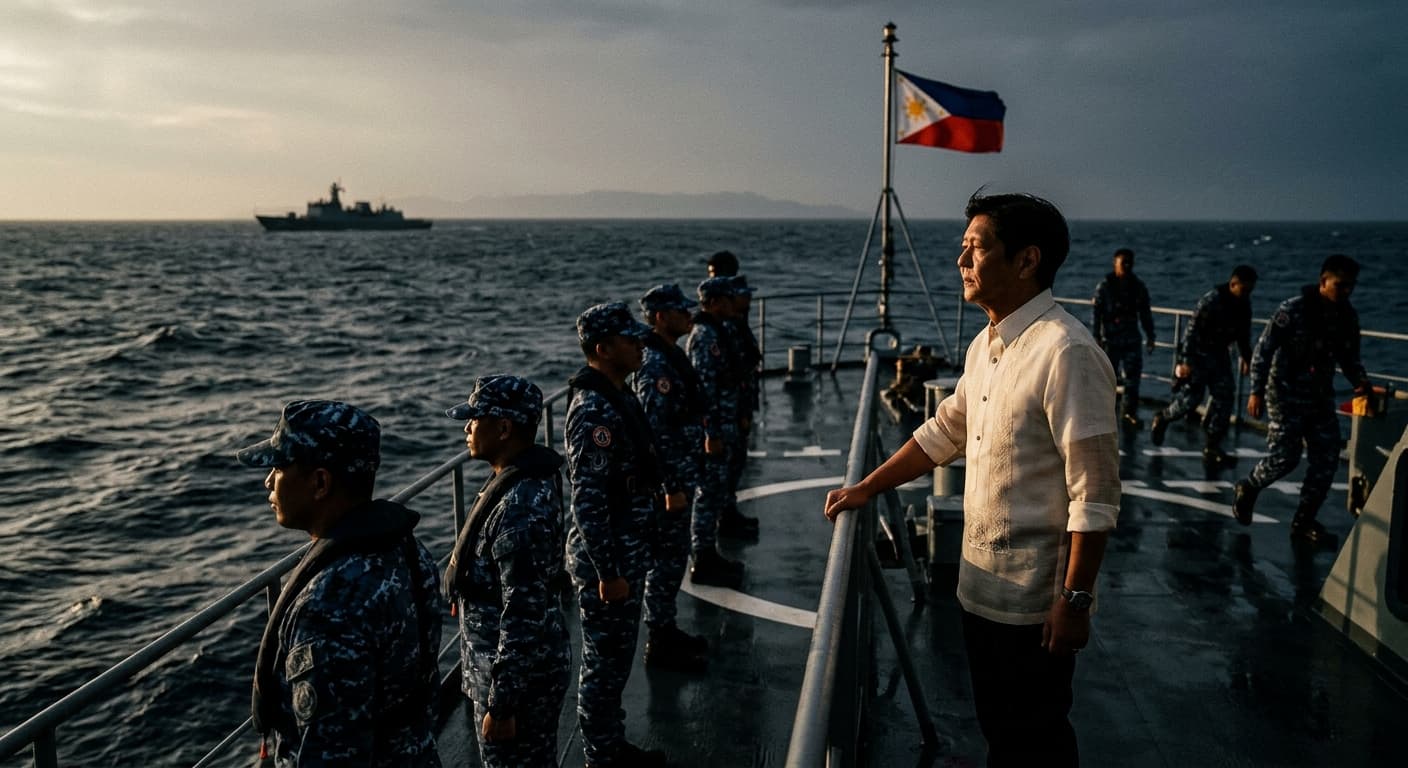
Marcos ordered the AFP on July 7, 2026 to sustain external defense in the West Philippine Sea, ratifying a doctrinal shift days before the 10th anniversary of the Hague ruling.
President Ferdinand Marcos Jr. used the July 7, 2026 Armed Forces of the Philippines command conference at Camp Aguinaldo to lock in an order that reads modest on paper and consequential in practice: keep external defense operations running in the West Philippine Sea, preserve internal security gains, and add a new task — monitor Chinese "United Front Works and foreign malign operations." Read alongside 933 CCG ship-days at Scarborough in the first half of 2026 and $2.5 billion in US Foreign Military Financing now authorised, the directive is not a repeat of past rhetoric. It is the moment Manila stops pretending diplomacy without deterrence is a strategy — five days before the 10th anniversary of the arbitral ruling that Beijing still refuses to honor, and two weeks before the AFP chief who executed the shift retires.
The order, decoded
The command conference itself was routine — the AFP briefs the commander-in-chief twice a year. What Marcos said behind closed doors was not. Outgoing AFP Chief of Staff Gen. Romeo Brawner Jr., who retires July 21, told reporters the President instructed the military to "continue external defense operations" while sustaining gains against communist rebels, and specifically flagged Chinese Communist Party influence operations as an external-security problem, according to the Manila Bulletin. Brawner framed the WPS as a stage watched by third parties: "many countries are watching how the Philippines responds" to China's "illegal, coercive, aggressive and deceptive" tactics.
Defense Secretary Gilberto Teodoro Jr. — banned from entering China last month for calling Beijing's South China Sea claims illegal at the Shangri-La Dialogue, per Al Jazeera — collapsed the doctrinal shift into a single sentence carried by the
Philippine Daily Inquirer:
"Legal action without hardening and without deterrence, just like diplomacy without deterrence, will result in accommodation and appeasement. That is what we do not want."
That is a repudiation, in the defense secretary's own voice, of the "quiet diplomacy" reflex that governed the Duterte years — and a signal to the parts of the Marcos cabinet that still hold it. It ratifies the Comprehensive Archipelagic Defense Concept (CADC) — the country's first grand strategy — announced in January 2024 and designed, per the Stratbase ADR Institute, to make the Philippine EEZ a "no-go zone" for the China Coast Guard, maritime militia, and PLA Navy. The CADC is not a naval-only document. According to the same Stratbase study by Renato de Castro, it is Manila's first attempt since independence in 1946 to write a genuine grand strategy — one that abandons the old army-centric assumption of "defending the coastline against an amphibious enemy" and moves the fight forward into the EEZ. IISS strategists have argued this evolves the Philippine Navy's 2013 Active Archipelagic Defense Strategy into a joint operating concept — but also warn in
Forward and Seaward that services still interpret the doctrine differently, and that Manila must now think "beyond technologies and materiel" toward how and when it will actually use force.
Why the timing is not accidental
Two calendars converge this month, and Marcos is choreographing both.
The first is Scarborough Shoal. New data from the Asia Maritime Transparency Initiative shows that in the first six months of 2026, China Coast Guard patrols at Scarborough amounted to 933 ship-days — already 85% of 2025's record annual total of 1,099, which itself had doubled the 2024 figure of 516. Confrontations with Philippine Coast Guard or Bureau of Fisheries vessels were recorded on 112 days between January and June — an average of 19 days per month. In May, Manila filed a formal protest after China deployed a six-by-six-metre "temporary research structure" inside the lagoon, the first fixed object of its kind at the shoal; it was removed on June 17 but two buoys and other floating markers installed since October 2025 remain. AMTI's separate analysis of 2025 patrol patterns —
Eyes on the Prize — showed Beijing pulling CCG hulls away from Second Thomas Shoal (a 55% drop in ship-days) and Thitu Island (down 82%) to concentrate on Scarborough. In other words, Beijing has chosen its pressure point.
The second calendar is legal. July 12 marks a decade since the Permanent Court of Arbitration, ruling under UNCLOS Annex VII, invalidated China's nine-dash line and found that Chinese conduct at Scarborough had violated Philippine sovereign rights. On June 26, US senators introduced S.Res. 760 pairing three anniversaries — the alliance's 80th, the Mutual Defense Treaty's 75th, and the ruling's 10th — into a single signal to Beijing. The
Manohar Parrikar IDSA notes that Manila chairs ASEAN in 2026 and now hosts the ASEAN Maritime Centre approved at the 48th ASEAN Summit in Cebu in May. The politics of the ruling have shifted with it: according to a CSIS analysis by Gregory Poling on
how to slay a giant, the number of governments publicly calling on Beijing to comply has climbed from 8 when Marcos took office in 2022 to 27, plus the European Union — a coalition CSIS argues is now large enough to carry a UN General Assembly resolution or an ICJ advisory referral. Marcos wants July 12 to look like vindication, not commemoration.
The doctrine — and its ceiling
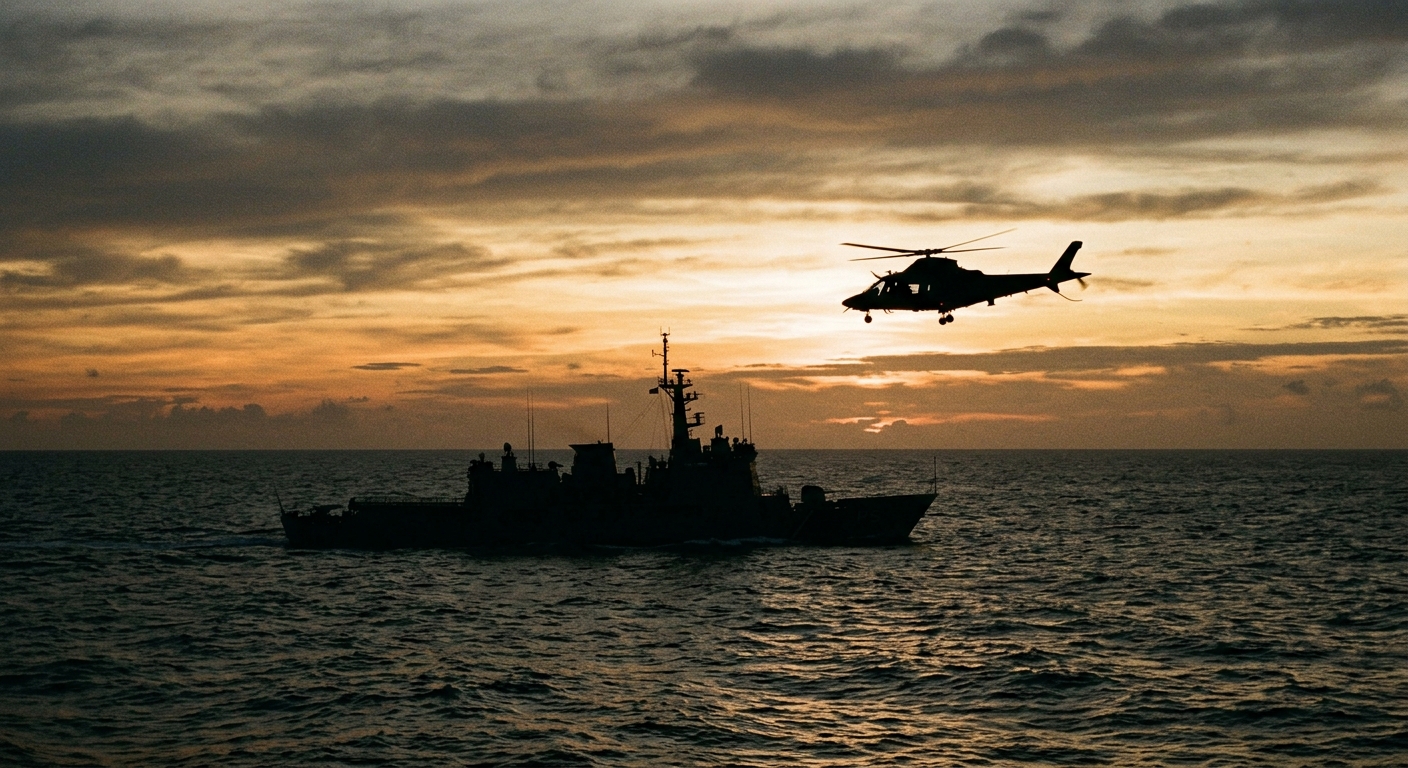
The hardware is arriving. Two BrahMos supersonic anti-ship missile batteries were delivered from India by April 2025, according to ISEAS, with a third imminent — and Brawner has openly floated joint manufacturing and technology transfer, a departure from the AFP's usual buyer posture. In April 2025, the US State Department approved the
$5.58 billion sale of 20 F-16 fighters to Manila — and Brawner told troops in northern Luzon to "start planning for actions in case there is an invasion of Taiwan," saying explicitly that the Philippines "will inevitably be involved." The US Army's mid-range Typhon launcher — capable of firing Tomahawks to targets on the Chinese mainland — fired a live cruise missile from Philippine soil for the first time during Balikatan 2026,
NPR reported, in an exercise involving 17,000 troops from seven partner nations.
Then there is the money. In December 2025, the US Congress authorised up to $2.5 billion in Foreign Military Financing plus $500 million in loans over five years for the Philippines under the FY2026 National Defense Authorization Act — funding levels, according to CSIS, "traditionally reserved for a handful of US partners in the Middle East." The same CSIS assessment notes that Rubio and Hegseth have both publicly reaffirmed "ironclad" alliance commitments, and that the Philippines was among the first countries to have its FMF unfrozen when the second Trump administration reviewed overseas assistance in early 2025.
Domestically, Marcos signed Republic Act 12024, the Self-Reliant Defense Posture Revitalisation Act, on October 8, 2024, creating a defence-technology office inside the DND and mandating multi-year procurement contracts, per a Congressional Policy and Budget Research Department paper that also puts the Revised AFP Modernization Program's cumulative funding deficiency at ₱2.14 trillion. The 2025 defence sector budget jumped 50.7% year-on-year to ₱419.3 billion, with the AFP modernisation line restored to ₱50 billion after the Senate reversed a House cut, according to the
Senate Legislative Budget Office. Historical CPBRD data show military-defense spending was still just
₱221.1 billion in 2023 — meaning the sector has effectively doubled in two years.
The ceiling is structural, and it is not moving. Philippine defence spending sits at roughly 1.2% of GDP — among the lowest ratios in Southeast Asia — because the constitution requires that education receive "highest budgetary priority," a cap CSIS analysts argue prevents Manila from ever independently matching Chinese defence outlays projected at $225 billion in 2025. As of February 2025, $336 million of the $500 million in US FY2024 FMF was still unspent — the AFP has hit its absorption ceiling. Money is no longer the binding constraint. Capacity to spend it is.
Corruption is the second binding constraint — and the more politically volatile one. In July 2025, revelations that flood-control funds had been pocketed by contractors and legislators forced Marcos to freeze most infrastructure spending and rewrite the 2026 budget, per the same CSIS analysis. Foreign investment softened in the second half of 2025, and thousands rallied in November —
Al Jazeera reported some pro-Duterte factions calling for the military to withdraw support. Brawner publicly refused: "the armed forces will not engage in any action that violates the Constitution. Not today, not tomorrow and certainly not under my watch." That refusal is why Tuesday's command conference matters. It reaffirmed civilian control over an AFP whose external mission is now the government's principal legitimacy claim — Marcos needs the WPS story to work because the domestic story is fragile.
Who wins, who loses
The US-Japan-Philippines trilateral wins. The Roles, Missions, Capabilities working group set up under the July 2024 2+2 joint statement is now the coordinating mechanism for a Philippine Security Sector Assistance Roadmap that runs to 2034. That statement also reaffirmed — in language Beijing reads carefully — that the Mutual Defense Treaty extends to "armed attacks against… armed forces, aircraft, [and] vessels — including those of coast guards — anywhere in the South China Sea." Japan's Reciprocal Access Agreement, signed in 2024, gives the Japan Self-Defense Forces training rights inside Philippine territory. Renato de Castro of De La Salle University told
Al Jazeera that Balikatan has shifted "in the last two years from internal security to external defence" — the alliance is now rehearsing archipelagic defence, not disaster response.
India wins quietly. BrahMos to Manila is New Delhi's first major weapons export contract in Southeast Asia — a proof of concept that the Indian defence industry can deliver against a live threat, not just a brochure. If Manila pursues Brawner's proposed joint production line, India becomes the first non-treaty partner embedded in the Philippine defence industrial base.
Beijing loses optionality. The Chinese playbook — grey-zone pressure to force Manila to trade sovereignty for investment — worked under Duterte, who returned from a 2016 Beijing trip with $15 billion in investment pledges that AMTI later noted "remain largely unrealized." Under Marcos, the same coercion has produced trilateral drills with France and Canada joining, an F-16 sale, BrahMos deployments, and the Typhon on Luzon. The sanction on Teodoro backfired: it turned him into a domestic hero and gave the AFP a public spokesperson framing Philippine responses as "clear and accurate representations of international law."
ASEAN consensus loses. Manila chairs the bloc but is now its least conciliatory voice on the South China Sea. The long-awaited Code of Conduct negotiations look further away, not closer, precisely because the arbitral-award anniversary reframes what "peaceful settlement" means.
The Duterte political camp loses. With Brawner refusing calls to withdraw military support and the AFP visibly aligned with Marcos on external defence, the "military swing" scenario floated by pro-Duterte factions in late 2025 has closed. That has second-order consequences: it insulates the 2028 succession from the kind of foreign-policy reversal the Philippines executed in 2016, when Duterte swung the country from Aquino-era arbitration to Beijing rapprochement in weeks.
The sharpest historical parallel is Japan in December 2010. That year, after a Chinese trawler rammed two Japan Coast Guard vessels near the Senkakus, Tokyo quietly rewrote its National Defense Program Guidelines to reorient the Self-Defense Force from defending Hokkaido to protecting the Nansei Shoto. The Hudson Institute has argued Manila's shift under Marcos is "as significant as any in the region" since. The parallel implies a timeline: Japan's doctrinal reorientation took roughly a decade to translate into hardware, alliance architecture, and public consent. Marcos is compressing that arc into a single presidential term.
Diplomat View
The July 7 directive is the moment the Philippines' China policy stops being ambiguous. Marcos has fused three tracks — the CADC doctrine, the US $2.5 billion authorisation, and the July 12 anniversary — into a single deterrent posture that his successors will find politically expensive to reverse. Our call: the Philippines is now the most consequential middle-power test case in the Indo-Pacific, and the next 18 months will show whether treaty-backed archipelagic defence can raise the cost of Chinese grey-zone coercion enough to change Beijing's cost-benefit calculus. If Scarborough Shoal CCG patrols exceed 2,000 ship-days in 2026 — on current trajectory, they will — and no permanent Chinese structure appears, the doctrine is working. What would revise this forecast: a resupply clash producing Philippine fatalities that forces the Mutual Defense Treaty question into the open; a corruption-driven collapse of the 2026 budget that guts the modernisation line; or the appointment of a Brawner successor who publicly rows back on Taiwan-contingency planning. All three are plausible before the year is out.
What to watch
- July 12, 2026 — 10th anniversary of the PCA ruling. Coordinated statements from the US, Japan, Australia, and EU are expected; CSIS has flagged a UN General Assembly resolution referral as the next escalation rung.
- July 21, 2026 — Gen. Brawner's retirement. His successor's first public statement on Taiwan contingencies will signal continuity or drift.
- August 30, 2026 — 75th anniversary of the US-Philippines Mutual Defense Treaty; expect a Marcos-Trump statement clarifying MDT applicability to WPS incidents.
- Q4 2026 — Passage of the FY2027 GAA. Watch whether the AFP modernisation line survives the flood-control budget squeeze at ₱50 billion or higher.
- Late 2026 — ASEAN Summit under Philippine chairmanship. The Code of Conduct draft language is the tell: if Manila accepts softer phrasing to preserve bloc unity, the harder line was posture; if it holds, ASEAN consensus is the price.
Discover more
Global
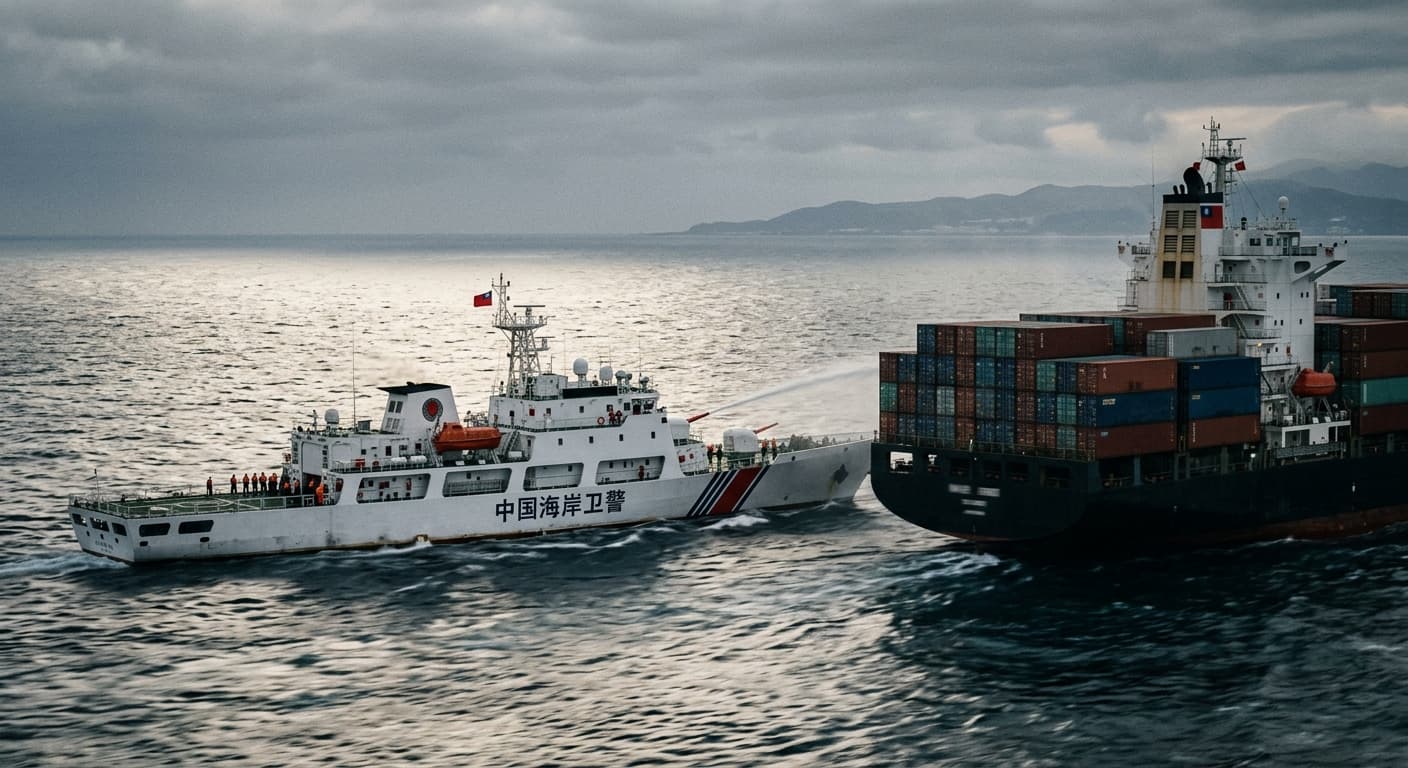
China's Taiwan Blockade Playbook: White Hulls
Senator Tammy Duckworth warns China will likely blockade Taiwan by 2028 using coast guard vessels under legal cover, not military invasion, citing rehearsed exercises and economic stakes of $2.45 trillion in trade.
Climate & Energy
Pentagon's $100B Critical Minerals Loan Plan
Pentagon launches $100B National Security Fund Finance program for critical minerals, routing loans through private funds. But $500M subsidy implies 0.5% default rate, far below DoD's own 9.97% rate.
Global
Taiwan's Armored Drill Targets Decapitation
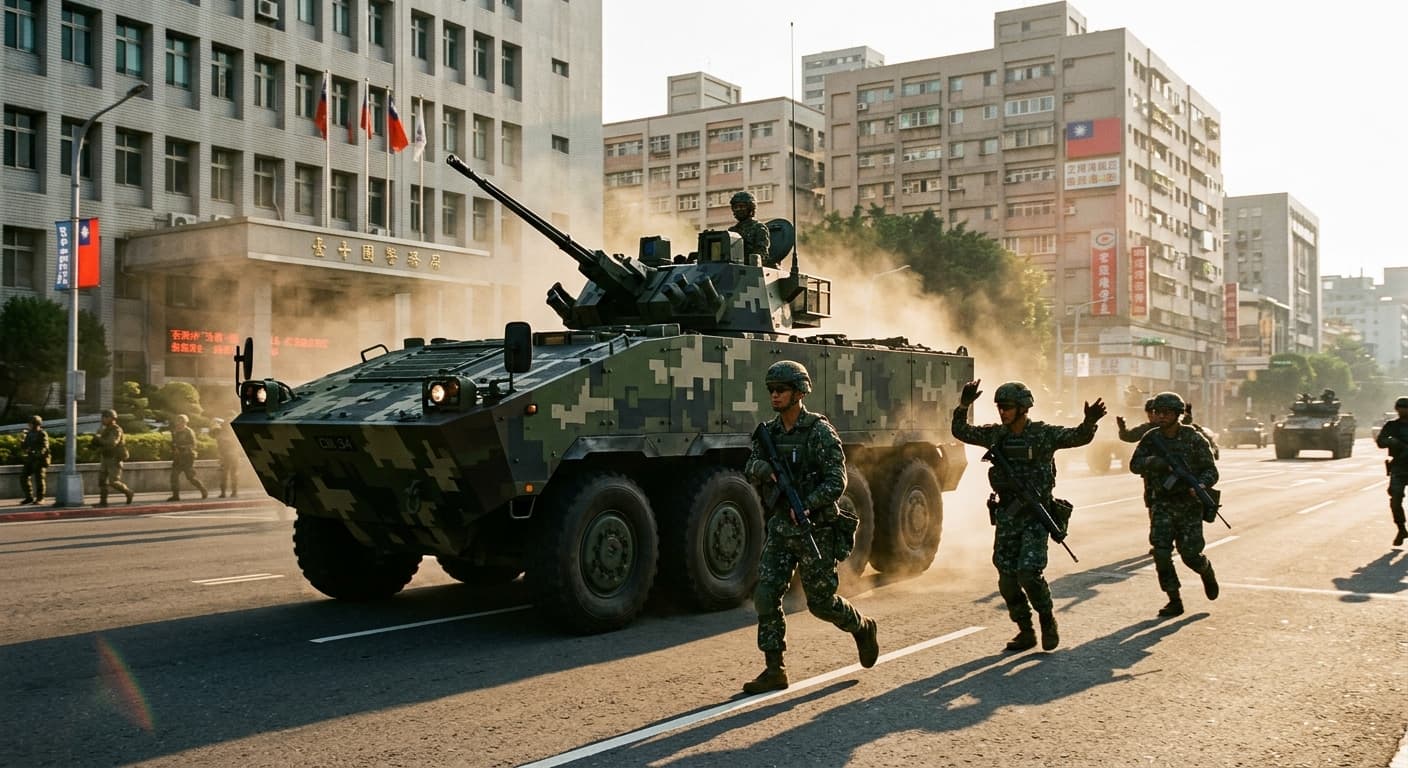
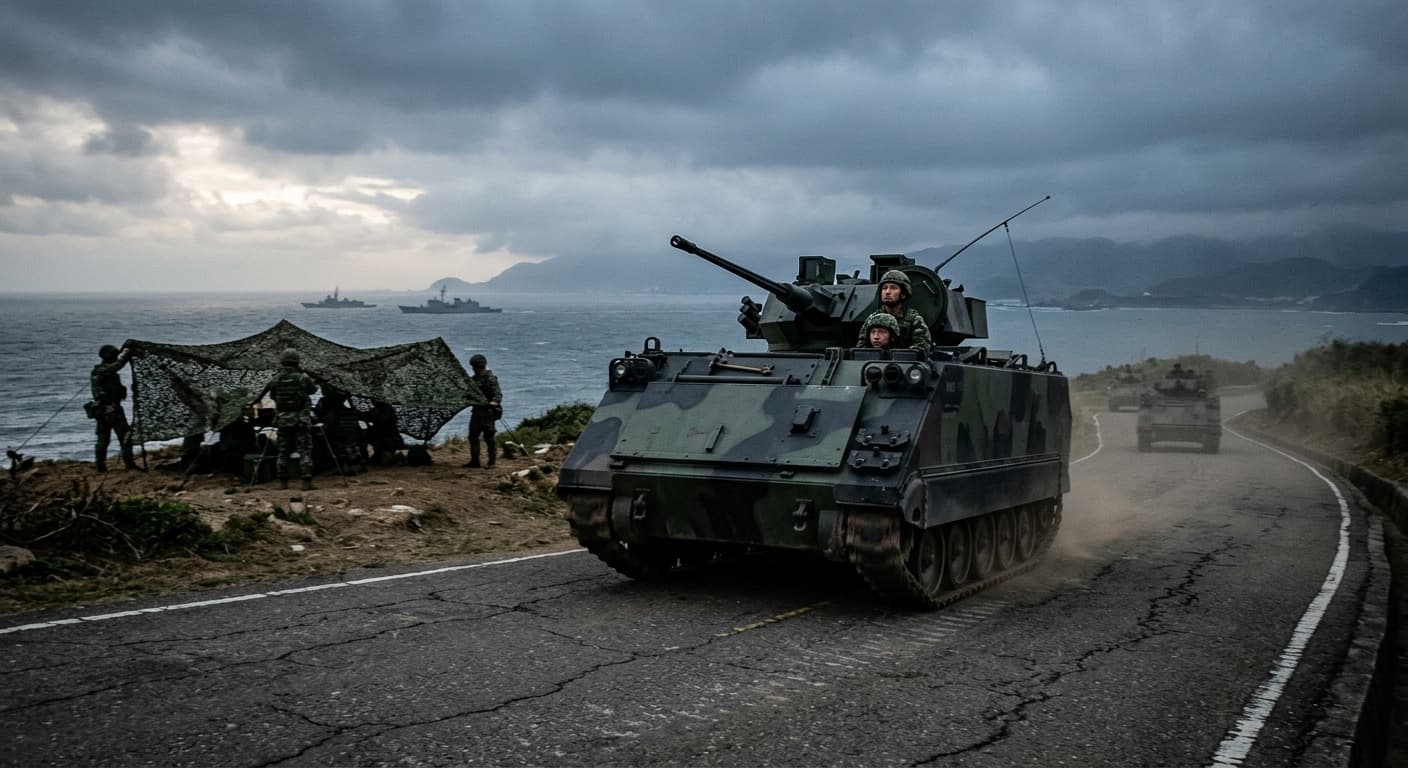
Taiwan's July 15 Clouded Leopard drill rehearses decentralized command of the Bo'ai Special Zone, targeting the PLA's decapitation-strike scenario. The exercise signals a doctrinal shift from static garrison to survivable command-and-control, with implications for cross-strait deterrence and U.S. arms policy.
Global
Taiwan's Armored Drill Rehearses Decapitation
Taiwan's 2026 Joint Defense Exercises rehearse counter-decapitation with Clouded Leopard armored vehicles, testing command survival under a PLA strike scenario amid budget cuts and U.S. arms sale delays.