Taiwan's Armored Drill Rehearses Decapitation
Taiwan rehearses command survival under a decapitation strike
Model Diplomat9 min readEast Asia and Pacific
Taipei's Armored Drill Rehearses the Mission Taiwan Cannot Afford to Lose
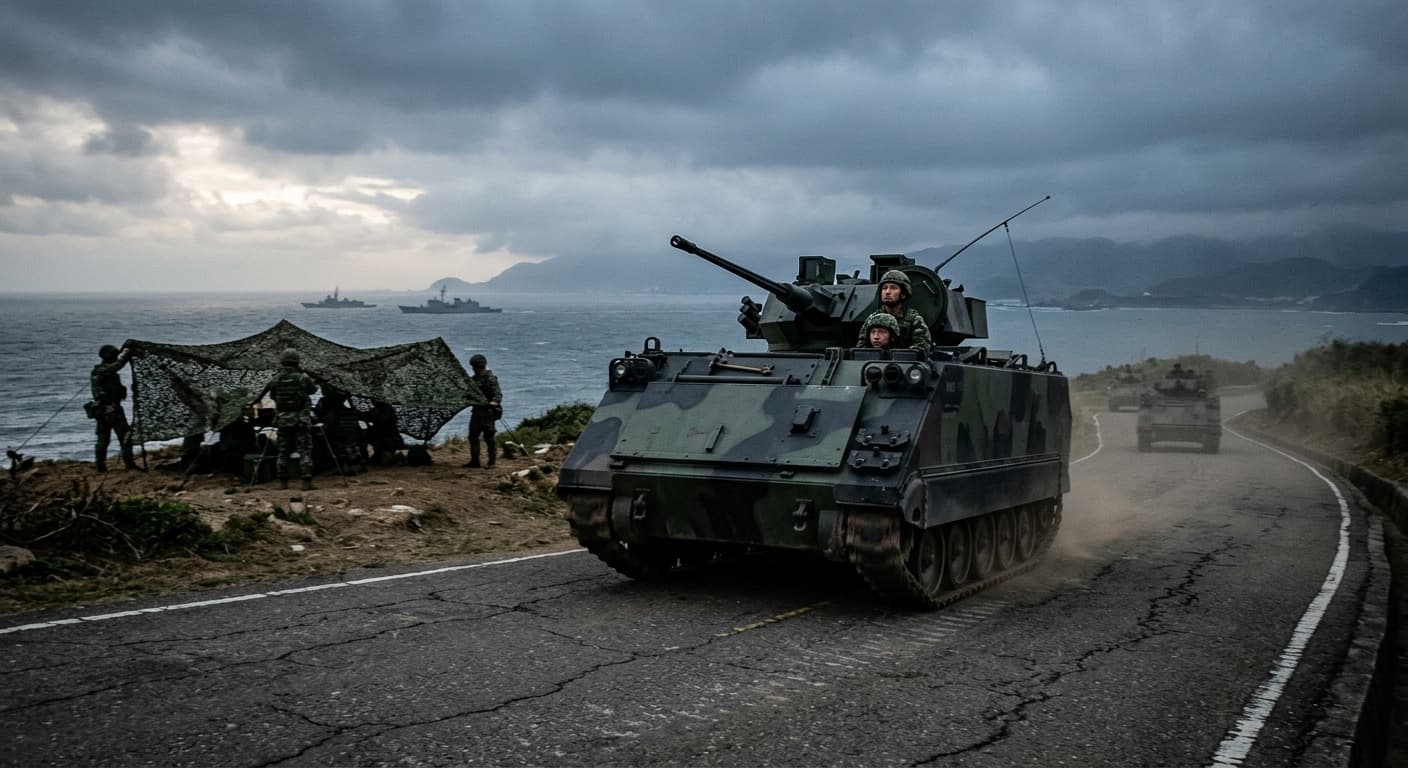
Clouded Leopard vehicles rolling from the Presidential Office perimeter on July 15, 2026, test the one capability that determines whether Taiwan survives a Chinese attack's first hours: keeping its command node alive under a decapitation strike.
On July 15, 2026, Clouded Leopard armored vehicles under Taiwan's 202nd Military Police Command rolled from the Bo'ai Special Zone — the fortified perimeter around the Presidential Office — through Taipei streets to Bo'ai Camp in the Dazhi neighborhood, in a drill that was less about repelling an invasion than about surviving its opening minutes. The exercise rehearses the one mission Taiwan cannot afford to get wrong: keeping the command node alive under a decapitation strike — and that matters because the PLA has rehearsed exactly this scenario, the U.S. demonstrated a modern version of it in Caracas in January 2026, and Taiwan's legislature has hamstrung the broader defense budget that funds the capability.
The drill, decoded
The Wednesday deployment was the centerpiece of Taiwan's Joint Defense Exercises, running July 13–17, 2026. According to Focus Taiwan, the exercise simulated Chinese forces entering Taiwan's territorial waters and tested "joint operations among the armed services and the execution of a 'kill chain' under decentralized command and control, with missions carried out according to the rules of engagement."
Two details matter more than the armored vehicles themselves. First, the unit: the 202nd Military Police Command is the force charged with protecting the central government — the Presidential Office, the Ministry of National Defense, and the continuity of leadership. Second, the route: from the Bo'ai Special Zone, the fortified district around the Presidential Office, to Bo'ai Camp in Dazhi. This is not a coastal defense drill. It is a garrison-protection and mobile-redeployment drill under fire.
Military officials told Focus Taiwan the exercise "builds on the operational scenarios used during the Immediate Combat Readiness Exercises last month" and was designed to "ensure the security of critical infrastructure and key military facilities in the Taipei garrison area while maintaining normal government operations." In Pentagon terms, this is continuity-of-government and command-and-control survival — the functions a decapitation strike is designed to destroy.
The Clouded Leopard (CM-32/CM-34) is Taiwan's indigenous 8×8 armored vehicle, a wheeled platform better suited to urban movement than tracked armor. Its presence on Taipei streets, rather than on a beach, signals the scenario being rehearsed: a capital under kinetic threat, not a coastline under assault. The drill evaluated "the units' ability to prepare forces, assemble by operational sectors, and conduct mobile deployments under a decentralized command structure," per Focus Taiwan — language that describes a military whose top-down communications may already be severed.
The 'Wan Jun Plan' and the decapitation template
The Taipei drill maps onto a named Taiwanese contingency framework: the Wan Jun Plan, a counter-decapitation doctrine designed to ensure leadership protection, command continuity, and crisis response if Beijing moves to decapitate the government in a conflict's opening hours. According to CSIS, Taipei has in recent years "expanded military police units responsible for protecting central government institutions, adjusted the missions of key Marine Corps formations, deployed amphibious reconnaissance forces to critical approaches, and conducted regular counter-decapitation exercises under a dedicated contingency framework known as the Wan Jun Plan."
The PLA's own doctrine assigns airborne forces a role in "deception and decapitation" and in "seizing beachheads" as a first echelon, according to the PLA textbook Science of Campaigns cited by RUSI. The CSIS ChinaPower project notes that PLA exercise zones placed near Taipei and Keelung in August 2022 were positioned to "enable the PLA to blockade Keelung Harbor" and to "seize Taipei from three different directions" in a decapitation attack, per
CSIS ChinaPower.
Wednesday's drill is the defensive answer to that operational concept. The 202nd Military Police Command is the unit that would physically move the president and the command node if the Presidential Office and MND complex came under special-forces or missile attack. The route from Bo'ai Special Zone to Bo'ai Camp in Dazhi rehearses exactly that evacuation-and-relocation maneuver — under simulated wartime conditions, with decentralized command, against a scenario in which top-down communication may already be severed.
This is why "decentralized command and control" and the "kill chain" language in the Focus Taiwan report is not boilerplate. Taiwan's 2024 Han Kuang reforms scrapped scripted, theatrical drills in favor of unscripted exercises testing "small dispersed units and scenarios simulating command lines being severed," as
Al Jazeera reported at the time. The 2026 Joint Defense Exercises extend that logic to the capital's own defense.
The Caracas precedent
The drill also lands in the wake of an event that reshaped every decapitation conversation: the January 3, 2026, U.S. Operation Absolute Resolve in Venezuela, which captured President Nicolás Maduro. CSIS analysts concluded that the Caracas operation "achieved total domain dominance before ground forces" and demonstrated "the integration of network-centric warfare" for a decapitation mission, per CSIS.
The CSIS assessment is measured. It argues China cannot easily replicate the U.S. operation against Taiwan, because Taiwan "has long invested in robust intelligence, surveillance, and reconnaissance capabilities" and has "strengthened its counter-decapitation posture." But the report's key warning is that Beijing likely drew lessons from Caracas about how to execute a modern joint special-operations decapitation against a weaker power — and that Taipei's appropriate response is to "continue strengthening counter-decapitation capabilities and to further institutionalize robust government continuity mechanisms."
Wednesday's armored-vehicle movement through Taipei is precisely that institutionalization, practiced in public. It is also a signal — to Beijing, to Washington, and to Taiwan's own population — that the command node has a survival plan that does not depend on a single hardened building.
The budget gap
The drill's credibility, however, runs straight into a political wall in Taipei. President William Lai proposed a $40 billion special defense budget in November 2025, targeting 3.3% of GDP in 2026 and 5% by 2030, according to Al Jazeera. The opposition-controlled legislature passed only two-thirds of that request in May 2026 — $24.8 billion over eight years — and cut the portion earmarked for domestic drones and indigenous weapons, per
NPR. The KMT and Taiwan People's Party, which control the Legislative Yuan's purse strings, insisted on funding only U.S. arms purchases.
The result is a defense posture that is strong on imported hardware but weak on the domestic capabilities — drones, mobile platforms, civilian resilience — that counter-decapitation and asymmetric warfare require. As Foreign Affairs noted in a July 2026 essay by David Petraeus, Taiwan's legislature "struck domestic drone production from the government's special defense budget" while preserving "billions of dollars for purchases of U.S. weapons systems," a balance Petraeus called the Ukraine lesson Taiwan "keeps missing." The Clouded Leopard vehicles rolling through Taipei are indigenous platforms. The doctrine they rehearse — decentralized command, mobile government survival — is one that no foreign arms sale can deliver.
The Congressional Research Service reports that Taiwan's defense budget increased by approximately 7.5% from 2024 to 2025, and that Lai "intends to increase defense spending to around 3.3% of GDP in 2026," per Congress.gov. But the same report notes that Taiwan's military "has struggled to recruit, train, and retain personnel" and that "some argue Taiwan's civil defense preparedness is insufficient." The 202nd Military Police Command drill addresses one narrow slice of that gap. It does not close it.
Meanwhile, the Trump administration has sent mixed signals. The U.S. announced a $10 billion arms sale to Taiwan in December 2025, per NPR, but a senior U.S. military official confirmed in May 2026 that Washington was pausing a separate $14 billion package to preserve munitions for the U.S.-Israel war against Iran, according to
Al Jazeera. At the May 2026 Shangri-La Dialogue, Defense Secretary Pete Hegseth became the first U.S. defense secretary in more than a decade not to mention Taiwan, as
CFR reported — a signal that current and former officials in both Washington and Asia read as accommodation of Beijing.
Whole-of-society meets whole-of-government survival
The drill also connects to Lai's broader Whole-of-Society Defense Resilience (WOSR) campaign, launched in 2024. The Brookings Institution identified five WOSR pillars: civilian training, strategic material stockpiles, critical infrastructure, social welfare and medical evacuation, and information systems protection. Wednesday's exercise sits at the intersection of two of those pillars — critical infrastructure and continuity of government — and is the military component of what Lai has framed as an all-of-society endeavor.
The 2025 Han Kuang exercises, the largest and longest in Taiwan's history, marked the first time civilian "urban resilience" drills were combined island-wide with military exercises, with air raid sirens emptying streets and HIMARS launchers visible in public parks, per NPR. The 2026 Joint Defense Exercises narrow that lens: rather than rehearsing civilian sheltering, they rehearse the military's ability to keep the government functioning — the precondition for any civilian resilience plan to matter. If the command node dies, the WOSR pillars have no one to activate them.
The RAND Corporation, in a 2026 study of Taiwan's civilian resilience, found that "integration of civilian response with military scenarios in exercises is relatively recent" and warned that "during a conflict, Taiwan's society might be required to hold out longer without assistance, and key infrastructure nodes might be purposefully targeted." Wednesday's drill tests the military side of that integration. But RAND's broader finding — that "resilience-building is a continuous process" requiring "broad societal and political support" — remains the unresolved variable. The KMT's budget cuts suggest that support is fractured.
Who benefits, who loses
The immediate beneficiary of the drill's visibility is the Lai administration, which can point to concrete evidence that Taiwan is preparing for the most dangerous scenario, not merely buying hardware. The American Institute in Taiwan, the de facto U.S. embassy, has praised Lai's spending commitments, with Director Raymond Greene calling the special budget "so critical," per NPR. The drill gives Greene something tangible to cite in Washington.
The loser is the KMT, whose budget posture now sits awkwardly against a drill that demonstrates what underfunded capabilities — domestic drones, mobile platforms, civil-military integration — are actually for. The Brookings Institution assessed that the KMT and DPP are "likely to reach a compromise" on the special budget because of "broad public support," but the compromise will be smaller than Lai's ask. Every dollar cut from domestic procurement is a dollar not spent on the capabilities the 202nd Military Police Command would need if its drill became reality.
The second-order loser is Washington's credibility. The CFR warned that the Trump administration's ambivalence on arms sales "weakens the pro-defense camp in Taiwan and strengthens those who doubt whether Taiwan can or should spend more on defense," giving the KMT's fiscal-hawk argument ammunition. A Taiwan that drills counter-decapitation but cannot fund the drones and mobile systems its own doctrine requires is a Taiwan whose deterrence rests on performance, not capability.
What to watch
- September 2026: The Legislative Yuan's next budget session. The $210 billion NT ($6.59 billion) drone package the government proposed in June 2026 is pending. If the KMT again caps or redirects it, the gap between doctrine and funding widens further.
- The $14 billion U.S. arms package: Paused in May 2026 for Iran-related munitions priorities. Lai said on June 18, 2026, that he hopes it "can be approved as soon as possible," per
Al Jazeera. A decision could come before the U.S. midterm elections.
- 2027: The CIA's assessed deadline for PLA capability to invade Taiwan, per
ASPI. Every drill between now and then is both preparation and signal.
Diplomat View
Taiwan's counter-decapitation drill is the right capability rehearsed at the right time — but it is being run on a budget that has been cut by the opposition and under a U.S. security umbrella that the Trump administration has shown willingness to fold. The forecast hinges on two variables. If the legislature passes the drone package in September and Washington releases the $14 billion arms sale before year-end, Taiwan's deterrence trajectory holds. If either stalls, the Clouded Leopards rolling through Taipei become a rehearsal for a mission the force cannot sustain — and the signal Beijing receives is that the command node is practicing survival on a shrinking budget. The next decision point is September 2026. The revision condition is a KMT budget capit or a U.S. arms-sale release. Either changes the picture. Neither is guaranteed.
Discover more
Global Politics
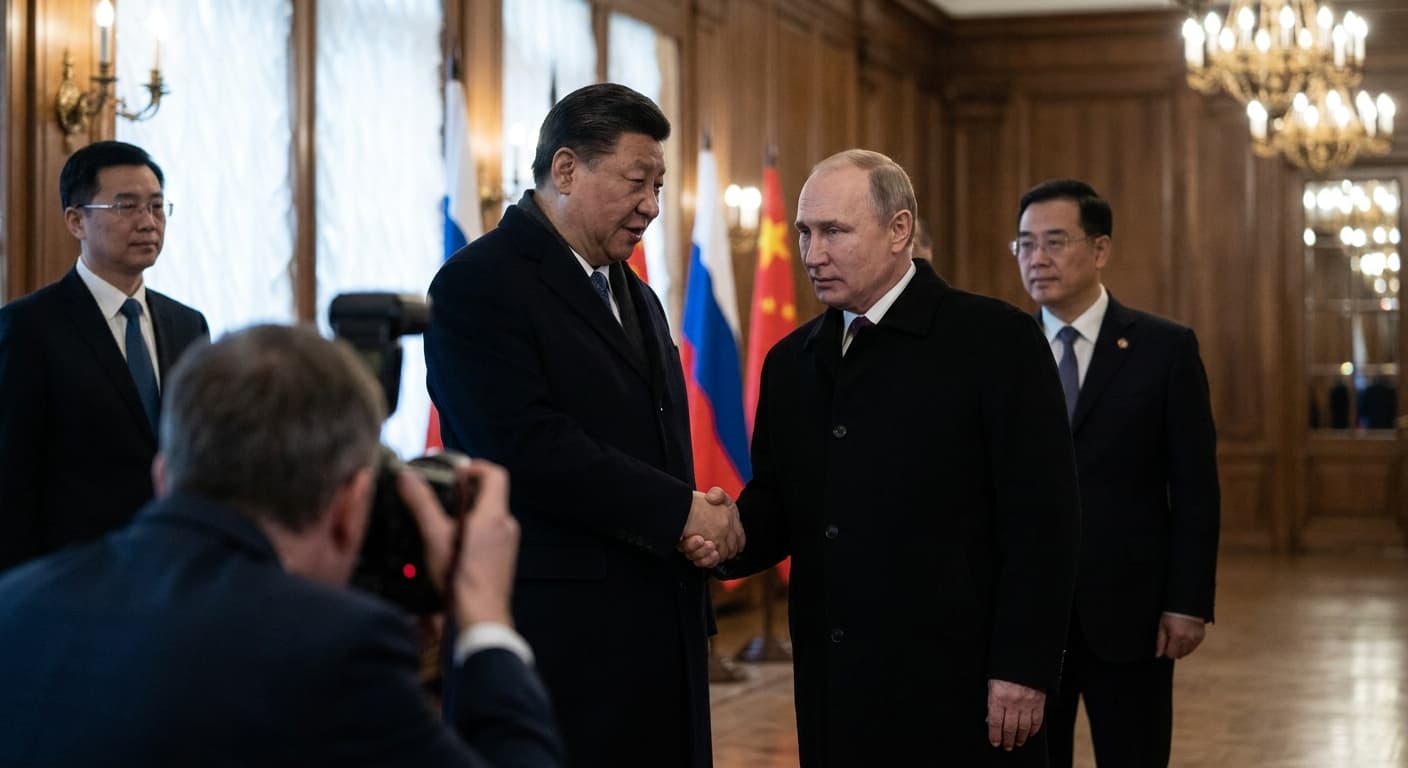
Xi Jinping Calls China-Russia Ties 'Precious'
Xi Jinping's description of China-Russia ties as 'precious' reflects a strategic imbalance, with Beijing dictating terms in the partnership.
India
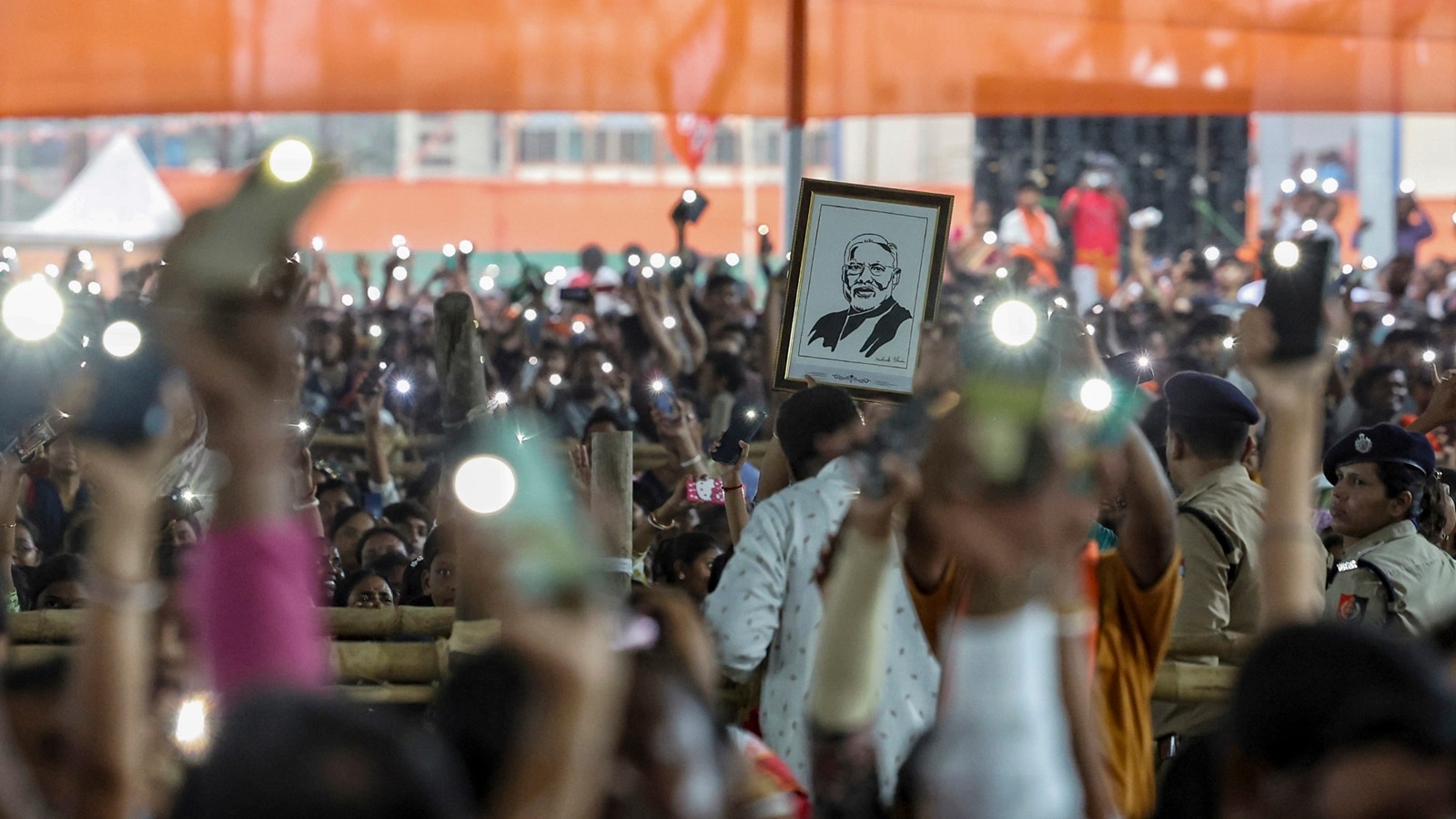
Modi's Women’s Convention in Varanasi
Modi's Varanasi rally frames women's reservation as a national mission, targeting the 2027 Uttar Pradesh elections with a strategic narrative.
India
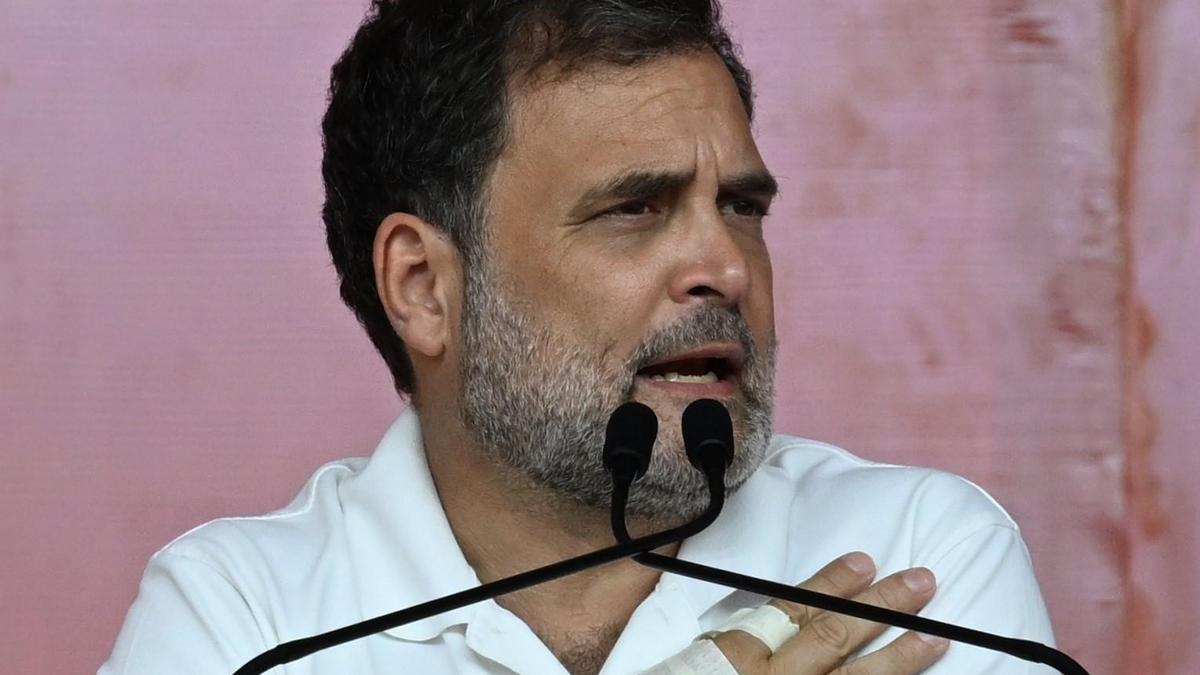
Rajnath Singh's Durga Squad for 2026 Polls
Rajnath Singh's Durga Squad promised women's safety in Bengal but has since disappeared from the agenda, revealing BJP's true priorities.

Economics
Fed's Amex AML order puts correspondent banking on notice
Federal Reserve's Amex AML order requires board-level controls and a 90-day plan; OCC fined the bank $350 million over enterprise-wide deficiencies.