Mandelson Vetting Sparks Political Controvers
Vetting reveals ties to China, Russia, and Israel.
Model Diplomat3 min readEurope
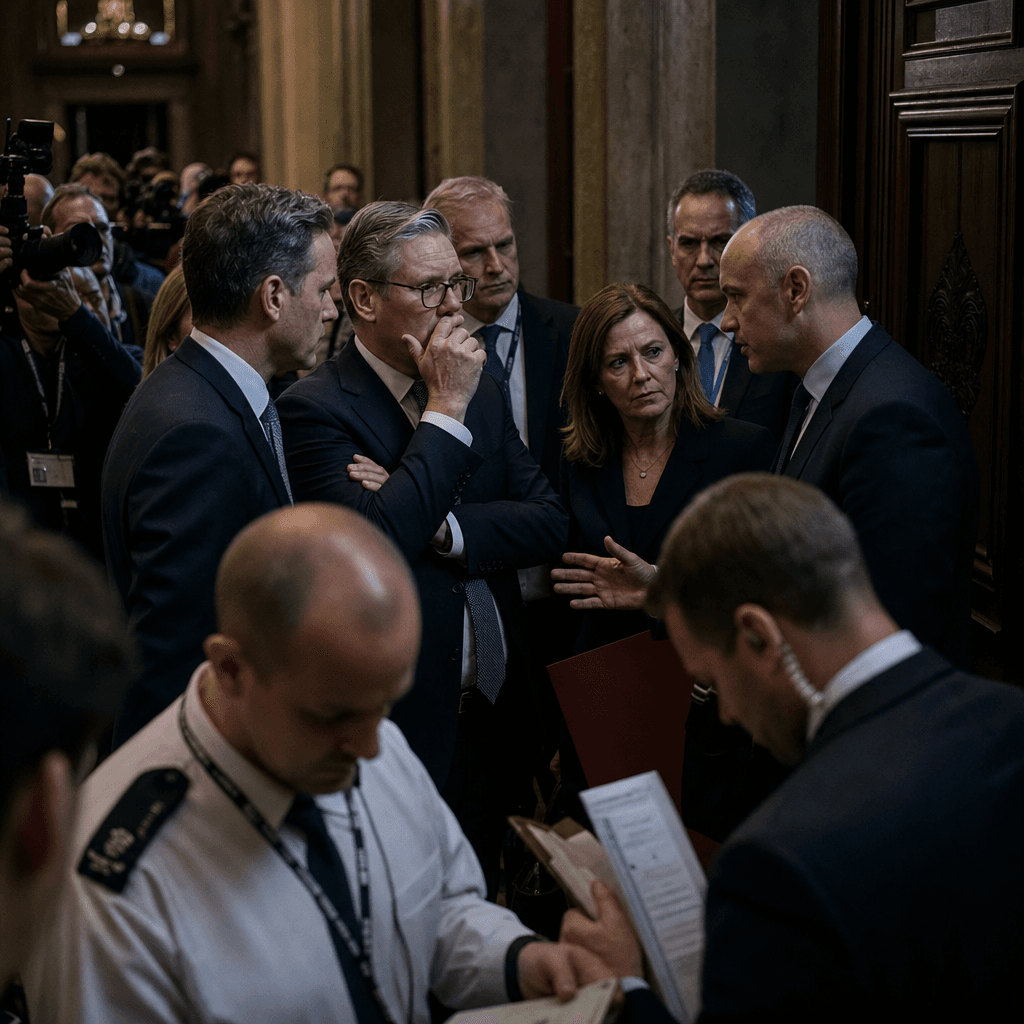
Mandelson vetting shows the real fight is over control
[The Guardian says Mandelson’s file flagged China, Russia and Israel ties; the row is really about whether Downing Street overrode security advice for a political choice.]
Peter Mandelson’s vetting file did not just raise generic “reputational” concerns. It flagged links to senior figures in China, Russia and Israel, according to The Guardian. That matters because it shifts this from a personal scandal into a question of state judgment: who in Whitehall decided those risks were manageable, and why.
The leverage sat with ministers, not the vetters
The broader pattern is already clear from earlier reporting. In April, EFE reported that former Foreign Office chief Olly Robbins told MPs there had been “pressure” from Downing Street to get Mandelson into post quickly, while UK Security Vetting was leaning toward denying clearance. EFE also reported that Robbins described Mandelson as a “borderline case” and said the process was treated with a “dismissive attitude.” If that account holds, the veto power was never really with the security machine; it was with the political operation in No. 10.
That is the core of the scandal. Mandelson was not just a controversial appointee; he was an asset the government wanted in Washington, and the system appears to have bent to get him there. The Guardian’s new disclosure hardens that case: if the file warned about ties to figures in Beijing, Moscow and Jerusalem, then ministers were not flying blind. They were choosing to proceed with open warnings on the table.
Why the country mix matters
The country list tells you how UK security culture reads risk. China and Russia are the obvious hard-security concerns: influence, access, and proximity to strategic decision-making. Israel is different. It points less to espionage than to the politics of elite access, lobbying, and the diplomatic sensitivities that come with a senior UK figure whose network crosses multiple conflict files. In Global Politics, that combination usually signals utility and vulnerability at the same time.
That is why this cannot be dismissed as just another Westminster embarrassment. London is effectively admitting that a highly connected political operator may have been seen as useful precisely because of the relationships that later made him hard to clear cleanly. The same network that can help an ambassador open doors can also trigger alarm bells in a vetting file. For a government trying to prove competence, that is a bad trade.
Starmer’s problem is accountability, not only Mandelson
Keir Starmer’s difficulty is no longer just that he appointed Mandelson. It is that he has to explain who saw the red flags, who waived them, and whether the prime minister was shielded from the file or simply ignored it. EFE reported that Antonia Romeo, the head of the civil service, and Catherine Little, the Cabinet Office permanent secretary, learned of the failed check before Starmer did. If that is accurate, the issue becomes bureaucratic discipline as much as political judgment.
The beneficiaries of the leak are obvious: opposition parties, which can now argue the government compromised security for convenience. The losers are also obvious: Starmer, the Foreign Office, and the claim that appointments to sensitive posts are insulated from political pressure. For the United States, the practical question is whether Britain’s ambassadorial pipeline can still be trusted to screen for risk, not merely reward loyalty.
What to watch next: the remaining disclosure of vetting papers and whether Parliament forces a fuller accounting of who signed off on Mandelson’s clearance. If the file is released in full, the decisive point will be whether the warnings were overridden deliberately — or buried.
Discover more
US Politics
House Ethics Committee Pushes Sexual Miscond.
The House Ethics Committee has shifted responsibility for sexual harassment settlement records to the Office of Congressional Workplace Rights, complicating disclosure efforts.

Conflict & Security
Drone Warfare Killing Aid Workers at Unprec
Over 1,000 humanitarian workers killed in three years as cheap armed drones collapse legal protections. Gaza, Sudan, Ukraine, and DRC see deliberate targeting of aid convoys and hospitals with zero prosecutions.
Global
World Normalises Taliban as Afghan Women Eras
UN data shows Afghan women erased from public life as Russia recognises the Taliban, EU hosts officials in Brussels, and ICC warrants for gender persecution go unenforced.
Conflict & Security
West Africa Food Crisis: Three Shocks in 2026
Conflict, climate extremes, and the Strait of Hormuz closure drive a severe food crisis in West and Central Africa, with fertilizer prices surging 80% and millions displaced.