Mandaviya Launches Free Health Checks for ESF
New health initiative for workers highlights compliance with Labour Codes.
Model Diplomat3 min readAsia
Mandaviya’s Free Health Checks Signal Modi’s Labour Push
The new screenings give workers a visible benefit, but the real leverage is the Centre’s effort to normalize ESIC-backed compliance under the Labour Codes.
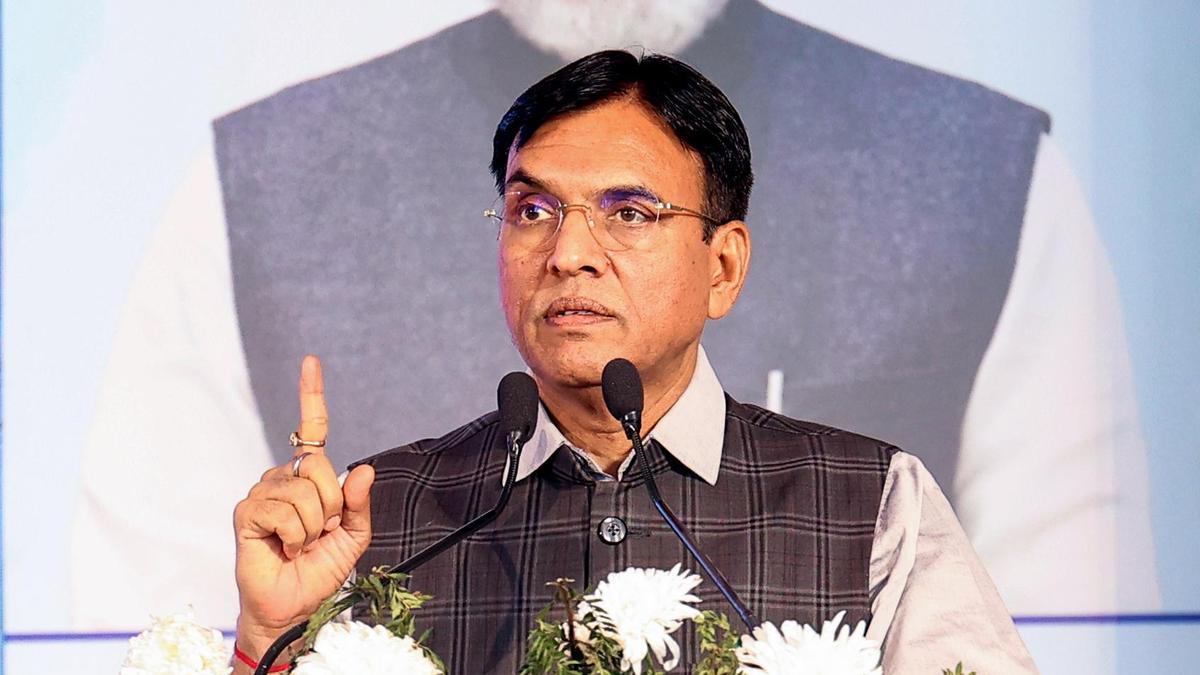
Mansukh Mandaviya on Thursday launched a nationwide free annual health-check initiative for workers aged 40 and above, with screenings to be run through ESIC hospitals and treatment routed through ESIC facilities, The Hindu reported. The rollout began in Delhi and was mirrored at 11 other ESIC hospitals across the country, turning a policy announcement into a synchronized national event rather than a one-off welfare gesture. For
India, the message is clear: worker protection is now being packaged as a delivery story.
A benefit, but also a compliance signal
On paper, this is preventive care. In practice, the Centre is using health screening to make the Labour Codes tangible. The Hindu reported that Mandaviya linked the initiative to the four Labour Codes and said social security coverage has expanded from nearly 30 crore people a decade ago to about 94 crore today, while ESIC coverage has risen from roughly 7 crore to nearly 15 crore beneficiaries. The Economic Times said the ministry is presenting the programme as part of the broader “Shramev Jayate” frame and the consolidation of 29 central labour laws into four codes.
That matters because the centre of gravity has shifted. The government is not offering a new universal health programme; it is tightening the link between formal work and formal benefits. For workers above 40 who are already inside ESIC, the gain is obvious: early detection, routine records, and follow-up care. For the government, the gain is political and administrative: it can show a concrete welfare dividend while embedding new reporting and screening routines into the labour system.
Who gains, who carries the cost
The immediate winners are insured workers in ESIC-covered jobs, especially those in older, risk-heavy workforces where non-communicable disease screening can catch problems before they become expensive. The Hindu also noted that workers in hazardous occupations are to be checked regardless of age, and that employees in establishments with fewer than 10 workers are now being brought into ESIC coverage.
The burden sits elsewhere. Employers in hazardous and smaller units now face more structured oversight, and ESIC has to absorb the operational load of turning an announcement into repeated annual screening. That is not a trivial shift: the promise only matters if hospitals, labs, and follow-up care can keep pace.
There is also political resistance baked in. Frontline reported that trade unions have argued the Labour Codes weaken worker protections and lack an enforceable mechanism for universal social security. That criticism will not disappear because the government adds a health-check benefit. It will, however, be harder to sell the codes as merely employer-friendly if the Centre can point to visible, free, recurring services for workers.
What to watch next
The next test is execution. Watch whether ESIC standardizes the screenings beyond the launch-day optics, how many workers actually turn up, and whether the ministry expands the programme beyond the insured workforce aged 40 and above. If this stays confined to a narrow ESIC cohort, it is a useful benefit. If it spreads into hazardous workplaces and smaller firms, it becomes a real labour standard — and a stronger political asset for the Modi government.
Discover more
India
Modi's Women’s Convention in Varanasi
PM Modi's upcoming women’s convention in Varanasi aims to boost support ahead of West Bengal elections, highlighting women's empowerment initiatives.
India
BJP's Misunderstanding of Women's Quota Needs
The BJP's linkage of the Women Reservation Bill to delimitation risks delaying women's empowerment in India, misreading their political needs.
Global Politics
Iran Releases $12B Frozen Assets Deal
Iran secures $12 billion in frozen assets as US lifts oil sanctions under new deal.
India
India-UK Trade Pact Removes Tariffs on 99%
India's trade pact with the UK eliminates tariffs on 99% of exports, but execution risks loom.