Mali's JNIM Strikes Kati
JNIM attacks Mali's military base, signaling a new threat to the junta.
Model Diplomat3 min readWest Africa

Mali's Coordinated Strikes Hit Kati — JNIM Is at the Gates of Bamako
JNIM militants attacked Mali's main military base and airport surroundings on April 25, signalling a strategic shift to strangle the junta's capital.
JNIM — Jama'at Nusrat al-Islam wal-Muslimin, al-Qaeda's Sahel franchise, launched simultaneous attacks across Mali on April 25, 2026, reaching Kati, the military base outside Bamako that serves as the junta's power center, and targeting areas near the capital's airport. The Malian army says it repelled the assaults. The geography tells the real story.
A Deliberate Escalation Toward the Capital
This is not a frontier raid. Kati is the symbol of junta authority — every coup since 2012, including Colonel Assimi Goïta's 2020 and 2021 grabs for power, originated there. Striking it, even unsuccessfully, is a messaging operation as much as a military one. JNIM has spent the past year methodically tightening a noose: BBC reporting documents a pattern of coordinated multi-town raids — seven towns simultaneously targeted in one July 2025 operation — with the group claiming capture of three army barracks in some locations. April 25 is that campaign's most audacious iteration yet.
The operational tempo has been building fast. JNIM has conducted at least three major coordinated offensives in the past month alone, per Malian army statements, and has coupled battlefield pressure with economic warfare: fuel convoy attacks along the 1,400 km Niger supply route and disruption of the Dakar-Bamako corridor near Kayes have pushed Mali toward a slow-motion blockade. Bamako has been feeling supply shortages for months. Hitting the airport perimeter now signals JNIM can threaten Mali's last viable external lifeline.
Who Gains, Who Loses
JNIM and Iyad Ag Ghaly gain regardless of tactical outcome. Every strike near Bamako degrades junta credibility, recruits from aggrieved communities, and invites overreaction that alienates civilians further.
Goïta's junta faces a compounding legitimacy crisis. It expelled French forces and MINUSMA to project sovereignty; now it must explain how the capital's military nerve center came under fire. The security argument that justified the coup is visibly fraying.
Russia's Africa Corps — which replaced the Wagner Group after its announced withdrawal — holds the unenviable position of a contracted force defending a shrinking perimeter. Wagner's exit and Africa Corps' assumption of the role has not reversed JNIM's advance; Russian prestige in the AES bloc is quietly on the line.
Senegal and Mauritania face immediate border-security spillover. JNIM has already demonstrated it can operate in Kayes and Nioro du Sahel — both within striking distance of Senegal's eastern flank — making this a regional problem, not a Malian one.
The US and France, both having issued evacuation advisories for Mali, are watching from the sidelines they were pushed to. Neither has the leverage to intervene; both have the incentive to say "we told you so."
What to Watch Next
Three signals matter in the coming days:
- JNIM's claim of responsibility — if and when it comes, the language will indicate whether this is framed as a capital campaign or a punitive strike against the junta's Russian backers.
- Africa Corps' public posture — any acknowledgment of their role in the Kati defense (or silence) will signal whether Russian forces sustained casualties.
- AES emergency consultations — Burkina Faso and Niger have their own JNIM pressure. A Bamako attack of this scale forces the Alliance of Sahel States to decide whether collective defense is real or rhetorical.
The next 72 hours of JNIM operational tempo will reveal whether April 25 was a one-off strike or the opening of a sustained push on the capital.
Discover more

Global Politics
US Seizes Iranian Ship, Tensions Surge
The US seizure of the Iranian ship Touska highlights a shift in control over the Strait of Hormuz, favoring Iran's strategic position.

Conflict & Security
Drone Warfare Killing Aid Workers at Unprec
Over 1,000 humanitarian workers killed in three years as cheap armed drones collapse legal protections. Gaza, Sudan, Ukraine, and DRC see deliberate targeting of aid convoys and hospitals with zero prosecutions.

Global
World Normalises Taliban as Afghan Women Eras
UN data shows Afghan women erased from public life as Russia recognises the Taliban, EU hosts officials in Brussels, and ICC warrants for gender persecution go unenforced.
Conflict & Security
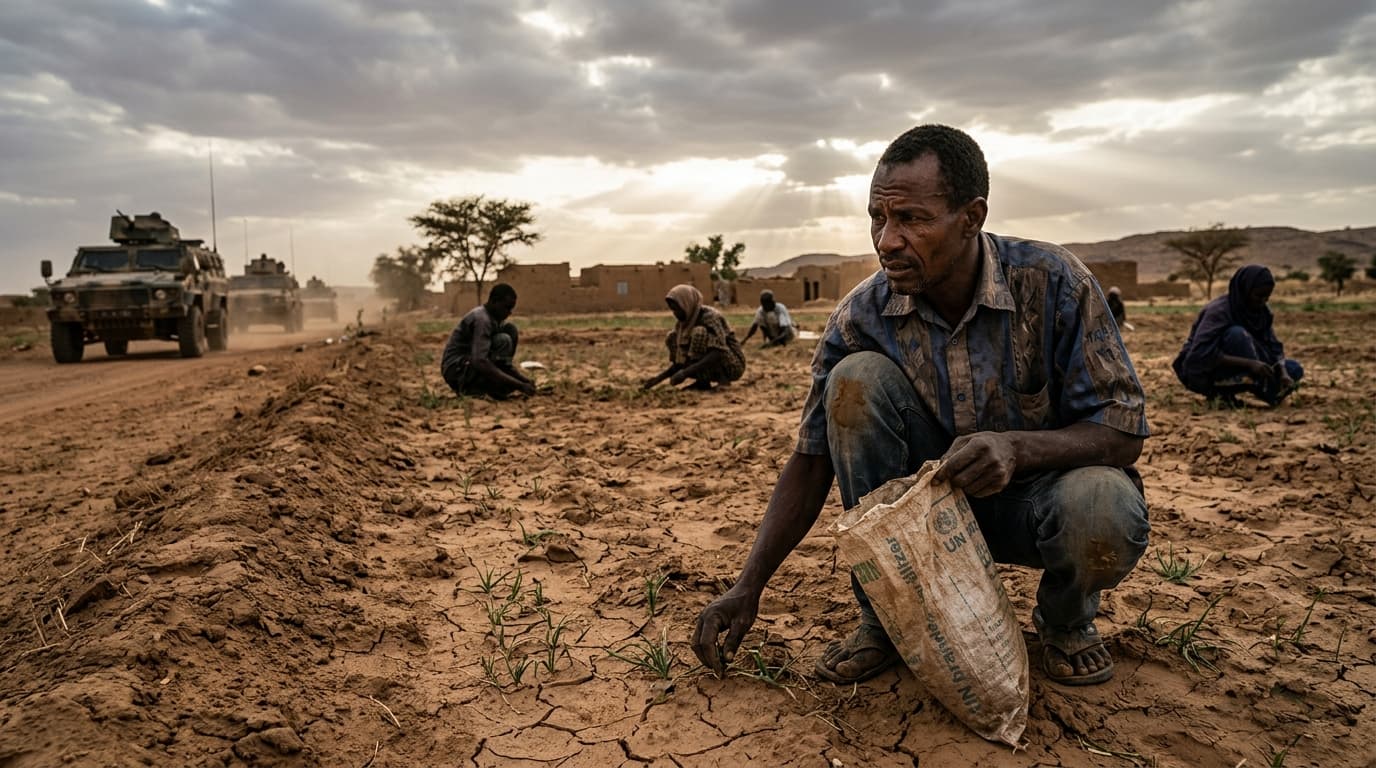
West Africa Food Crisis: Three Shocks in 2026
Conflict, climate extremes, and the Strait of Hormuz closure drive a severe food crisis in West and Central Africa, with fertilizer prices surging 80% and millions displaced.