Mali's Goïta Takes Control
Goïta consolidates power amid territorial losses.
Model Diplomat8 min readAfrica
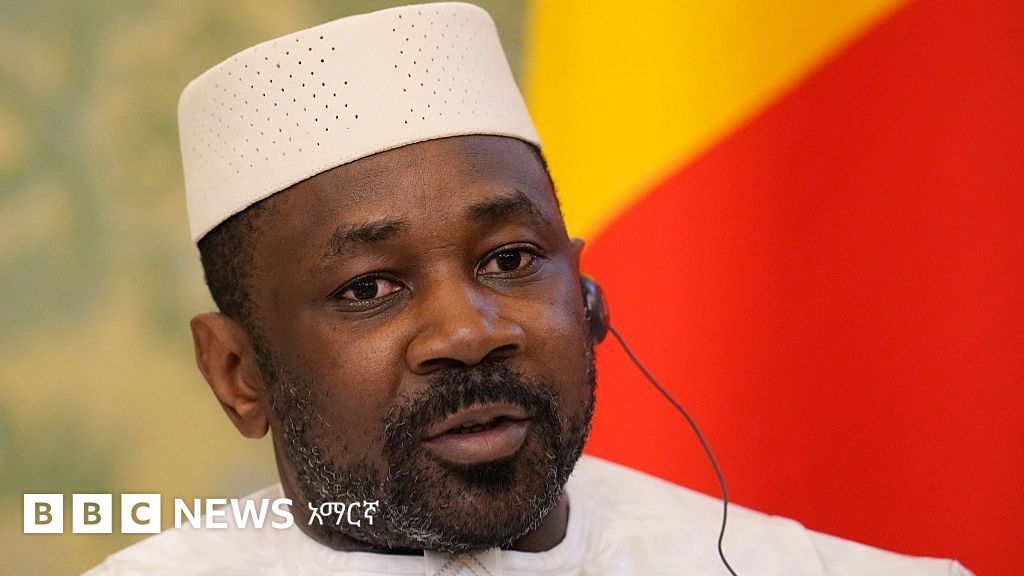
Mali's Goïta Takes Control — and Loses the Country
Assimi Goïta now runs Mali's presidency, defence ministry and army at once. He commands less territory than at any point since 2020.
General Assimi Goïta has spent six years accumulating titles. On May 4, 2026 — a week after a jihadist-separatist alliance killed his defence minister and seized Kidal — he added the defence portfolio to the presidency and the command of the armed forces, all under a single decree read out on state television by Al Jazeera. The logic is simple and uncomfortable: Goïta's consolidation of power is inversely proportional to the state's control of Malian territory. The more offices he holds, the less country he governs — and the July 4, 2026 attacks on five towns, including a prison holding opposition figures, show the trajectory is still down.
The paperwork of a shrinking state
On paper, Goïta has never been stronger. The transitional parliament unanimously granted him a five-year presidential term on July 4, 2025, renewable "as many times as necessary" until Mali is "pacified," according to the BBC. A month earlier the junta dissolved every political party in the country — a decree the
BBC described as the "latest opposition crackdown," following a suspension of party activities weeks before, per
Al Jazeera.
The legal scaffolding is now built to last. A Brookings analysis of Mali's democratic breakdown notes that the revised transition charter was pushed through after regime-organised "consultations with civil society and traditional leaders" — a process boycotted by the real opposition, per Brookings. Former Prime Minister Choguel Maïga, sacked in November 2024, is now on trial: he was charged with embezzlement and remanded in custody in August 2025, according to
Al Jazeera. The regime has, in effect, criminalised its own former civilian face.
The territory the paperwork does not reach
The physical map tells the opposite story. On April 25–26, 2026, the al-Qaeda affiliate Jama'at Nusrat al-Islam wal-Muslimin (JNIM) and the Tuareg-led Azawad Liberation Front (FLA) executed simultaneous strikes on Kati, Sévaré, Gao, Mopti and Kidal, seizing the northern city of Kidal and killing Defence Minister Sadio Camara in a suicide truck bombing on his residence, according to the UN humanitarian office OCHA. A car bomb also targeted Goïta's own residence in Kati; security forces "contained the threat and defused the vehicle," Malian army commander Djibrilla Maïga told a Bamako press conference reported by
Al Jazeera.
Ten weeks later, the pattern repeated. On July 4, 2026, coordinated attacks struck Aguelhok, Anefis, Gao, Sévaré and Kenieroba — the last a major prison complex where members of the political opposition are held, per Al Jazeera. Alex Vines of Chatham House told Al Jazeera the offensives have squeezed government authority into "securitised enclaves and corridors" — the operative phrase for what Mali now is.

The economic siege
The most consequential weapon against Goïta is not a rifle but a match. Since September 2025, JNIM has attacked fuel tankers crossing from Senegal, Côte d'Ivoire and Niger, torching more than 100 trucks and kidnapping drivers to enforce a blockade on landlocked Bamako. Al Jazeera's Nicolas Haque reported that pump prices at some Bamako stations rose roughly 500%, from around $0.25 to $1.30 per litre, at the peak of the October 2025 crunch, per Al Jazeera. Electricity from the state utility was cut to just six hours a day in parts of the capital, down from the usual 19, according to a BBC dispatch citing an AFP interview with the state power firm, per the
BBC.
The blockade is a governance weapon, not a supply problem. Niger's transport ministry revoked the licences of 14 operators and 19 drivers who refused to make the 1,400-km run into Mali, the BBC reported — meaning even Goïta's Alliance of Sahel States partner had to coerce its own hauliers to keep his capital lit. And the strategy is working politically: JNIM tightened the blockade further after the April 2026 assault, burning dozens more vehicles on the Bamako–Kéniéba highway just before Eid al-Adha, per the
BBC.
The Russian problem
Goïta's other consolidation — the strategic pivot to Moscow — is fraying at exactly the wrong moment. Wagner Group formally wound up its Malian mission in June 2025, transferring personnel to Africa Corps under the Russian defence ministry. Roughly 2,000 paramilitary fighters remain; Al Jazeera described their mission bluntly as "protect Mali's military leadership," per Al Jazeera. During the April assault, Russian forces were driven out of Kidal, and social-media footage verified by Al Jazeera showed Malian troops and Russian fighters surrendering to FLA-JNIM units, per
Al Jazeera. Moscow's defence ministry nevertheless claimed Africa Corps had "prevented a coup d'état" — the first time the Kremlin has openly framed its Sahel presence as regime protection rather than counter-terrorism.
That is a meaningful shift. The BBC's post-attack scenario analysis identified Turkey as the most likely diversification partner, and noted Bamako could lean harder on the Alliance of Sahel States, though the bloc "has yet to act as a major joint fighting force," per the BBC. The AES confederation itself remains institutionally thin: an ISS Africa analysis notes that a December 2025 protocol on diplomatic coordination exists but has never been made public, and that Algeria has quietly rebuilt ties with Niger and Burkina Faso while Mali remains isolated, per
ISS Africa. Goïta's most valuable regional alliance is drifting around him.
What the numbers say
The human ledger is the clearest measure of failure. The Centre for Democracy and Development recorded 2,157 conflict fatalities in Mali in the first half of 2025 alone — 16.6% of all West African conflict deaths — with a sharp June surge to 543 fatalities and at least 344 civilian deaths attributable to Malian air and drone strikes, per CDD West Africa. ACLED's senior West Africa analyst Heni Nsaibia told Al Jazeera that "in the past two years, the Malian army and Russian fighters have inflicted more violence on civilians than the armed groups combined," per
Al Jazeera.
The UN human rights office has now put that on the record. Speaking on September 4, 2025, OHCHR spokesperson Seif Magango warned of "hundreds of extrajudicial executions, arbitrary arrests and detentions, enforced disappearances and other abductions by all parties" since April, singling out both the security forces and Africa Corps personnel. In its May 5, 2026 press briefing, OHCHR was more specific:
"There have been gravely concerning reports of extrajudicial killings and abductions, allegedly carried out by members of the security forces following the 25 and 26 April attacks. On 2 May, lawyer and politician Mountaga Tall was abducted from his house by two hooded men and taken to an unidentified location."
— OHCHR press briefing, May 5, 2026
At least 100,000 people have fled to Mauritania since late 2023, with 13,000 arrivals from October 2025 to April 2026 alone, per UNHCR figures cited by Al Jazeera.
The historical parallel that reframes this
The temptation is to read Mali as another Sahelian junta failure. The sharper parallel is Afghanistan circa 2019 — a militarily backed government controlling the capital and provincial garrisons, an insurgent coalition controlling the roads, and a foreign patron whose primary function has quietly shifted from defeating the enemy to preventing the collapse of the regime it props up. The Kremlin's own words in April 2026 confirm the shift: Africa Corps' role is now, explicitly, to prevent a coup d'état.
Title-stacking, then, is rational. When the security architecture is degrading, hollowing out any competing power centre — political parties in May 2025, a defence minister with independent standing in May 2026, a prime minister you can prosecute in August 2025 — reduces the number of actors who could plausibly replace you. A World Bank country brief projects real GDP growth of 4.9% in 2025 and around 5% over 2026–2027, driven by lithium output and agriculture — a macro picture entirely disconnected from the security reality on the ground, per the World Bank. The disconnect matters: it explains why Bamako can still tell itself the current strategy is sustainable, even as JNIM chokes the fuel supply to the capital that generates most of that GDP.
Who wins, who loses
The immediate winner is JNIM. Its economic-warfare model — burn tankers, blockade highways, price the government out of legitimacy — has forced the state into a defensive posture without requiring the group to hold cities. The Stimson Center concluded that April 25 marked "a pivotal turning point" redefining security risks across the Sahel, per Stimson.
The medium-term winners are Russia's Africa Corps and Mali's non-Western commercial partners. In July 2025 Goïta launched a 200-tonne-capacity gold refinery in Senou in partnership with Russia's Yadran Group, framed as an assertion of "economic sovereignty," per the BBC. The state has extracted at least $635 million in additional tax payments from foreign miners and forced Barrick to agree to a $438 million settlement, according to a February 2025 report in
The Economist.
The losers are more numerous. Mali's opposition — dissolved as parties, jailed as individuals. Canadian and Australian miners caught by retroactive application of the 2023 mining code. Ordinary residents of Bamako paying five times last year's fuel prices. And ECOWAS, whose January 2025 loss of Mali, Burkina Faso and Niger has left it presiding over a region where an alternative bloc now defines the geopolitical map, even without functional common institutions.
What to watch
- Next JNIM-FLA offensive. The 10-week rhythm between the April 25 and July 4 assaults suggests a tempo. Expect another coordinated wave by mid-September 2026.
- Africa Corps troop numbers. Any confirmed drawdown below the reported 2,000 fighters would signal Moscow is hedging on Goïta's survival.
- Kenieroba prison follow-up. JNIM's targeting of a facility holding opposition detainees is a new tactic; watch whether it recurs at other detention sites.
- AES ambassador to Algiers. A Malian return of its envoy to Algeria would confirm Bamako's isolation is being managed by its neighbours rather than resolved.
The Bottom Line
Assimi Goïta now holds more offices than any Malian leader in the country's history and controls less of its territory than any government since the 2012 Tuareg rebellion. The consolidation is not a strategy — it is what a regime does when it can no longer trust the people around it, and it is a leading indicator of collapse, not of stability. The decisive question in Mali is no longer whether Goïta rules; it is whether Africa Corps can keep him alive long enough for the fuel to arrive.
Discover more
India
Romanian Coalition Party Demands PM Resign
Romania's Social Democrats withdrew from coalition, joining far-right AUR to topple PM Bolojan, risking €10 billion in EU funds by August 2026.

Global Politics
US Seizes Iranian Ship, Tensions Surge
The US seizure of the Iranian ship Touska highlights a shift in control over the Strait of Hormuz, favoring Iran's strategic position.

Conflict & Security
Drone Warfare Killing Aid Workers at Unprec
Over 1,000 humanitarian workers killed in three years as cheap armed drones collapse legal protections. Gaza, Sudan, Ukraine, and DRC see deliberate targeting of aid convoys and hospitals with zero prosecutions.
Global
World Normalises Taliban as Afghan Women Eras
UN data shows Afghan women erased from public life as Russia recognises the Taliban, EU hosts officials in Brussels, and ICC warrants for gender persecution go unenforced.