Linking Women’s Reservation to Delimitation
Exploring the political stakes of India's women’s reservation plan
Model Diplomat3 min readIndia
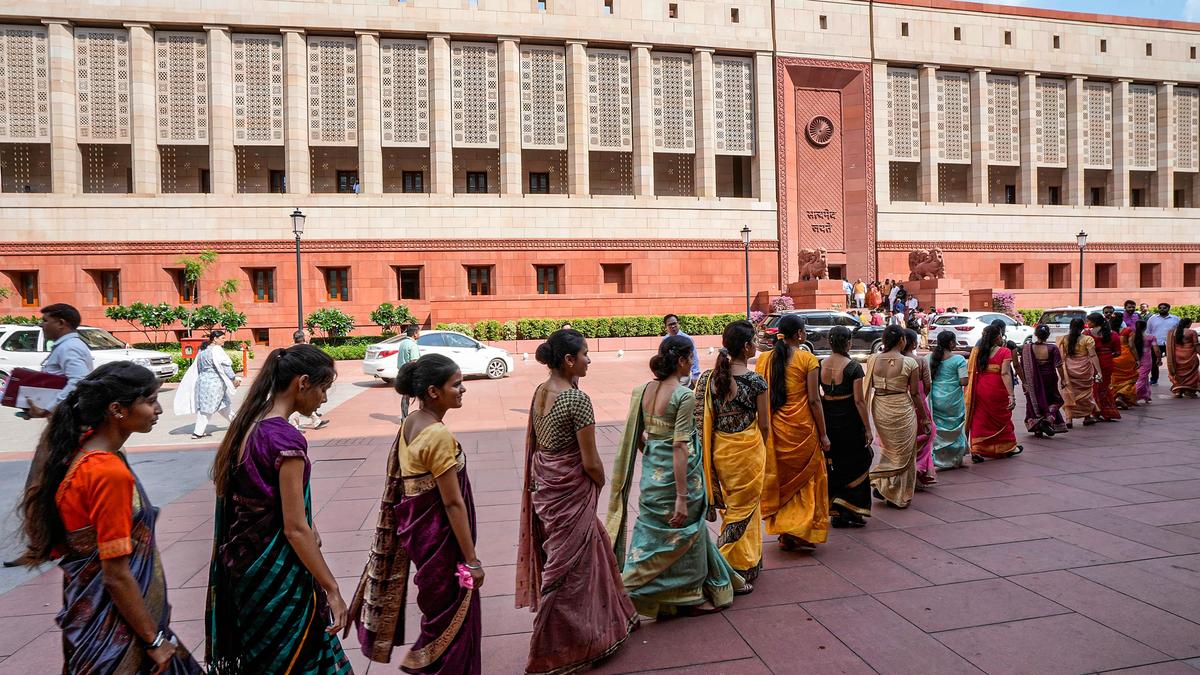
Delimitation and Women’s Reservation: Political Stakes Behind Linked Reforms
The BJP-led government’s move to link 33% women’s reservation with delimitation is dividing major parties and shaping India’s electoral landscape.
The Indian government is advancing a controversial plan to link women’s reservation in Parliament and state assemblies—guaranteed by the Nari Shakti Vandan Adhiniyam—with the upcoming delimitation exercise to redraw electoral boundaries. This has sparked a strong political debate, revealing deep fault lines between the ruling NDA coalition and opposition parties like Congress, DMK, CPIM, BRS, and SP, each reading the move through the lens of electoral advantage and regional power dynamics.
Why Linking Delimitation to Women’s Reservation Matters
The Nari Shakti Vandan Adhiniyam mandates a 33% quota for women candidates in both central and state legislatures, a landmark step for gender representation in Indian politics. However, this women’s reservation has not yet been implemented. The government now intends to operationalize this quota simultaneously with delimitation—an exercise conducted roughly every decade to redraw constituency boundaries based on the latest census data.
Delimitation has profound political consequences: it shifts the geographic and demographic contours of constituencies, affecting the electoral prospects of parties. By linking it with women’s reservation, the government adds an additional layer of complexity and political calculation. The move could reshape candidate selection and power distribution at multiple levels of governance.
The ruling BJP and its allies argue that linking these reforms will streamline election logistics and finally realize the women’s reservation promise. But opposition parties fear this bundling is a strategic gambit. Congress and regional players like DMK and BRS see delimitation as a tool likely to favor the ruling coalition’s electoral prospects, especially in northern and central India where demographic shifts may benefit BJP candidates.
Political Reactions: Alignments and Anxieties
The BJP and NDA allies back the combined approach, framing it as a progressive push to modernize India’s democracy and ensure women’s voices in governance. However, they are perceived to gain disproportionately from the delimitation exercise, given their strong organizational base in many states targeted for boundary redraws.
On the other hand, Congress, DMK, CPIM, BRS, and the Samajwadi Party have criticized the government for “politicizing” the women’s reservation bill by tying it to delimitation. These parties worry that the delimitation exercise could dilute their voter bases and reduce their assembly strength. For example, the DMK insists on separate, unhindered passage of the women’s reservation bill without the baggage of delimitation, emphasizing gender justice over political calculus.
This divide highlights a broader pattern in Indian politics: electoral boundary exercises are rarely neutral and often trigger intense contestation over how representation and resources are allocated. The tension also underscores the challenge of pushing gender equality reforms through a political system still heavily shaped by caste, community, and party calculations.
What to Watch Next
The coming months will be critical. Parliament will debate the government’s proposal to tie delimitation with women’s reservation, with opposition parties likely to push for decoupling the two. Attention will focus on:
- How the government manages dissent from allies skeptical about the political wisdom of coupling these issues.
- Whether women’s reservation becomes a political bargaining chip or achieves real implementation.
- The criteria and methodology that will guide the delimitation exercise, especially in politically sensitive states.
For activists and observers, the key question remains: Will India finally translate the long-promised women’s quota into seats at the political table, or will electoral strategizing stall progress? This intersection of gender equity and electoral engineering is defining the shape of Indian democracy as it heads into a crucial electoral cycle.
For more on Indian politics and electoral reform, visit India and
Global Politics.
Discover more

India
India's Delimitation Plan
India's delimitation plan would expand the Lok Sabha to 850 seats and boost women's representation, but it stokes regional tensions and political concerns.
India
Congress: Modi's Delimitation Manipulation
Congress accused the Modi government of using delimitation to consolidate power in Jammu and Kashmir, urging it be separated from the women's reservation bill.

India
India's Delimitation
India's delimitation could expand Lok Sabha seats and favor the North, igniting Southern opposition over representation, equity and regional political power.

Conflict & Security
Drone Warfare Killing Aid Workers at Unprec
Over 1,000 humanitarian workers killed in three years as cheap armed drones collapse legal protections. Gaza, Sudan, Ukraine, and DRC see deliberate targeting of aid convoys and hospitals with zero prosecutions.