Leipzig Boycott Vote Signals Campus Divide
Student vote at Leipzig University highlights ideological shifts.
Model Diplomat2 min readEurope
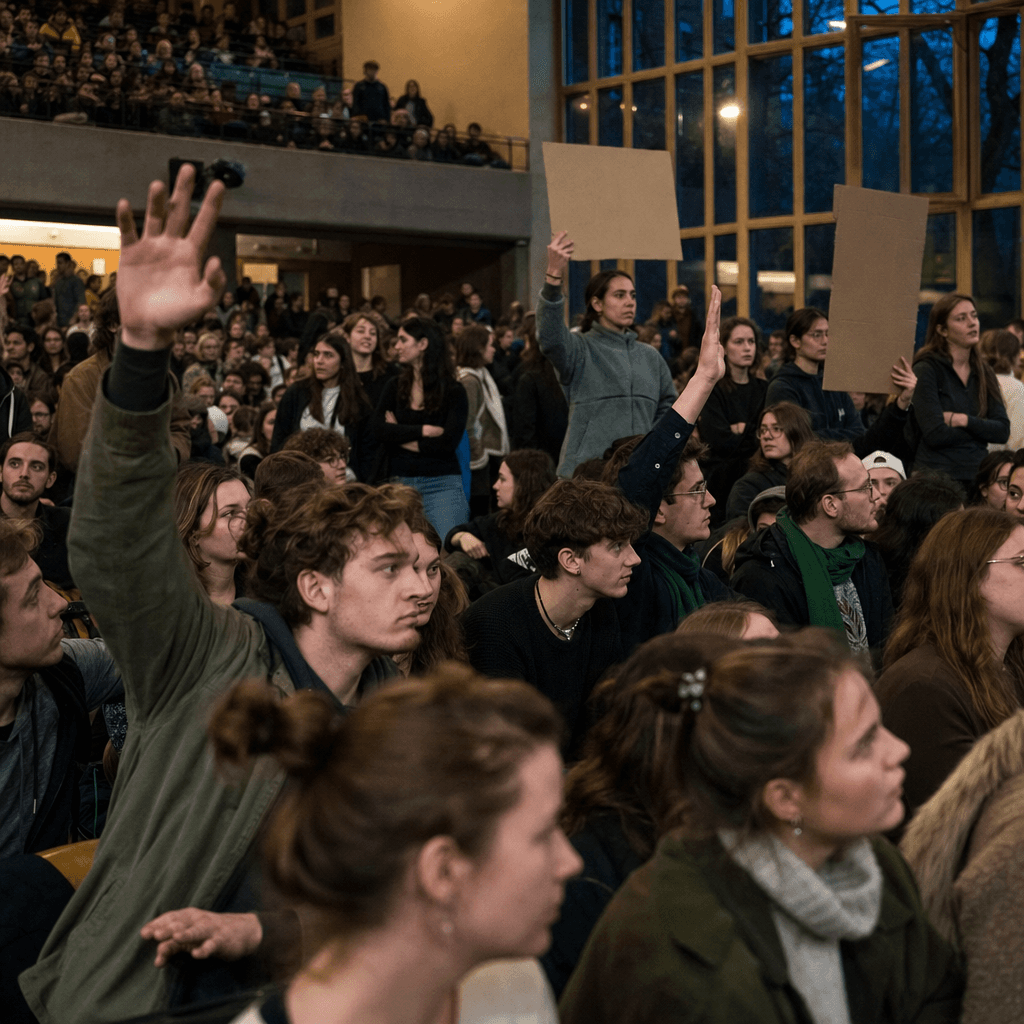
Leipzig Boycott Vote Signals Growing German Campus Divide
A historic student vote to boycott Israeli institutions at Leipzig University exposes a widening gulf between German youth and state policy.
A historic vote at Leipzig University has brought the global battle over academic boycotts directly into the German university system, marking a critical escalation in student-led activism. On May 19, nearly 700 students gathered for an extraordinary general assembly and voted almost unanimously to demand that Leipzig University sever all academic and research ties with Israeli institutions, citing accusations of complicity in the Gaza war, as reported by Al Jazeera. The vote represents a significant shift in Leipzig, a city historically recognized as a stronghold for the "Antideutsche"—a uniquely German left-wing faction defined by its staunchly pro-Israel stance. By capturing this symbolic territory, student activists are signaling a major ideological shift in German higher education.
Administrative Resistance and State Power
The university’s response illustrates the administrative leverage deployed to suppress campus-level boycotts. To obstruct the assembly, school administrators under Rector Eva Ines Obergfell withdrew access to campus venues, forcing the student council to organize the vote in an outdoor courtyard near the city's old fortifications, according to the European Palestinian Council for Political Relations. Legally, the university administration is not bound by student assembly resolutions. Crucially, the German Rectors’ Conference has explicitly endorsed closer academic cooperation with Israel, meaning university leadership remains aligned with German state policy rather than their student bodies.
This growing friction is playing out against Germany’s highly restrictive political framework on Middle Eastern diplomacy. Since the Bundestag passed a resolution in 2019 designating the Boycott, Divestment, and Sanctions (BDS) movement as antisemitic, German state funding and institutional support have been legally insulated from boycott demands, as documented by Al Jazeera. Consequently, students advocating for divestment face severe institutional risks. For instance, at the Hertie School in Berlin, the student council was forced to step down following a vote of no confidence after passing a pro-BDS motion, while the Free University of Berlin and Heinrich-Heine University Düsseldorf have similarly rejected student demands to preserve their institutional partnerships, according to
Middle East Eye. This struggle on campuses reflects a wider battle within
Global Politics over the limits of speech in state-funded institutions.
What to Watch Next
Moving forward, the primary flashpoint will be whether university administrations take administrative or disciplinary action against student councils that execute these symbolic campaigns. Activists at Leipzig are currently preparing to publish their "complicity report" to pressure individual faculty members into choosing between academic collaboration and research ethics. Academic associations and state ministries are likely to increase scrutiny on student-administered funds to ensure they do not violate national anti-BDS parameters. The next key indicator of this movement's momentum will be whether student groups at other German institutions succeed in forcing similar general assemblies, risking deeper fractures with a state apparatus committed to maintaining its strategic partnerships.
Discover more

Global Politics
Canada’s LNG Deal With Germany Redraws Energy
Canada's LNG export deal with Germany, anchored by the Ksi Lisims project, signals a shift in transatlantic energy trade and reshapes global supply dynamics.

International Relations
Germany Advocates EU Veto Reform for Action
Germany is pushing to scrap EU veto power, aiming to speed decisions on Ukraine and bypass holdouts like Hungary in a contentious bid to reform foreign policy.

Global Politics
US Troop Cuts in Germany Impact NATO Strategy
The US plans to cut 5,000 troops in Germany, pressing Europe to shoulder more NATO responsibility and challenging the alliance's broader European strategy.

Global Politics
Trump's Troop Cuts Impact NATO and Germany
Trump's troop cuts in Germany are turning the US military presence into a bargaining chip, signaling a major shift in NATO dynamics and European defense.