Trump's Troop Cuts Impact NATO and Germany
U.S. troop reductions in Germany raise NATO's strategic concerns.
Model Diplomat3 min readEurope
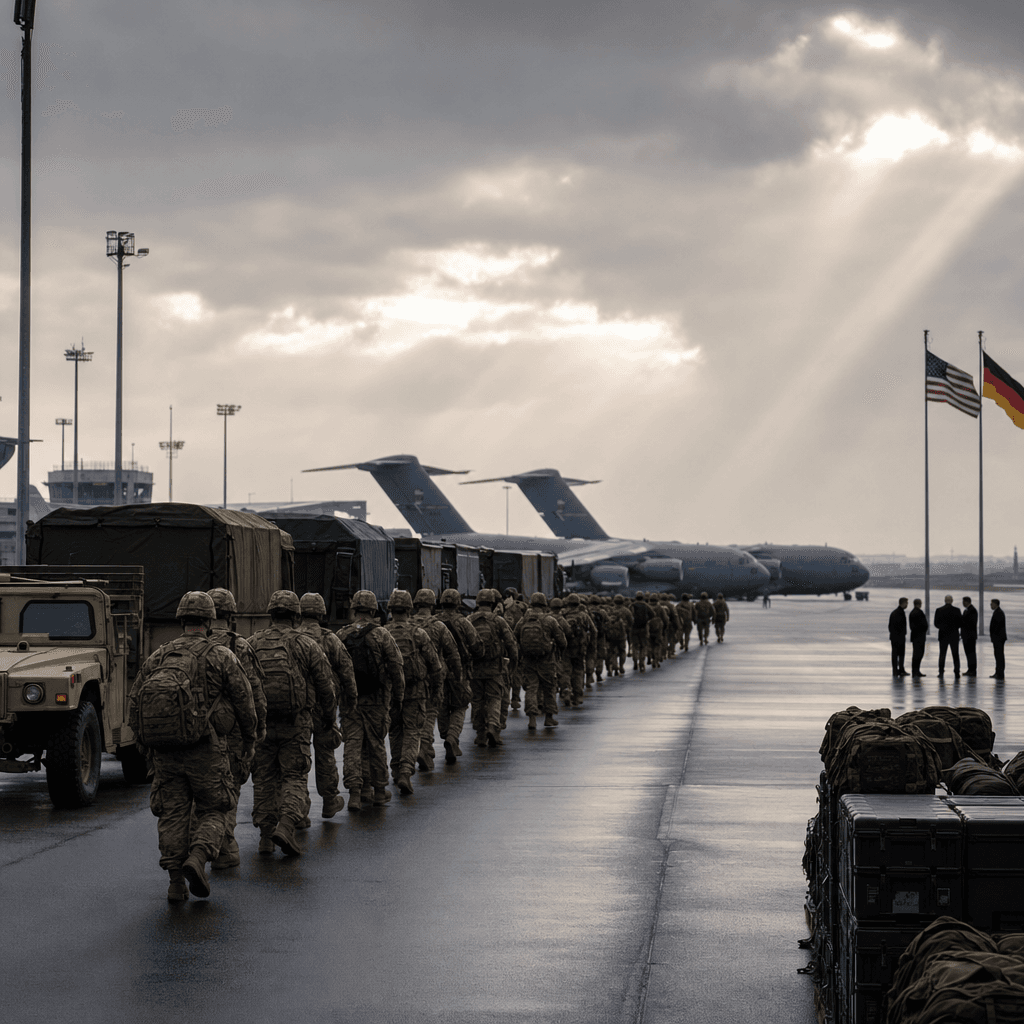
Trump’s Europe Troop Cut Puts Berlin and NATO on Notice
Trump is turning U.S. troop levels into bargaining power over Europe, forcing Germany and NATO to prepare for a faster security handoff.
Trump is using force posture as leverage, not just trimming numbers. Washington is preparing to withdraw about 5,000 U.S. troops from Germany over the next six to 12 months, and Trump has signaled the cut could go further than that initial figure, according to AP and subsequent reporting from the BBC and AP partners. Germany matters because it hosts the largest U.S. military presence in Europe, making any reduction there strategically and politically louder than a comparable cut elsewhere. AP News
BBC
Why this matters
Germany hosts more than 36,000 U.S. active-duty personnel, compared with roughly 12,000 in Italy and 10,000 in the UK, so a drawdown there hits the alliance’s central platform first. Reuters, via CBC, reported the move is intended to bring U.S. force levels in Europe back toward pre-2022 levels — in other words, to unwind part of the reinforcement posture built after Russia’s full-scale invasion of Ukraine. BBC
CBC/Reuters
That makes this bigger than a Germany dispute. Trump is signaling that U.S. protection in Europe is no longer treated as a standing condition; it is becoming a negotiated asset. For Berlin, that raises the cost of political friction with Washington. For NATO, it injects uncertainty into deterrence planning. For Europe’s defense ministries, it shortens the timetable for shifting from dependence to capability — a debate already accelerating across Global Politics. Germany’s own response shows it understands that pressure: Defense Minister Boris Pistorius called the withdrawal “foreseeable” and has argued Europe must carry more of the burden, while Berlin is projecting €105.8 billion in defense spending for 2027, or about 3.1% of GDP when related funds are included.
BBC
POLITICO
Who gains and who loses
Trump benefits first. Troop levels are one of the few alliance levers a U.S. president can move quickly and visibly, and they create immediate pressure on allies without formally challenging NATO membership. Germany loses strategic certainty. Poland and other frontline allies lose reassurance: Polish Prime Minister Donald Tusk has already warned against the alliance drifting toward disintegration. Even some U.S. Republicans see risk here; Senate Armed Services Chair Roger Wicker and House Armed Services Chair Mike Rogers questioned whether removing a brigade-scale presence from Germany could signal weakness to Russia. BBC
France 24
The other clear winner is the argument for a more self-reliant Europe. Every U.S. cut strengthens the hand of officials in Berlin, Paris, and Brussels who say the continent must plan for “less America” as a baseline, not a contingency. That shift will matter well beyond Germany — including in how Washington is read in the United States and across NATO.
What to watch next
The real question is whether 5,000 becomes a floor, not a ceiling. Watch three things: whether the Pentagon frames this as a Germany-specific move or the start of wider cuts in Italy and Spain; whether Congress tries to slow or condition the withdrawal; and whether NATO gets enough detail to reassure eastern allies. The next decision point is the implementation window itself: if removals begin on schedule over the next six to 12 months, Europe will treat this as a structural shift, not another Trump threat cycle. CBC/Reuters
BBC
Discover more
Global Politics
Trump's Conflicting Messages on Iran War
Trump's mixed messages on Iran reflect a strategy of audience management, benefiting Tehran amid a complex geopolitical landscape.

Conflict & Security
Drone Warfare Killing Aid Workers at Unprec
Over 1,000 humanitarian workers killed in three years as cheap armed drones collapse legal protections. Gaza, Sudan, Ukraine, and DRC see deliberate targeting of aid convoys and hospitals with zero prosecutions.

Global
World Normalises Taliban as Afghan Women Eras
UN data shows Afghan women erased from public life as Russia recognises the Taliban, EU hosts officials in Brussels, and ICC warrants for gender persecution go unenforced.
Conflict & Security
West Africa Food Crisis: Three Shocks in 2026
Conflict, climate extremes, and the Strait of Hormuz closure drive a severe food crisis in West and Central Africa, with fertilizer prices surging 80% and millions displaced.