Canada’s LNG Deal With Germany Redraws Energy
Canada strengthens ties with Germany through LNG exports.
Model Diplomat3 min readNorth America
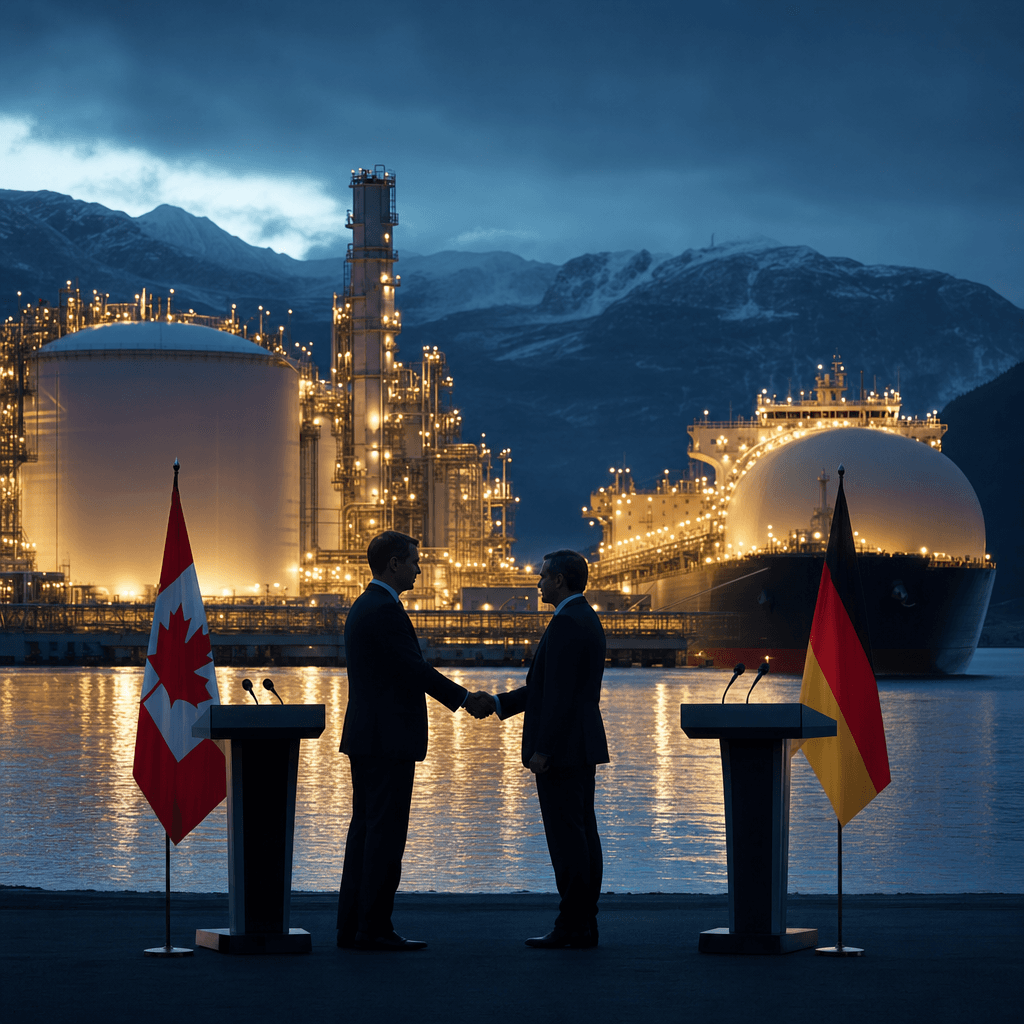
Canada’s LNG Deal With Germany Redraws Energy Trade
Ottawa is using a German LNG contract to pull Canada closer to Europe, while giving Ksi Lisims the buyer it needs to reach a final investment decision.
Canada has put Germany at the center of its energy diversification strategy. In Vancouver, Energy Minister Tim Hodgson said Ottawa will back a long-term deal to ship one million tons of liquefied natural gas a year from British Columbia’s planned Ksi Lisims project to Germany’s state-linked utility SEFE, with deliveries expected to begin in the early 2030s and run for up to 20 years (BBC). The timing is the point: Canada is trying to reduce its dependence on the U.S. market, while Germany is still rebuilding supply chains shattered by Russia’s invasion of Ukraine (
BBC;
Bloomberg).
Ottawa gets leverage; Berlin gets optionality
The deal works because each side needs the other. Canada wants a non-U.S. buyer to justify new west-coast export infrastructure, and Ksi Lisims still needs contracted offtake before its backers can make a final investment decision (BBC;
BNN Bloomberg). Hodgson said the agreement should help unlock financing “in a matter of months,” which is the real leverage point: without long-term customers, the project remains paper; with them, it becomes bankable (
BBC).
For Germany, SEFE is a politically useful buyer. The company was nationalized in 2022 after Gazprom abandoned the business during Europe’s energy crisis, and it has since been tasked with diversifying supply away from Russia (BNN Bloomberg). That means Berlin is not just buying gas; it is buying insurance against another supply shock. For a country still vulnerable to industrial energy prices, a 20-year LNG contract adds flexibility even if Europe continues to push renewable buildout.
Ksi Lisims is the test case
The contract also matters because it is tied to a specific project with political and commercial momentum. Bloomberg reported that Ksi Lisims is a C$10 billion floating export facility that already has regulatory approval (Bloomberg). BNN Bloomberg said the project, proposed by Western LNG, Rockies LNG and the Nisga’a First Nation, would have capacity of 12 million tonnes a year and would become Canada’s second-largest LNG export facility (
BNN Bloomberg).
That makes this more than a bilateral announcement. It is a signal that Ottawa is willing to fast-track energy infrastructure when it serves trade and strategic goals, a theme that also fits Carney’s push to deepen ties with non-U.S. markets and raise Canada’s profile in Global Politics. It also gives British Columbia and the Nisga’a First Nation a shot at a project that still needs financing and construction momentum.
What to watch next
The next decision point is not the announcement in Berlin or Vancouver; it is whether Ksi Lisims reaches a final investment decision this year, as reported by BNN Bloomberg (BNN Bloomberg). If financing closes, Canada gets a genuine pivot away from U.S. dependence. If it slips, the deal remains strategically useful but commercially incomplete. The date that matters now is the project’s financing window over the coming months.
Discover more

India
India-South Korea $50B Trade Expansion Plan
India and South Korea target $50 billion in bilateral trade by 2030, focusing on industrial cooperation and strategic alignment amid US pressures.

Conflict & Security
Drone Warfare Killing Aid Workers at Unprec
Over 1,000 humanitarian workers killed in three years as cheap armed drones collapse legal protections. Gaza, Sudan, Ukraine, and DRC see deliberate targeting of aid convoys and hospitals with zero prosecutions.

Global
World Normalises Taliban as Afghan Women Eras
UN data shows Afghan women erased from public life as Russia recognises the Taliban, EU hosts officials in Brussels, and ICC warrants for gender persecution go unenforced.
Conflict & Security
West Africa Food Crisis: Three Shocks in 2026
Conflict, climate extremes, and the Strait of Hormuz closure drive a severe food crisis in West and Central Africa, with fertilizer prices surging 80% and millions displaced.