Kosovo Certifies June 7 Vote: Kurti Wins
Kurti's Vetëvendosje wins plurality, presidency still elusive.
Model Diplomat7 min readEurope
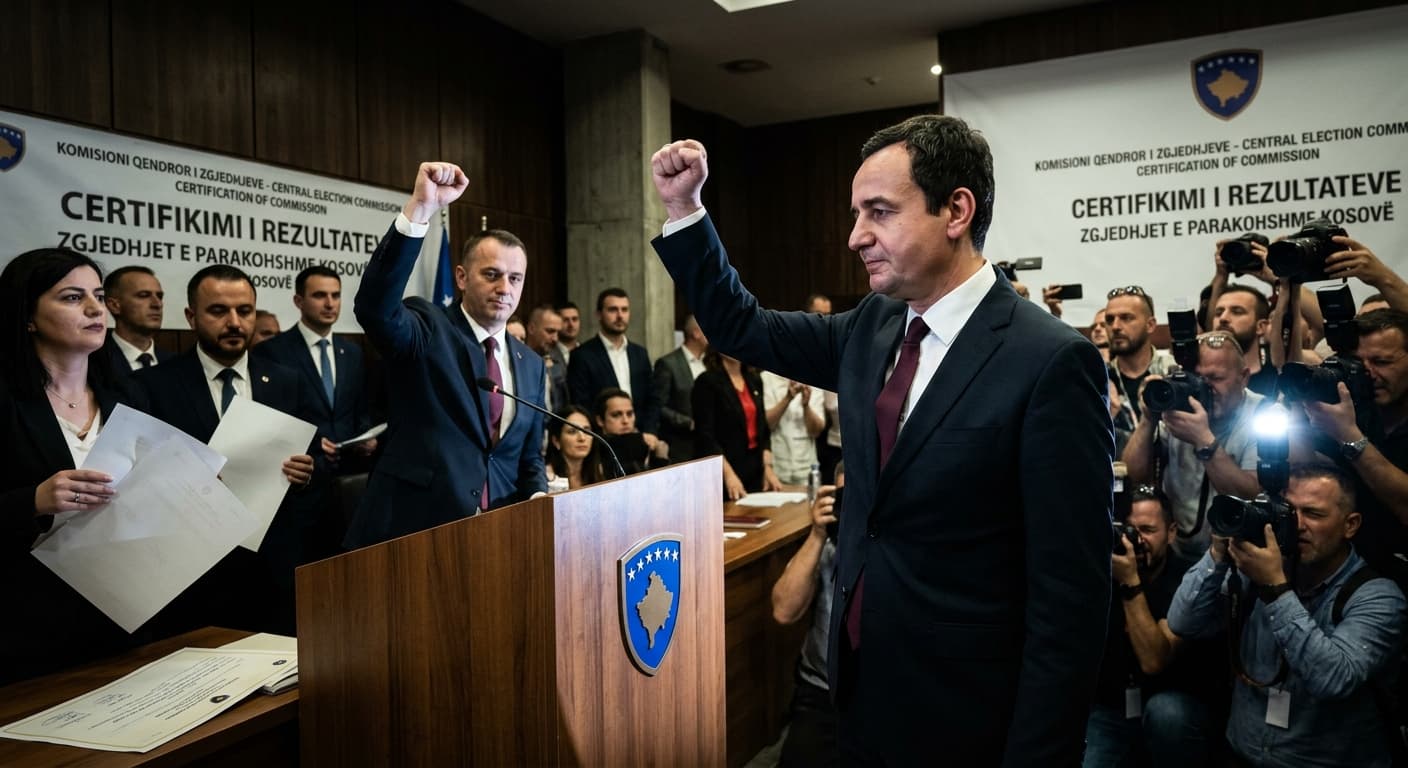
Kosovo certifies June 7 vote: Kurti wins, presidency still out of reach
Kosovo's Central Election Commission certified the June 7 snap vote on July 8, 2026: Vetëvendosje 53 seats, but 80 are needed for a president — and a fourth election looms.
Kosovo's third election in eighteen months produced the same trap as the first two. The Central Election Commission on July 8, 2026 certified that Prime Minister Albin Kurti's Vetëvendosje (VV) won 47.13% and 53 of 120 seats — a plurality large enough to form a government but eight short of the 61-seat threshold to invest one, and 27 short of the 80 votes the constitution demands to elect a president. The certification does not resolve Kosovo's crisis; it restarts the same clock that has already forced three votes and torched more than a billion euros in stalled EU and World Bank funding. Unless Kurti trades something real to the Democratic Party of Kosovo (PDK) or the Democratic League (LDK) — parties he has spent five years describing as corrupt heirs of the Kosovo Liberation Army — Pristina is on track for a fourth election by early 2027, with EU accession, the frozen Belgrade dialogue and the Serb-majority north all in the balance.
What was certified, and what it actually means
CEC chair Kreshnik Radoniqi confirmed the results on the deadline day, one month after the vote. PDK, led by figures around Kosovo Specialist Chambers defendant Hashim Thaçi, took 19.44% and 22 seats; the LDK, running with former president Vjosa Osmani on its list, took 16.69% and 18 seats; Ramush Haradinaj's AAK collapsed to 6.74% and 7 seats, per the certification detailed by Hürriyet Daily News and
KOHA. Twenty seats are reserved for ethnic minorities, ten of them for the Belgrade-aligned Srpska Lista.
Turnout tells its own story. The CEC put participation at 36.88%, roughly eight points below the December 2025 vote, according to Al Jazeera's election-day reporting. In a country of about two million voters that has now been to the polls four times in eighteen months — including two rounds of local elections — the electorate is disengaging faster than the elite can produce a government.
Certification starts a hard constitutional clock. Under Article 66 of Kosovo's constitution, the Assembly must convene a constitutive session within 30 days — a window that runs, per KOHA, from July 9 to August 7, 2026. Acting President Albulena Haxhiu is expected to call the session; if she does not, the parliament convenes automatically on the last day. Members then elect a speaker and five deputy speakers, two of whom must come from minority communities, before the president can nominate a prime-minister-designate.
The arithmetic Kurti cannot escape
Kurti holds a comfortable working majority for a cabinet. Ten of the twenty minority seats belong to non-Serb communities that have historically backed VV, giving Kurti a plausible path to the 61 votes needed to be invested as prime minister — the same coalition math that produced the 66–49 confidence vote in February 2026, as Al Jazeera reported.
The presidency is the problem. Under Article 86, a president needs 80 votes in each of the first two rounds and 61 in the third. Vjosa Osmani's mandate expired in April 2026, the Assembly failed to elect a successor even under the extended 45-day deadline, and that failure — under precedent set by the Constitutional Court in 2020 — is exactly what mandates dissolution. As Sweden's Utrikespolitiska Institutet
documented in a December 2025 policy brief, even in Kurti's stronger December 2025 parliament the process was so paralysed that the speaker was chosen "at the 58th attempt" and Serb minority approvals had to be negotiated seat by seat.
The math today is worse than in December. To reach 80, VV's 53 needs at least PDK's 22, or LDK's 18 plus every non-Serb minority MP plus AAK — a coalition BBC Balkans correspondent Guy De Launay described bluntly on July 7 as one Kurti "should not find it difficult" to assemble on paper but has systematically refused to build in practice, according to the BBC's election analysis. The opposition's price is what it has always been: a share of ministries, the presidency itself, or a genuine handover of the northern policy Kurti considers his defining achievement.
Who benefits from another failure
The uncomfortable analysis: repeated deadlock benefits Vetëvendosje's brand. Kurti has spent every previous crisis blaming PDK and LDK for obstructionism, and voters have rewarded him four elections in a row. His share is down from 51% in December to 47% in June, but PDK and LDK together still cannot outvote him. The Economist's Pristina correspondent argued in January 2026 that Kosovo's democracy is unusually resilient precisely because Kurti's charisma survives the paralysis he provokes.
The losers are more concrete. The IMF's Fourth Review of Kosovo, published in May 2025, warned that "failure to elect a new president with two-thirds of MPs participating — challenging for any coalition — will trigger a snap vote." That is now exactly what has happened, twice. The Fund has anchored its Stand-By Arrangement and Resilience and Sustainability Facility on the assumption of continuity from a stable government; another dissolution puts disbursements and the 2027 budget cycle in doubt.
The EU has also moved. The bloc lifted the punitive measures imposed on Pristina in 2023 — a package Al Jazeera valued at hundreds of millions of euros in withheld cooperation funds — after Serb mayors were re-elected in northern municipalities. But European Council President António Costa, who visited Pristina in early June, tied further pre-accession disbursement explicitly to institutional stability. His office issued the warning on the record days before the vote; certification without a functioning government pushes the €880m in cooperation-agreement aid identified by The Economist further out of reach.
The regional beneficiary is Belgrade. Serbian President Aleksandar Vučić has spent the eighteen-month crisis normalising his own position: Serbia hosted its first joint military exercise with NATO less than thirty years after the alliance bombed his capital, according to Al Jazeera. Every month Pristina spends without a legitimate president is a month the EU-facilitated dialogue on normalisation cannot advance, and a month in which the Association of Serb Municipalities — the 2013 commitment Kurti has refused to implement — remains Belgrade's live grievance.

The constitutional trapdoor
Kosovo's problem is not that its democracy is failing. Turnout is falling and elite trust is thin, but the CEC certified within statutory deadlines, the Constitutional Court has repeatedly intervened on procedure without partisan controversy, and the OSCE Mission handed over election-management servers as recently as February 2025, according to the OSCE. The problem is a constitutional design in which a plurality winner cannot govern without the losers' consent to elect a head of state, and the losers have no incentive to grant it.
The 80-vote presidential threshold was intended, in the aftermath of the 2008 declaration of independence, to force consensus and reassure minority communities. In practice it now functions as a veto for a demoralised opposition that has watched Kurti win four consecutive elections. Kosovo scholars Driola Susuri and Kadri Kryeziu argued in a 2021 Kosovo Constitutional review that direct presidential election is "the most current and best way of overcoming the present parliamentary stalemate." That reform requires a two-thirds constitutional amendment — the same threshold Kurti cannot reach.
The most likely path, absent a genuine deal, is the one the Assembly has already walked. Kurti secures 61-plus votes for a cabinet with minority support, moves quickly to ratify the World Bank and EU loans, and dares the opposition to trigger a fourth election by boycotting the presidential vote. The opposition's calculation is the mirror image: another failed presidency forces dissolution, and Kurti's numbers have now dropped four percentage points in six months. Somewhere below 45%, VV's cabinet-forming plurality disappears.
What to watch
- Speaker election, July 9 – August 7, 2026. The constitutive session must produce a speaker and five deputy speakers, one of them from the Serb community. The 2025 experience — 58 rounds and a month of horse-trading over the Serb deputy speaker, per the UI brief — is the base case, not the worst case.
- Presidential nomination, late August 2026. Article 86 requires two candidates and 30 MP signatures; the first vote is where PDK and LDK will show whether they intend to negotiate or force dissolution.
- IMF programme review, autumn 2026. The next scheduled review under the Stand-By Arrangement will test whether the Fund treats another interim government as a programme-eligible counterparty.
- EU pre-accession disbursement decision. Costa and the European Commission have tied cooperation-agreement funds to a functioning executive; the timing of any release is the clearest external signal of whether Brussels views the July 8 certification as sufficient.
The Bottom Line
Kosovo's certification of the June 7 vote confirms Vetëvendosje as the country's dominant party and the constitutional order as its dominant obstacle: 53 seats let Albin Kurti govern, but only 80 votes elect a president, and no serious path to those 80 votes runs through the parties he has spent his career denouncing. Unless Kurti trades ministries or the presidency itself to PDK or LDK before autumn, Kosovo will hold a fourth national election within a year — and the beneficiaries will be Aleksandar Vučić in Belgrade and the EU officials whose patience with Pristina is now openly rationed.
See also: Kosovo country profile.
Discover more
Economics
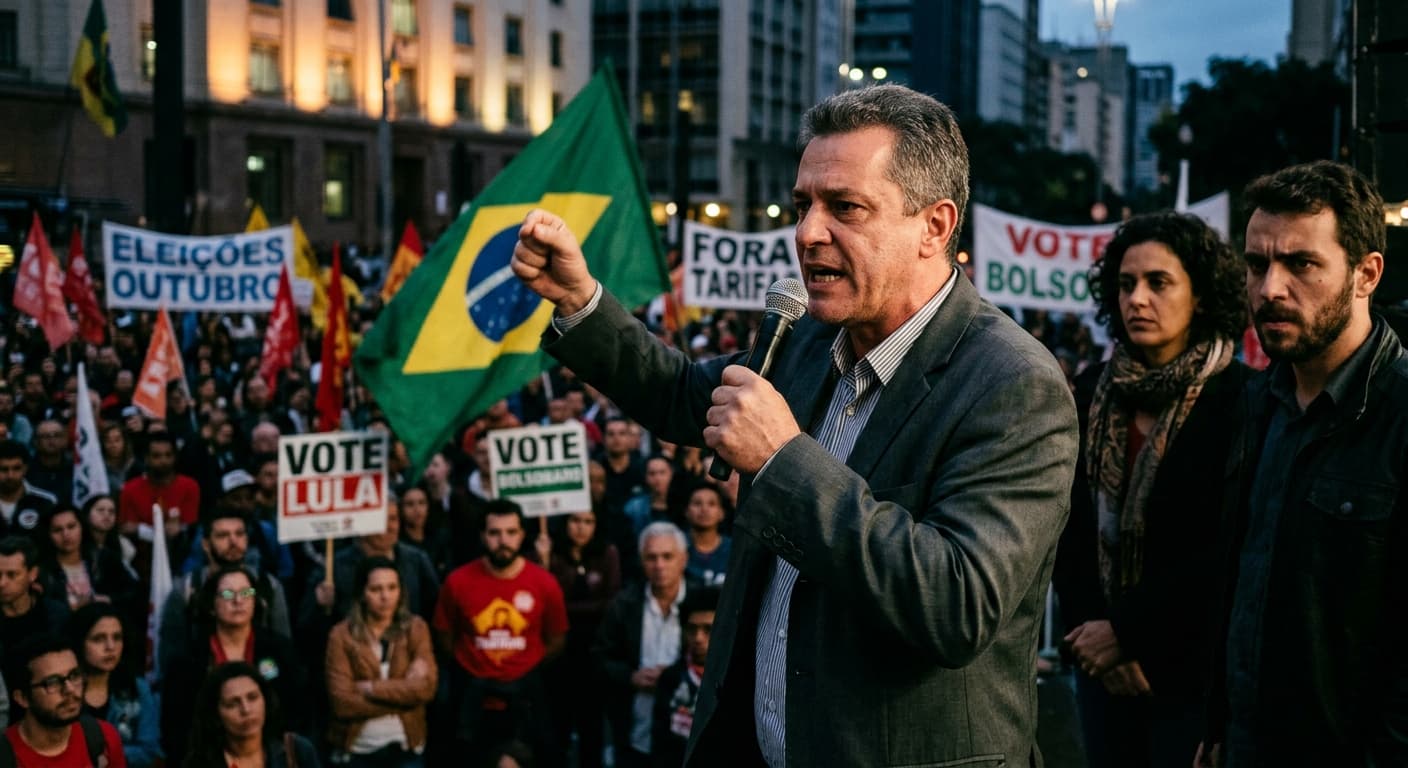
US Tariffs on Brazil: A Political Play
US imposes 25% tariff on Brazil but exempts 66% of exports, targeting manufactured goods ahead of Brazil's October election. Analysis of the political calculus, exemptions, and Brazil's response options.
Elections & Campaigns
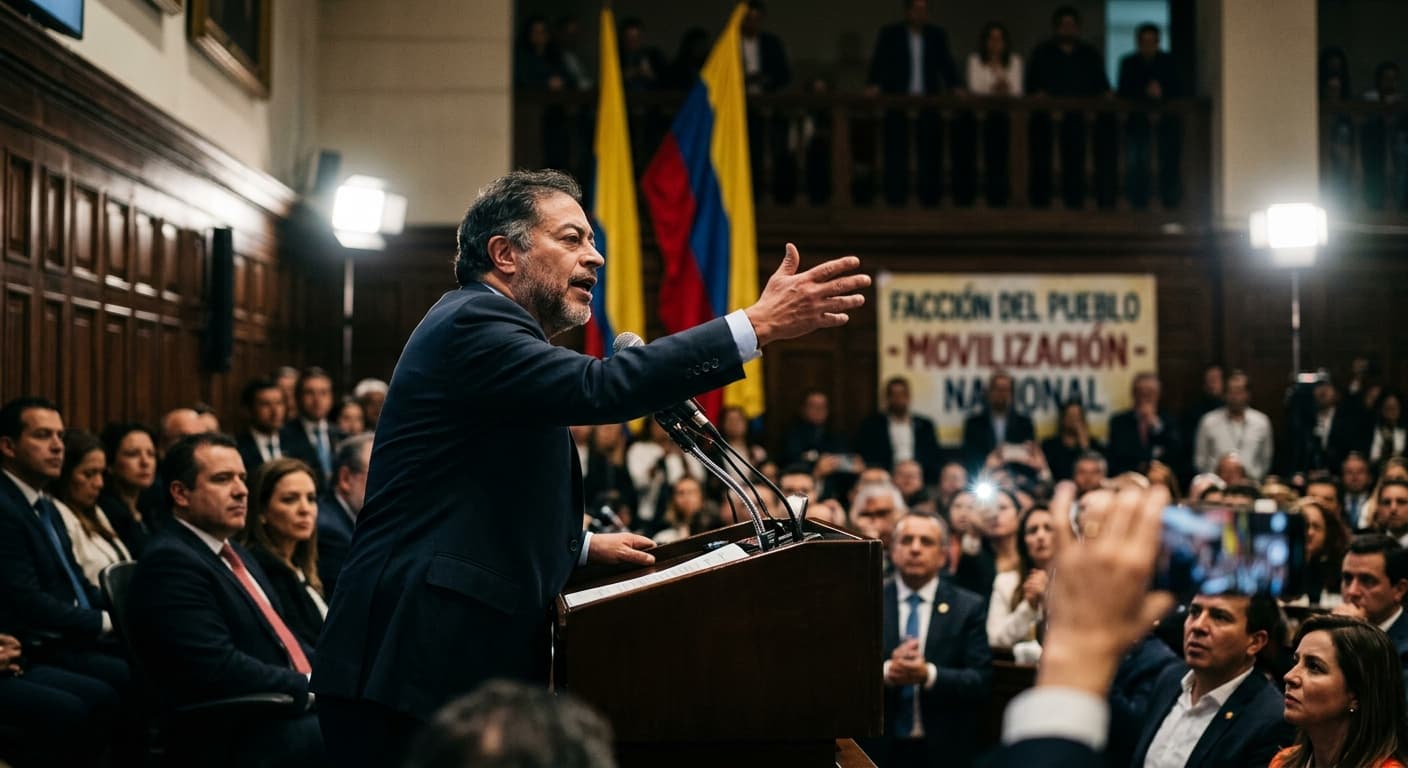
Petro's Farewell: Blueprint for Opposition-in
Colombia's Gustavo Petro refuses to recognize the June 21 election result, calls the incoming government a US-imposed 'viceroyalty', and mobilizes supporters for a general strike, setting the stage for a turbulent transfer of power.
Economics
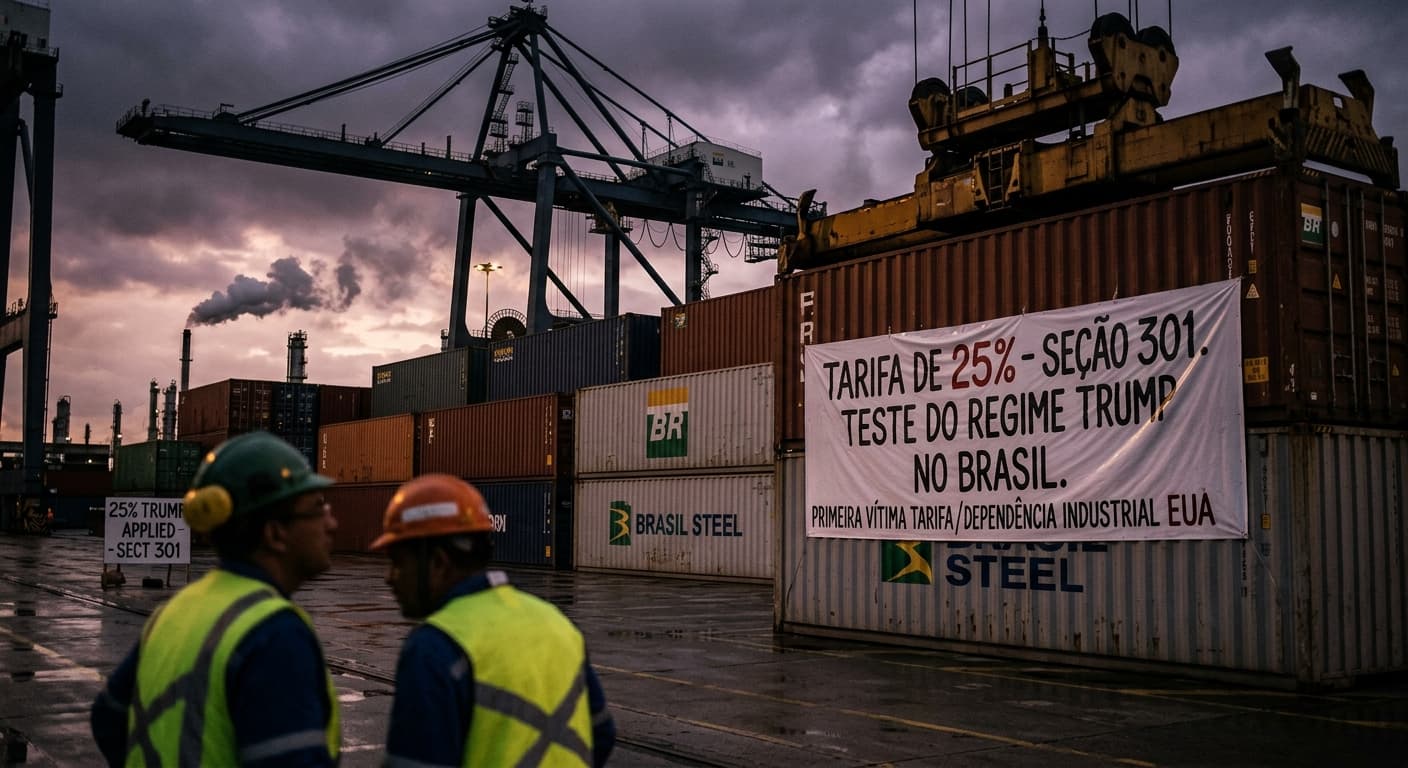
Brazil Becomes Trump's Section 301 Guinea Pig
Brazil faces a 25% US tariff from July 22, 2026, as the first test of Trump's post-IEEPA Section 301 regime. Exemptions covering 65% of exports reveal US industrial dependence.
Global
Fujimori Pre-Inauguration World Bank Deal
Peru's president-elect Keiko Fujimori secures pre-approved World Bank credits for El Niño prevention before taking office, using multilateral financing as political armor against impeachment.