Khalil Case Boosts Trump Deportation Strategy
Supreme Court involvement sought in Khalil's deportation case
Model Diplomat3 min readNorth America

Khalil Case Hands Trump a Deportation Lever
The Third Circuit’s move gives the administration the upper hand; Khalil’s lawyers are now trying to freeze the case long enough to get the Supreme Court involved.
Mahmoud Khalil’s lawyers are headed to the Supreme Court after a federal appeals court ruling cleared the way for the government to keep pressing for his deportation, a development that shifts immediate leverage back to the Trump administration, The Guardian reported. The legal team’s goal is simple: slow the machinery down before immigration proceedings and federal review converge against him. In practice, time is now the main battleground.
Why the ruling matters
The case has become more than a fight over one Columbia graduate and lawful permanent resident. It is now a stress test of how far the White House can stretch immigration law to punish or remove a noncitizen tied to pro-Palestinian activism. CNN reported last year that immigration authorities relied on a rarely used foreign-policy provision to argue that Khalil could be deported because his “beliefs, statements or associations” threatened U.S. interests, with Secretary of State Marco Rubio’s letter doing most of the legal work (CNN). That is why the administration benefits from keeping the case in this lane: it turns a politically charged speech dispute into an immigration question, where the government usually has more room to maneuver.
Khalil’s side is trying to force the opposite frame. Their argument, as CNN and the The New York Times both reported, is that the government is using immigration authority to punish protected speech. That matters not only for Khalil, but for any noncitizen who joins a campus protest, signs a petition, or becomes politically visible. If the government can convert those activities into deportability, the chilling effect extends well beyond Columbia.
What the courts have already signaled
The problem for Khalil is that the legal map is fragmented and moving fast. CNN reported that an immigration judge in Louisiana has already kept the deportation case alive and set a June 2 deadline for written closing arguments in the removal proceedings (CNN). Separately, a federal judge in New Jersey has been weighing the legality of the detention itself, and earlier this month found the government’s use of the statute to be likely unconstitutional as applied, calling the theory “unconstitutionally vague,” CNN reported (
CNN).
That split is what makes the Supreme Court appeal so important. Khalil’s lawyers are not just asking for relief in one courtroom; they are trying to keep one court from outrunning the others. If the high court declines to intervene, the administration keeps the advantage of parallel proceedings, with the immigration case in Louisiana and the federal challenge in New Jersey pulling in different directions.
What to watch next
Watch for two dates and one decision-maker. First, whether the Supreme Court will issue any emergency relief at all. Second, whether the Louisiana immigration judge turns the procedural pressure into an actual removal order. And third, whether the New Jersey federal court keeps its restraining order in place long enough to matter. For the White House, the objective is deterrence: make Khalil an example. For Khalil, the only winning move is delay.
Discover more

Human Rights
Pakistan's Quiet Siege on Afghan Students
KEMU orders Afghan medical students to vacate hostels within 48 hours, part of Pakistan's deportation drive that has expelled over 1.5 million Afghans since 2023, now targeting higher education.

Conflict & Security
Afghan Asylum in EU: 78% Recognition Rate
Afghan asylum recognition rates in the EU hit 77.8% in Q1 2026, the highest among major nationalities, even as applications fall to a five-year low and the EU opens deportation channels with the Taliban.
Human Rights
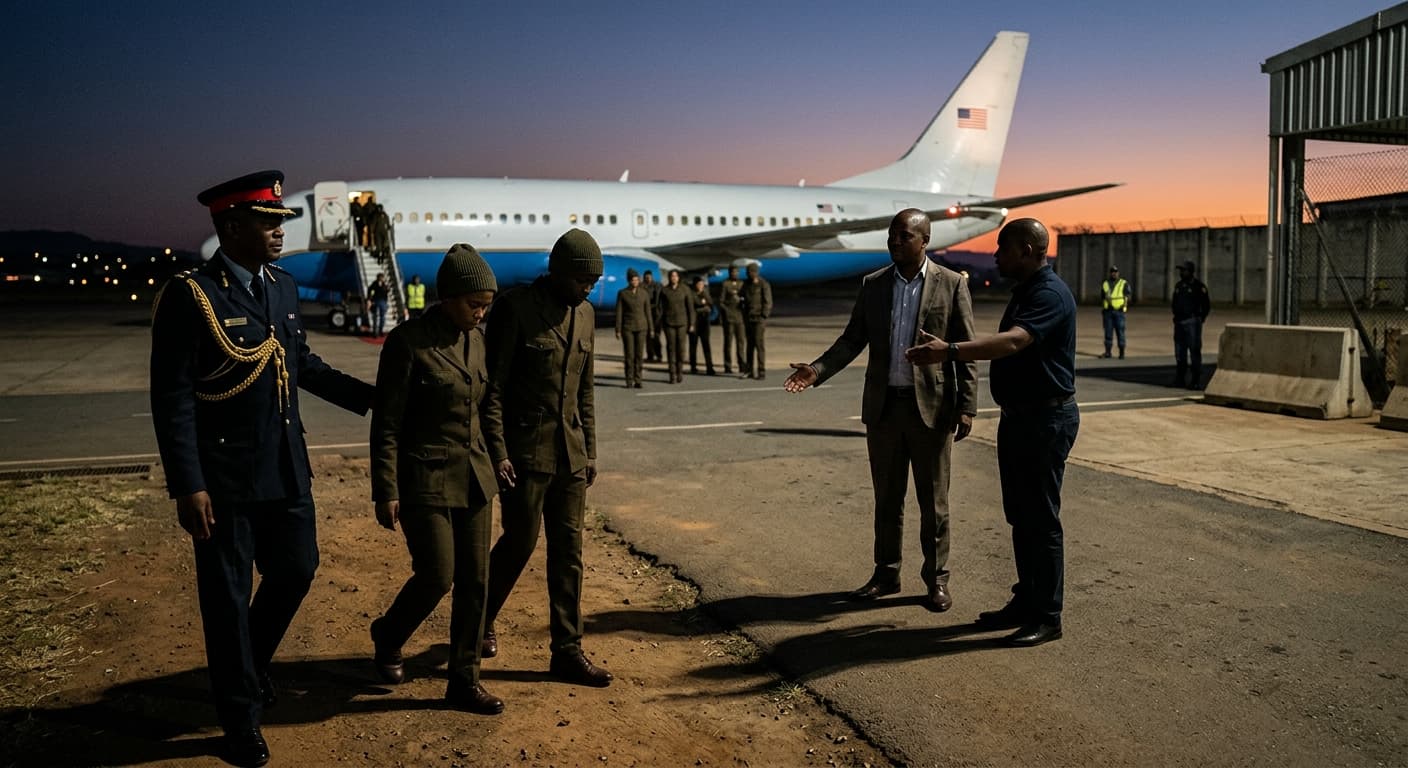
Eswatini's US Deportee Flight and Diplomacy
Eswatini accepts US deportees under a $5.1m deal, reshaping regional human rights politics and providing diplomatic cover for its monarchy.

Global Politics
EU Engages Taliban on Deportations
The EU's direct engagement with the Taliban over deportations marks a notable shift in diplomatic strategy, linking migration policy to Afghanistan's rulers.