Kazakhstan Court Clears Path for Tokayev to
Court ruling allows Tokayev to run until 2036
Model Diplomat7 min readCentral Asia
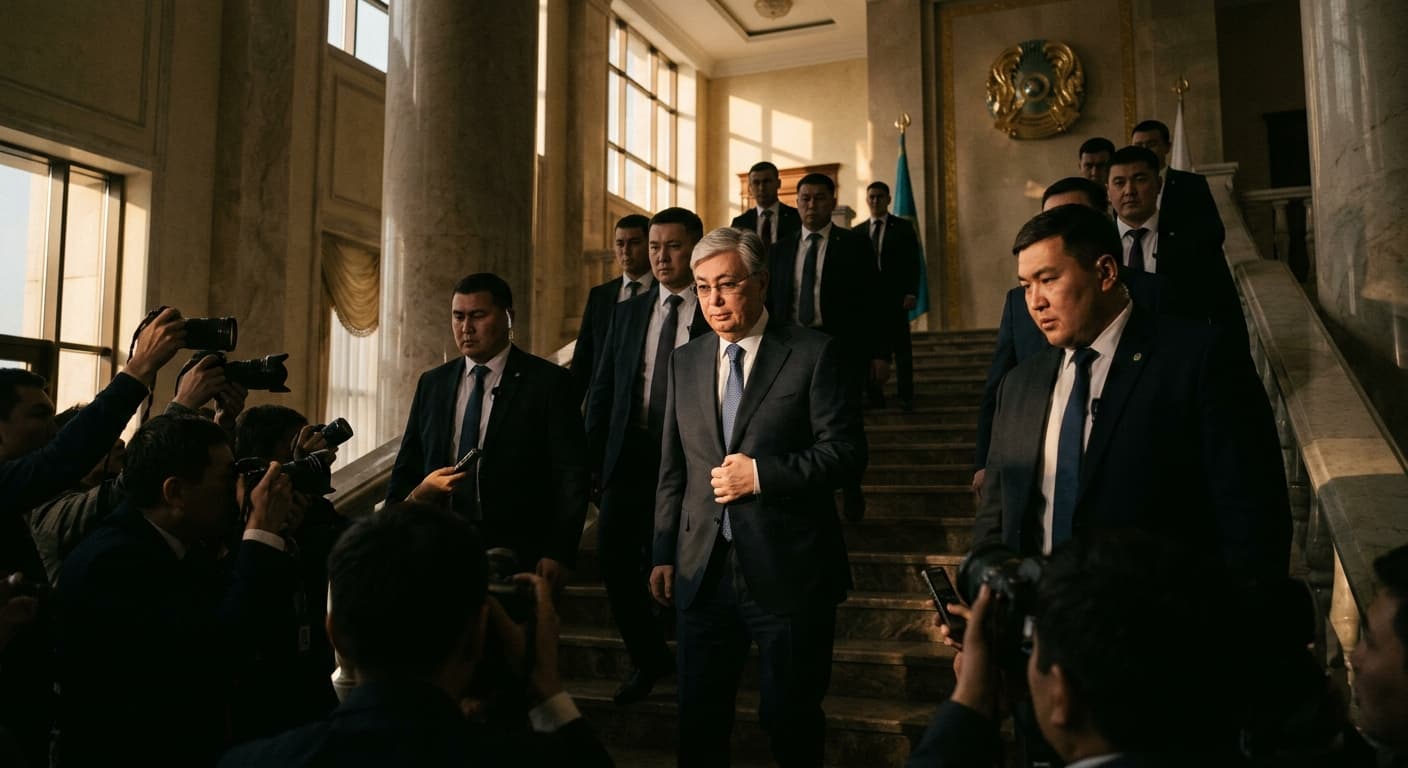
Kazakhstan Court Resets Tokayev's Clock, Clearing Path to 2036
Kazakhstan's Constitutional Court ruled on July 7, 2026 that President Tokayev's prior terms don't count under the new charter — opening a runway to 2036.
Kazakhstan's Constitutional Court on July 7, 2026 issued Normative Resolution No. 89-NP, ruling that terms served under the 1995 constitution do not count against the term limits in the new charter that took effect July 1 — a decision that gives 73-year-old President Kassym-Jomart Tokayev a legal path to run in 2029 and, if he wins, govern until 2036. The ruling matters less for what Tokayev decides personally than for what it institutionalizes: a Central Asian playbook, borrowed from Moscow and Tashkent, in which each new constitution zeroes out the incumbent's clock while promising the public a "fresh start" that hardens presidential power over parliament, courts and succession.
The decision is the closing act of a 16-month legal reset that began with the March 15, 2026 referendum, in which the Central Referendum Commission reported that 87.15% of voters approved the new constitution on a 73.12% turnout. That charter dissolves the bicameral parliament in favor of a unicameral Kurultai, re-establishes a vice presidency abolished 30 years ago, and — per Chatham House analyst Kate Mallinson's
assessment — concentrates appointment powers over the Supreme Court, Constitutional Court, Supreme Audit Chamber and Central Election Commission in the presidency, "subject to Kurultai approval."
What the court actually ruled
The primary document is short and decisive. In Resolution No. 89-NP, the Constitutional Court interpreted Article 43(1), Article 72(2)–(3), Article 83(1) and Article 84(3) of the 2026 Constitution — the provisions governing term limits for the president, Constitutional Court judges, the prosecutor general and the human-rights ombudsman.
The court's operative finding, translated from the Russian text on the government portal gov.kz:
"The fact of a person having occupied one of the specified offices during the period of the 1995 Constitution does not, by itself, constitute a constitutional-legal impediment to their election or appointment to the corresponding office after the entry into force of the 2026 Constitution… election or appointment of such persons after the entry into force of the 2026 Constitution shall be considered a first election or appointment."
In plain terms: the clock starts at zero. The seven-year single-term cap written into the new charter — the same nominal cap Tokayev signed into law in September 2022 — now applies only to terms served after July 1, 2026. Tokayev's 2019 partial term and his 2022 full mandate no longer count.
The Central Asian playbook
Tokayev is not improvising. He is running the script Vladimir Putin ran in 2020 and Shavkat Mirziyoyev ran in 2023 — a script The Diplomat's own analysis notes was pioneered in Uzbekistan by Islam Karimov, who "was elected four times despite the two-term limit in the Uzbek Constitution."
The mechanics vary; the outcome converges. A referendum delivers a new charter with an ostensibly stricter limit (a single seven-year term, in Kazakhstan's case), sold as a rupture with the old regime. A constitutional court — staffed under rules the president himself designed — then rules that the stricter limit applies prospectively only. The incumbent emerges with the moral high ground of "having accepted term limits" and the practical reality of another decade in office.
What distinguishes Kazakhstan is speed and elegance. The 2026 text was drafted in roughly three weeks; the referendum passed 22 days after Tokayev signed the decree calling it on February 11. The court's interpretation followed six days after the charter took effect. There was no protracted political fight because the architecture of the fight had already been dismantled — the two-chamber parliament that could have slowed things down is being dissolved and replaced on August 23.
Why this reshuffles regional stability
The immediate winner is not Tokayev alone. Beijing benefits materially. Chatham House's Mallinson argues that the new constitution moves Kazakhstan "towards a more institutional, less personalist authoritarian system — similar to the political economy of its neighbour, China," and notes that Tokayev, who served in the Soviet embassy in Beijing in the late 1980s, "appears to admire the technocratic authoritarianism of China."
Moscow's position is more ambivalent. The new charter downgrades Russian from a language used "on equal terms" with Kazakh to one used "alongside" it, and — critically — affirms constitutional supremacy over international treaties. That last clause is a shield against the sort of legal claims Russia used to justify its 2014 Crimean annexation and its 2022 invasion of Ukraine. Mallinson's blunt reading: "Russia will be wary that the new constitution cements Kazakhstan's sovereignty and territorial integrity in the face of increasing Russian attempts to assert its influence."
For the West, the calculus is uncomfortable. The Biden and Trump administrations both invested in the C5+1 format built around Tokayev personally, betting that a reformist Kazakhstan would anchor Central Asia's opening to Europe. A president who now controls appointment of the entire top judiciary and can plausibly govern until age 83 is a durable partner — but he is also, on paper, less democratic than the leader Washington cultivated. The question for European Union critical-minerals diplomacy, and for U.S. sanctions-enforcement cooperation on Russia, is whether transactional stability trumps democratic backsliding. Chatham House concludes it likely will: "Countries with a more transactional way of doing business — such as the US — could be at an advantage, at least in the short term."

The Tokayev question — will he actually run?
Tokayev has spent six years insisting he would not do exactly what the court has now permitted him to do. In June 2022, he told parliament: "Let me answer: I have never had such an idea and will never have it." His camp told Orda.kz after the July 7 ruling that the president "intends to serve out his seven-year term" — meaning through 2029.
Three scenarios are now live, and each has a named beneficiary.
Scenario one: Tokayev runs in 2029. He wins a seven-year term, governs to 2036, and hands over to a hand-picked successor at 83. This is the Putin path. It maximizes personal continuity but exhausts the "reformer" narrative Tokayev has cultivated since Qandy Qantar.
Scenario two: Tokayev calls a snap election in 2026 or 2027. He runs immediately under the new constitution — while the reset is fresh and the newly elected Kurultai is docile — and secures a full seven-year mandate through 2033 or 2034. The Devdiscourse wire explicitly flagged this option, noting "speculation has arisen about Tokayev's political future, particularly concerning potential snap elections." History favors this reading: Tokayev has called two snap votes already, in 2019 and 2022.
Scenario three: Tokayev steps down into the newly created vice presidency. Mallinson's Chatham House note treats this seriously. The vice presidency, reintroduced after 30 years, is officially a liaison between president and Kurultai. Politically, as BBC Uzbek reported, "if the president's powers expire prematurely, leadership of the state can pass precisely to the vice president." A Tokayev who installs a loyalist as president and takes the vice presidency himself becomes Kazakhstan's Deng Xiaoping — the paramount leader without the daily grind.
The court's July 7 ruling matters because it makes all three scenarios legally clean. Before Resolution 89-NP, only scenario three was uncontested. Now every option is open.
The loser hiding in plain sight
The immediate loser is not the parliamentary opposition — there effectively isn't one — but the Constitutional Court itself. The court was Tokayev's signature institutional reform after Qandy Qantar; the Akorda's own factsheet still touts it as "a supreme body of constitutional control that ensures the supremacy of the Constitution" with decisions that "even the President cannot revise."
Its first constitutionally consequential ruling under the new charter was to interpret the president's term limits in the president's favor, on the president's own referral, six days after the constitution the president designed took effect. That sequence — however defensible legally — burns the court's independence as a resource. The next Kazakh president, or the next opposition, will find it harder to argue that the court is a check on anything.
What to watch
- August 23, 2026 — snap Kurultai elections. The composition of the 145-seat unicameral parliament will signal whether Tokayev is preparing for a snap presidential vote (expect a heavily pro-government sweep) or a long consolidation (expect controlled pluralism designed to reassure Brussels).
- Legislative package before parliament — five new constitutional laws on the president, the Kurultai, the Halyk Kenesi, the capital and administrative-territorial structure,
flagged by Tokayev on July 1. The vice-presidency implementing law is the one to read closely — its succession clauses will reveal which scenario the Akorda is preparing for.
- A snap-election decree — Tokayev's next presidential decree calling for an early vote. He has done it twice; a third time would confirm scenario two.
- The Venice Commission opinion — the Council of Europe body has issued critical assessments of Kazakhstan's constitutional changes in the past. Its response to Resolution 89-NP will shape EU parliamentary sentiment on the C5+1 framework.
The Bottom Line
Kazakhstan's Constitutional Court did not extend Tokayev's rule on July 7 — it made the extension legal, deniable and repeatable. The ruling completes a 16-month sequence in which a referendum, a new charter and a court interpretation converted a self-imposed one-term limit into a runway to 2036, while stripping parliament of budgetary and appointment powers that might have offered resistance. The question is no longer whether the Central Asian playbook works; it is whether any post-Soviet term limit, anywhere, still means what it says.
Discover more
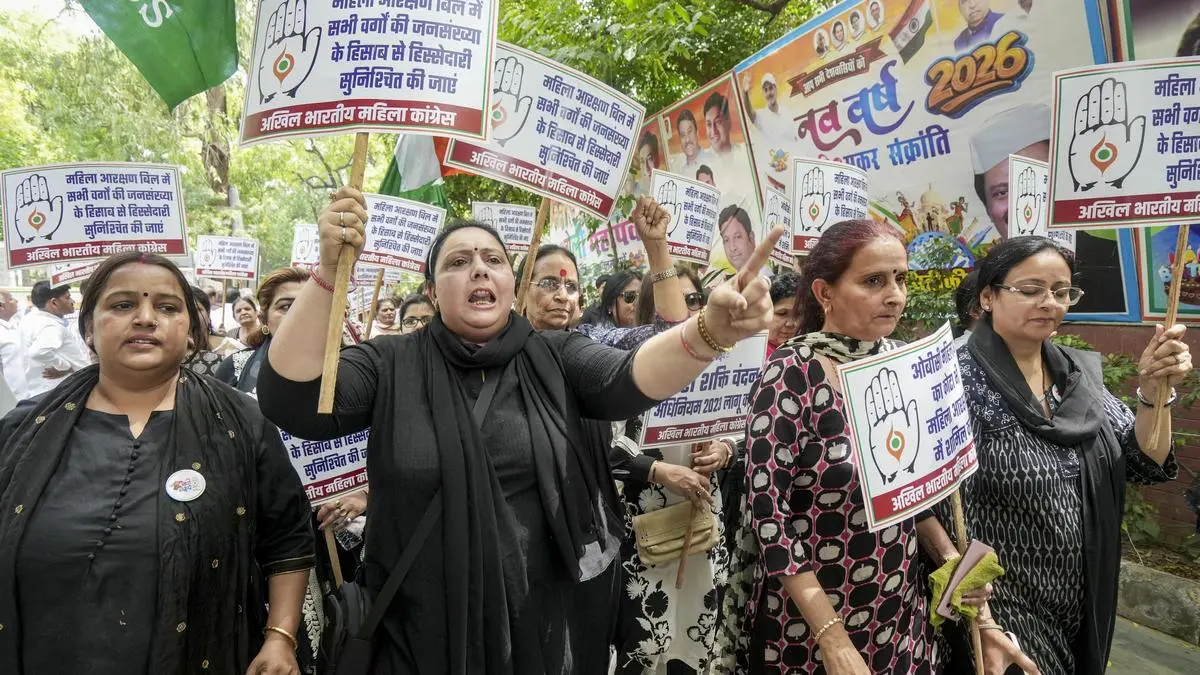
India
BJP's Misunderstanding of Women's Quota Needs
The BJP's linking of the Women Reservation Bill to delimitation risks delaying women's empowerment in India, misreading the aspirations of female voters.
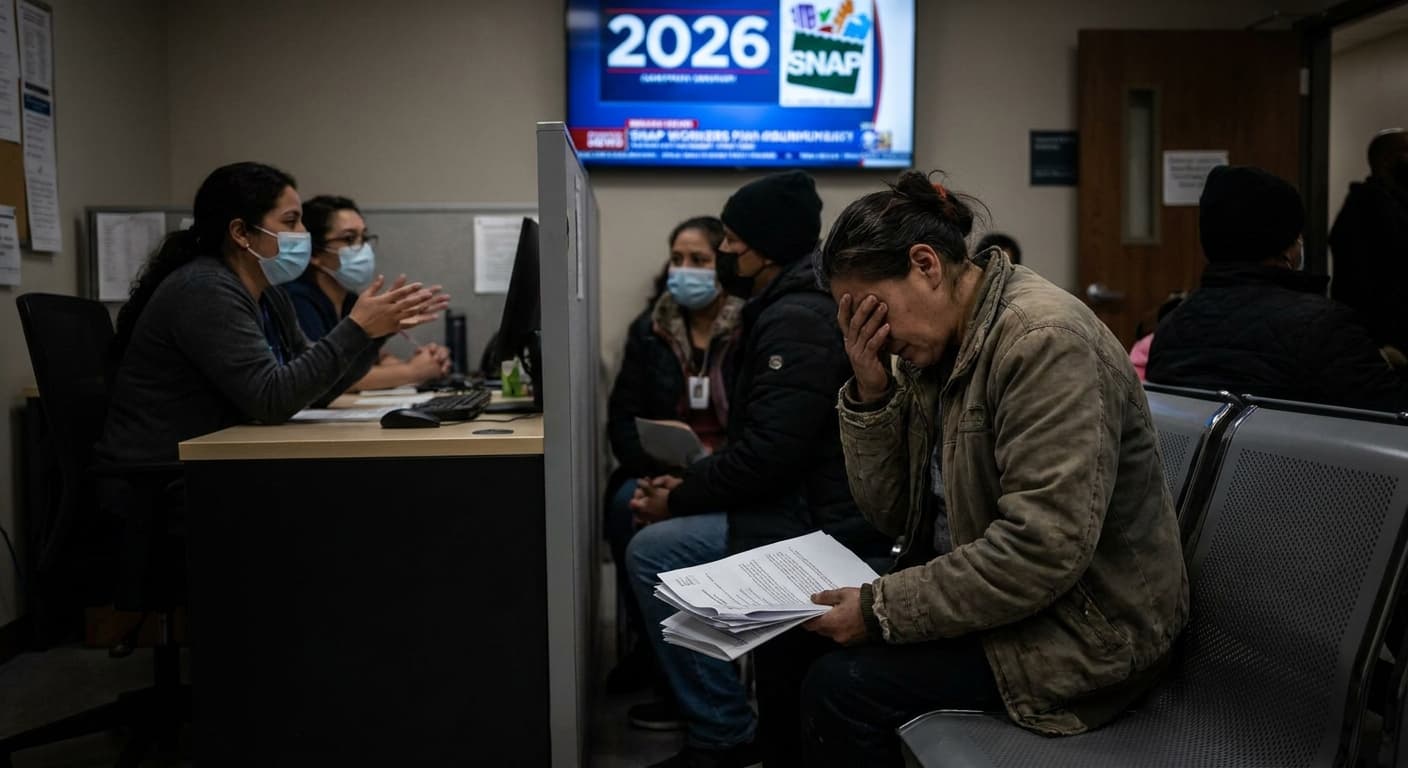
US Politics
SNAP Food Assistance Faces Legal Challenges
In 2026, SNAP faces stricter eligibility rules and mounting legal challenges, threatening food assistance for the millions of Americans who rely on the program.
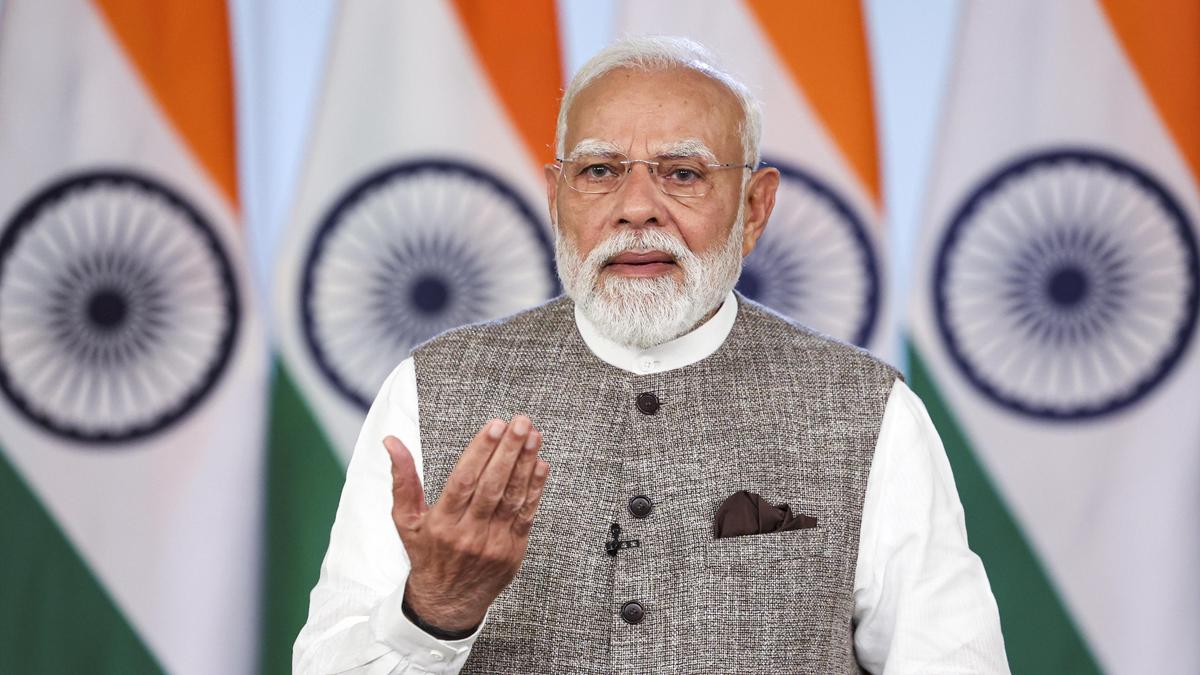
India
700 Activists Accuse PM Modi of MCC Breach
Over 700 activists allege PM Modi breached election code with a televised address attacking opposition parties just before state elections.

Economics
Fed's Amex AML order puts correspondent banking on notice
Federal Reserve's Amex AML order requires board-level controls and a 90-day plan; OCC fined the bank $350 million over enterprise-wide deficiencies.