J&K’s Anti-Drug Drive Turns Law Enforcement Into Leverage
[Manoj Sinha’s crackdown mixes demolitions, arrests and women’s committees to show control in Kashmir—while raising the stakes on due process.]
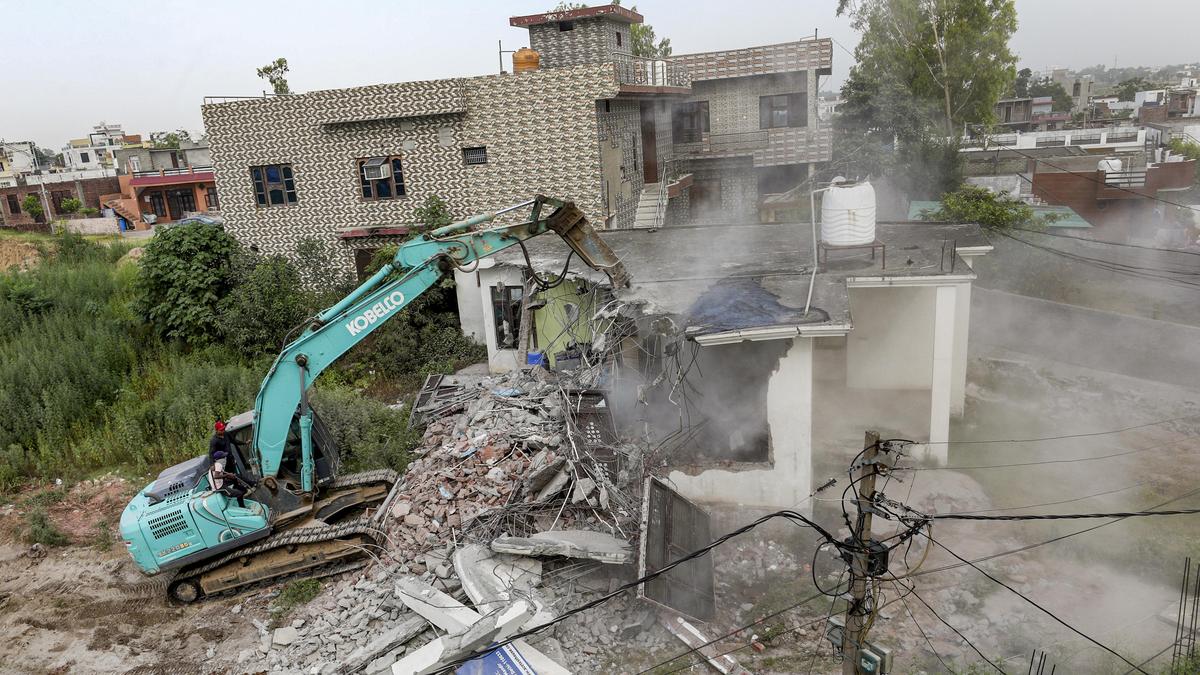
Manoj Sinha is using Jammu and Kashmir’s anti-drug campaign as a display of state reach, not just a policing exercise. In Shopian on May 23, the lieutenant governor said the campaign had produced more than 7,000 women’s committees, 797 FIRs in 43 days, 894 arrests, 59 preventive detentions under PIT-NDPS, and 81 demolitions of properties he described as “narcotic palaces,” according to  The Hindu and
  News Vibes of India.
Enforcement as political messaging
The power dynamic is straightforward: the lieutenant governor’s office wants visible wins that signal command over a region where narcotics, criminal finance and security politics are tightly intertwined. The numbers matter because they go beyond arrests. Sinha said 101 immovable properties have been attached, 457 driving licences suspended, and recommendations made to cancel passports of 22 smugglers and the registrations of 606 vehicles, all in the same anti-drug drive, The Hindu reported.
That mix changes the campaign from interdiction to administrative pressure. It gives police and district officials leverage over income, mobility and property, not just over suspects. It also sends a signal to anyone in public life: Sinha said officials or others connected to the drug network would face “strict legal consequences,” News Vibes of India reported.
For  India, J&K is a test case in whether a coercive campaign can be made to look like community mobilization. The women’s committees are the key political cover here. They let the administration say it is not only punishing traffickers but recruiting households into prevention, surveillance and social pressure against drug use.
Why the model matters
The immediate winners are the LG’s administration, Jammu and Kashmir Police, and the central government’s law-and-order narrative. The losers are traffickers and the local networks that benefit from moving cash, vehicles and property out of the state’s reach. But the broader effect is to widen the circle of vulnerability: once demolitions, asset attachments and licence suspensions become routine tools, the campaign starts to touch family property, business access and local status, not just criminal records.
That is why the enforcement story matters beyond J&K. On the same day, a separate ANI dispatch carried by  Daily PRABHAT said district officials were already demolishing allegedly illegal properties linked to drug smugglers in Jammu’s Miran Sahib area, with a similar operation reported in Udhampur. The pattern is clear: this is not a one-off sweep, but a rolling administrative doctrine.
What to watch next
The next test is whether the crackdown is matched by a published rehabilitation plan. Sinha said the administration is preparing a policy to de-addict youth and reintegrate them through jobs and employment, The Hindu reported. If that policy stays vague, the campaign will remain strongest where the state is most visible: raids, attachments and demolitions. If it is implemented, the administration can claim it is building a system, not just staging a crackdown.