Japan's Rare-Earth Crisis: China's Export Sna
Japan faces rare-earth supply challenges from China.
Model Diplomat7 min readAsia
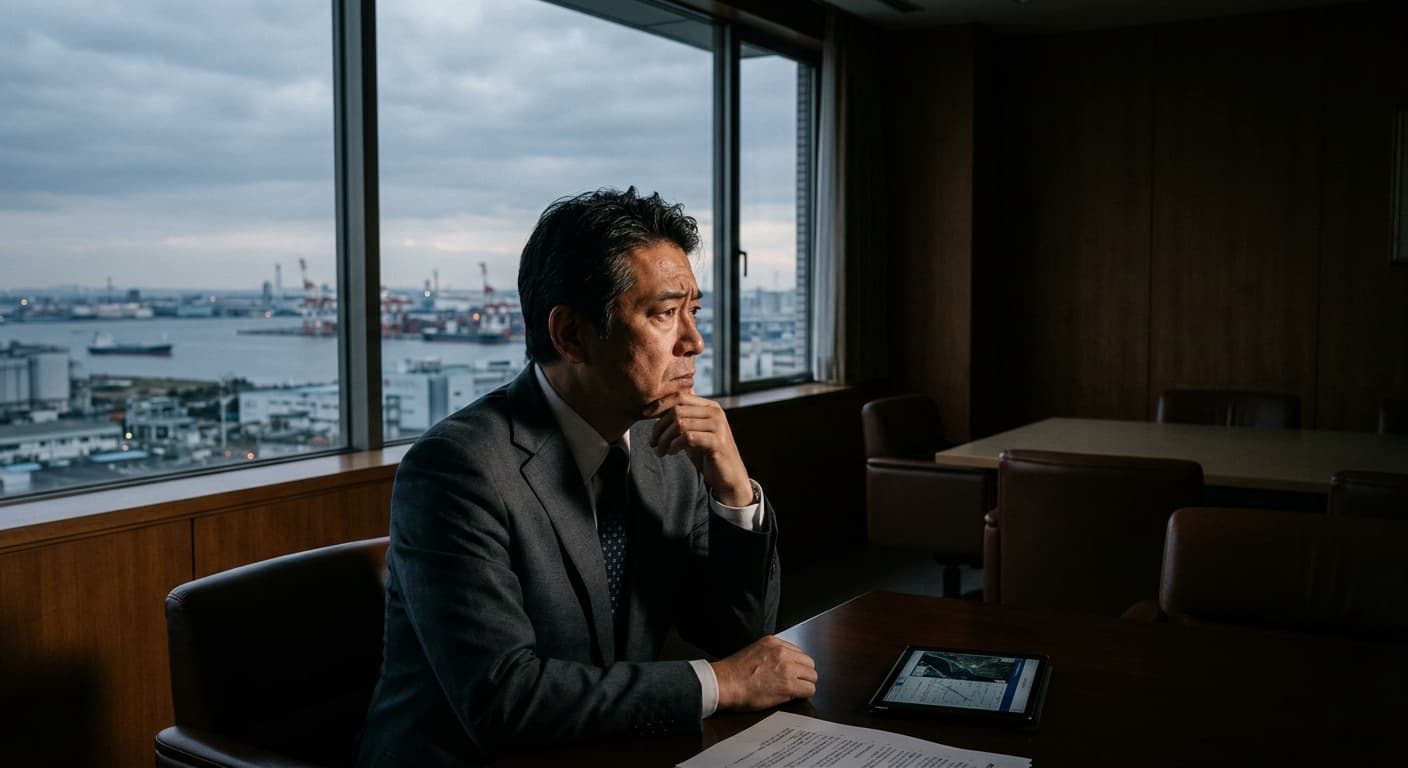
Japan's rare-earth warnings escalate as China chokes exports
Corporate Japan's TSE filings mentioning rare earths doubled in May–June 2026 as Beijing's export freeze on terbium, dysprosium and yttrium enters its ninth month.
Corporate Japan is quietly rewriting its risk disclosures. Filings to the Tokyo Stock Exchange that mention rare earths topped roughly 200 in May and June 2026 — more than double a decade-long monthly baseline under 40 — and two-thirds of those notices flagged Beijing's export controls as a current or looming drag on earnings, according to a Reuters review published July 7. The thesis: China has converted a diplomatic dispute over Taiwan into a slow-motion industrial squeeze, and Prime Minister Sanae Takaichi's government is now racing a clock — measured in inventory weeks — against a coercion architecture that will outlast this crisis regardless of what Beijing does next.
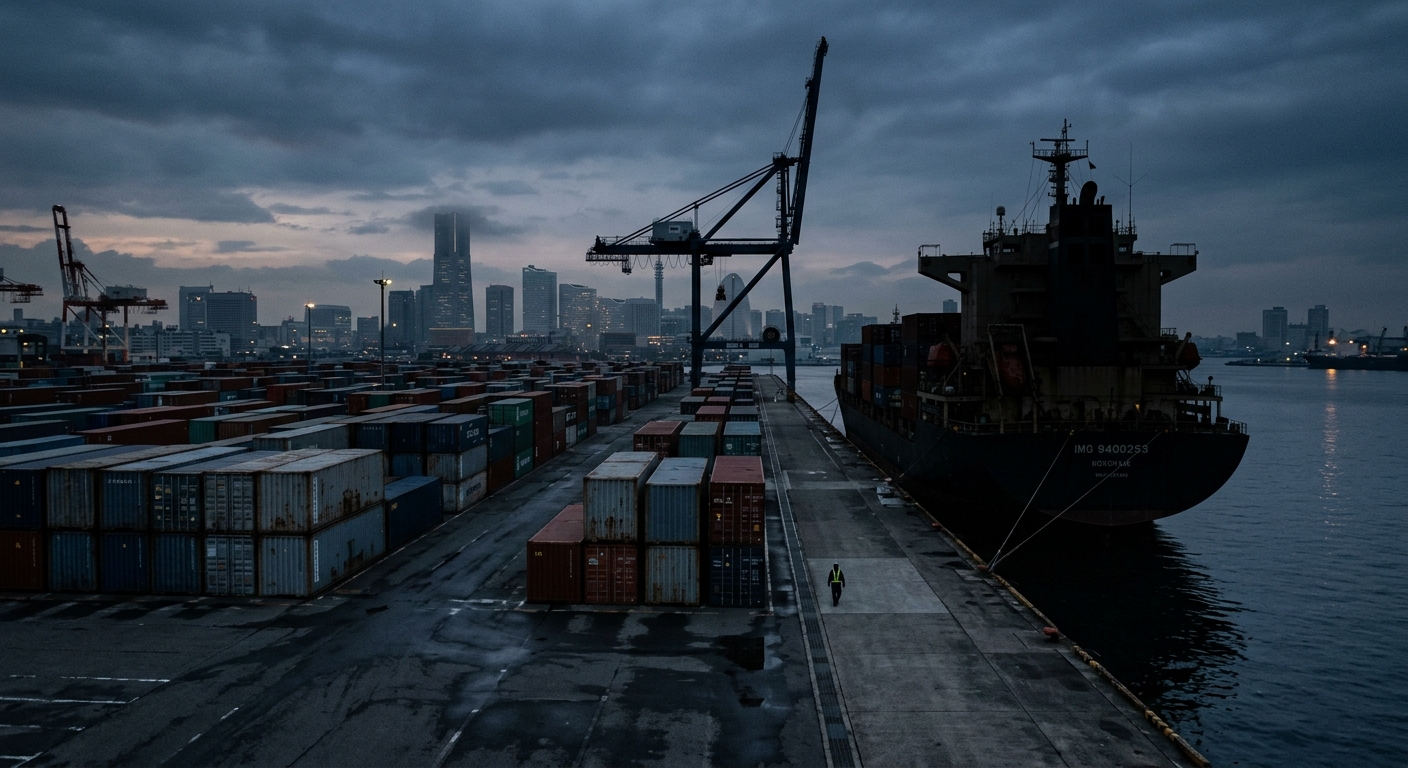
The choke point, quantified
Chinese customs data reviewed by Reuters show no exports of terbium or dysprosium oxide to Japan between November 2025 and May 2026, with yttrium oxide reduced to minuscule volumes since December. Those three heavy rare earths are precisely the inputs Japanese magnet makers cannot substitute at scale: they raise the coercivity of neodymium-iron-boron magnets used in electric-vehicle traction motors, industrial robotics and precision-guided munitions.
The freeze is legally engineered, not improvised. On January 6, 2026, China's Ministry of Commerce imposed a "dual-use items" export-control regime targeting Japan specifically, prohibiting shipments deemed capable of enhancing Japan's military capacity — a designation MOFCOM controls unilaterally, with no independent appeals mechanism. The Center for Strategic and International Studies called it a marked shift from earlier trade-war controls — a framework "explicitly tied to China's foreign-policy signaling," in CSIS's assessment. On February 25, MOFCOM widened the net to 40 named Japanese entities including Mitsubishi Heavy Industries' shipbuilding arm, Kawasaki Heavy Industries, Subaru, ENEOS and Mitsubishi Materials,
Al Jazeera reported — though the linked article cites 20 companies, not 40.
The trigger is not in dispute. In November 2025, Takaichi told the Diet that a Chinese attack on Taiwan could constitute a "survival-threatening situation" — the most explicit statement any Japanese premier has made linking Taiwan's defense to Article 9's collective self-defense exceptions. Beijing's response has been calibrated: not a formal embargo, which would invite WTO action, but licensing discretion that lets it turn shipments on and off firm by firm.
Why the pain lands harder than 2010
Japan has been here before. The 2010 Senkaku trawler incident produced a brief, deniable Chinese slowdown that jolted Tokyo into a diversification push. Dependence on Chinese rare earths dropped from roughly 90% to 60–70% over the subsequent decade, largely on the back of the Lynas contract in Australia, as the Takshashila Institution has documented. But two things are different in 2026, and both cut against Tokyo.
First, the industrial application base is broader. "With the development of AI, rare earths are being used across a broad range of goods and throughout supply chains," Takeshi Higashifukasawa, senior economist at Mizuho Research Institute, told Reuters. Data-center liquid-cooling pumps, humanoid-robot actuators and AI accelerators all use heavy-REE-doped magnets that were niche fifteen years ago. The Nomura Research Institute has estimated a US$4.2 billion hit to Japanese GDP if restrictions persist through March 2027, rising to as much as US$16.6 billion if they harden into permanent status quo, according to figures cited by Takshashila and Ranzware.
Second, Beijing's leverage is more concentrated than the headline numbers suggest. A peer-reviewed 2026 study in Resources Policy (Wang, Elsevier) puts China's share of global mine output at roughly 69% and its refining share at 85–90%. For heavy rare earths specifically — the ones Japan needs — dependence remains "almost entirely" Chinese, according to a
RSIS analysis by Janet Fung. Diversifying mining is hard. Diversifying processing is the choke point Beijing built the strategy around.
The corporate disclosures capture the diffusion. Citizen Watch on June 23 warned that "should restrictions on the export of rare earths or similar measures persist for an extended period, this could affect the group's production activities and financial performance." Omron, on June 22, folded Chinese rare-earth controls into the same paragraph as war in Ukraine and the Middle East — the language of a diversified geopolitical risk factor, not a one-off supply hiccup. Suzuki Motor and Nissan reported production disruptions during the April 2026 wave, with Suzuki briefly suspending its Swift line.
The non-obvious loser: Chinese leverage itself
Here is the second-order effect the wires are missing. Every month Beijing keeps the spigot closed is a month it accelerates the very supply-chain reconfiguration that erodes its own coercive tool. Malaysia is investing in heavy-REE separation with Japanese and Australian capital. Vietnam has banned the export of unprocessed rare earths effective January 1, 2026, forcing midstream capacity to be built domestically rather than shipped to China. Brazil — with 21 million metric tons of reserves, second only to China — is now the target of parallel US$500 million US investment and a JOGMEC memorandum of understanding with the state of Goiás,
Lowy Institute analyst Jing Ge writes.
The most consequential piece may be the price architecture. Lynas renewed its supply contract with the Sojitz/JOGMEC joint venture JARE at 7,200 tonnes per year of neodymium and praseodymium through 2038, with a US$110 per kilogram floor price on 5,000 tonnes of that volume — the same benchmark the Trump administration set with MP Materials in the United States. That is the missing ingredient of every previous diversification push: a coordinated Japan–US–Australia floor that lets non-Chinese producers survive the price wars Beijing has historically used to kill nascent competitors. In France, Iwatani and JOGMEC have committed roughly €100 million to Caremag's Lacq refinery, which METI expects to cover about 20% of future Japanese heavy-REE demand.
Tokyo is also building the strategic reserve it never had. In February 2026, the Japan Agency for Marine-Earth Science and Technology (JAMSTEC) extracted rare-earth-rich mud from a depth of about 6,000 meters near Minamitorishima Island — a world record for that depth. In an official press briefing, METI Minister Yoshitaka Akazawa said the ministry would use FY2025 supplementary budget funds and the FY2026 draft budget to accelerate domestic mining, processing and allied-country projects. Academic modeling suggests Minamitorishima will not compete on cost — the Wang paper puts extraction costs above US$50/kg — but it functions as a "high-cost strategic reserve for extreme contingencies," which is exactly what a coercion-resistant supply chain requires.
The Bank of Japan problem
The Tankan and the Nikkei are pointing in the opposite direction from the filings. Corporate sentiment surveyed by the Bank of Japan is buoyant, and the Nikkei has hit successive records. That divergence is the tell. Companies with 6–12 months of built-up inventory before the November trigger are still shipping product; the writedowns and production pauses will land in the fiscal second half. Yuriy Humber, CEO of Tokyo consultancy Yuri Group, put the timeline plainly to Reuters: "I assume that a year of export restrictions will create big problems and we're four to five months into that."
Rakuten Securities commodities analyst Satoru Yoshida framed the dynamic with equal precision: "Supply is being restricted, but everyone is starting to use them — and that only makes them even rarer." Translation: the demand curve for heavy rare earths is inelastic in the short run, and every buyer racing to stockpile is bidding against every other buyer. Chinese permanent-magnet spot prices had risen 25% by late November 2025 versus April, according to Argus data compiled by the Swedish Institute of International Affairs.
Diplomat View
The reflex read — that Japan is trapped — misses the direction of travel. Beijing's January 2026 dual-use regime looks like maximum leverage, but it has locked in exactly the political conditions Tokyo needed to break parliamentary resistance to expensive, subsidized, ex-China supply chains. The Takaichi–Trump critical-minerals framework signed October 28, 2025 — the first bilateral minerals pact Japan has concluded with the United States — the G7 stockpiling coordination agreed in June 2026, the JOGMEC equity stakes in Lynas, Caremag and Goiás, and the METI "manufacturing base reinforcement" report of April 2026 all pull in the same direction: a coordinated price floor, coordinated stockpiles, and midstream processing capacity outside Chinese jurisdiction by 2028–2030.
The forecast: expect a first wave of formal earnings guidance cuts from Japanese electronics and precision-instrument names in the October–November 2026 reporting cycle, once pre-freeze inventories deplete. Expect Beijing to selectively grant licenses to non-defense Japanese buyers to fragment the corporate coalition pushing Takaichi toward decoupling — the classic 2010 playbook. And expect the Takaichi government to use exactly that pressure to legislate a stockpile mandate and expand the JOGMEC balance sheet before the fiscal year ends March 31, 2027.
The forecast would flip if Takaichi publicly walks back the November 2025 Taiwan remarks — extremely unlikely, given her domestic coalition — or if China trades rare-earth licensing for Japanese concessions on semiconductor equipment exports in a Xi–Takaichi meeting. Neither is on the calendar. Absent those, this is the moment when Japan's rare-earth strategy stops being an industrial policy and becomes a pillar of its economic-security doctrine.
What to watch
- August 2026: Chinese customs data for July, the first month reflecting any Q3 licensing loosening (or further tightening) tied to bilateral dialogue.
- October–November 2026: H1 FY2026 earnings season for Japanese TSE-listed manufacturers — the first cycle where pre-freeze inventories are largely exhausted.
- March 31, 2027: End of Japan's fiscal year; deadline for METI's FY2026 supplementary budget deployment on stockpile and midstream investments.
- 2030: Target date for commercial-scale Minamitorishima output; the point at which Japan's strategic-reserve architecture is meant to be operational.
Bottom line: China's export freeze is not the end of Japan's rare-earth vulnerability — it is the political shock that finally forces Tokyo to price security into its supply chain. Beijing wins the current quarter. It is losing the decade.
Discover more
US Politics
House Ethics Committee Pushes Sexual Miscond.
The House Ethics Committee has shifted responsibility for sexual harassment settlement records to the Office of Congressional Workplace Rights, complicating disclosure efforts.
Global Politics
Trump's Conflicting Messages on Iran War
Trump's mixed messages on Iran reflect a strategy of audience management, benefiting Tehran amid a complex geopolitical landscape.

US Politics
SNAP Food Assistance Faces Legal Challenges
In 2026, SNAP faces stricter eligibility rules and mounting legal challenges, threatening food assistance for the millions of Americans who rely on the program.

Conflict & Security
Drone Warfare Killing Aid Workers at Unprec
Over 1,000 humanitarian workers killed in three years as cheap armed drones collapse legal protections. Gaza, Sudan, Ukraine, and DRC see deliberate targeting of aid convoys and hospitals with zero prosecutions.