Japan's BOJ Rate Hike and Yen Crisis
A clash of fiscal and monetary policies in Japan
Model Diplomat8 min readAsia
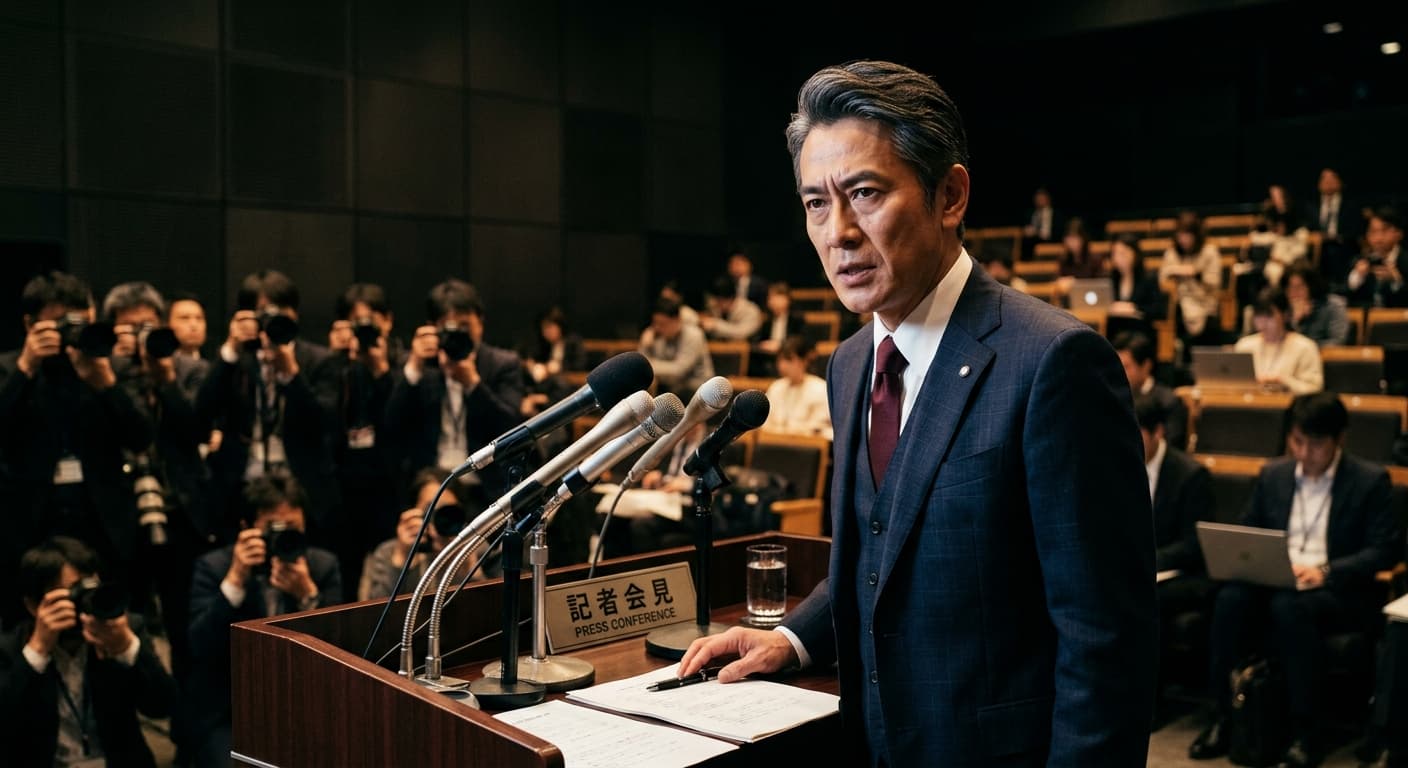
Japan 2026: BOJ at 1%, Yen at 162, Bond Market in Revolt
Japan's central bank pushed rates to a 31-year high on June 16, but a record ¥122.3 trn budget and Takaichi's tax cuts have JGB yields at 30-year peaks.
Japan's economic strategy in 2026 is a public quarrel between two arms of the state, and the bond market is scoring it. On June 16, the Bank of Japan hiked its policy rate to 1% — the highest since 1995 — to lean against imported inflation from the Middle East war and a yen trading near ¥162 to the dollar. Twenty-two days later, 10-year Japanese government bond yields hit a 30-year high as investors priced in Prime Minister Sanae Takaichi's record ¥122.3 trillion budget and her plan to suspend the consumption tax on food. The result is the sharpest fiscal-monetary clash in a G7 economy today: the BOJ is trying to normalise policy just as Tokyo executes its biggest peacetime stimulus since the pandemic, and the JGB market has become the arbiter of who wins.
The clash, in numbers
The BOJ's June decision was not close. The Policy Board voted 7-1 to lift the uncollateralised overnight call rate to "around 1.0 percent," citing the risk that "price increases stemming from high crude oil prices will spread across a wide range of items" and that underlying CPI could "deviate upward" from the 2% target, according to the Bank of Japan's statement. The move — the fourth hike since the BOJ scrapped negative rates in March 2024 — came despite headline core CPI running at just 1.4% in April, held down by government subsidies on gasoline and electricity, as
Al Jazeera reported.
The Summary of Opinions from the meeting shows the hawks setting the pace. One member argued that Japan's rate "remains below the estimated range of the neutral interest rate" and that policy must move "closer to the neutral rate as soon as possible"; another put neutral "at around 2 percent" and floated hikes at intervals "of a few months," according to the BOJ's June minutes. The IMF's April Article IV assessment, the most authoritative outside gauge, pegs Japan's neutral nominal rate at 1.1–2.2% and projects the policy rate reaching neutral "in 2027," per the
Country Report 26/75. That implies at least another 25 basis points this year — probably more.
The fiscal side is pulling the other way. Takaichi's cabinet approved a record ¥122.3 trillion (~$784 billion) FY2026 budget in December, including more than ¥9 trillion for defence — Japan's largest ever military outlay, and enough to make Tokyo the world's third-largest defence spender behind Washington and Beijing, Al Jazeera reported. On top of that sits the November 2025 stimulus package worth ¥21.3 trillion — Japan's biggest since COVID — and a pledged two-year suspension of the 8% consumption tax on food, which Japanese government estimates put at roughly ¥5 trillion in forgone revenue per year, per
Al Jazeera's January analysis.
The bond market has picked a side
The market's verdict is unambiguous. The 10-year JGB yield closed near 2.89% on July 8, its highest in three decades, per FT market data. Yields on 40-year bonds pierced 4% for the first time on record in January as Takaichi unveiled the food-tax pause, and long-dated auctions have absorbed weak demand ever since, according to the
Financial Times' JGB coverage. The Economist, on January 21, called it plainly: "monetary and fiscal policy are heading for a clash," with the 40-year at 4% against a neutral rate the
central bank itself puts at 1–2.5%.
That clash matters beyond Tokyo because Japan is a net exporter of capital. As Sayuri Shirai of Keio University told Al Jazeera, "If Japanese government bond yields rise, Japanese investors can earn more at home, potentially reducing demand for foreign bonds; that can nudge global yields and risk pricing." The sell-off in Japanese debt has already dragged 30-year US Treasury yields to their highest since September, and FT reporting notes foreign investors are now buying long-dated JGBs at a record pace as Japanese life insurers and pension funds rebalance home. The unwind of the yen carry trade — the world's cheapest funding source for a generation — is now visibly under way.
The yen is the pressure release valve. USD/JPY sat at roughly 162.4 on July 9, near the top of its 52-week range and back at levels that triggered a suspected $59 billion Ministry of Finance intervention in 2024, according to FT market data and the FT's earlier
analysis of intervention. The BOJ's June statement flagged that "import prices have also been driven up by exchange rate developments," language markets read as a nod to the currency channel — the hike was as much about the yen as about oil.
Where the IMF disagrees with Tokyo
The Article IV consultation, published April 2, is where the international consensus sits — and it does not sit with Takaichi. The IMF Executive Board explicitly told Japan to "avoid reducing the consumption tax," calling it "an untargeted measure that would erode fiscal space and add to fiscal risks," according to the Fund's staff concluding statement. The Fund also warned that any relief should be "budget neutral, temporary, and targeted" and pressed for growth-friendly consolidation "starting in 2026." Instead, Tokyo is proceeding with the two-year food-tax suspension, framed by the Katayama finance ministry as a bridge to a refundable tax-credit system, as noted in the
IMF Executive Director's statement.
Growth is thinning out even as the fiscal pulse widens. The IMF projects Japanese growth of just 0.8% in 2026, down from 1.2% in 2025, with private consumption cushioned by wage gains above 5% at the March 2026 shuntō but capped by the Middle East shock. Gross debt-to-GDP already exceeds 230% — the highest in the G7 — and the Fund warned the debt trajectory turns upward from 2035 without new consolidation.
The politics point the other direction. Sanae Takaichi, formally an Abenomics disciple who last year called rate hikes "stupid," won a snap election on February 8 with what the Center for Strategic and International Studies called a "sweeping mandate" from voters revolting against the cost of living, per CSIS's post-election analysis. She has since publicly avoided criticising Governor Kazuo Ueda, but her fiscal architecture — the food-tax pause, defence hitting 2% of GDP two years ahead of schedule, and strategic industrial spending on AI and quantum — is engineered to push nominal GDP faster than debt, not to shrink the deficit. As one senior BOJ policymaker warned in June, "her headline package looks like large, near-term fiscal loosening at exactly the moment the BOJ is trying to normalise policy," a formulation Keio's Shirai first offered
in January and that has become the consensus read.
What the sanctions and Middle East channels do
The overlay is geopolitical. Japan imported roughly 95% of its crude from the Middle East before the US-Israel war on Iran, per Al Jazeera, and the BOJ's April Outlook Report projects core CPI in the 2.5–3.0% range for fiscal 2026, well above target, largely because of the oil pass-through, according to the
Outlook for Economic Activity and Prices (April 2026). The June statement judged that "the risk of heightened supply-side constraints has abated" after a ceasefire agreement, but the BOJ still flagged that "the impact of the situation on logistics persists."
Trade policy adds another layer. Takaichi's Taiwan comments in November drew Chinese diplomatic and economic retaliation, and Tokyo's push to relax arms-export controls — CSIS notes recommendations on Japan's three strategic documents are expected in April 2026 — is deepening the dependence on domestic defence-industrial capex just as capital costs rise. This is the third-order effect worth naming: higher JGB yields are compressing the interest-cost headroom Takaichi needs to fund her security build-out, meaning every basis point of yield is also a basis point off Japan's defence-industrial ambition.
What to watch next
- BOJ Monetary Policy Meeting, July 30–31, 2026. A hold is base case; the June minutes show a majority wanting to observe transmission before moving again. Any signal that the next hike could come as early as October — before the FY2026 supplementary budget lands — would push USD/JPY back through 160 and yields sharply higher.
- FY2026 supplementary budget, autumn 2026. The IMF has explicitly asked Tokyo to restrict supplementaries to "large, unexpected shocks." A second round of energy relief or cash handouts would be the market's next fiscal-credibility test.
- Consumption-tax suspension legislation, Diet debate through summer. The vehicle for financing the food-tax pause — whether it triggers additional JGB issuance or is offset by tax-expenditure reviews under the new dedicated office — will determine whether super-long yields settle or spike again.
- September MOF intervention window. With USD/JPY back near ¥162, verbal intervention has resumed. A direct MOF operation above ¥165 is now the working consensus among Tokyo dealers.
Diplomat View
The forecast: the BOJ hikes once more in 2026, most likely in October, taking the policy rate to 1.25% — below the IMF's neutral floor of 1.1–2.2% but close enough for Ueda to claim mission progress before his term winds down. Takaichi will deliver the food-tax suspension because she must — the political cost of retreat is now higher than the fiscal cost of proceeding — and the JGB curve will steepen further, with the 40-year drifting toward 4.25%. The yen finds a floor near ¥165 only if the Federal Reserve begins cutting into 2027, not before. This forecast breaks if any of three things happen: Ueda resigns on health grounds and Takaichi installs a dove (postponing the October hike, sending USD/JPY through ¥170); the Middle East ceasefire collapses and Brent returns above $110 (forcing an inter-meeting BOJ move); or a failed 30- or 40-year auction triggers emergency BOJ JGB buying, which would end normalisation in a single afternoon. Japan is no longer the deflation case study. It is now the test case for whether a G7 sovereign can normalise monetary policy while running a 230%-of-GDP debt stock and a fiscally expansionist government — and the market is not yet convinced.
The bottom line: Japan's 2026 story is not the BOJ's rate hike. It is that Tokyo is running the world's most aggressive fiscal-monetary divergence — a 1% policy rate against a ¥122.3 trillion budget and a suspended consumption tax — and the JGB market has begun charging it a premium that will radiate through global bond markets long before the yen finds its floor.
Discover more

US Politics
SNAP Food Assistance Faces Legal Challenges
In 2026, SNAP faces stricter eligibility rules and mounting legal challenges, threatening food assistance for the millions of Americans who rely on the program.
India
Women’s Reservation Bill 2026
The Constitution (131st Amendment) Bill, 2026 was defeated in Lok Sabha, revealing deeper political conflicts over women's reservation and delimitation.
India
BJP's Misunderstanding of Women's Quota Needs
The BJP's linking of the Women Reservation Bill to delimitation risks delaying women's empowerment in India, misreading the aspirations of female voters.

Conflict & Security
Drone Warfare Killing Aid Workers at Unprec
Over 1,000 humanitarian workers killed in three years as cheap armed drones collapse legal protections. Gaza, Sudan, Ukraine, and DRC see deliberate targeting of aid convoys and hospitals with zero prosecutions.