Israel's Strikes in Lebanon: Escalation Tact
Israeli airstrikes intensify pressure on Hezbollah amid talks.
Model Diplomat3 min readMiddle East
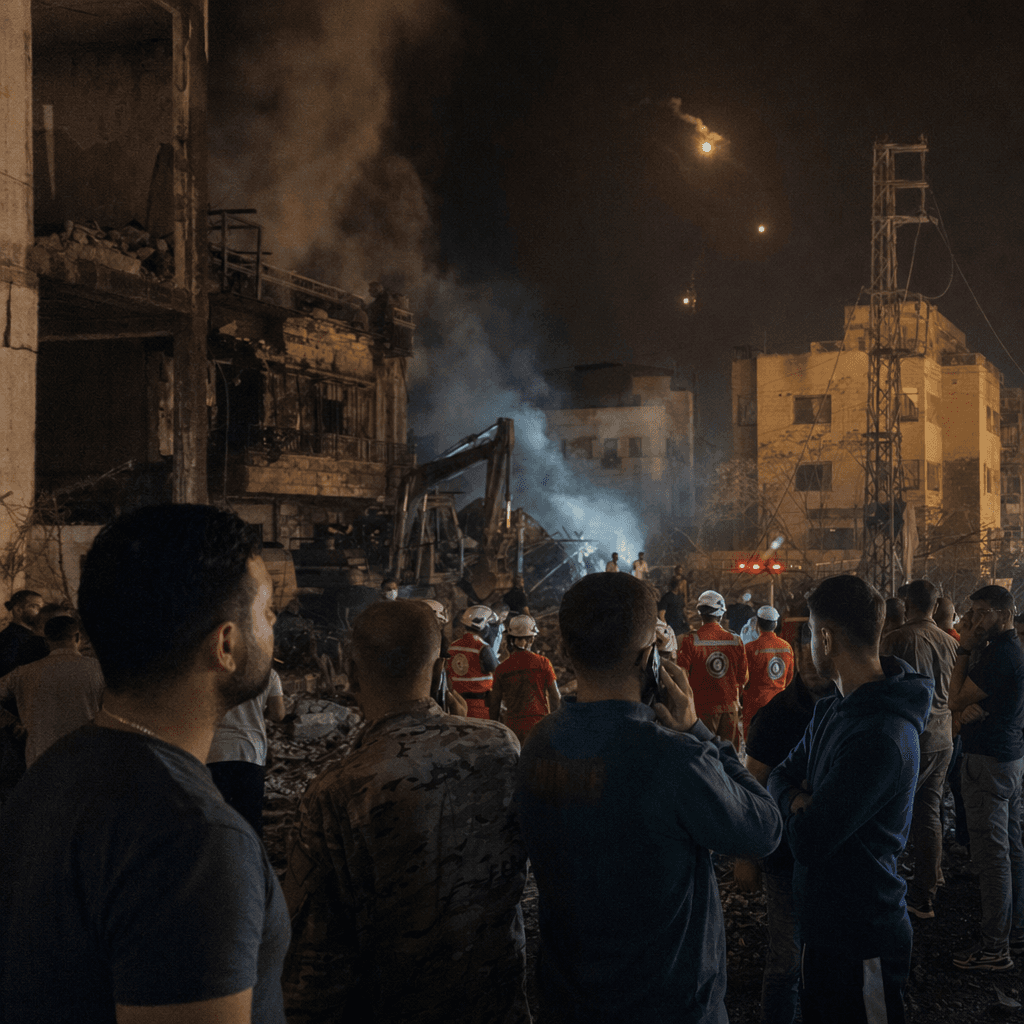
Israel’s Lebanon strikes are meant to force terms
Six killed in southern Lebanon as Israel expands evacuation orders, signaling it still holds escalation leverage ahead of US-backed talks and a fragile ceasefire clock.
Israeli strikes killed at least six people in southern Lebanon on Sunday, while the Israeli army issued 16 fresh evacuation orders for towns and villages in the south, according to Al Jazeera and Lebanon’s National News Agency. The pattern matters more than the toll: Israel is using air power and displacement warnings to keep the pressure on Hezbollah and on Beirut, not to wait for diplomacy to catch up.
A wider squeeze on Lebanon’s south
The strikes hit multiple locations, including Al-Namiriya, Al-Duweir, Abba, Jebchit, Arab Salim, Bazouriyeh and Srifa, with one paramedic among the dead, according to Al Jazeera. That matters because the target set is no longer limited to classic front-line areas. Al Jazeera’s correspondent in Tyre said the attacks were hitting “homes and communities,” while local rescue teams were still pulling bodies from rubble. That makes the operational message blunt: Hezbollah cannot claim the south is stable, and civilians cannot treat displacement as temporary.
A day earlier, Israeli strikes had already killed at least 20 people in Lebanon, according to another Al Jazeera report.
France 24 reported that Israel also struck a Lebanese army barracks in Nabatieh, wounding a soldier. That is an important escalation marker: even if Israel says it is targeting Hezbollah infrastructure, the blast radius is increasingly landing on Lebanese state institutions and emergency responders.
The real leverage is political
This is happening while Lebanon and Israel are engaged in US-backed direct talks, with a further security meeting scheduled for May 29, according to France 24. In that context, evacuation orders are not just a battlefield tool; they are bargaining language. Israel is signaling that it can keep widening the cost of non-compliance, while Lebanon’s government is trying to separate the negotiations from Iran-US diplomacy and prevent Hezbollah from setting the agenda.
Hezbollah, for its part, is still firing back. Al Jazeera reported the group carried out attacks on Israeli military positions and soldiers in southern Lebanon. That keeps Hezbollah in the game militarily, but it does not change the leverage balance: Israel has the air force, the warning system, and the ability to choose where to make the south feel unsafe.
For policymakers following Global Politics, the key point is that the ceasefire framework is holding only as a legal fiction. Israel is preserving freedom of action under the rubric of “imminent” threats, while Beirut is trying to use talks to secure withdrawal and an end to attacks. The civilian toll is rising because neither side sees restraint as cheaper than escalation.
What to watch next
Watch the May 29 talks for one question: does Washington accept Israel’s right to keep striking suspected Hezbollah sites, or does it try to trade that freedom of action for a firmer ceasefire mechanism? If the answer is no, the south will keep absorbing the cost. If the answer is yes, Hezbollah will likely claim the talks have legalized pressure on Lebanon rather than ended it.
Discover more

International Relations
Pakistan's Key Role in US-Israel-Iran Meddle
Pakistan is seeking to mediate the US-Israel-Iran conflict, balancing high-stakes diplomacy against severe economic pressures and steep regional challenges.
Global Politics
Trump's Conflicting Messages on Iran War
Trump's mixed messages on Iran reflect a strategy of audience management, benefiting Tehran amid a complex geopolitical landscape.

Conflict & Security
Drone Warfare Killing Aid Workers at Unprec
Over 1,000 humanitarian workers killed in three years as cheap armed drones collapse legal protections. Gaza, Sudan, Ukraine, and DRC see deliberate targeting of aid convoys and hospitals with zero prosecutions.
Global
World Normalises Taliban as Afghan Women Eras
UN data shows Afghan women erased from public life as Russia recognises the Taliban, EU hosts officials in Brussels, and ICC warrants for gender persecution go unenforced.