Israel's Red Sea Gambit: Why Somaliland
Israel seeks strategic ties with Somaliland amid regional tensions.
Model Diplomat3 min readHorn of Africa
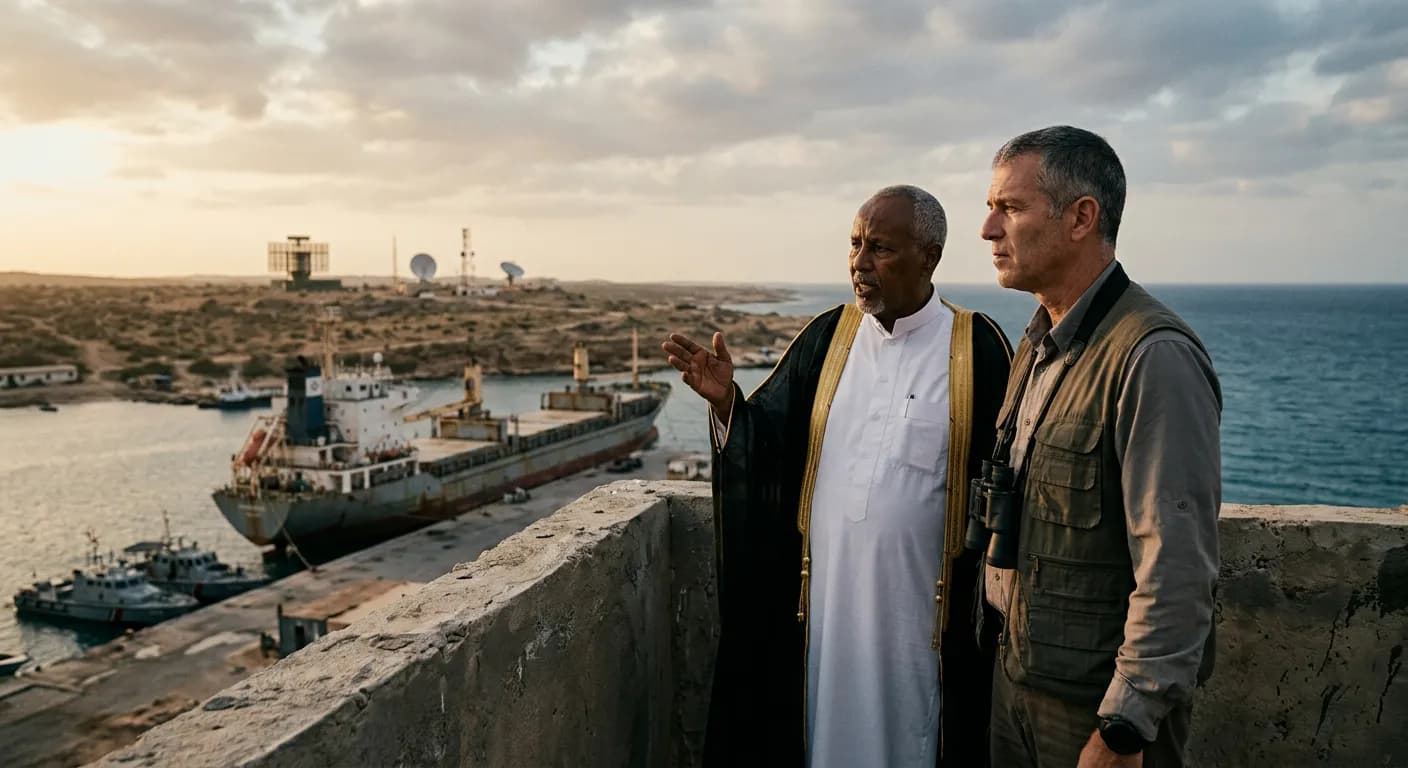
Israel's Red Sea Gambit: Why Somaliland Matters
Israel presses a strategic partnership in the Horn of Africa, betting on Somaliland's geography to counter Houthi threats while courting Arab recognition.
Israel rolled out a full state reception for Somaliland President Abdirahman Mohamed Abdullahi this week—a lavish signal of intent that belies a hardheaded strategic calculation. The two governments signed a Strategic Cooperation Declaration covering security, investment, and trade, six months after Israel became the first UN member state to recognize Somaliland's independence. Somaliland opened its embassy in West Jerusalem—a diplomatic point-scoring move that few other countries extend—and Israeli Defence Minister Israel Katz disclosed years of covert cooperation, signaling that the public partnership rests on foundations already laid in classified operations.
The lever is maritime choke-point control. Somaliland sits on the Gulf of Aden directly opposite Yemen, near the Bab al-Mandab Strait—a narrow gateway through which ships heading to Israel's southern port at Eilat must pass. For two years, Israel has traded fire with Yemen's Iran-backed Houthis, who have repeatedly disrupted Red Sea shipping and threatened Israeli commerce. Netanyahu framed the Somaliland partnership as a way to anchor Israel's position at the opposite end of the Red Sea—not to launch attacks on Yemen (Somaliland officials deny a military base is on the table, though
Defence Minister Katz's acknowledgment of covert ops leaves room for interpretation), but to secure a foothold in a region where Israel has historically held limited presence.
For Somaliland, the bargain unlocks 35 years of international isolation. No country before Israel granted recognition to the breakaway territory, which declared independence in 1991 but lacks African Union backing or UN membership. The visit alone—with Palestinian and Western media covering every ceremonial detail—delivered the diplomatic visibility Somaliland craved. The Israeli recognition offered a proof-of-concept: if one major power breaks ranks, others might follow.
Abdullahi explicitly stated he hopes Arab countries and the United States will emulate Israel's move, betting that Israeli recognition catalyzes a cascade.
The economics matter too. Over 200 Israeli business leaders attended forums discussing investment in water management, agriculture, minerals, and infrastructure, with Somaliland pitching its Port of Berbera as an economic anchor and its natural resources as a draw for Israeli capital.
The Cost: Somali Sovereignty and Arab Backlash
Somalia's government sees the arrangement as an existential threat. President Hassan Sheikh Mohamud called it a "naked invasion," and
his state minister for foreign affairs warned that Israel's recognition violated his country's territorial integrity. Somalia has zero leverage here—it lost control of Somaliland in 1991 and never reclaimed it—but it holds diplomatic weapons:
the African Union, Arab League, and Organisation of Islamic Cooperation all rejected the recognition, and Somalia successfully lobbied regional powers to reaffirm support for its territorial claim. The Houthis, for their part,
warned that an Israeli military presence in Somaliland would be a "legitimate target."
Israel's move fractures the Arab world selectively. While the Arab League objected, the visit signals Netanyahu's bet that some Arab states—particularly those threatened by Houthis or Iran—will quietly align with Israel on Red Sea security, even if they cannot publicly endorse Somaliland's independence.
What to Watch
The next flashpoint is whether other countries follow Israel's lead. Somaliland's president explicitly lobbied the U.S. in meetings with American officials. If the Trump administration grants recognition—Texas Senator Ted Cruz has been a vocal advocate—it would shatter Arab consensus and validate Netanyahu's strategy. Watch too for concrete manifestations of security cooperation: military training, intelligence-sharing, or port access would signal that the strategic partnership has moved beyond ceremony. And monitor Somalia's response—it has the African Union backing but little practical power to enforce its territorial claims.
Discover more

International Relations
Pakistan's Key Role in US-Israel-Iran Meddle
Pakistan is seeking to mediate the US-Israel-Iran conflict, balancing high-stakes diplomacy against severe economic pressures and steep regional challenges.

Global Politics
US Seizes Iranian Ship, Tensions Surge
The US seizure of the Iranian ship Touska highlights a shift in control over the Strait of Hormuz, favoring Iran's strategic position.

India
Modi's Women’s Convention in Varanasi
Modi's Varanasi rally frames women's reservation as a national mission, targeting the 2027 Uttar Pradesh elections with a strategic narrative.

Conflict & Security
Drone Warfare Killing Aid Workers at Unprec
Over 1,000 humanitarian workers killed in three years as cheap armed drones collapse legal protections. Gaza, Sudan, Ukraine, and DRC see deliberate targeting of aid convoys and hospitals with zero prosecutions.