Israel's Strikes in Lebanon Shift Power
Israel's airstrikes leverage military power over Lebanon's sovereignty
Model Diplomat3 min readMiddle East
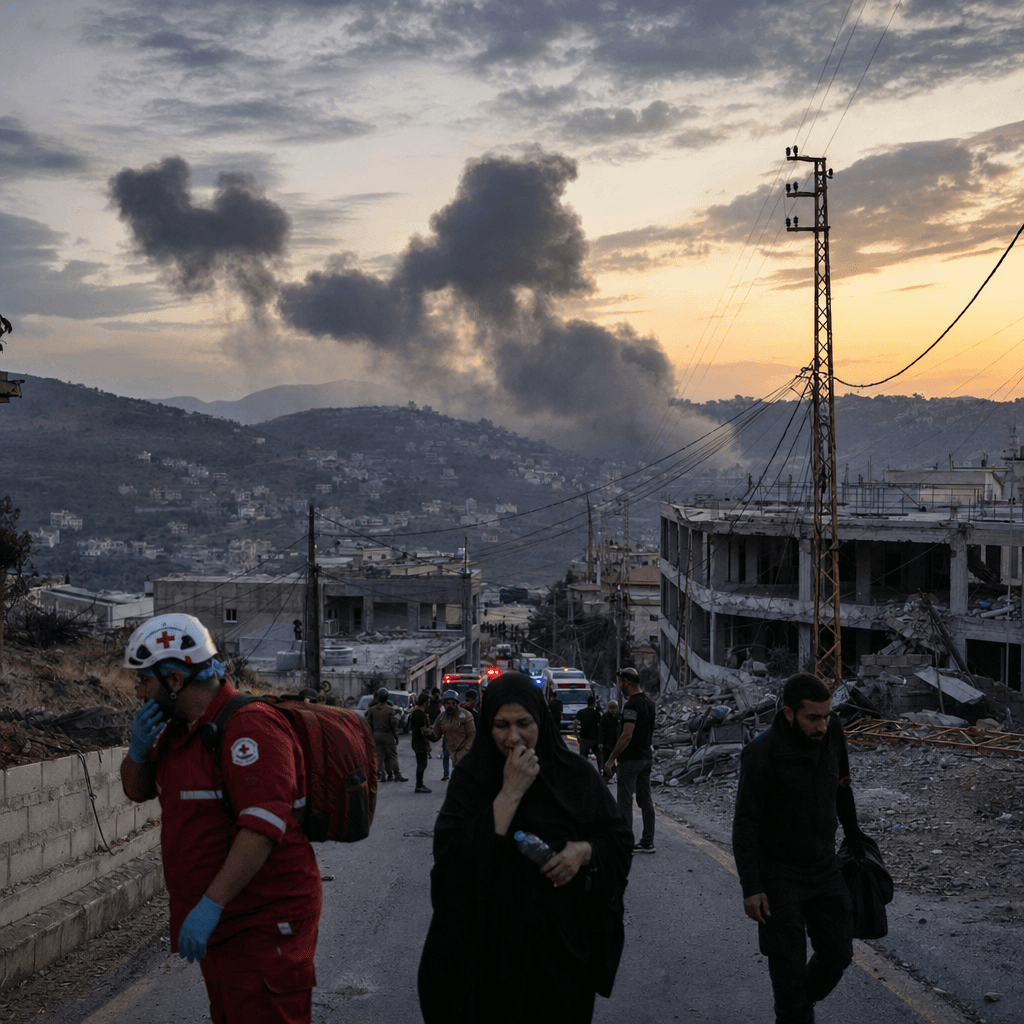
Israel’s Lebanon Blitz Turns Ceasefire Into Leverage
April 8’s 100-strike barrage shows Israel is using military tempo to force a new order in Lebanon while Beirut struggles to contain Hezbollah.
On April 8, Israel launched more than 100 strikes in under 10 minutes across Lebanon, killing at least 357 people; Israel said roughly 250 were Hezbollah operatives. In Beirut’s Tallet el Khayat, Ahmad Hamdi, 22, survived when a blast tore through his building and sprayed shrapnel into the couch where he had been sitting moments earlier. Human Rights Watch and UN experts cited by Al Jazeera said the scale and timing of the attacks looked indiscriminate and reckless. Civilians or Hezbollah: Who did Israel hit on Lebanon’s ‘Black Wednesday’?
Israel’s leverage is not just firepower
Israel holds the initiative because it can escalate faster than Beirut can enforce the postwar rules on the ground. Under the November 2024 ceasefire, only Lebanese state security forces were meant to bear arms in southern Lebanon, and Israel has repeatedly framed continued strikes as a response to Lebanon’s failure to disarm Hezbollah. Israeli leaders have warned they will keep acting if Beirut does not enforce those terms. Israel urges Lebanon to disarm Hezbollah under ceasefire terms | Reuters
That matters because the Lebanese state still does not have full coercive control. Reuters reported that the Lebanese army has been locating and destroying Hezbollah arms caches in the south, but faces an explosives shortage and relies in part on intelligence passed through coordination channels with Israel. Lebanese army walks political tightrope to disarm Hezbollah | Reuters In practical terms, Israel is exploiting that gap: if Beirut cannot impose the ceasefire architecture, Israel will impose its own version from the air.
This is the core power shift in Lebanon’s wider conflict file. The immediate losers are civilians in mixed urban areas and the Lebanese government’s claim to sovereign control. Hezbollah also loses strategically: even if some strikes hit operatives, the group’s deterrence story weakens when Israel can hit across Lebanon at will while forcing Beirut to absorb the political cost.
Beirut is being squeezed from both sides
The broader regional context makes Lebanon more exposed, not less. On the same day, Israel backed a two-week pause on Iran strikes but explicitly kept Lebanon outside that arrangement, preserving freedom of action against Hezbollah even amid wider de-escalation diplomacy. Israel backs Trump’s two-week pause on Iran strikes, says Lebanon excluded | Reuters
That tells Beirut the hierarchy of negotiations. Lebanon is not being treated as a separate diplomatic track; it is being treated as the unresolved enforcement front of Israel’s struggle with Hezbollah and, by extension, Iran. For readers tracking the regional international picture, that is the non-obvious implication of “Black Wednesday”: Lebanon has become the arena where ceasefire language is being converted into coercive leverage.
What to watch next
Watch two things. First, whether Israel keeps striking Beirut and other non-border areas; that would signal it is widening the definition of Hezbollah-linked targets beyond the old southern battlefield. Civilians or Hezbollah: Who did Israel hit on Lebanon’s ‘Black Wednesday’? Second, whether the Lebanese army can show visible enforcement gains in the south quickly enough to narrow Israel’s justification for continued strikes.
Lebanese army walks political tightrope to disarm Hezbollah | Reuters If it cannot, Israel retains the leverage, Hezbollah absorbs more attrition, and Beirut keeps paying the sovereignty bill.
Discover more

International Relations
Pakistan's Key Role in US-Israel-Iran Meddle
Pakistan is seeking to mediate the US-Israel-Iran conflict, balancing high-stakes diplomacy against severe economic pressures and steep regional challenges.

Global Politics
US Seizes Iranian Ship, Tensions Surge
The US seizure of the Iranian ship Touska highlights a shift in control over the Strait of Hormuz, favoring Iran's strategic position.

Conflict & Security
Drone Warfare Killing Aid Workers at Unprec
Over 1,000 humanitarian workers killed in three years as cheap armed drones collapse legal protections. Gaza, Sudan, Ukraine, and DRC see deliberate targeting of aid convoys and hospitals with zero prosecutions.

Global
World Normalises Taliban as Afghan Women Eras
UN data shows Afghan women erased from public life as Russia recognises the Taliban, EU hosts officials in Brussels, and ICC warrants for gender persecution go unenforced.