Israel-Ukraine Grain Dispute Exposes Tensions
Ukraine pressures Israel over stolen grain shipments from Russia.
Model Diplomat3 min readEurope
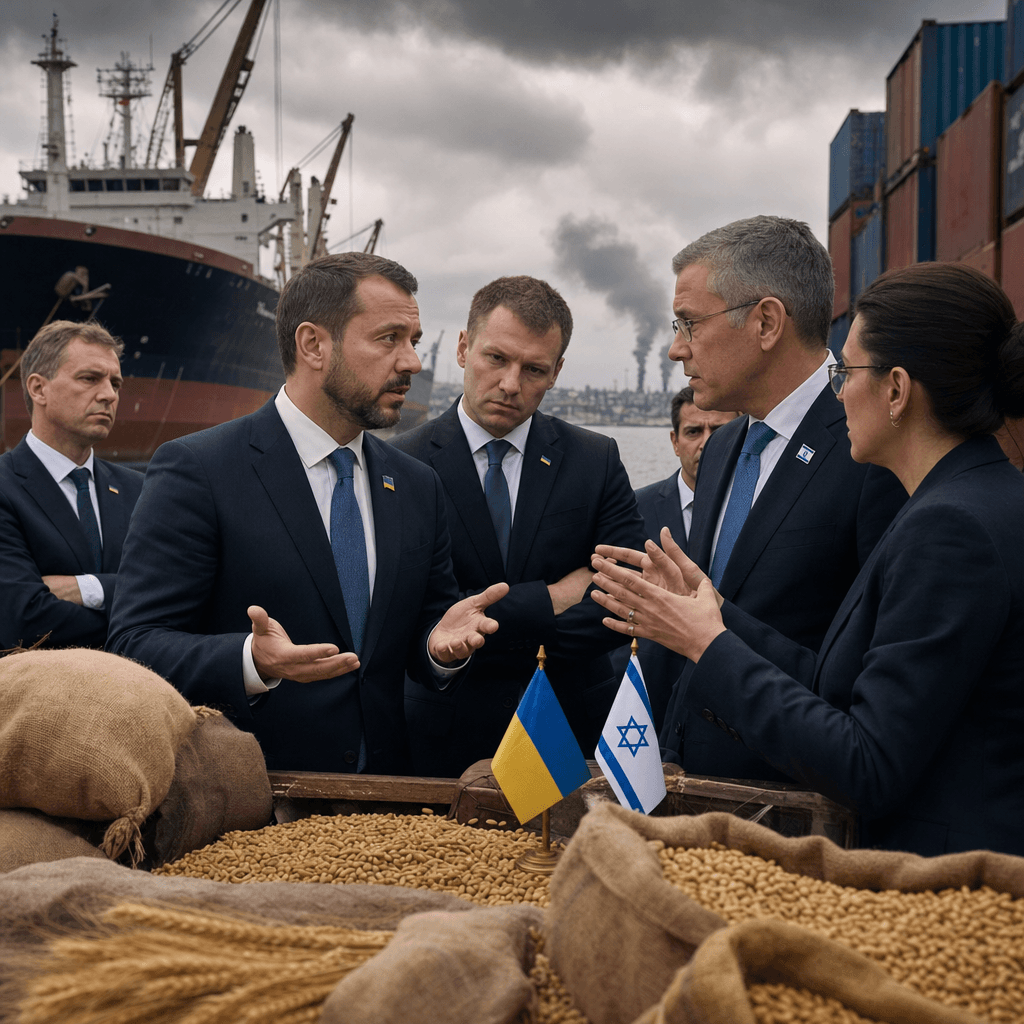
Israel-Ukraine Rift Puts Grain Above Shared Enemies
Ukraine wants Israel to block Russian-linked grain; Israel wants proof, not public pressure. The dispute exposes how war partners still clash over law and leverage.
The immediate fight is not about battlefield alignment but control over a shipment chain. The Washington Post reported Thursday that Israel and Ukraine — both fighting adversaries tied to Russia and Iran — are now in a public quarrel over grain Ukraine says was stolen from occupied territory and moved through Israeli ports (The Washington Post). Kyiv says it has pressed Israel through diplomatic channels to stop the cargo; Jerusalem says it has seen accusations, not evidence (
Reuters,
BBC).
The leverage is at the port
Ukraine’s case is straightforward: if grain taken from Russian-occupied regions enters legitimate commercial channels, it helps Moscow launder wartime gains and undermines sanctions enforcement. Ukrainian officials say the vessel Panormitis was headed for Haifa, while another ship, Abinsk, had already unloaded in Israel earlier this spring (Reuters,
BBC). President Volodymyr Zelenskyy warned that Kyiv would prepare sanctions against those profiting from the trade, and Foreign Minister Andrii Sybiha summoned the Israeli ambassador after what he called Israel’s lack of action (
BBC,
Reuters).
Israel’s leverage is different. It controls whether cargo enters its ports and whether the government treats Ukraine’s claims as a legal issue or a political nuisance. Foreign Minister Gideon Saar’s response — dismissing “Twitter diplomacy” and saying allegations are not evidence — shows Jerusalem does not want to be publicly boxed into acting as an enforcer for Kyiv’s war claims (BBC,
Reuters).
Why this matters beyond the cargo
This is a small dispute with larger signaling value. Russia benefits if its occupied-territory exports can move quietly through third-country markets, because that turns seized grain into cash and normalizes the occupation economy. Ukraine loses if even friendly states hesitate to act on alleged war spoils. And Israel loses little commercially by delaying a decision, but risks aggravating a partner it has reasons to keep close as it navigates its own confrontation with Iran and the wider regional war environment highlighted by the Post (The Washington Post,
Reuters).
There is also a wider sanctions angle. The BBC reported that the European Union said it was ready to target individuals and entities in third countries if they helped fund Russia’s war effort through these grain flows (BBC). That raises the pressure on Israel: even if Jerusalem does not want to adjudicate the theft claim itself, it may have to decide whether the reputational cost of inaction is now higher than the friction of intervention.
What to watch next
The next decision point is whether Israeli authorities detain the vessel now under review and whether Kyiv follows through on sanctions naming shippers, brokers, or insurers. Watch for an Israeli legal response to the request on Panormitis, and for any EU move to widen the net to facilitators in third countries (Reuters,
BBC). For broader context on the diplomatic logic, see
Global Politics.
Discover more

Global Politics
US Seizes Iranian Ship, Tensions Surge
The US seizes the Iranian ship Touska near the Strait of Hormuz, escalating tensions and risking wider conflict in the region.

International Relations
Pakistan's Key Role in US-Israel-Iran Meddle
Pakistan seeks to mediate in the US-Israel-Iran conflict, balancing diplomacy and economic pressures while facing significant challenges.
India
Romanian Coalition Party Demands PM Resign
Romania's PSD demands PM Ciolacu's resignation, risking a political crisis and economic instability. Will the coalition hold?
India
India Rejects Zardari's Mosque Comments
India's MEA rebukes Zardari's mosque comments, citing Pakistan's human rights record.