Israel's Military Pressure Tactics in Lebanon
Israel uses military leverage to shape Lebanon's ceasefire talks.
Model Diplomat3 min readMiddle East
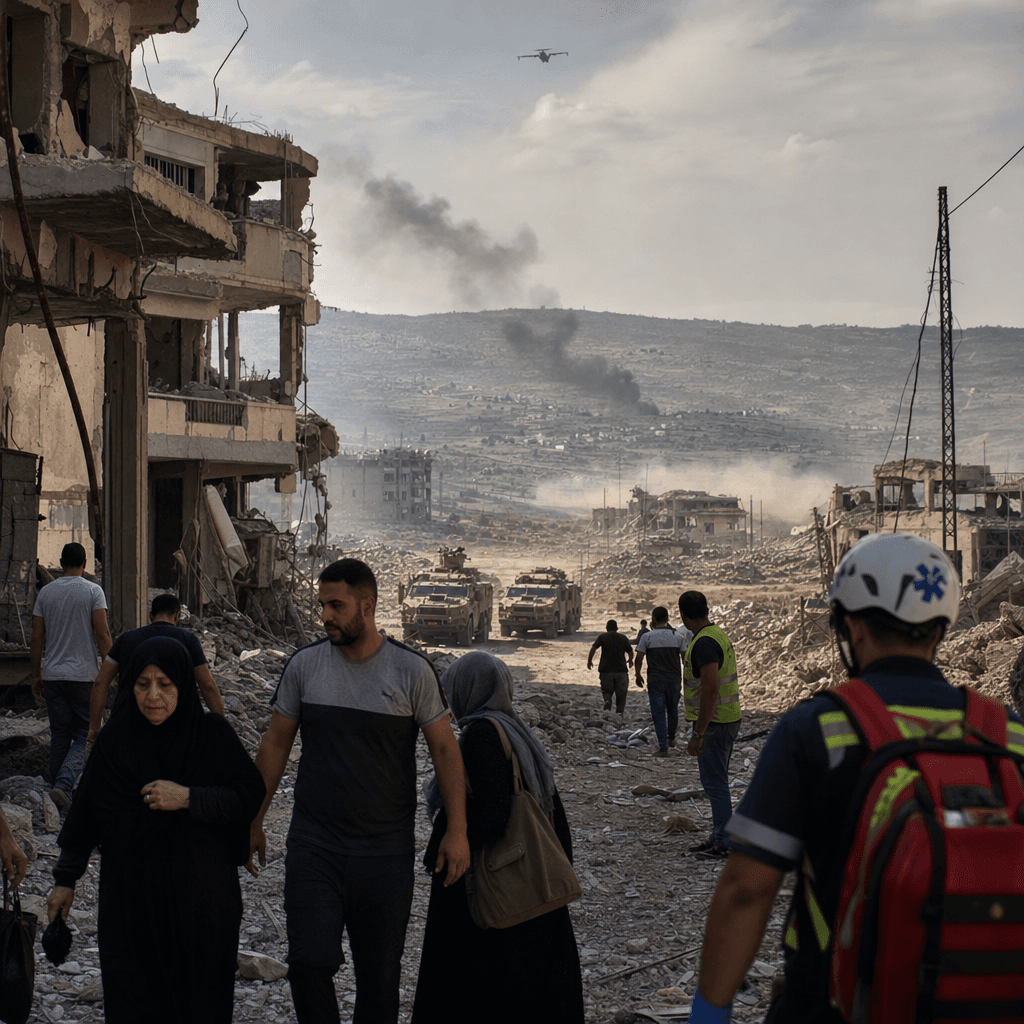
Israel Turns Truce into Pressure Campaign in Lebanon
Airstrikes, displacement orders and Washington talks show Israel using military leverage to shape Lebanon’s next ceasefire phase.
Israel is using the gap between diplomacy and force to improve its terms on the ground. Its military killed six people in a strike on a house in Kfar Dounin in southern Lebanon on Monday night, then issued fresh displacement threats for several villages and towns on Tuesday, according to Al Jazeera and
Reuters. The message is not just military punishment; it is bargaining pressure. Beirut wants the attacks to stop before a third round of talks in Washington later this week, while Israel is showing it can still empty villages and shape the border before negotiators sit down,
Al Jazeera reported.
Military force is setting the ceiling for diplomacy
This is what leverage looks like in practice. Israel’s Arabic-language spokesman Avichay Adraee told residents in Sohmor, Arzoun, Tayr Debba, Bazouriyeh and al-Haush to flee, while the army demolished homes and a water pumping station, Al Jazeera said. That fits a broader pattern Reuters has already described: Israel’s defence minister said in March that forces would occupy a “security zone” up to the Litani River, and Israeli strikes and evacuation orders have displaced more than a million people,
Reuters. The practical aim is to keep southern Lebanon thinly populated, militarily degraded and politically weaker at the negotiating table.
That pressure matters because the talks in Washington are not symbolic. The AP News report says Lebanon and Israel are resuming rare direct talks to extend the ceasefire and discuss Israeli withdrawals, prisoner releases, Lebanese troop deployment and reconstruction. Those are not parallel issues; they are the core trade-off. Israel wants a border it can police from distance, and Lebanon wants an end to strikes without conceding permanent territorial facts.
Lebanon’s problem is not just firepower — it is political weight
Beirut is trying to move the fight into the diplomatic arena because it cannot match Israel’s operational tempo. Lebanon’s prime minister, Nawaf Salam, asked the U.S. ambassador to “exert pressure on Israel to stop the ongoing attacks and violations,” Al Jazeera reported. That appeal is a sign of weakness, but also of the one channel still open: Washington can lean on Israel if it chooses to do so. Without that pressure, the ceasefire remains, as Al Jazeera put it, alive “on paper” only.
The immediate losers are Lebanese civilians in the south, many of whom have already been displaced once and are now being told to move again. The beneficiary, at least for now, is the Israeli government, which can convert battlefield dominance into negotiating leverage before any broader settlement hardens. Hezbollah also gains something from the Israeli escalation: every new strike strengthens its claim that the south is still under attack and that disarmament or restraint would be a one-way concession.
What to watch next
The next decision point is the Washington meeting later this week, which will show whether the U.S. can force Israel to trade airstrikes for implementation. Watch for three things: whether the Israeli army keeps expanding displacement orders, whether Lebanon’s delegation gets any written security guarantees, and whether Washington treats the ceasefire as a real enforcement task or just a diplomatic placeholder. If the strikes continue through the talks, the message will be clear: Israel is negotiating from the air, not the table.
Discover more
Tech Policy
Iran's Cavern Manticore Targets Israel's IT
Cavern Manticore, an Iran-linked hacking group, targets Israeli IT vendors, prompting a shift in Israel's cybersecurity policy and legislative efforts.
Tech Policy
Iran's Cavern Manticore Cyber Threat
Iran's Cavern Manticore cyber group exploits Israeli IT networks, leading to new cybersecurity regulations in Israel.
Conflict & Security
UN Report: Israel Targets Palestinian Kids
A UN report accuses Israel of genocide against Palestinian children in Gaza, citing grave human-rights violations and intensifying scrutiny of the war's toll.
Conflict & Security
Israel's Annexation Strategy Escalates
Israel's annexation push goes public as minister Smotrich declares intent in Hebron, signaling an open strategy to entrench West Bank settlements and control.