Israel-Lebanon Talks: Ceasefire Stakes
US-mediated talks test ceasefire framework viability
Model Diplomat8 min readMiddle East
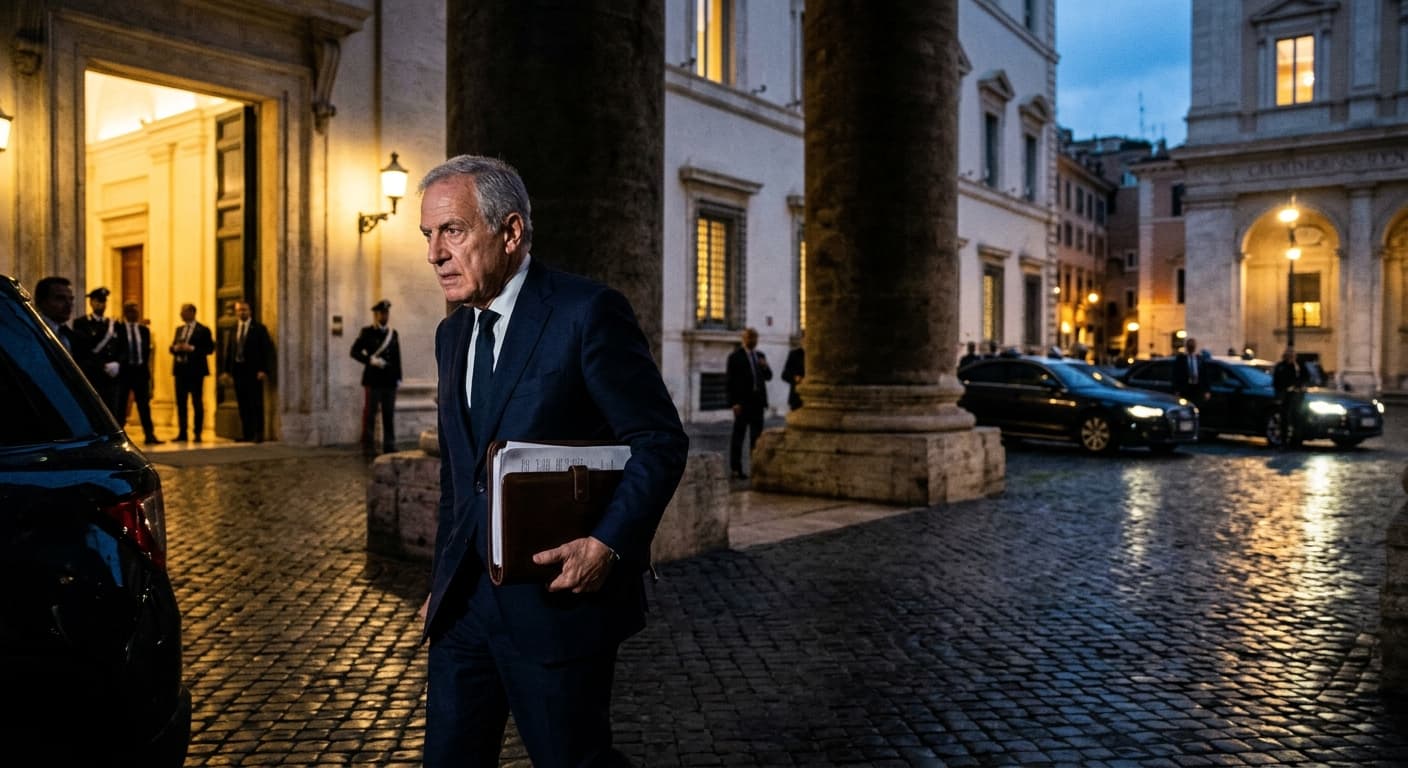
Israel-Lebanon Rome talks: what a mid-July round means for the ceasefire
Israel and Lebanon return to US-mediated talks in Rome on July 14–15, 2026, testing whether the June framework can survive Hezbollah's rejection and an unresolved US–Iran track.
Israel and Lebanon will hold a sixth round of US-mediated direct talks in Rome on July 14 and 15, 2026, the two sides' ambassadors to Washington confirmed on July 7. The Rome round is the first working-level test of the 14-point trilateral framework signed at the State Department on June 26, and it is the pivot on which two competing Trump-administration deals — the US–Iran Memorandum of Understanding signed in Islamabad on June 15, and the Israel–Lebanon framework signed 11 days later — will either be reconciled or begin to unravel. Netanyahu has already declared Israeli forces "will not leave" the south, Hezbollah has called the framework "null and void," and roughly one-fifth of Lebanese territory remains under Israeli occupation. Rome, in other words, is not a peace conference. It is a stress test of whether Washington can hold two contradictory ceasefires together long enough to reach the sixty-day US–Iran deadline.

The Rome meeting was announced by Israeli Ambassador Yechiel Leiter, whose July 6 remarks at the Council on Foreign Relations declared that Jerusalem now views the Israel–Lebanon framework as superseding the US–Iran MOU on Lebanon-related questions, according to L'Orient Today and confirmed by
Naharnet. Leiter will lead the Israeli delegation opposite Lebanese Ambassador Nada Hamadeh, with US State Department Counsellor Daniel Holler chairing — the same trio that signed the framework in Washington on June 26, per
Al Jazeera.
What the framework actually commits — and does not
The full text released by the State Department describes a "sequenced process" in which the Lebanese Armed Forces restore sovereign authority "pending the verified disarmament of non-state armed groups and dismantlement of associated infrastructure," according to the US Department of State. Only once that disarmament is verified in each of two "pilot zones" — one south of the Litani River, one north of it — will Israeli forces "progressively redeploy." The word withdrawal does not appear in the operative clauses, a point Al Jazeera's Beirut correspondent Zeina Khodr flagged in
her reading of the released text.
The US financial architecture is modest but concrete. Secretary of State Marco Rubio, at the June 26 signing, pledged an "immediate" $100 million in humanitarian assistance through the UN and a $30 million reimbursement to the Lebanese Armed Forces, according to a State Department release cited by Al Jazeera. A trilateral Military Coordination Group — Israel, Lebanon and the United States — is charged with implementation. The
BBC reports that Lebanon separately asked "particularly Arab partners, under the leadership of the US" to backstop the LAF's expanded role.
Two clauses trouble international lawyers. Amnesty International, Human Rights Watch, the Lebanese Center for Human Rights, Legal Agenda, Reporters Without Borders and the Union of Journalists in Lebanon warned in a joint July 3 statement, reported by Al Jazeera, that Clauses 3 and 13 appear designed to "prevent Lebanon and Israel from having recourse to international courts, including the International Criminal Court and the International Court of Justice." Clause 13, they said, forbids "actions in international political or legal fora" — a bar the six organisations argued would "betray victims of war crimes."
The two-deal problem Rome must solve
Rome's real subject is not the pilot zones. It is the collision between two Trump-brokered instruments signed 11 days apart.
The US–Iran MOU, signed at the G7 on June 15, mandates in its first operative clause "the immediate and permanent termination of military operations on all fronts, including in Lebanon," according to Al Jazeera's reconstruction of the text. The Israel–Lebanon framework, by contrast, ties Israeli redeployment to Hezbollah's verified disarmament — a condition the group has publicly refused. The two instruments are, on the Lebanon question, mutually inconsistent. As the
Council on Foreign Relations put it in its June analysis of the Iran deal, "Lebanon is the variable most likely to play spoiler to any long-term deal."
Ambassador Leiter, at CFR on July 6, took the Israeli position further: the trilateral framework, he said, now supersedes the MOU on Lebanon. That is a diplomatically pointed claim about a US-signed document, and it clarifies the Rome delegation's brief. Israel is negotiating in Rome to lock in the sequencing — disarmament before withdrawal — that the MOU appeared to reverse.
Iran has not, so far, made Lebanon a wedge issue. Ronnie Chatah, host of The Beirut Banyan, told Al Jazeera on July 1 that despite Israel's public insistence on staying, he does not believe Tehran will "jeopardise" the MOU over southern Lebanon. Joe Macaron, a Wilson Center analyst quoted in the same piece, argued that "the nuclear issue with Iran takes precedence over everything else" for Washington, meaning the US "isn't willing" to press Hezbollah into a corner it cannot exit.
The primary document
The framework's own language captures the trade the two sides are being asked to sell at home. The State Department text reads:
"Israel and Lebanon affirm the right of each state to exist in peace, and their mutual desire to live in security as neighboring sovereign states … The Lebanese Armed Forces will restore effective sovereign authority over all Lebanese territory, pending the verified disarmament of non-state armed groups and dismantlement of associated infrastructure."
There is no companion sentence obliging Israel to withdraw within a fixed period. That asymmetry — Lebanese obligations set as preconditions, Israeli obligations set as consequences — is precisely what Rome must translate into a working timetable, and it is what Hezbollah cites when it calls the deal a "surrender of sovereignty."
What Rome is really negotiating
Three technical files sit under the political headlines.
Pilot-zone maps and verification. The framework identifies two zones for phased LAF takeover but does not specify their boundaries or verification mechanism. According to the BBC's reading of the four-point operative annex, Israel will retain an "expanded security area" during the transition — a term Defense Minister Israel Katz described on June 27 as a zone up to 10 kilometres inside Lebanese territory. Rome's negotiators will need to fix a line on a map, and Hezbollah is not in the room to accept it.
LAF deployment and financing. The $30 million US reimbursement to the LAF is a down payment on a much larger reconstitution. The Lebanese army will require the political cover and materiel to police villages where Hezbollah remains the de facto authority. Hezbollah MP Hassan Fadlallah told Al Jazeera any attempt by the LAF to enforce a Washington-brokered agreement would risk "civil war" — a warning that will hang over every deployment order.
Detainees and remains. The framework commits both governments to work toward the release of detainees and the return of remains, per the BBC. This is the lowest-cost humanitarian deliverable and the one most likely to produce a public "win" from Rome.
The humanitarian floor
The talks are not opening in a lull. UN OCHA's Flash Update #40, issued on July 2, records at least 4,298 deaths and 12,196 injuries since the March 2 escalation, drawing on figures from Lebanon's Ministry of Public Health. Around 646,107 people have returned to their areas of origin; nearly 500,000 remain displaced, including 47,143 in 430 collective shelters. OCHA notes "daily reports of airstrikes, shelling, demolitions, drone activity, and UXO incidents." The 2026 Lebanon Flash Appeal remains only 37 percent funded.
UNIFIL, whose mandate under Resolution 1701 is still the legal architecture nominally binding Israel and Lebanon, reported observing 143 projectile trajectories on a single day in mid-June, of which 119 were attributed to Israel, according to UN News. A UNIFIL convoy was obstructed by two Israeli tanks in Tiri the same week. The peacekeeping mission has, in effect, become a witness to the framework it is not part of.
The historical rhyme Washington is trying to avoid
The 1983 tripartite May 17 agreement between Lebanon and Israel — brokered under US mediation and predicated on withdrawing Israeli forces in exchange for Lebanese security guarantees — collapsed within a year. It was followed by the bombing of the US Marine barracks in Beirut and by Hezbollah's consolidation as the dominant armed actor in southern Lebanon. Chatah invoked this precedent explicitly in his Al Jazeera interview: a Beirut government signing a US-brokered deal over Hezbollah's veto is not new terrain. Ahron Bregman of King's College London told
Al Jazeera the framework "is likely to join 1701 in the growing pile of unsuccessful Israeli-Lebanese deals."
CFR's Steven Cook wrote in a June 27 analysis that Israel sees "the linking of Lebanon's internal affairs and national sovereignty to Iran as a great Iranian victory and an incomprehensible U.S. concession." Leiter's Rome brief is, in that reading, a rearguard action to decouple the two files before the sixty-day US–Iran clock — which began mid-June — expires around mid-August.
Who wins and who loses if Rome delivers
Lebanese President Joseph Aoun and Prime Minister Nawaf Salam need the framework to hold: it is the vehicle through which they extract Israeli forces without inviting a domestic confrontation their army cannot win. Aoun told the country on June 27, per Al Jazeera, that Lebanon's "sovereign decision to separate our track from the Iranian-US track" was "a problem for some who have become accustomed to being under guardianship."
Netanyahu wins if Rome codifies disarmament-first sequencing and buys domestic quiet for the "buffer zone." Finance Minister Bezalel Smotrich, quoted by Al Jazeera, has said Israel will stay "beyond" disarmament "because we need defendable borders" — signalling that the coalition's right flank will oppose any timetable Rome produces.
Hezbollah and Iran win the longer the talks stall without extracting the disarmament commitment. Every week of Rome without verification triggers is a week the group retains its arms and its narrative — that only the "resistance" secured Israel's eventual retreat.
The Trump administration wins only if it can prevent Rome from surfacing the contradiction between the MOU and the framework. That is why the sixty-day clock matters more than the Rome agenda: Washington needs Iran nuclear progress before Hezbollah's disarmament becomes the binding constraint.
What to watch
- July 14–15, Rome. Any joint communiqué naming pilot-zone boundaries or a verification body. Absent that, the round is atmospherics.
- Around August 14. The US–Iran MOU's sixty-day negotiating window closes. If Washington cannot show progress on the nuclear file, US pressure on Israel to visibly withdraw from Lebanese territory will spike, per
CFR.
- Trilateral Military Coordination Group's first field report. The State Department–chaired body is the framework's implementation spine. Its first assessment of Hezbollah disarmament in the pilot zones will determine whether Israeli redeployment moves from paper to map.
- OCHA Flash Updates. A resumption of displacement orders, or another Beirut suburbs strike on the scale of the June 14 raid, would collapse the political room the Rome round needs.
The Bottom Line
The Rome round is not about ending the Israel–Lebanon war. It is about whether the Trump administration can hold two incompatible ceasefires — the US–Iran MOU that binds "all fronts," and the Israel–Lebanon framework that binds none until Hezbollah disarms — inside the same sixty-day clock. If Leiter's line that the framework supersedes the MOU becomes US policy in practice, Iran keeps Hezbollah armed and Washington keeps its nuclear track; if it does not, Israel loses the sequencing it went to Washington to secure. Either way, the deal that emerges from Rome will be judged not on what it says about peace, but on what it lets each side tell its own domestic audience about who is still holding a gun.
Discover more

US Politics
House Ethics Committee Pushes Sexual Miscond.
The House Ethics Committee has shifted responsibility for sexual harassment settlement records to the Office of Congressional Workplace Rights, complicating disclosure efforts.

US Politics
SNAP Food Assistance Faces Legal Challenges
In 2026, SNAP faces stricter eligibility rules and mounting legal challenges, threatening food assistance for the millions of Americans who rely on the program.
India
700 Activists Accuse PM Modi of MCC Breach
Over 700 activists allege PM Modi breached election code with a televised address attacking opposition parties just before state elections.

Conflict & Security
Drone Warfare Killing Aid Workers at Unprec
Over 1,000 humanitarian workers killed in three years as cheap armed drones collapse legal protections. Gaza, Sudan, Ukraine, and DRC see deliberate targeting of aid convoys and hospitals with zero prosecutions.