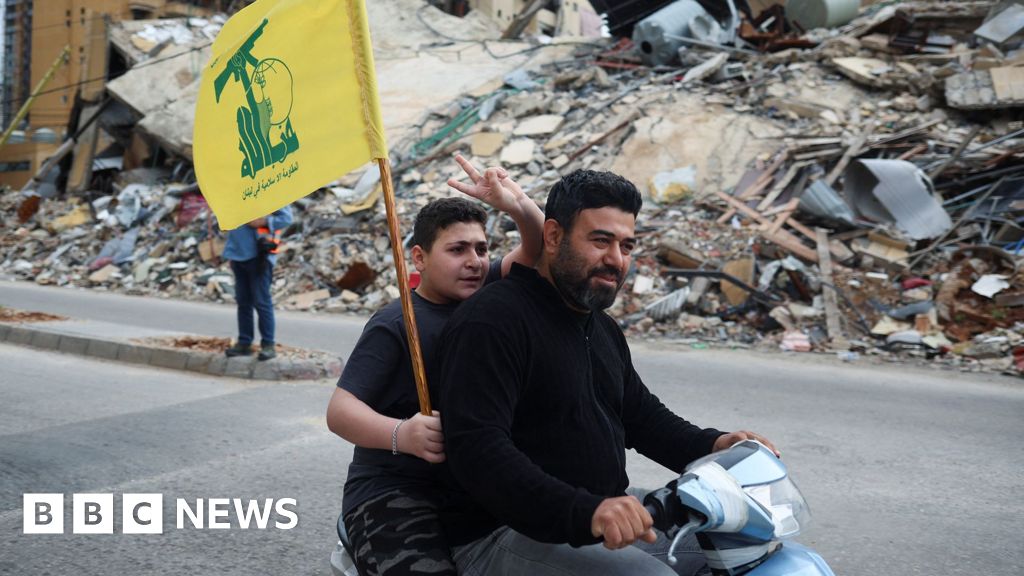
Israel-Lebanon Ceasefire Begins: What’s at Stake and What Comes Next
The 10-day ceasefire between Israel and Lebanon, starting April 16, marks a fragile pause in a longstanding conflict, hinging on Hezbollah’s role and future talks.
Israel and Lebanon entered a 10-day ceasefire on April 16 at 17:00 EST, a pause brokered under delicate terms  BBC. This ceasefire is notable in its conditionality: Israel retains the right to defend itself if attacked, while Lebanon must actively prevent hostile actions by Hezbollah and other militias operating on its soil. Lebanon’s own security forces remain officially responsible for maintaining order—a point of diplomatic emphasis that underscores the delicate balance.
Why This Ceasefire Matters
This is not just a typical ceasefire; it represents a precarious diplomatic dance between two parties whose last major conflict in 2006—known as the Israel-Hezbollah war—left scars still felt today. The involvement of Hezbollah, a powerful Shiite militia and political faction backed by Iran, complicates Lebanon’s ability to guarantee peace along its southern border. Israel’s insistence that Lebanon rein in Hezbollah exposes the chronic challenge: the Lebanese government wields limited control over the group.
The ceasefire also signals a broader regional and international concern about escalation. Recent skirmishes had reignited fears of a larger confrontation that could destabilize the already fragile Middle East region. By officializing Lebanon’s role in preventing militant attacks, the ceasefire attempts to place responsibility on the Lebanese state—yet Hezbollah’s autonomy defies easy containment.
The Core Tensions: State Sovereignty vs. Non-State Actors
Lebanon’s acknowledgment that its security forces hold responsibility creates a diplomatic opening but also a tension point. Hezbollah is both a political party and an armed militia integrated into Lebanese society, yet it operates independently in military terms. It’s a perennial challenge for Lebanese sovereignty. Israel’s conditional acceptance of the ceasefire rests on Lebanon’s ability to demonstrate control, which historically has proven elusive.
The provision that Israel “may defend itself” is a typical yet critical security guarantee. It leaves room for unilateral Israeli military action if Israel perceives an imminent threat. This ambiguity reflects Israel’s strategic doctrine of deterrence: ceasefires only hold if the opposing side can credibly contain rogue actors within its borders.
What to Watch Next
The ceasefire’s initial duration is 10 days, with possible extensions dependent on progress in talks—likely involving indirect negotiations mediated by international actors such as the UN or regional players like Syria. Observing whether Lebanon can assert more control over Hezbollah’s actions will be the litmus test for this ceasefire’s success.
A failure to contain Hezbollah risks a return to open hostilities, which could draw in Iran’s regional influence directly against Israel once again. Conversely, meaningful dialogue and cooperation might open incremental pathways toward reducing tensions in a region long marked by mistrust.
This ceasefire fits into a broader pattern of uneasy truces in the Israel-Lebanon axis, where fragile peace is less a permanent state than a momentary pause. Analysts should watch how Lebanon’s government maneuvers domestically and whether international actors can sustain pressure on Hezbollah without inflaming broader conflict.
For deeper context on the complex Israel-Lebanon relationship and the role of Hezbollah, see our profiles on  Israel and Lebanon, as well as the broader Middle East geopolitics.
This ceasefire is a pivotal moment—if tentative—in the ongoing Israel-Lebanon struggle, where state authority, militant autonomy, and regional rivalries intersect. How each side manages this pause will shape security dynamics for months to come.