House GOP Blocks FISA Renewal
House Republicans' rebellion leads to a short-term FISA extension.
Model Diplomat2 min readUnited States

House GOP rebellion derails FISA renewal — What’s next for US surveillance?
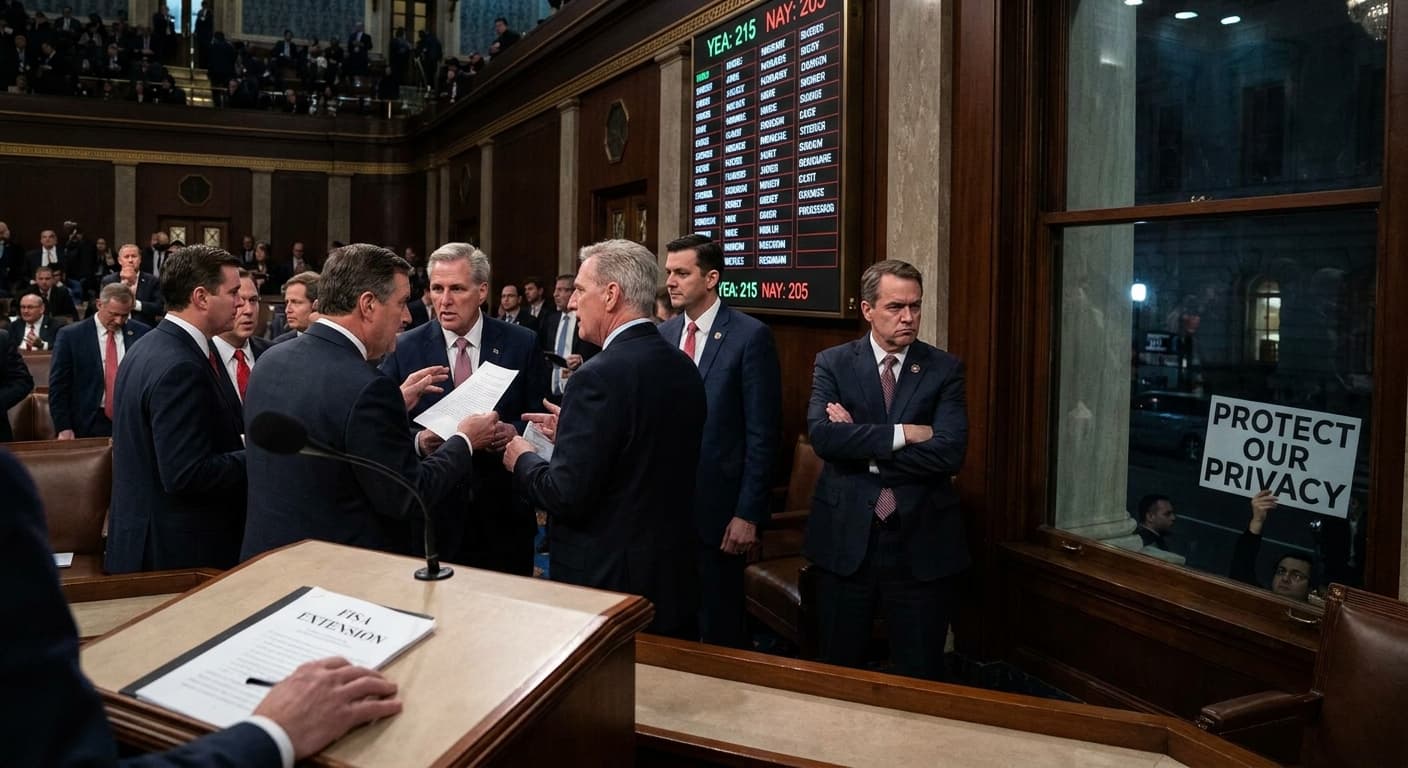
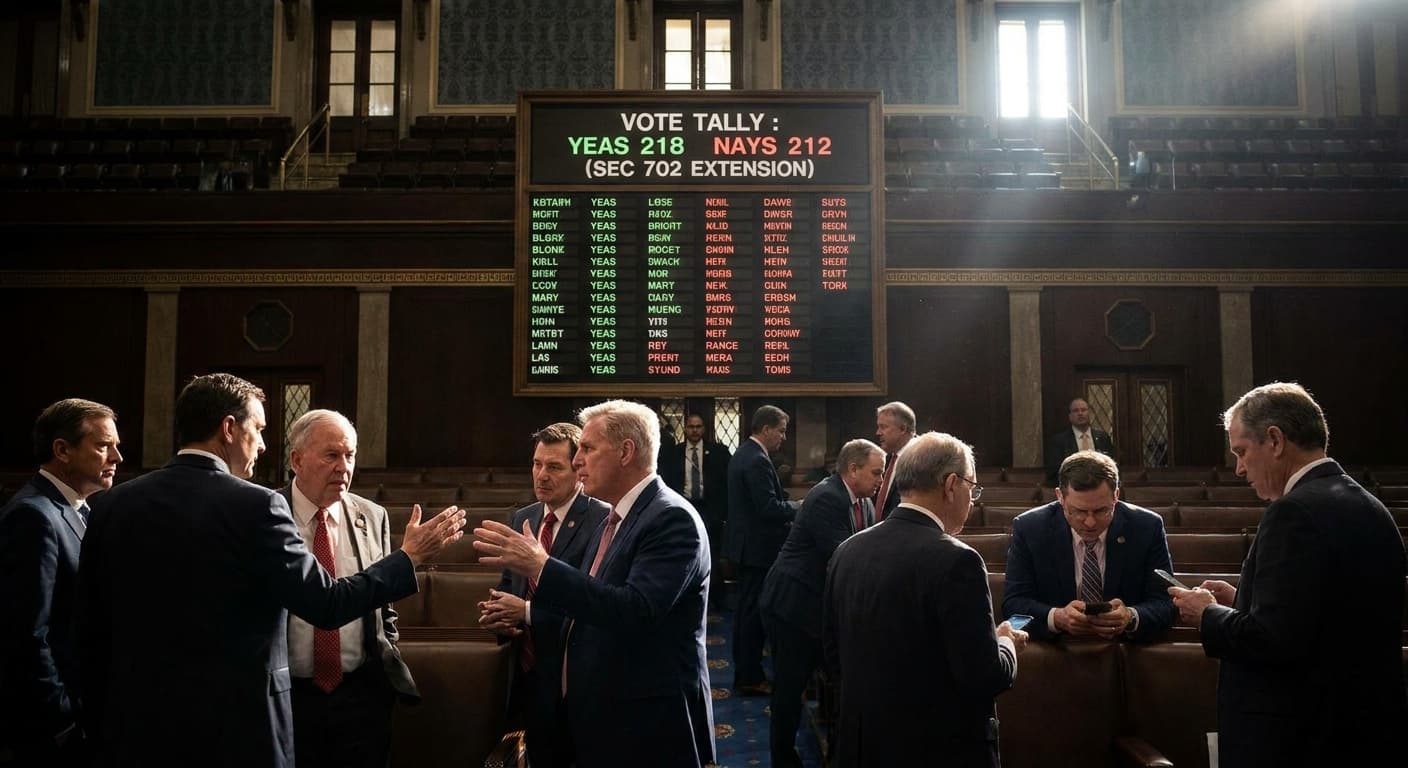
House Republicans blocked a long-term renewal of Section 702 of the Foreign Intelligence Surveillance Act, forcing a two-week extension instead.
House Republicans rebelled against leadership and the White House by blocking the customary five-year renewal of Section 702 of the Foreign Intelligence Surveillance Act (FISA), allowing only a two-week extension until April 30. This short-term fix buys Congress more time but underlines deep divisions over surveillance, civil rights, and national security priorities.
Why Section 702 matters
Section 702 authorizes the US government to collect foreign intelligence by targeting communications involving non-Americans outside the US, including indirectly sweeping up Americans' information incidentally. It is a foundational tool in counterterrorism and foreign intelligence for agencies like the NSA and CIA, credited with thwarting plots since its enactment in 2008.
Every few years, Congress must renew it. While the five-year renewals have been routine, they periodically ignite fierce debate. Critics—especially civil libertarians and some congressional Republicans—warn Section 702 enables mass surveillance without adequate privacy safeguards or meaningful oversight. Supporters, from both parties traditionally, emphasize its indispensable role in protecting US interests abroad.
What went wrong in April 2026
Speaker Mike Johnson and the White House sought a straightforward, clean five-year extension to avoid operational gaps. Instead, a faction of House Republicans, dissatisfied with perceived insufficient privacy controls, oversight, and transparency, withheld votes. Their rebellion forced unanimous consent on a mere two-week extension to avoid a lapse in authority.
This rift is particularly telling because it exposes fissures in the GOP coalition over national security versus civil liberties. It also complicates bipartisan cooperation on intelligence reform. The short-term extension injects uncertainty into intelligence operations and raises the stakes for negotiations over improved privacy provisions and accountability mechanisms.
What to watch next
Congress now faces an urgent deadline to resolve its impasse before April 30. Expect intense behind-the-scenes bargaining over amendments that strengthen privacy protections, limit incidental collection, or expand transparency to satisfy the rebellious wing of the GOP without losing Democratic support.
Look for potential proposals to enhance the role of the FISA Court, require more congressional oversight, or tighten data handling and minimization procedures. The White House and centrist Republicans will push to avoid a repeat short extension, which risks operational disruption.
This moment echoes past battles over surveillance laws—from the 2013 Snowden revelations to the 2023 FISA reform debates—and reflects a growing public wariness about digital privacy in an era of persistent threats. The outcome will set the tone for US intelligence authority and privacy norms for years to come.
For more on the impact of intelligence and surveillance policy on US politics, see our United States political analysis and the broader
Global Politics landscape.
Discover more

US Politics
House Passes 10-Day FISA Section 702 Bill
The House approved a 10-day extension of FISA Section 702, exposing deep partisan divides over digital surveillance, privacy and national security powers.
US Politics
House Extends Surveillance Powers Amid GOP Rr
The House extended federal surveillance powers until April 30, revealing sharp GOP divisions and reigniting privacy concerns over intelligence collection.
US Politics
House Passes Short-Term Section 702 Extension
The House approved a short-term extension of Section 702 surveillance despite GOP pushback, exposing deep divisions over privacy and national security.

Conflict & Security
Drone Warfare Killing Aid Workers at Unprec
Over 1,000 humanitarian workers killed in three years as cheap armed drones collapse legal protections. Gaza, Sudan, Ukraine, and DRC see deliberate targeting of aid convoys and hospitals with zero prosecutions.

