Escalating Violence
Israeli strikes on paramedics raise humanitarian concerns in Lebanon.
Model Diplomat3 min readMiddle East
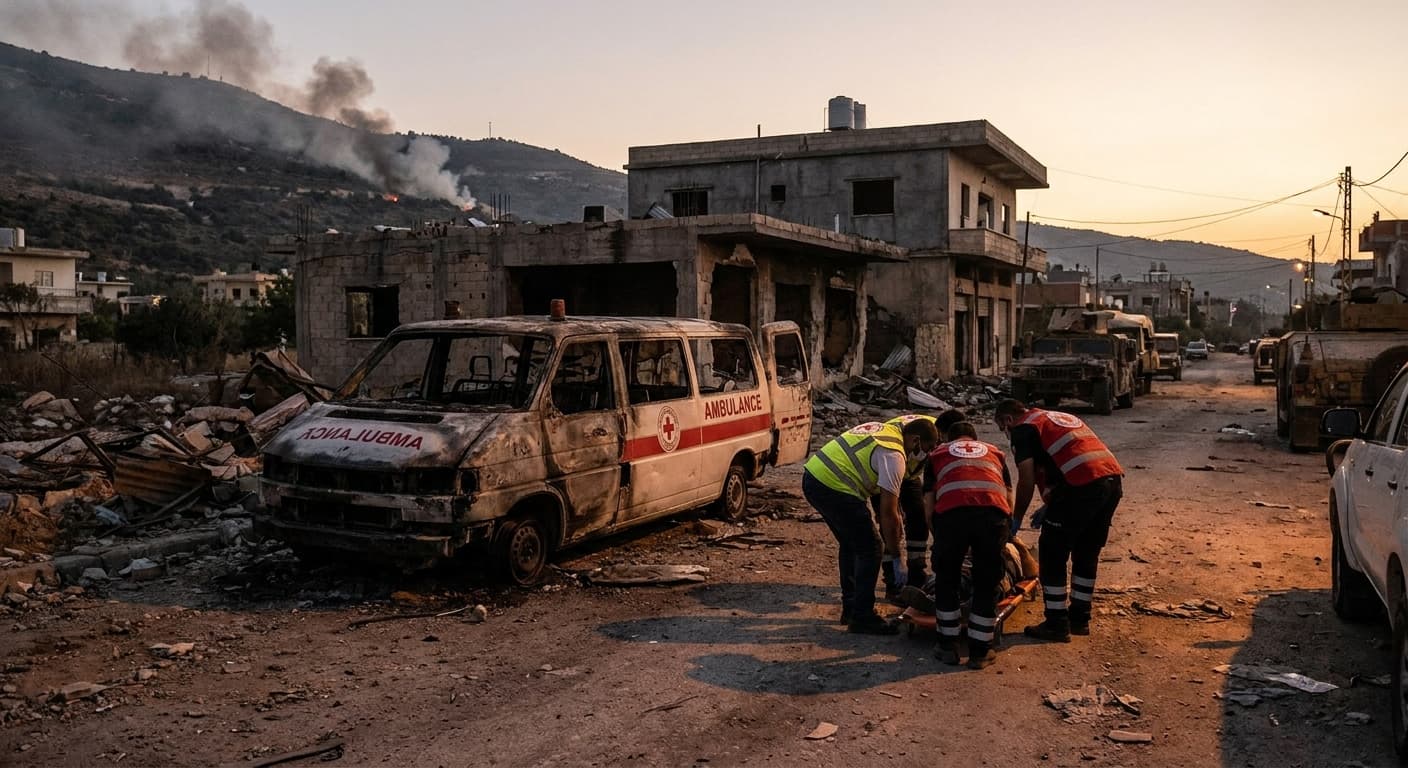
Three Paramedic Teams Struck in Southern Lebanon Amid Israel’s Ongoing Conflict
Three separate paramedic teams in southern Lebanon were struck by Israeli strikes, underscoring escalating violence and raising humanitarian alarms.
Israel’s military campaign in southern Lebanon hit a troubling new mark with three separate paramedic teams reportedly struck in recent attacks, according to Lebanon’s health ministry AP News. This development comes amid intensified Israeli aerial and ground operations targeting Hezbollah and other militant groups. The strikes on emergency responders mark a grim escalation with significant implications for civilian protection and the humanitarian situation on the ground.
Why This Matters: Red Lines and Rising Civilian Costs
Paramedics and medical personnel are generally protected under international humanitarian law, and attacks on them typically provoke strong condemnation. Striking three different teams suggests either high operational risks or a troubling disregard for these protections in Israel’s current military approach in Lebanon. This is likely to exacerbate the already severe humanitarian crisis in the region, where medical infrastructure is stretched thin amid ongoing conflict.
Southern Lebanon has long been a focal point of Israel-Hezbollah confrontations, with conflict flare-ups periodically erupting since the 2006 war. Israel’s justification for this latest wave of attacks centers on deteriorating security threats along its northern border. However, striking medical teams risks alienating Lebanese civilians and harder political blowback for Israel internationally, potentially inviting increased diplomatic pressures from regional and global actors to restrain military actions.
Broader Conflict Context and Implications
This incident highlights how the Israel-Lebanon conflict continues to spiral beyond conventional combatants. Hezbollah in Lebanon has grown more entrenched militarily and politically in southern Lebanon, complicating Israel's campaign and making civilian casualties more likely. The strikes may also signal Israel’s attempt to degrade Hezbollah’s operational support infrastructure, which often overlaps with civilian spaces.
From a geopolitical perspective, ongoing violence in Lebanon reverberates through the region. Lebanon’s fragile political state risks collapse under the pressure of renewed conflict and humanitarian burden. Meanwhile, Israel faces growing scrutiny from Western allies wary of broader regional escalation. This dynamic echoes past crises but with more acute risks given the precision weaponry and intelligence campaigns now integrated into these conflicts.
What to Watch Next
-
Diplomatic Reactions: Watch how Lebanon, the United Nations, and key international actors respond, especially regarding calls for ceasefire or humanitarian corridors. Increased global pressure could steer Israel’s tactics or slow the fighting.
-
Hezbollah’s Response: The group’s retaliation strategy will be pivotal. Escalation risks could drag the conflict into a wider regional war involving Iran-backed forces.
-
Civilian and Medical Infrastructure: Continued strikes on emergency responders will worsen Lebanon’s healthcare crisis, making aid access and protection a critical area for international monitoring and intervention.
This conflict remains one of the most volatile flashpoints in Middle East politics, where every strike and casualty shifts the delicate balance of local and international relations. For those tracking regional stability and humanitarian outcomes, the attacks on paramedic teams in southern Lebanon signal a pressing need to reassess both military and diplomatic strategies in the conflict's next phases.
For more on the broader geopolitical dynamics, see Lebanon’s Profile and
Global Politics.
Discover more

Global Politics
Lebanon Ceasefire Amid US Blockade on Iran
Israel and Lebanon entered a 10-day ceasefire as a U.S. naval blockade on Iran took hold, sharply escalating tensions across an already volatile Middle East.
Global Politics
Iran's Fragile Ceasefire
With Iran's ceasefire nearing its end, uncertainty mounts over stalled US-Iran negotiations and the fragile prospects for lasting Middle East stability ahead.

Global Politics
China's New Strategy for Taiwan and Japan
China softened its stance on Taiwan and Japan, eyeing the 2028 election and regional stability as Middle East turmoil reshapes its geopolitical calculations.

Economics
Fed's Amex AML order puts correspondent banking on notice
Federal Reserve's Amex AML order requires board-level controls and a 90-day plan; OCC fined the bank $350 million over enterprise-wide deficiencies.