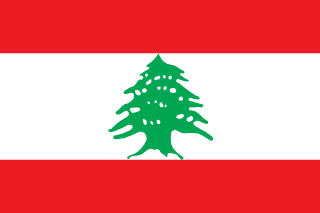
Inside Lebanon’s foreign policy.
Lebanese Republic
Asia · UN voting record, treaty positions, and alliances — every claim primary-sourced.
In short
Lebanon is a weak but strategically exposed confessional parliamentary republic whose foreign policy is constrained less by formal doctrine than by internal fragmentation, the Hezbollah–state duality, and the spillover from the Israel–Iran confrontation…
Capital
BeirutGovernment
Confessionalist parliamentary republicResearch Lebanon on your topic
Start a Quick answer framed for your committee — official statements, UN votes, and bloc context.
Lebanon's government & politics
Leadership, governance, and democratic trajectory.


Lebanon's UN voting record
How Lebanon votes at the UN General Assembly — ideological trajectory, voting partners, topic patterns, and key recent roll calls.
Ideological trajectory
Top voting partners
Topic-level voting
Source: Erik Voeten, “United Nations General Assembly Voting Data”, Harvard Dataverse (CC0). Aggregated by Model Diplomat. Last refresh tracked in profile freshness.
Lebanon's foreign policy
Bilateral posture, key relationships, and live diplomatic statements.
Foreign Policy
Lebanon’s foreign policy is constrained less by doctrine than by state weakness and divided authority. The constitution gives the cabinet formal control over foreign policy, but in practice the presidency, prime minister, speaker, foreign ministry, party leaders, and Hezbollah all shape external behavior, with Hezbollah retaining independent coercive power despite the state’s formal monopoly claims under the Taif framework and UN Security Council resolutions calling for disarmament of militias Lebanese Constitution via Lebanese Presidency United Nations Security Council Resolution 1559 United Nations Security Council Resolution 1701. President Joseph Aoun and Prime Minister Nawaf Salam took office in 2025, giving Beirut a leadership team that publicly prioritizes state restoration, border stabilization, and re-engagement with Arab and Western partners after years of paralysis Presidency of the Republic of Lebanon Lebanese Prime Minister’s Office. Lebanon’s core interests sit in a clear hierarchy: survival through avoiding full-scale war with Israel and containing spillover from Syria; regime and system security through preserving the confessional order and preventing state collapse; economic recovery through aid, remittances, and external financing; and status through preserving a role in Arab diplomacy and multilateral forums World Bank Lebanon Overview International Monetary Fund Lebanon page International Crisis Group on Lebanon.
That hierarchy explains why Lebanese statements often endorse Arab consensus and anti-Israel language while actual state behavior is more risk-averse. Beirut officially remains in a state of war with Israel and regularly denounces Israeli violations of Lebanese sovereignty, especially airspace breaches and military operations near the Blue Line Lebanon Permanent Mission to the United Nations UNIFIL Mandate and reporting. At the same time, Lebanon has repeatedly relied on indirect, UN- or U.S.-mediated arrangements with Israel when survival and economic interests require it, most clearly in the 2022 maritime boundary agreement that enabled offshore gas development without diplomatic recognition or normalization U.S. Department of State on the Lebanon-Israel Maritime Boundary Agreement United Nations Treaty Collection / deposited coordinates and communications. This is the key divergence in Lebanon’s regional posture: unlike rejectionist rhetoric associated with the “axis of resistance,” the Lebanese state has shown it will accept technical, indirect bargains with Israel when state survival and economic relief outrank ideological alignment Carnegie Middle East Center on Lebanon-Israel maritime deal International Crisis Group on Israel-Lebanon escalation.
Lebanon’s bilateral relationships are organized around dependency and counterweighting. France remains a central diplomatic sponsor, pressing for institutional reform, ceasefire implementation, and donor mobilization since the Beirut port explosion and subsequent political crises French Ministry for Europe and Foreign Affairs: Lebanon Élysée statements on Lebanon. Saudi Arabia and other Gulf states matter for remittances, tourism, deposits, and political legitimacy inside the Sunni camp, but Riyadh has reduced blank-check support and tied deeper engagement to curbing Hezbollah’s dominance and implementing reforms Saudi Press Agency World Bank Lebanon economic monitoring. Iran is not a conventional state-to-state patron of Lebanon as a whole; it is the decisive external backer of Hezbollah, which gives Tehran major influence over Lebanese deterrence and escalation dynamics even when formal Lebanese institutions seek de-escalation U.S. Department of the Treasury sanctions designations on Hezbollah networks Council on Foreign Relations backgrounder on Hezbollah. Syria remains structurally important because of refugee flows, border smuggling, security spillover, and the unresolved legacy of Syrian domination; Beirut cannot ignore Damascus, but it is split internally over how far normalization should go UNHCR Lebanon International Crisis Group on Lebanon-Syria border dynamics.
Multilaterally, Lebanon uses institutions as shields. It is active in the United Nations, Arab League, Organisation of Islamic Cooperation, Organisation internationale de la Francophonie, and Non-Aligned Movement, and it relies heavily on the UN not only for diplomacy but for security management through UNIFIL in southern Lebanon and humanitarian support for refugees United Nations Member States: Lebanon Arab League member states OIC Member States Organisation internationale de la Francophonie members. In the UN General Assembly, Lebanon usually aligns with Arab and Global South positions on Palestinian statehood, Israeli occupation, and sovereignty questions, and it has consistently backed resolutions affirming Palestinian rights and criticizing Israeli settlement policy UN Digital Library voting records UNGA resolution archive. But Lebanon is not a clean bloc voter across all issues. Its dependence on Western aid, IMF engagement, and UN peacekeeping support pushes it toward caution on polarizing votes that could endanger external backing, and its officials frequently frame positions in legal-sovereignty terms rather than revolutionary or ideological ones IMF Lebanon page UNIFIL official site Lebanon Mission to the UN.
The most analytically useful insight is that Lebanon is often misread as either a Western client or an Iranian proxy; in practice it is both less coherent


Rivals

Lebanon's treaties & memberships
UN multilateral treaty positions and IGO memberships.
International Organizations
Society & economy
Macro-economic snapshot and demographic context.
GDP (nominal)
$20.1B
#130/250GDP per capita
$3,478
#148/250HDI
0.723
#104/250GDP (nominal USD)
GDP per capita (USD)
Top trading partners


In the news
Coverage from Lebanon’s authoritative outlets and headline events from the last 30 days.
Explore Lebanon in depth
Frequently asked questions about Lebanon
Quick answers to the most common questions about Lebanon.
What type of government does Lebanon have?
Lebanon is governed as a confessionalist parliamentary republic, with its capital at Beirut.
Who is the head of state of Lebanon?
Joseph Aoun is the head of state of Lebanon, in office since 2025-01-09.
Who leads the government of Lebanon?
Nawaf Salam serves as the head of government of Lebanon, since 2025-02-08.
What is the population of Lebanon?
Lebanon has a population of approximately 5.8 million people, making it the 116th most populous country.
What is the economy of Lebanon like?
Lebanon has a nominal GDP of about $20 billion, or roughly $3,478 per capita.
What languages are spoken in Lebanon?
The official languages of Lebanon are Arabic and French.
When did Lebanon join the United Nations?
Lebanon has been a member of the United Nations since 1945.
Who are Lebanon's closest allies?
Lebanon's key allies include France, Saudi Arabia, Iran, and Egypt.
More about Lebanon
Lebanon is a weak but strategically exposed confessional parliamentary republic whose foreign policy is constrained less by formal doctrine than by internal fragmentation, the Hezbollah–state duality, and the spillover from the Israel–Iran confrontation CIA World Factbook International Crisis Group. The presidency is held by Joseph Aoun and the government by Prime Minister Nawaf Salam, whose cabinet took office in February 2025 after securing a parliamentary confidence vote; Lebanon’s executive authority is shared across sectarian institutions rather than controlled by a single ruling party, and the current government is a coalition arrangement shaped by bloc bargaining in parliament rather than a majority-party administration Presidency of the Republic of Lebanon Encyclopaedia Britannica Reuters. In practice, major external-security questions run through the presidency, the prime minister, the speaker, the army command, and Hezbollah at once, which is why Lebanese state positions often read as partial rather than decisive Carnegie Middle East Center International Crisis Group.
Lebanon’s place in the world is larger than its material weight because it sits on the eastern Mediterranean fault line between Arab Gulf states, Syria, Iran, Israel, France, and the wider UN system through UNIFIL UNIFIL French Ministry for Europe and Foreign Affairs Council on Foreign Relations. It is formally aligned with no military bloc, belongs to the Arab League, the Organisation of Islamic Cooperation, La Francophonie, and the Non-Aligned Movement, and relies heavily on external diplomatic and financial support from France, the United States, Gulf states, international financial institutions, and UN agencies Arab League Organisation internationale de la Francophonie IMF World Bank. That external dependence gives outside actors unusual leverage over domestic outcomes, but it has not produced stable governance because Lebanon’s internal veto players can block implementation even when foreign backers agree on a reform line World Bank International Crisis Group.
Economically, Lebanon is no longer a services hub in the old sense; it is a post-crash economy running on remittances, dollarized transactions, aid inflows, and enclave activity rather than normal credit intermediation World Bank IMF. The World Bank has described the country’s collapse since 2019 as among the world’s worst economic crises in modern times, while the IMF has continued to press for bank restructuring, fiscal reform, and a credible exchange-rate and governance framework before any durable recovery can take hold World Bank IMF. GDP remains far below pre-crisis levels, poverty has surged, the banking sector is effectively insolvent, and basic infrastructure such as electricity supply remains structurally broken despite repeated emergency fixes World Bank Human Rights Watch Electricité du Liban.
Three issues define Lebanon’s current trajectory. The first is security on the southern border: the recurring cycle of escalation, ceasefire diplomacy, and incomplete implementation with Israel keeps survival-tier concerns above every reform agenda, and it reinforces the gap between the Lebanese state’s formal sovereignty and Hezbollah’s coercive power UN Security Council UNIFIL Reuters. The second is state reconstruction: President Aoun and Prime Minister Salam have tied their credibility to restoring institutional authority, but that requires progress on army deployment, border control, judicial credibility, and economic legislation that entrenched interests have resisted for years Reuters IMF. The third is financial recovery: without a politically survivable plan to allocate banking losses and unlock external financing, Lebanon remains trapped in low-level state failure even if frontline violence subsides World Bank IMF.
The non-obvious point is that Lebanon’s immediate foreign-policy behavior is driven less by ideology than by sequencing problems. Beirut needs a reduction in hostilities with Israel to create room for economic repair, but meaningful economic repair also requires a stronger state able to enforce decisions that touch Hezbollah, the banks, and patronage networks International Crisis Group IMF