Israel Blocks Gaza Muslims from Hajj
Gaza's pilgrimage ban highlights political leverage.
Model Diplomat2 min readMiddle East
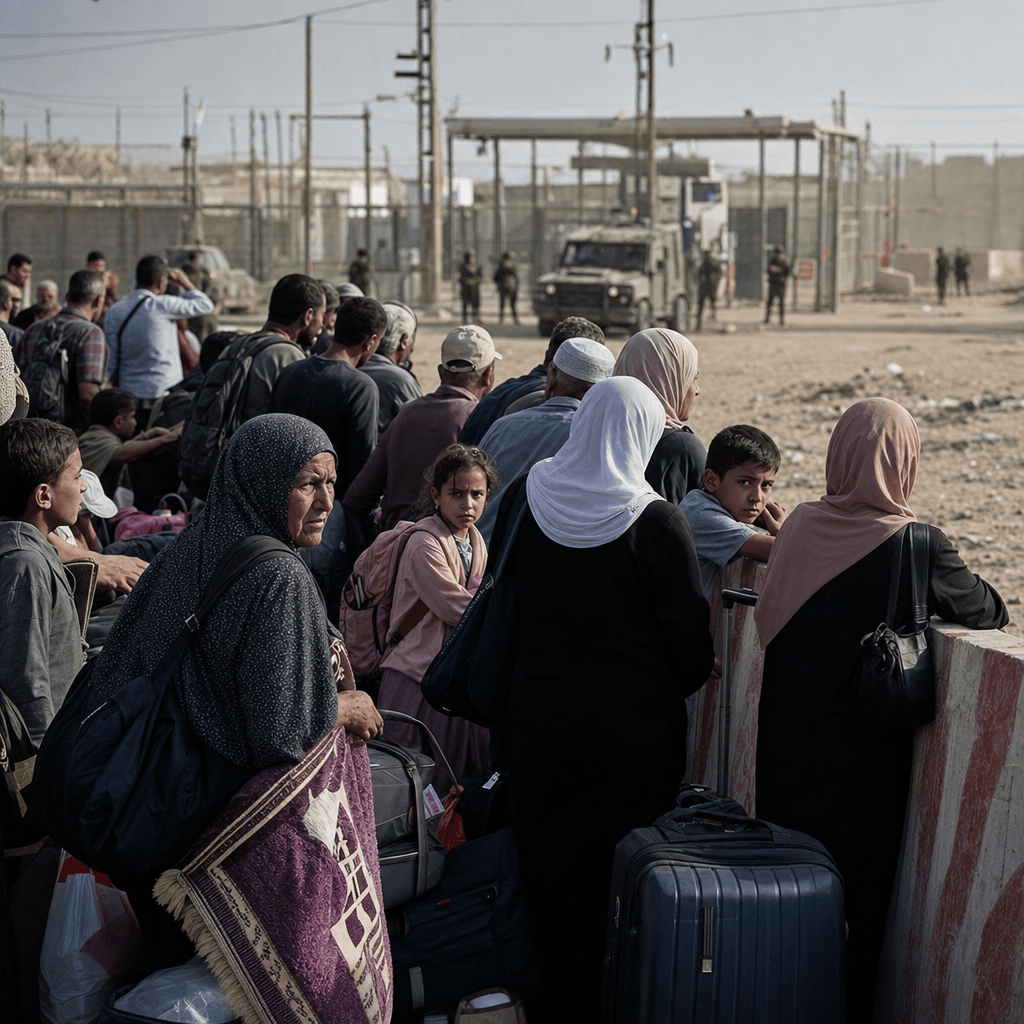
Israel’s Gaza Hajj block turns religion into leverage
Israel’s control of Rafah gives it the power to decide who leaves Gaza; the result is another year of denied pilgrimage, lost savings, and political pressure.
Israel has again blocked Gaza Muslims from making the Hajj, leaving thousands unable to reach Mecca for the third straight year, Al Jazeera reported. The leverage is straightforward: whoever controls Rafah controls the exit. Israel says the crossing is open only for humanitarian cases, with travel lists cleared through Egyptian coordination and Israeli security approval,
Reuters reported.
A religious right becomes a border decision
This is not just another closure. Hajj is one of Islam’s five pillars, and in Gaza it has become a measure of how complete the blockade remains. Before the war, roughly 3,000 Gazans performed Hajj each year, Reuters reported. Now even people who won the official pilgrimage draw have been stranded for years. Gaza’s Ministry of Awqaf says more than 10,000 residents have been prevented from making Hajj over three years because Rafah has stayed shut,
Al Jazeera reported.
The human cost is compounded by time. Al Jazeera said at least 71 would-be pilgrims died during the war before they could go. That matters because the denial is not temporary for many older Gazans; it is permanent. For elderly and sick residents, each missed season narrows the chance to fulfill a duty they may never recover.
The blockade is also crushing a local economy
The pilgrimage ban is part of a wider economic collapse around travel, not just worship. A May 2026 study cited by Al Jazeera says Gaza’s Hajj and Umrah sector has effectively collapsed, with all 78 licensed travel companies shut down and more than $4 million in capital losses. It estimates another $2 million to $3 million in frozen funds held by airlines and hotels abroad.
That loss matters politically. The businesses that used to process visas, flights, housing and bus transfers were part of Gaza’s middle layer of commerce. Their disappearance means the blockade is now erasing not just mobility, but a service economy tied to religion and seasonal income. In practical terms, Israel’s restrictions hit families twice: once by denying the pilgrimage, and again by wiping out the companies that used to organize it.
The broader regional contrast is sharp. Saudi Arabia has already opened Hajj logistics for hundreds of thousands of pilgrims this year, Asharq Al-Awsat reported, underscoring that the obstacle is not capacity in Mecca but access out of Gaza.
What to watch next
The immediate test is whether Egypt, Saudi Arabia, or international intermediaries can force any late exception for Gaza travelers before the Hajj season peaks. More likely, the real decision point is next year: whether Gaza’s quota is restored, or whether this year’s transfer of places to West Bank and East Jerusalem pilgrims becomes the new normal.
For now, Israel keeps the gate, and Gaza’s religious life remains hostage to it. See also Conflict and
General Politics.
Discover more

International Relations
Pakistan's Key Role in US-Israel-Iran Meddle
Pakistan is seeking to mediate the US-Israel-Iran conflict, balancing high-stakes diplomacy against severe economic pressures and steep regional challenges.

India
UN Expert Albanese: India Violates Law
UN Rapporteur Francesca Albanese accuses India of breaching international law, spotlighting human rights concerns in Kashmir and prompting diplomatic pushback.

Conflict & Security
Drone Warfare Killing Aid Workers at Unprec
Over 1,000 humanitarian workers killed in three years as cheap armed drones collapse legal protections. Gaza, Sudan, Ukraine, and DRC see deliberate targeting of aid convoys and hospitals with zero prosecutions.
Global
World Normalises Taliban as Afghan Women Eras
UN data shows Afghan women erased from public life as Russia recognises the Taliban, EU hosts officials in Brussels, and ICC warrants for gender persecution go unenforced.