Iran Deal Complicates Israel's Election Math
Netanyahu faces coalition challenges amid US-Iran deal fallout.
Model Diplomat3 min readasia
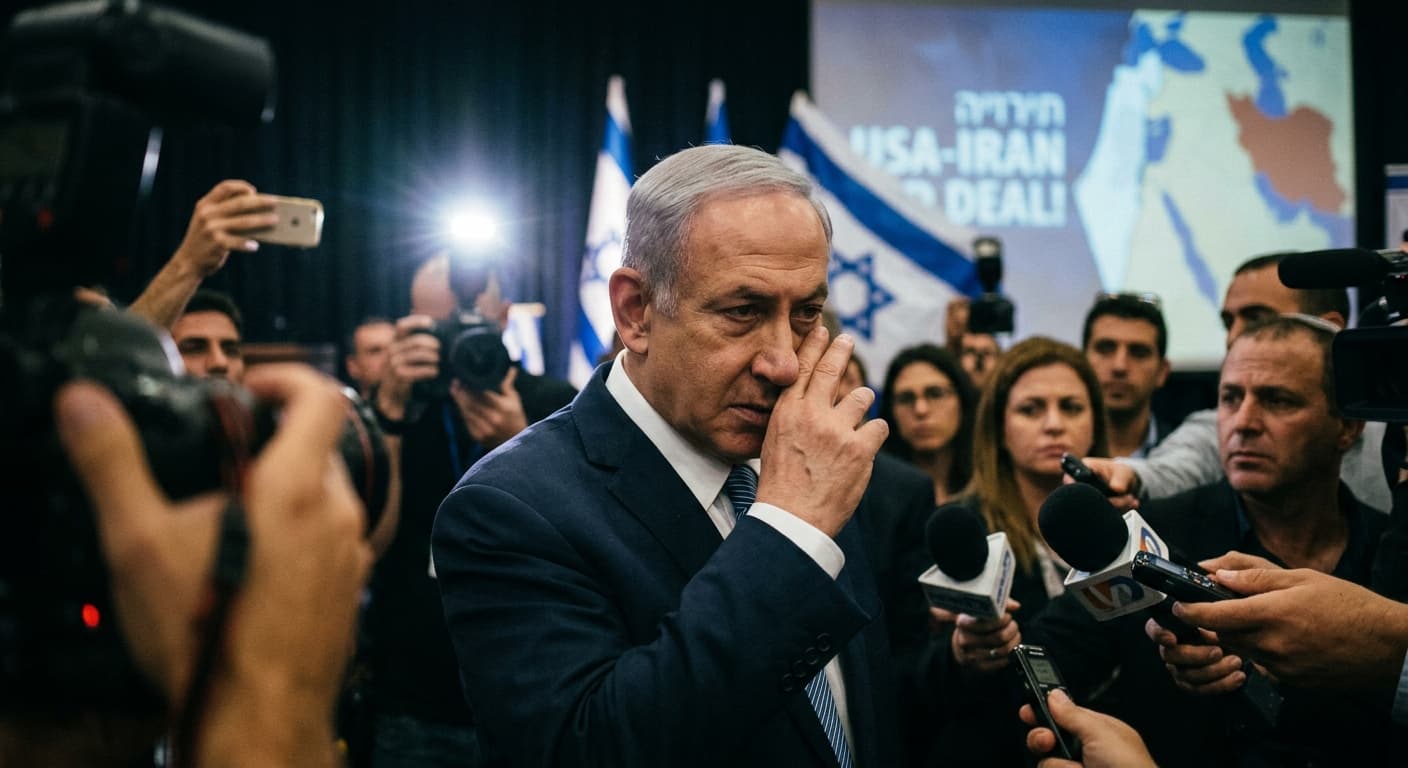
The Iran Deal Just Turned Israel's Election Into a Coalition Math Nightmare
Netanyahu loses his victory narrative. The opposition leads but can't reach 61 seats without an Arab party it just ruled out. Something has to give.
The US-Iran memorandum of understanding has done what four months of war could not: it has made Benjamin Netanyahu's re-election a coalition-arithmetic problem rather than a security referendum. The deal, which leaves Iran's ballistic missiles and support for regional proxies largely unaddressed while deferring nuclear negotiations to a 60-day window, strips Netanyahu of the decisive victory he needed before Israelis vote — likely in September, after the Knesset voted 110-0 on Wednesday to advance dissolution. Asharq Al-Awsat
Three polls published Friday tell the same story from different angles. The Maariv/Walla poll found 46% of Israelis believe the US and Israel did not win the war against Iran. Kan 11 put that figure at 58%. Channel 12 found only 30% said Israel and the US had won. Across all three, the opposition bloc would win 59-61 Knesset seats to the ruling coalition's 49-51 — but that still falls short of a governing majority.
Asharq Al-Awsat
That shortfall is the entire election. The opposition — now consolidated into a single Beyahad list under Naftali Bennett and Yair Lapid — needs Arab party Ra'am, led by Mansour Abbas, to cross the 61-seat threshold. The same coalition math that briefly unseated Netanyahu in 2021.
But on Monday, Lapid explicitly ruled it out. "Israel is in a very different place after nearly three years of wars and he and Bennett will not build a coalition with Abbas' party in the next elections," he told reporters in Jerusalem. The deal, he said, is "bad for Israel, bad for the region, bad for the citizens of Iran." Asharq Al-Awsat
This is where the Iran deal reshapes the math. The Jerusalem Post analysis argues that Bennett's opposition to Ra'am reflects a strategic play for Likud-leaning voters who see the deal as insufficiently hawkish. If the deal is perceived as leaving Iran's nuclear infrastructure intact — Netanyahu himself demanded "dismantling the equipment and the infrastructure" — Bennett becomes a credible home for defectors who want a prime minister untainted by October 7 but unwilling to govern with Arab parties. The Jerusalem Post
The polling supports the vulnerability. An INSS national security survey from May found only 22% of Israelis are satisfied with the war's diplomatic achievements, and satisfaction with military outcomes has collapsed from 60% in March to 37%. Trust in Netanyahu sits at 33% — down from 38% at the campaign's start. INSS
Netanyahu's immediate problem is that his coalition is imploding on a second front. Ultra-Orthodox parties withdrew support two weeks ago after he conceded he could not pass a bill legalizing their military draft exemptions — an explosive issue when hundreds of thousands of reservists have been mobilized across Gaza, Lebanon, and Iran. Deputy Foreign Minister Sharren Haskel, a Netanyahu loyalist and former combat soldier, declared she and at least six other coalition members would vote against any exemption bill. The coalition now lacks a parliamentary majority on two counts: the Iran deal and the draft. Asharq Al-Awsat
The Bennett-Lapid strategy is coherent but fragile. They are betting they can peel off enough right-wing voters to close the gap without Ra'am. The risk is equally clear: if they fall short and have already ruled out Abbas, Netanyahu — who has shown no such compunction in prior coalitions — may yet find a path back through the same fragmented arithmetic that has kept him in power for most of 17 years.
What to watch
The dissolution bill now moves to committee, where the election date will be fixed — likely September. The Iran ceasefire itself is under strain: both sides have accused the other of violating the MOU, with US strikes on Iranian coastal radar facilities drawing accusations of a "blatant violation" from Tehran. If the deal collapses and hostilities resume, the election calendar could be suspended, and with it the opposition's polling advantage. Asharq Al-Awsat
The second variable is Bennett and Lapid's discipline. If polls in August show them stuck at 59 seats, the pressure to reverse the Ra'am pledge will be enormous — and their unity may not survive it.
Discover more
India
Congress Accuses Modi of Stalling Women's Law
Congress accuses Modi of stalling women's reservation law by linking it to delimitation, revealing a deeper electoral strategy.

US Politics
SNAP Food Assistance Faces Legal Challenges
In 2026, SNAP faces stricter eligibility rules and mounting legal challenges, threatening food assistance for the millions of Americans who rely on the program.

India
Congress Advocates 33% Women’s Quota
Congress calls for a 33% women's reservation in the existing 543 Lok Sabha seats, countering Modi's plan to expand the house to 850 seats.

Conflict & Security
Drone Warfare Killing Aid Workers at Unprec
Over 1,000 humanitarian workers killed in three years as cheap armed drones collapse legal protections. Gaza, Sudan, Ukraine, and DRC see deliberate targeting of aid convoys and hospitals with zero prosecutions.