Iraq–Turkey Pipeline Deal: Energy Shift
Ankara's leverage grows with new Ceyhan agreement.
Model Diplomat7 min readMiddle East
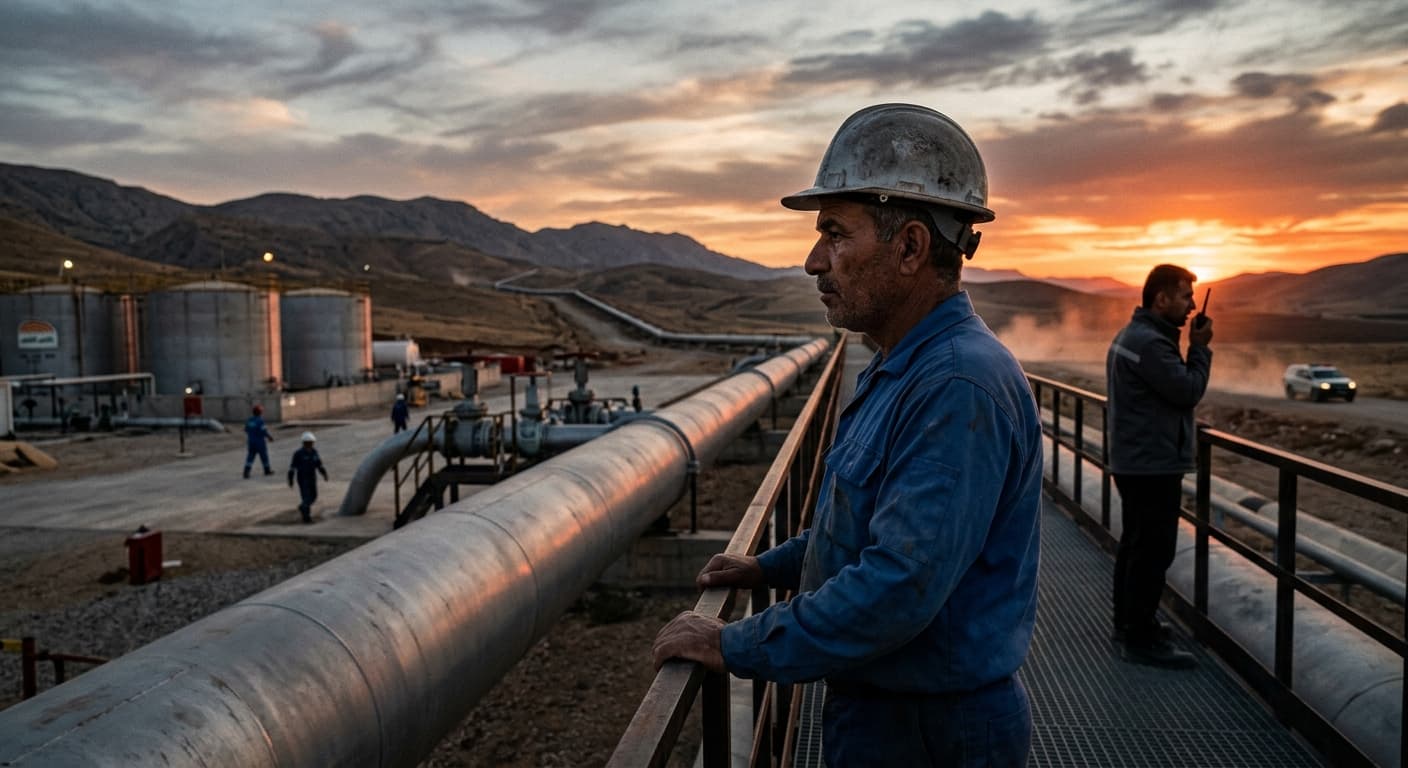
Iraq–Turkey Ceyhan pipeline deal: Ankara's 12-month bridge to a new energy order
Turkey and Iraq are signing a one-year Ceyhan pipeline deal after the July 27 treaty expiry — a stopgap that hands Ankara leverage to rewrite the terms.
The 12-month pipeline deal Turkish Energy Minister Alparslan Bayraktar announced in Baghdad on July 9, 2026 is being sold as continuity. It is the opposite. It is a bridge to a wholly rewritten Iraq–Turkey energy relationship — one in which Ankara, exploiting Iraq's post-Hormuz export collapse, converts a stalled transit pipeline into the spine of a hub strategy that extends south to Basra, bundles in gas and electricity, and locks Baghdad into the Development Road corridor. The party gaining leverage from a July 27 treaty cliff is Turkey, not Iraq.
According to The National, Bayraktar met Iraqi Prime Minister Ali al-Zaidi and Oil Minister Bassem Mohammed Khudair on Thursday and said the agreement will be signed "in the coming days." Iraqi output has fallen 66 percent since the June 2026 US–Israel war on Iran — from 4.3 million barrels per day in February to 1.4 million in May — and flows through the 970-kilometre Kirkuk–Ceyhan line have collapsed from 3.5 million bpd pre-war to roughly 200,000. Baghdad is negotiating from the weakest position it has held in a decade.
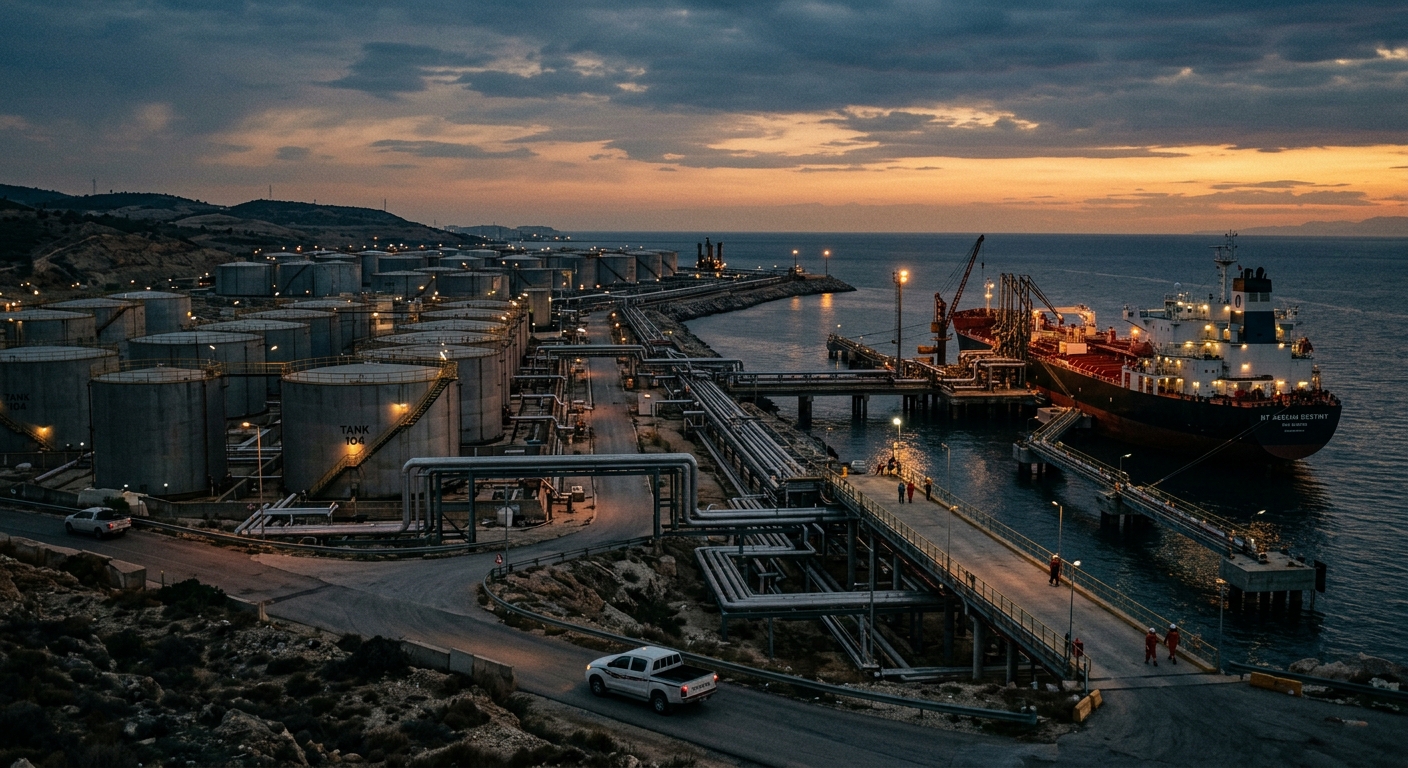
The treaty cliff Ankara built
The 12-month framing obscures the more consequential clock. In July 2025 Turkey published a notice in its Official Gazette terminating the 1973 Iraq–Turkey pipeline agreement outright, with effect from July 27, 2026. Ankara did not wait to be asked; it detonated the legal foundation of the pipeline and told Baghdad to negotiate a replacement.
That timing was strategic. The 1973 treaty barred Turkey from using the pipeline for its own domestic purposes without Iraqi consent. As the Baghdad-based Al-Bayan Center documented, Ankara's declared aim in the successor accord is to secure "new terms allowing Ankara to operate the Iraqi pipeline on its territory independently of Baghdad" — and to bundle the transit arrangement with electricity supply, Qatari gas transit, and upstream exploration rights. That is not a technical update. That is a treaty designed to convert Iraqi infrastructure into a Turkish hub asset.
Bayraktar has been explicit about the second half of the vision. In April, he told Al Jazeera that Turkey's flagship regional proposal was "extending the [Iraq–Türkiye] oil pipeline to reach Basra, which is of vital importance to Türkiye, Iraq and global markets." Berlin's SWP institute reports that Ankara has already submitted a comprehensive draft agreement to Baghdad covering
oil, gas, petrochemicals and electricity — a package explicitly designed to align with the Development Road corridor from Basra's Al-Faw port to the Turkish border.
Why Baghdad had no room to refuse
The one-year rollover is what Baghdad could get, not what it wanted. Iraq's leverage evaporated in June.
The 12-day war between Iran and Israel–United States shut in southern Gulf traffic and, according to the Atlantic Council, forced Iraq to close production from Basra fields when storage tanks filled. Roughly 93 percent of Iraqi crude normally moves through Basra's Gulf terminals; when Hormuz went dark, the northern pipeline became the fiscal lifeline of a state that draws over 90 percent of budget revenue from oil, according to the
Al-Bayan Center's constitutional analysis of the Baghdad–Erbil oil dispute.
The March 17 restart brokered by Washington moved only 170,000 bpd — a rounding error against the 3.3 million bpd Iraq normally exports. The Council on Foreign Relations notes that even with all three regional bypass pipelines — Saudi Arabia's East–West line, the UAE's ADCOP, and the ITP — combined overland capacity of roughly 9 million bpd covers less than half of pre-war Hormuz throughput of 20 million bpd. Iraq has the least redundancy of any major Gulf producer. Ankara knows it.
The domestic politics compound the pressure. Prime Minister Ali al-Zaidi took office on May 14, 2026, following October's parliamentary election, per a Turkish MFA statement welcoming his government. Al-Zaidi's cabinet is barely eight weeks old, still assembling ministerial teams, and staring at a July 27 legal cliff. A 12-month bridging deal buys negotiating time; refusing it strands the pipeline in legal limbo just as Iraq needs every barrel it can move.
The arbitration nobody has resolved
Underneath sits an unpaid $1.5 billion. In February 2023, the International Chamber of Commerce in Paris ordered Turkey to compensate Iraq for facilitating unauthorised Kurdish exports between 2014 and 2018 — a ruling covered contemporaneously by Al Jazeera. Ankara has never paid. It filed a counterclaim seeking over $4 billion for pipeline maintenance and continues to appeal.
The Gulf International Forum's Madeline Stahle writes that Turkey is "tying compliance to wider bargains over trade, water, and security" — turning arbitration into a diplomatic instrument rather than a legal obligation. The July 9 announcement made no mention of the outstanding award. That silence is the story: Baghdad has effectively agreed to keep the pipeline open while parking its most valuable legal claim.
Ankara's counter-leverage is water. In 2025 the two countries signed what Carnegie has called an oil-for-water arrangement — Iraqi oil revenues via Turkey channelled into water infrastructure projects built by Turkish firms in a country the World Bank classifies as highly climate-exposed. The
World Bank's April 2025 project document on the $2.7 billion Iraq Railways Extension and Modernization project — the Development Road's rail spine — makes the interdependence architectural: Ankara now sits astride Iraq's water, rail and oil futures simultaneously.
The second-order winners: US oil majors
The hidden beneficiary of the pipeline restart is not Turkey. It is the American oil sector that has quietly returned to Iraq after a decade of absence.
Hours before the pipeline announcement, Iraq's North Oil Company signed a contract with US-based HKN Energy to develop the Hamrin oilfield, targeting peak production of 140,000 bpd and 40 million standard cubic feet of gas a day, per The National. Hamrin previously produced barely 20,000 bpd. It is HKN's second northern Iraq deal in a year — the first, a $110 billion package of KRG gas contracts in May 2025, was struck down by Baghdad within days.
The Atlantic Council's Ellen Wald documents that ExxonMobil, Chevron, HKN and KBR have all signed major deals with Baghdad in recent months on materially better contract terms than the 2009-era technical service agreements. This is the trade Al-Zaidi's predecessor Mohammed Shia al-Sudani engineered and Al-Zaidi is now inheriting: American commercial stakes in Iraqi hydrocarbons as insurance against US sanctions pressure. Washington gets barrels moving; US firms get physical crude to trade; Baghdad gets a lobbying phalanx on K Street. Turkey's pipeline concession is the enabling infrastructure.
That is also why the Trump administration pushed hard for the September 2025 restart. Secretary of State Marco Rubio publicly welcomed the tripartite deal, per Al Jazeera, calling it beneficial for "Americans and Iraqis" — an unusually explicit acknowledgment that Iraqi export policy has become instrument of US Iran strategy.
What the LSE analysis got right — and what has changed
The LSE Middle East Centre's Jack McGinn, writing in May 2025, argued that the whole scheme was contingent on the 2023–2025 federal budget's validity and would require renegotiation with any new Baghdad government. That prediction has now come due. The Al-Zaidi cabinet is inheriting arrangements built for the Sudani era, and the $16-per-barrel formula paid to IOCs — codified in the February 2025 budget amendment — remains a stopgap, not a settlement.
The Association of the Petroleum Industry of Kurdistan still estimates the pipeline shutdown cost Iraq more than $35 billion in lost revenue. Kurdistan Regional Government arrears to IOCs sit at roughly $1 billion, with a further $3.3 billion owed to oil trading firms holding calls on future exports. None of this is resolved by a 12-month rollover.
Diplomat View
The 12-month deal is not a diplomatic success; it is a symptom of asymmetry. Ankara terminated the 1973 treaty on its own timetable, waited for the Iran war to strip Iraq of alternatives, and is now offering a bridge in exchange for a wholesale restructuring of the transit relationship — one that would formalise Turkish rights to use the pipeline domestically, extend it to Basra as part of the Development Road, and bundle it with gas, electricity and water infrastructure Baghdad cannot easily replicate. The successor treaty, whenever it is signed, will almost certainly leave the unpaid $1.5 billion ICC award in permanent legal purgatory as the price of continued flows.
The forecast: the interim deal signs before July 27. Flows stabilise at 200,000–250,000 bpd through 2026, well below the pipeline's 1.6 million bpd nameplate. The successor treaty is negotiated in parallel and lands in Q2 2027 — heavily favouring Ankara on transit fees, domestic-use rights and pipeline extension southward. What would revise this call: a decisive Iranian move to reopen Hormuz corridor politics; a US administration decision to enforce the ICC award as a condition of Turkish F-35 or S-400 diplomacy; or a fresh Iran-backed strike on Kurdistan oilfields that removes the KRG's export capacity from the equation entirely. Absent one of those shocks, this is Turkey's decade in Iraqi energy.
What to watch
- July 27, 2026 — Expiry of the 1973 Iraq–Turkey pipeline treaty. The interim protocol must be signed and gazetted before this date, or transit loses its legal basis.
- Q4 2026 — First substantive negotiating round on the successor treaty; watch for language on pipeline extension to Basra and Turkish domestic-use rights.
- First half of 2027 — Federal oil-and-gas law. Al-Zaidi's coalition has pledged to advance it; without it, every pipeline arrangement remains contingent on annual budget politics.
The Bottom Line
Iraq is not renewing a pipeline contract on July 9, 2026 — it is signing a one-year lease on its own leverage. Turkey engineered the July 27 treaty cliff, timed the negotiation to Iraq's post-Hormuz export collapse, and will use the next twelve months to bind the Kirkuk–Ceyhan line into a Basra-to-Ceyhan energy corridor that puts Ankara at the centre of Iraqi crude, gas, electricity and water simultaneously. The unpaid $1.5 billion arbitration award is now, for practical purposes, the price Baghdad pays to keep the taps open.
Discover more
Global Politics
Xi Jinping Calls China-Russia Ties 'Precious'
Xi Jinping's description of China-Russia ties as 'precious' reflects a strategic imbalance, with Beijing dictating terms in the partnership.

US Politics
US Launches $166B Tariff Refund Portal
The US is launching a $166 billion tariff refund portal to aid importers hit by Trump-era tariffs, with major implications for trade and supply costs.
US Politics
Virginia's Redistricting Referendum
Virginia's redistricting referendum is drawing a flood of dark money, shaping future elections and the fight for congressional control amid party stakes.

Conflict & Security
Drone Warfare Killing Aid Workers at Unprec
Over 1,000 humanitarian workers killed in three years as cheap armed drones collapse legal protections. Gaza, Sudan, Ukraine, and DRC see deliberate targeting of aid convoys and hospitals with zero prosecutions.