Iraq's OPEC Strategy: 2027 Quota Push
Iraq aims for higher oil output amid OPEC dynamics.
Model Diplomat8 min readMiddle East
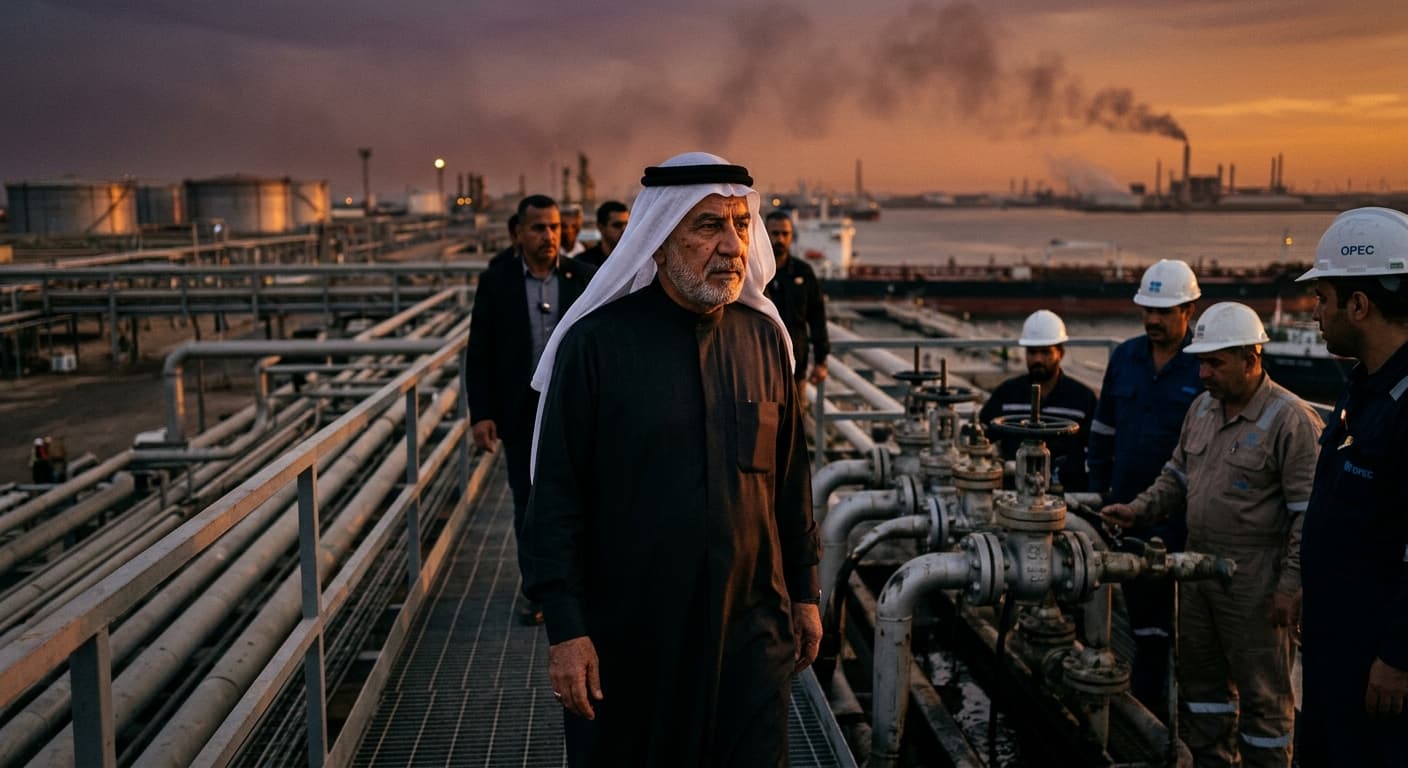
Iraq Stays in OPEC — but Bets on the 2027 Quota Reset
Prime Minister Ali al-Zaidi rules out an OPEC exit and pushes for a bigger Iraqi output quota as the UAE's departure and the Iran war reshape Gulf oil politics.
Iraq will not follow the United Arab Emirates out of OPEC, Prime Minister Ali al-Zaidi said on July 9, 2026, but Baghdad will use the group's coming 2027 capacity review to demand a quota worth up to 300,000 barrels a day more than the 4.378 million it is allowed today. The decision is less a vote of confidence in the cartel than a calculated bet: with the UAE gone, the Strait of Hormuz half-open, and Saudi Arabia carrying more of the cohesion burden alone, Iraq calculates it can extract concessions from inside OPEC that it could never win outside it. The real contest is not whether Iraq leaves — it is who inherits the UAE's vacated market share.
What al-Zaidi actually said, and what he did not
Al-Zaidi's line — no withdrawal, "fair" quota — closes a two-month rumour cycle. On July 3, Reuters had quoted unnamed Iraqi officials threatening to consider "all options," including exit, if OPEC refused to lift Iraq's ceiling. Baghdad walked that back within 48 hours. The Ministry of Labour's spokesperson told Al Jazeera Net via Jordan News that the government "has not put forward this option," framing Iraq's demand as a claim to "reclaim its position as the second-largest producer within the organization."
The context matters. Al-Zaidi, a 40-year-old businessman with no prior political office, took the premiership on May 14, 2026 with only a partial cabinet, according to Al Jazeera. The
International Crisis Group notes he inherited an office where oil revenues fund 90% of the state, most of which had just been strangled by Iran's closure of the Strait of Hormuz. In that setting, floating an OPEC exit — then denying it — reads as classic negotiating theatre. The Iraq Energy Center's Furat al-Mousawi told Jordan News that Baghdad's short-term ask is a "gradual increase ranging between 150,000 and 300,000 barrels per day"; the strategic target is 7 million bpd of sustainable capacity.
The UAE's exit rewired the incentives
Any read of Iraqi strategy has to start with what the UAE did on April 29, 2026. Abu Dhabi announced its withdrawal from OPEC and OPEC+ after nearly six decades, effective May 1, blaming quota constraints that capped it at 3.2 million bpd against 4.8 million bpd of capacity, according to Al Jazeera's tick-tock. Analysts at Swiss private bank Syz Group told the
BBC the exit marked "the end of OPEC as we knew it"; the cartel lost roughly 15% of its capacity and one of its most compliant members overnight.
For Baghdad, the exit is a template and an opportunity. The Middle East Institute's post-mortem observes that OPEC+ is already conducting third-party capacity assessments — the exercise that will set 2027 quota baselines — and warns that "quotas grow commensurately with members' ability to produce" is now the price of holding the group together. That is exactly the language Iraqi officials have adopted since. According to the Middle East Institute, Iraq has been "a chronic offender" on compliance for years; the loss of the UAE is what may finally get Baghdad's claim taken seriously rather than punished.
The mechanics reward Iraq structurally. With ~1 million bpd of UAE output migrating outside the group's discipline, and Kazakhstan already flouting quotas, Saudi Arabia needs the remaining large producers inside the tent — even at higher personal ceilings — to keep a floor under prices. Iraqi Oil Minister Basim Mohammed (appointed in May) has been explicit that Baghdad wants its production capacity, which the Iraqi Oil Ministry now puts at roughly 4.9 million bpd rising toward 6 million by 2029, formally recognised in the 2027 reset. Iraqi News reports Saxo Bank's Ole Hansen expects "Iraq's request may become part of the 2027 capacity review, where production baselines will be examined."
Why Iraq cannot afford to leave
The threat of exit was never credible, and Baghdad's fiscal numbers explain why. The IMF's 2025 Article IV consultation, published in June 2025, states that Iraq's fiscal break-even oil price rose to around $84 per barrel in 2024, up from $54 in 2020, as spending expanded and non-oil revenues stagnated. Oil revenues will "continue to hover at more than 90 percent of government revenue through 2030," the Fund warned, and government debt is projected to climb from 44% of GDP at end-2023 to more than 86% by 2029 without policy adjustment.
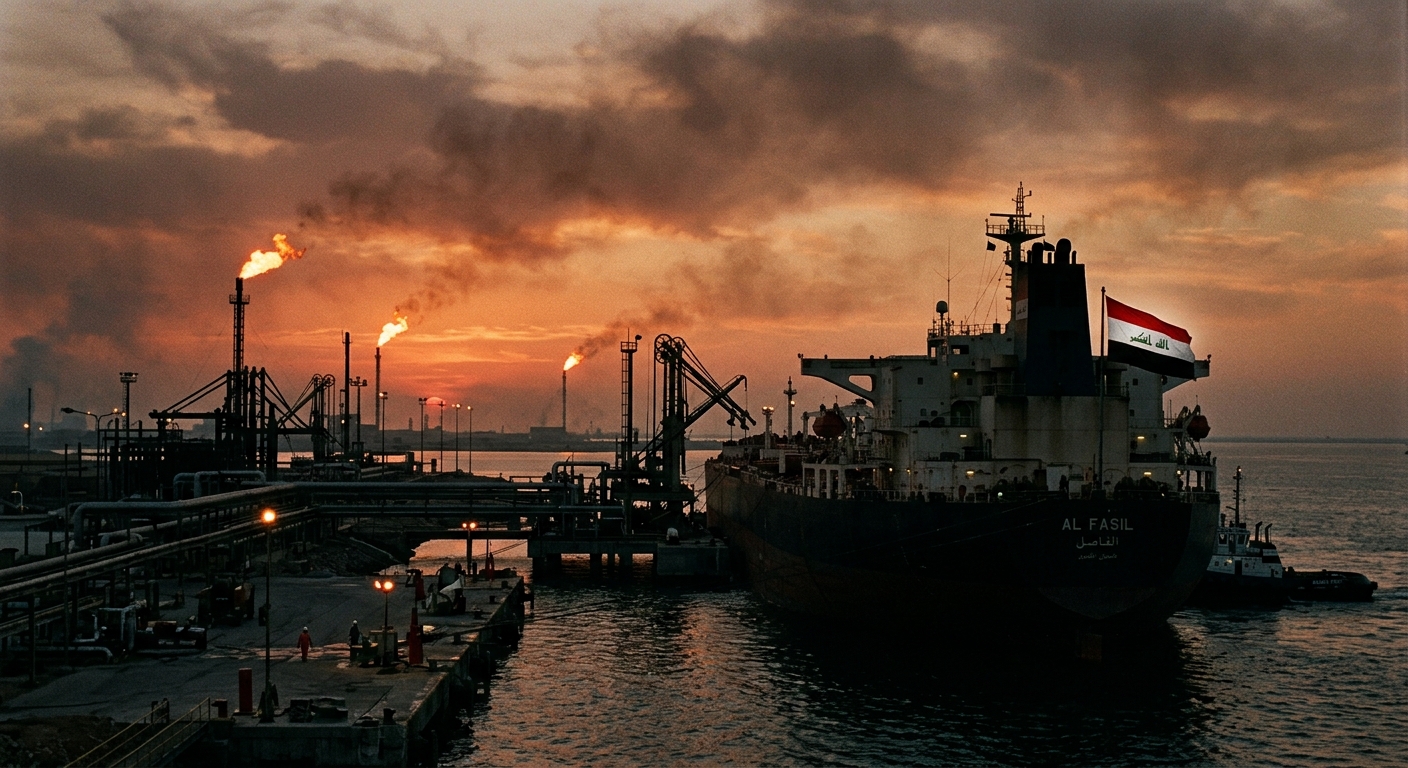
The war made this worse in real time. The Atlantic Council documented that Iraqi output fell from about 4.3 million bpd in February 2026 to below 1.3 million bpd once tanker traffic through Basra halted. Iraq exports roughly 93% of its crude through Basra's Gulf terminals — a chokepoint that makes any confrontation with Saudi Arabia over prices existentially reckless. Leaving OPEC would strip Iraq of political cover with Riyadh while doing nothing to fix its export bottleneck. It would also intersect badly with a separate American squeeze: the US Treasury sanctioned Iraq's deputy oil minister Ali Maarij al-Bahadly on May 7 for allegedly helping Iran launder oil, according to
Al Jazeera, and Washington briefly froze cash payments from Iraq's oil escrow at the New York Fed to force cabinet concessions. That is not a moment to abandon multilateral shelter.
There is, however, a bilateral card on the table. Oil expert Adel Sadiq told Jordan News that Iraq is quietly weighing a proposed joint energy and development fund with the United States "that relies on allocating around 500,000 barrels per day" — roughly the same volume Baghdad wants added to its OPEC quota. That number is not a coincidence. It is the price of Washington's political protection, and it is the leverage Baghdad now brings to the Vienna table.
Hormuz reopens, then convulses — and Iraq's timing tightens
The window in which Iraq can press its case is defined by the Strait of Hormuz. A US-Iran memorandum of understanding signed on June 17, 2026, committed Tehran to allow commercial passage for 60 days while a permanent deal was negotiated. Brent crude fell from a wartime peak above $126 in April to $72 by early July, Al Jazeera reported. Then on July 7, three tankers were struck in the strait; the US launched retaliatory strikes on July 8 and revoked its sanctions waiver on Iranian oil, according to the
BBC. Brent jumped back above $76.
The Council on Foreign Relations warns that transit through the strait could remain "below 50 percent of pre-war levels for many months," in the words of MST Financial's Saul Kavonic, cited in CFR's Strait of Hormuz analysis. For Iraq, whose southern exports still cannot reliably move at pre-war volumes, a higher OPEC quota this year is largely notional — Saxo Bank's Hansen observed the need "is not imminent" while actual production is capped by shipping constraints. The prize is the 2027 baseline, which will govern quotas for years. Getting recognised at 4.9 million bpd rather than 4.378 is worth billions of dollars in annuitized revenue.
That is why al-Zaidi's July 9 statement was carefully calibrated. He denied withdrawal (protecting the Saudi relationship), asserted a "fair" claim (positioning for the review), and — with Chevron entering exclusive talks to nearly double West Qurna 2 output to 800,000 bpd, per Gulf International Forum — gave Washington a stake in higher Iraqi ceilings. Chevron's involvement matters: it aligns US commercial interests with Baghdad's OPEC ask, since American majors will not sink capital into fields whose output is quota-throttled.
Who benefits, who pays
Iraq's real competitor for the vacated UAE share is not Saudi Arabia — which the Middle East Institute notes is focused on price defence to fund Vision 2030 at an $80-plus break-even — but Kazakhstan, Kuwait, and, once sanctions questions clarify, Iran. All are running above quota or seeking exemptions. In a group where the
MEI's 2025 backgrounder records Gulf states already holding "roughly 19 million barrels per day" of sustainable capacity, roughly 60% of OPEC's total, distribution is now a zero-sum negotiation.
The losers, if Iraq wins its bigger baseline and the strait normalises, are producers outside the cartel who benefited from wartime scarcity — American shale, Brazilian pre-salt operators, Guyana — and any OPEC member that must trim to accommodate Iraq. The Valdai Club's analysis warns of a possible "supply race" once Hormuz reopens fully, in which coordination among Russia, Saudi Arabia, and second-tier producers will decide whether prices settle in a manageable band or collapse. Iraq's calculation is that it wins either way: a higher quota inside OPEC captures the upside; the credible outside option — sealed by a US fund — insures the downside.
Diplomat View
Baghdad's July 9 posture is not a defence of OPEC; it is a hostage negotiation dressed as loyalty. The falsifiable thesis is this: if OPEC+'s 2027 baseline review awards Iraq a quota of 4.7 million bpd or higher, al-Zaidi's government will publicly recommit to the group and shelve the US-Iraq oil fund as a formal 500,000 bpd carve-out. If the review holds Iraq near 4.4 million, expect Baghdad to sign the American deal within 90 days, effectively neutralising OPEC's discipline over Iraqi production without a formal exit — the UAE playbook in Arabic. What would change this forecast: a durable Hormuz agreement that restores pre-war shipping norms (removing Iraq's leverage over Saudi Arabia); a fresh US Treasury action against al-Zaidi's own network (his Al-Janoob Islamic Bank was banned from dollar dealings in 2024, per the Atlantic Council); or a Saudi decision, unlikely but not impossible, to accept a formal UAE-style flexibility clause for Iraq inside OPEC — an outcome that would preserve the cartel by admitting its impotence.
What to watch next
- Q4 2026: OPEC+ third-party capacity assessments conclude. The technical numbers set the ceiling for Iraq's political ask.
- August 17, 2026: Expiry of the US-Iran MoU's 60-day free-passage window on the Strait of Hormuz. A collapse reprices everything.
- Late 2026 – early 2027: Announcement of the OPEC+ 2027 quota baselines. Iraq's stated target: recognition at 4.9 million bpd or higher.
- Ongoing: Progress of the US-Iraq joint energy fund and Chevron's West Qurna 2 talks — the pace of both is a real-time indicator of Baghdad's confidence in its OPEC ask.
Discover more
India
Women’s Reservation Bill 2026
The Constitution (131st Amendment) Bill, 2026 was defeated in Lok Sabha, revealing deeper political conflicts over women's reservation and delimitation.
India
Congress Accuses Modi of Stalling Women's Law
Congress accuses Modi of stalling women's reservation law by linking it to delimitation, revealing a deeper electoral strategy.

US Politics
SNAP Food Assistance Faces Legal Challenges
In 2026, SNAP faces stricter eligibility rules and mounting legal challenges, threatening food assistance for the millions of Americans who rely on the program.

Economics
Fed's Amex AML order puts correspondent banking on notice
Federal Reserve's Amex AML order requires board-level controls and a 90-day plan; OCC fined the bank $350 million over enterprise-wide deficiencies.