Iran's Uranium Stockpile
The standoff over enriched uranium shapes US-Iran relations.
Model Diplomat3 min readMiddle East
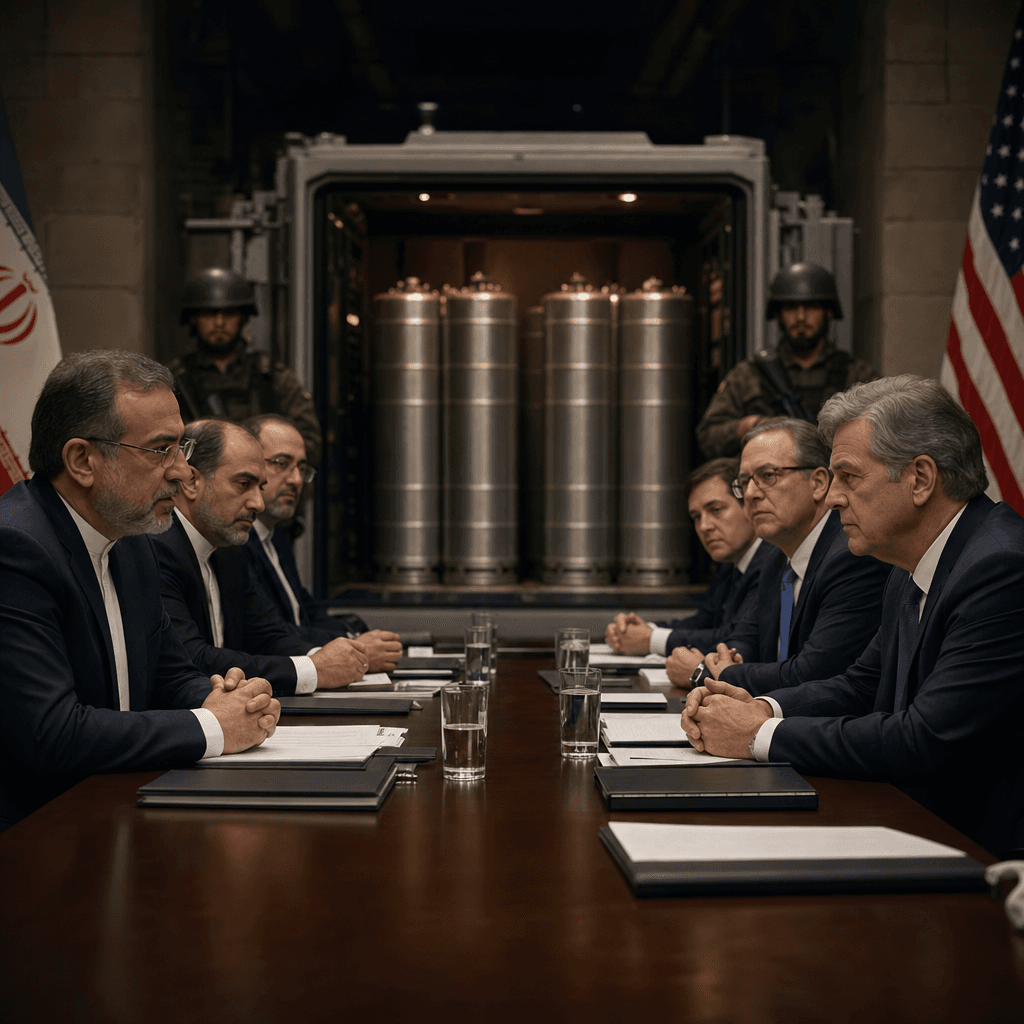
Iran’s uranium stockpile is now the real bargaining chip
Trump wants the 60%-enriched material out; Tehran wants it kept at home. The dispute is less about transport than who blinks first in the U.S.-Israel-Iran standoff.
Iran’s enriched uranium stockpile has become the central lever in talks because whoever controls it controls the breakout clock. On Thursday, Donald Trump said the United States would not allow Iran to keep its highly enriched uranium and suggested Washington would take it and “probably destroy it” later, according to Al Jazeera. Hours earlier,
Reuters reported that Iran’s Supreme Leader had ordered the stockpile not to leave the country at all, closing off the U.S. demand that the material be removed or handed over.
What is actually at stake
The numbers explain the pressure. The stockpile is believed to be about 440 kilograms of uranium enriched to 60 percent, far above civilian reactor levels and only a short technical step from weapons-grade, which is generally defined as 90 percent, according to Reuters and
Al Jazeera. That makes the material both a proliferation concern and a bargaining chip. Tehran has reportedly floated alternatives, including sending it to a third party or downblending it under International Atomic Energy Agency supervision, but the leadership’s new line is that it should not leave Iran,
Reuters said.
That is the power dynamic: Washington and Israel want the stockpile out because it shortens Iran’s nuclear timeline; Tehran wants to keep it because removal would make Iran more vulnerable to future strikes. Reuters quoted Iranian sources saying exactly that. For Tehran, the uranium is not just material; it is insurance.
Why the transfer question is really about trust
Technically, the transfer problem is manageable. The IAEA has protocols for moving enriched uranium hexafluoride in fortified 30B containers, and Al Jazeera noted that the cylinders are designed to avoid criticality risks and withstand heat and pressure, citing the agency’s guidance. But that is not the real obstacle. The obstacle is whether any transfer can be verified, protected from attack, and politically sold inside Iran after a year of war and airstrikes.
That is why the issue is blocking the wider diplomacy. Al Jazeera reported that Iranian foreign minister Abbas Araghchi called the enriched material dispute a “deadlock” and said it had been postponed to later stages.
Reuters added that the two sides have narrowed some gaps but remain split on two core issues: the fate of the stockpile and Iran’s demand for recognition of its right to enrich uranium.
What to watch next
The next decision point is whether the United States shifts from demanding removal to accepting a monitored dilution or third-party custody formula. Al Jazeera reported that Russia has floated storing the material, while Iranian sources told
Reuters that “feasible formulas” still exist, including IAEA-supervised downblending. If that compromise fails, the leverage shifts back to force: Trump has already paired diplomacy with threats, and Iran is treating the uranium issue as the line that determines whether talks can survive.
For policymakers, the immediate takeaway is simple: the uranium stockpile is no longer a technical footnote. It is the test of whether the United States can impose terms without reopening the war, and whether Tehran believes any deal buys real security.
Discover more

International Relations
Pakistan's Key Role in US-Israel-Iran Meddle
Pakistan is seeking to mediate the US-Israel-Iran conflict, balancing high-stakes diplomacy against severe economic pressures and steep regional challenges.

Conflict & Security
Drone Warfare Killing Aid Workers at Unprec
Over 1,000 humanitarian workers killed in three years as cheap armed drones collapse legal protections. Gaza, Sudan, Ukraine, and DRC see deliberate targeting of aid convoys and hospitals with zero prosecutions.

Global
World Normalises Taliban as Afghan Women Eras
UN data shows Afghan women erased from public life as Russia recognises the Taliban, EU hosts officials in Brussels, and ICC warrants for gender persecution go unenforced.
Conflict & Security
West Africa Food Crisis: Three Shocks in 2026
Conflict, climate extremes, and the Strait of Hormuz closure drive a severe food crisis in West and Central Africa, with fertilizer prices surging 80% and millions displaced.