Khamenei's Red Line on Iran's Uranium Stock
Iran's Supreme Leader tightens uranium stockpile control.
Model Diplomat3 min readMiddle East
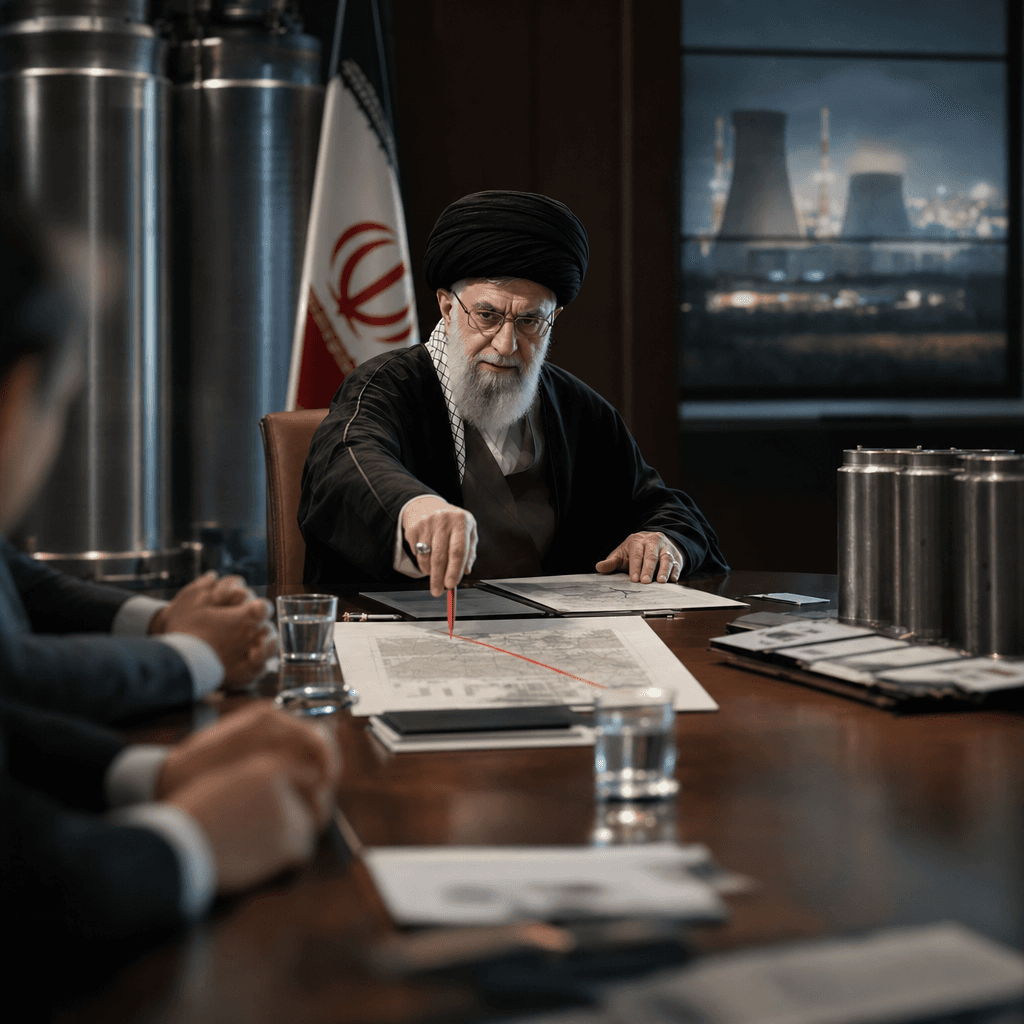
Khamenei Draws a Red Line on Iran’s Uranium Stockpile
Tehran is signaling the enriched uranium will stay inside Iran, tightening Khamenei’s leverage and narrowing any U.S. deal terms.
Iran’s Supreme Leader has ordered that the country’s enriched uranium stockpile remain in Iran, according to two Iranian sources cited by Reuters. That is the real bargaining move here: Khamenei is using the stockpile as both shield and leverage, rejecting Washington’s central demand while keeping Tehran’s nuclear program inside the country’s borders. The message is not just about uranium. It is about who sets the terms of any ceasefire, and whether the United States can force a transfer without conceding on sanctions, security guarantees, or enrichment rights.
Tehran is narrowing the deal space
Reuters reports that Iranian officials now fear moving the material abroad would leave the country more exposed to future U.S. or Israeli strikes, and that the Supreme Leader’s directive reflects a broader establishment consensus. That matters because it shuts down one of the few clean verification options in play: removing or exporting the most sensitive stockpile. Reuters also said Tehran had previously signaled willingness to ship out part of its 60%-enriched uranium, before threats from Donald Trump hardened its position. By then, the stockpile had become a political asset, not just a technical one.
That is why this line is stronger than a routine negotiating position. Iran is not merely asking for concessions; it is trying to reframe the talks around sovereignty and deterrence. In Global Politics terms, this is coercive diplomacy failing to produce compliance and instead forcing the other side to bargain around the coercion itself.
Washington still wants the uranium moved out
The U.S. position remains the opposite. Reuters said Israeli officials have told the outlet that Trump promised Israel Iran’s stockpile would be sent out of the country and that any agreement must include a removal clause. Al Jazeera likewise reported Trump saying the U.S. would not allow Iran to keep its highly enriched uranium, while Iranian Foreign Ministry spokesman Esmaeil Baghaei said the material was “as sacred to us as Iranian soil” and would not be transferred.
That leaves both sides boxed in. Washington wants a visible rollback it can sell as nonproliferation success. Tehran wants guarantees against renewed attacks before it bargains on the nuclear file. Those are incompatible demands unless one side changes sequence: either Iran hands over material first, or the U.S. offers sanctions relief and security assurances first. Right now, neither appears ready.
What to watch next
The next decision point is whether mediators can find a face-saving workaround, not whether the principle changes. Reuters noted that Iranian sources floated a technical option: dilution under International Atomic Energy Agency supervision rather than outright removal. That is the only formula that preserves Iranian sovereignty while addressing the U.S. demand for reduced breakout risk. It would still be politically fragile, because it depends on trust in a process both sides distrust.
Watch the next round of mediator traffic, especially through Pakistan, and any statement from the IAEA on what remains of the stockpile after the June 2025 strikes described by Reuters and Associated Press. If Tehran keeps the uranium in place, the talks become a contest over containment, not resolution. If Washington accepts dilution instead of removal, it will be admitting that force did not fully reset the Iranian program.
Discover more
Global Politics
Trump's Conflicting Messages on Iran War
Trump's mixed messages on Iran reflect a strategy of audience management, benefiting Tehran amid a complex geopolitical landscape.

Conflict & Security
Drone Warfare Killing Aid Workers at Unprec
Over 1,000 humanitarian workers killed in three years as cheap armed drones collapse legal protections. Gaza, Sudan, Ukraine, and DRC see deliberate targeting of aid convoys and hospitals with zero prosecutions.

Global
World Normalises Taliban as Afghan Women Eras
UN data shows Afghan women erased from public life as Russia recognises the Taliban, EU hosts officials in Brussels, and ICC warrants for gender persecution go unenforced.
Conflict & Security
West Africa Food Crisis: Three Shocks in 2026
Conflict, climate extremes, and the Strait of Hormuz closure drive a severe food crisis in West and Central Africa, with fertilizer prices surging 80% and millions displaced.