Iran's Strait Gambit Threatens Peace Deal
Iran closes Hormuz after Israeli strikes disrupt ceasefire.
Model Diplomat3 min readMiddle East
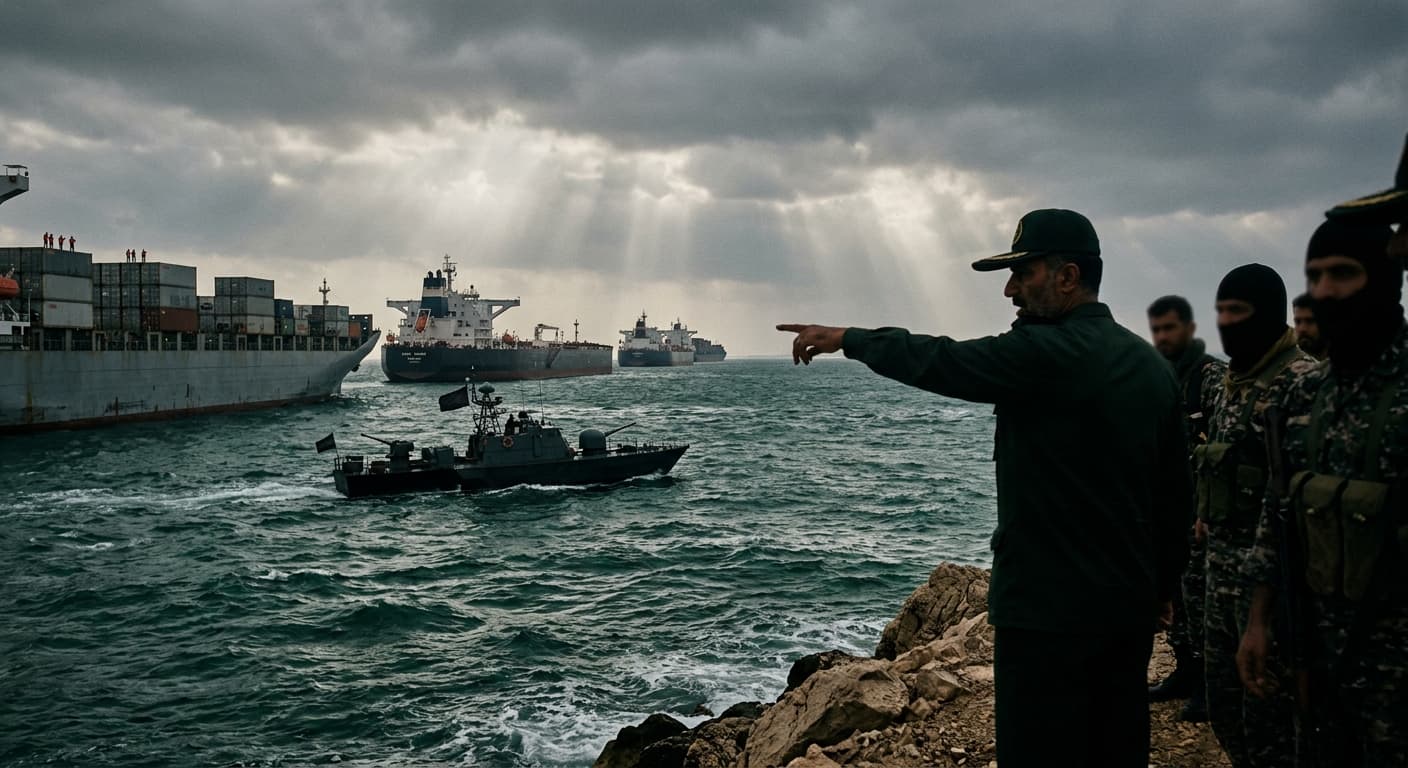
Iran's Strait Gambit Threatens Fragile Peace Deal
Iran re-closes Hormuz after Israeli strikes undermine week-old ceasefire framework, forcing negotiations in Switzerland with the clock running.
Al Jazeera reported Saturday that Iran's Islamic Revolutionary Guard Corps announced it had closed the Strait of Hormuz, just days after signing a 60-day peace framework with the United States. The move follows Israeli airstrikes in Lebanon that killed at least 32 people—hours after a ceasefire between Israel and Hezbollah took effect Friday. Iran claims Israel breached the 14-point memorandum of understanding by continuing military operations that the deal explicitly forbade on "all fronts."
The timing is a calculated escalation. Iran's Foreign Ministry spokesman said the country would demand that the US "fulfil its commitments," not as a negotiating position but as a precondition for participating in the 60-day talks now underway in Switzerland. Vice President JD Vance arrived in Burgenstock Sunday to meet Iran's delegation, including Parliament Speaker Mohammad Bagher Ghalibaf and Foreign Minister Abbas Araghchi, but the window is closing. Iran has already signaled it will not move forward on nuclear negotiations or a final settlement unless Israel stops hitting Lebanon—something Israel says it has no intention of doing.
The Leverage Play
Iran's move is not primarily about actually blockading the strait. The US confirmed that 55 merchant vessels transited Saturday, with commercial shipping continuing despite Tehran's warnings. But as former CIA officer Mike Baker noted in
7NEWS coverage, Iran doesn't need to physically close the waterway—it merely has to declare it closed. Shipping insurers, cargo operators, and energy traders immediately price in the uncertainty, disrupting flows without a single vessel being seized.
The Strait carries 20 percent of global oil and liquefied natural gas, making psychological control nearly as effective as physical control.
This is Iran betting it can use energy market pressure to force Washington's hand with Israel. The calculation is straightforward: if global oil prices spike and shipping insurance premiums surge, the US administration—which had already pressured Israel to accept the ceasefire—will have new incentive to rein in further operations. Trump has already pre-emptively warned Israel, stating there will be "NO TOLLS" in the strait unless imposed by the US itself, a typically blunt if ambiguous threat to both parties.
What the Deal Actually Requires
The problem is built into the architecture of the MOU itself. Israel is not a signatory. It agreed to the Lebanon ceasefire bilaterally with Hezbollah but rejected any obligation to halt operations under the US-Iran framework. The BBC reported that Israeli officials insist their conflict with Hezbollah is "separate from the war on Iran," a legal fiction that allows them to continue targeting the Iranian-backed militia despite the broader peace deal.
From Iran's perspective, this is no technicality—it is a betrayal. The MOU's first clause demands "immediate and permanent termination of military operations on all fronts, including in Lebanon." Israel's continued air campaign suggests the US either cannot or will not enforce that clause. Iran, which agreed to reopen the Strait of Hormuz as part of the deal, is now using that concession as its only remaining leverage. Al Jazeera's James Bays reported from Burgenstock that "Iran believes this tactic will help get things back on track with regard to southern Lebanon."
What to Watch Next
The 60-day negotiation window officially begins now, with talks focused on Iran's nuclear program and a final peace settlement. But the deal will not survive the first week unless the Lebanon ceasefire holds. Iran's delegation has already signaled it will not move on substantive nuclear issues until Israel halts operations. This gives Washington days, not weeks, to either restrain Israel or acknowledge that the MOU is already dead on arrival.
Watch whether Trump directly intervenes with Israeli Prime Minister Netanyahu this week. Watch whether the US pressures Israel to declare another ceasefire with explicit penalties for violations. And watch the shipping data from MarineTraffic—if insurance premiums on Strait transits spike beyond historical peaks, global energy markets will begin pricing in a real blockade, forcing Trump's hand sooner.
Discover more

Global Politics
US Seizes Iranian Ship, Tensions Surge
The US seizure of the Iranian ship Touska highlights a shift in control over the Strait of Hormuz, favoring Iran's strategic position.
Global Politics
Trump's Conflicting Messages on Iran War
Trump's mixed messages on Iran reflect a strategy of audience management, benefiting Tehran amid a complex geopolitical landscape.

International Relations
Pakistan's Key Role in US-Israel-Iran Meddle
Pakistan is seeking to mediate the US-Israel-Iran conflict, balancing high-stakes diplomacy against severe economic pressures and steep regional challenges.

Conflict & Security
Drone Warfare Killing Aid Workers at Unprec
Over 1,000 humanitarian workers killed in three years as cheap armed drones collapse legal protections. Gaza, Sudan, Ukraine, and DRC see deliberate targeting of aid convoys and hospitals with zero prosecutions.