Iran's Oil Offer: A Chance for India
Exploring India's potential energy ties with Iran amid US sanctions
Model Diplomat3 min readAsia
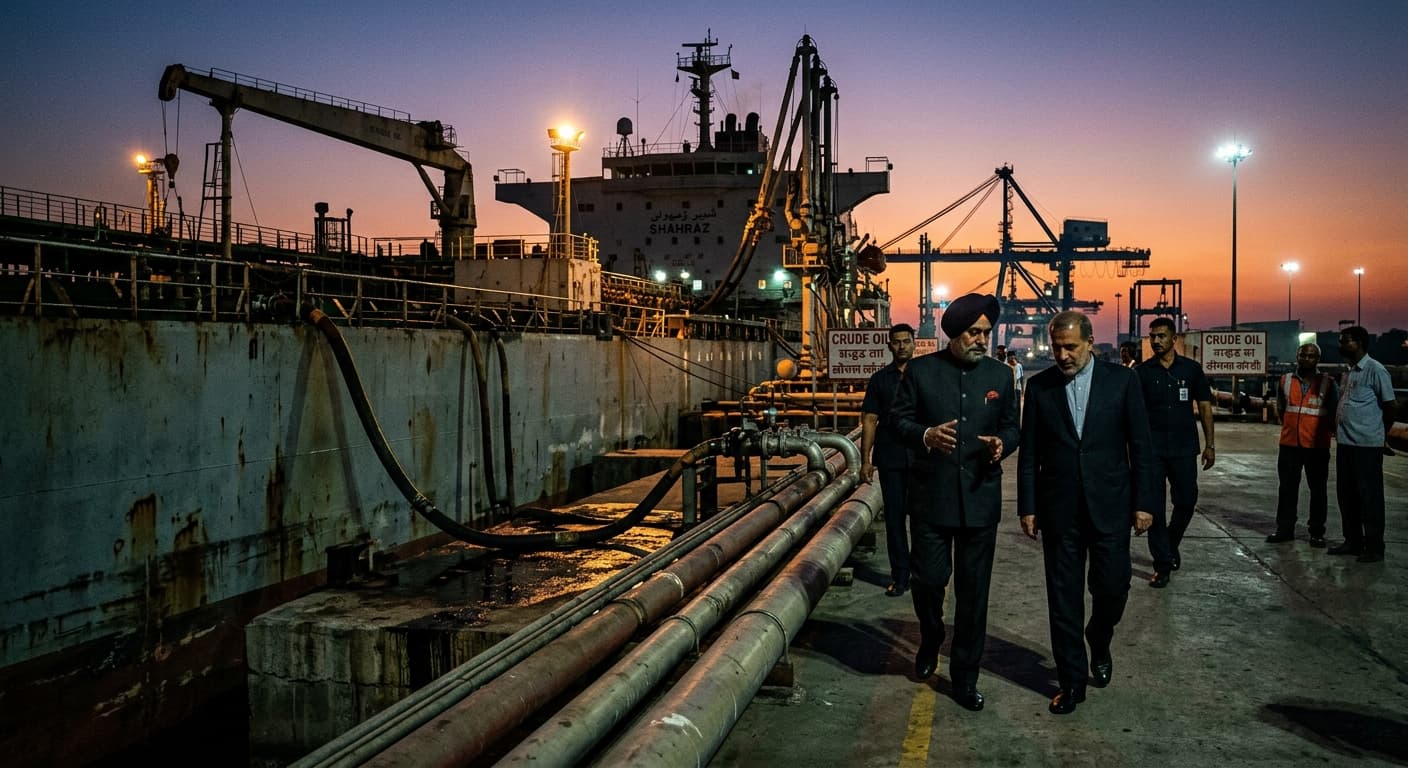
Iran's Wager: Why New Delhi Can't Ignore Tehran's Oil Offer
A 60-day US waiver and Iran's push for deeper trade create a window for India to restore energy ties—but the terms remain precarious.
Iran's petroleum minister has offered India a major economic partnership centered on oil, energy, and trade cooperation, following a
US-Iran ceasefire agreement that began on June 17. The move arrives as a temporary 60-day waiver on US oil sanctions—valid until August 21—creates the first legal window for Indian refiners to purchase Iranian crude since 2019, when the Trump administration's "maximum pressure" campaign hardened sanctions enforcement. Iran is testing whether New Delhi will convert this window into a durable supply relationship that extends beyond summer if the US-Iran ceasefire holds.
For India, the calculus is economic and strategic. The country imports 90% of its oil and spends over $100 billion annually on energy imports. Half of these supplies transit the Strait of Hormuz, which was effectively shut during the recent Iran-Israel conflict.
The availability of additional Iranian barrels could help moderate global oil prices and strengthen New Delhi's bargaining position with existing suppliers, particularly Saudi Arabia and the UAE. Energy analysts believe any resumption of purchases will occur gradually, not through immediate surge imports—Indian refiners have already locked in supplies for coming months, and uncertainties persist over shipping, insurance, and banking arrangements tied to Iranian transactions.
The Structural Opportunity
Before 2018, Iran ranked among India's largest crude suppliers, with Indian refiners valuing Iranian grades for compatibility with existing refinery configurations, competitive pricing, and favorable payment terms. The market is priced in: every dollar decline in crude costs translates to substantial savings for an import-dependent economy struggling with inflation and current account deficits.
India's import bill has risen from $231 billion in 2016 to $388 billion as of 2026—a doubling driven partly by energy commodity shocks and war-driven disruptions.
But the clock is running. The waiver expires August 21. Beyond that date, unless Washington and Tehran finalize a comprehensive peace deal, sanctions reimpose automatically. India's External Affairs Ministry spokesman Randhir Jaiswal confirmed that shipping has resumed through the Strait of Hormuz, with 11 India-bound vessels emerging since June 17, including crude tankers, LPG carriers, and cargo ships. This suggests Iran is serious about normalizing trade. Yet Indian officials, as Jaiswal demonstrated, are moving cautiously, couching energy sourcing as driven by "requirements of 1.4 billion people" and the need to "secure affordable supplies from diverse sources."
What to Watch
The critical question is not whether India can buy Iranian oil—refineries have the technical capacity. It is whether the US-Iran ceasefire survives August 21. US Treasury Secretary Scott Bessent has signaled the talks are "productive", and the initial framework includes Iranian commitments to free Strait of Hormuz transit and IAEA inspections. But geopolitical volatility in the Middle East could derail a final deal. If it does, India's temporary opening closes, and New Delhi reverts to depleted Iranian inventory and reliance on costlier alternatives from Russia, Saudi Arabia, and the UAE—the latter two now more queasy about Indian price pressure after the Strait's disruption.
Watch for three signals: whether Indian refiners place spot-market orders by late July; whether a final peace accord emerges before August 20; and whether Iran tempts India with even longer-term contracts or joint energy ventures beyond oil, perhaps in liquefied natural gas and renewable partnerships. Tehran's offer is as much about breaking isolation as it is about commerce. New Delhi's reply will reveal whether India prioritizes immediate energy relief or deference to Trump-era sanctions preferences.
Discover more

International Relations
Pakistan's Key Role in US-Israel-Iran Meddle
Pakistan is seeking to mediate the US-Israel-Iran conflict, balancing high-stakes diplomacy against severe economic pressures and steep regional challenges.

India
India-South Korea $50B Trade Expansion Plan
India and South Korea set a $50 billion trade target, deepening economic cooperation and strengthening Asia-Pacific ties amid shifting global trade dynamics.

Global Politics
US Seizes Iranian Ship, Tensions Surge
The U.S. seized the Iranian ship Touska near the Strait of Hormuz, sharply escalating tensions and raising the risk of wider conflict in a vital oil corridor.
Global
Will Kurti's 4th victory reshape Kosovo's foreign relations?
- Episode focus: A Balkans Debrief conversation with Yll Sadiku about Albin Kurti’s fourth consecutive electoral victory in Kosovo and what it could mean for Kosovo’s foreign relations. - Key questions addressed: - How Vetëvendosje’s victory ended months of political