Iran's Hormuz Threat Fuels Oil Price Surge
Tehran's influence on oil prices amid military tensions
Model Diplomat3 min readMiddle East

Iran’s Hormuz Threat Is Moving the Oil Market Again
Tehran’s leverage is the chokepoint, not the battlefield: each threat around Hormuz raises costs for Washington, importers and the White House.
Oil rose again on April 30 as traders priced in renewed escalation risk in the Iran war, while U.S. Defense Secretary Pete Hegseth was set to testify before a Senate committee — a sign the administration now has to manage military pressure abroad and political pressure at home at the same time. Iran war live: Oil prices surge on fears of escalation, Hegseth to testify before Senate committee
Tehran’s leverage is economic
Iran does not need to match U.S. or Israeli firepower to keep leverage. It needs to keep the market convinced that the Strait of Hormuz can stay unsafe or partially blocked. Reuters reported earlier in the war that Iran had effectively shut the strait, which normally carries about one-fifth of global oil trade, and that Brent jumped to around $108 after President Donald Trump threatened broader attacks. World anxious to open Hormuz Strait while Trump and Iran trade threats
Oil jumps 10% on Iran conflict and could spike to $100 a barrel, analysts say
That is the core power dynamic. Every day Hormuz looks vulnerable, shipping insurers, Asian refiners, and European buyers pay more, regardless of who controls the battlefield. It also blunts the value of OPEC+ spare capacity, because additional barrels matter less if Gulf exporters cannot move them cheaply and predictably. Forget OPEC+ output hike. Duration of Hormuz disruption is what matters
Iran war puts Middle East Dubai oil benchmark under stress as prices soar
Who benefits, who loses
The immediate beneficiary is Tehran, because market fear amplifies its coercive reach. The immediate losers are Gulf producers that rely on stable export routes, and consuming economies that import inflation with every price spike. Reuters said the war had already broken the normal relationship between futures and physical crude, with physical benchmarks such as Dated Brent rising much faster because prompt cargoes became scarce. The Iran war has shattered oil's price compass
World anxious to open Hormuz Strait while Trump and Iran trade threats
The political risk sits with the White House. Reuters reported on March 30 that oil had surged roughly 57% for the month after Iran’s effective closure of Hormuz — the steepest monthly jump in LSEG data since 1988, exceeding gains during the 1990 Gulf War. That is why Hegseth’s testimony matters in United States politics: if the administration cannot lower energy risk, it will face a rising domestic price for the war.
Brent eyes record monthly rise; US crude settles above $100 as Houthis join Iran war
Iran war live: Oil prices surge on fears of escalation, Hegseth to testify before Senate committee
What to watch next
The next decision point is shipping flow data, not rhetoric. Reuters showed in mid-March that oil fell after some ships transited Hormuz; if traffic resumes consistently, part of the war premium comes out fast. If sailings stay irregular, traders will keep pricing a Hormuz risk tax into every barrel. Oil prices slide 3% as some ships transit Strait of Hormuz
For readers tracking Global Politics, the near-term question is simple: can Washington make the waterway look open, or can Iran keep making it look dangerous? That answer will move oil faster than any hearing room exchange in Washington.
Discover more

Global Politics
US Seizes Iranian Ship, Tensions Surge
The US seizure of the Iranian ship Touska highlights a shift in control over the Strait of Hormuz, favoring Iran's strategic position.

Conflict & Security
Drone Warfare Killing Aid Workers at Unprec
Over 1,000 humanitarian workers killed in three years as cheap armed drones collapse legal protections. Gaza, Sudan, Ukraine, and DRC see deliberate targeting of aid convoys and hospitals with zero prosecutions.

Global
World Normalises Taliban as Afghan Women Eras
UN data shows Afghan women erased from public life as Russia recognises the Taliban, EU hosts officials in Brussels, and ICC warrants for gender persecution go unenforced.
Conflict & Security
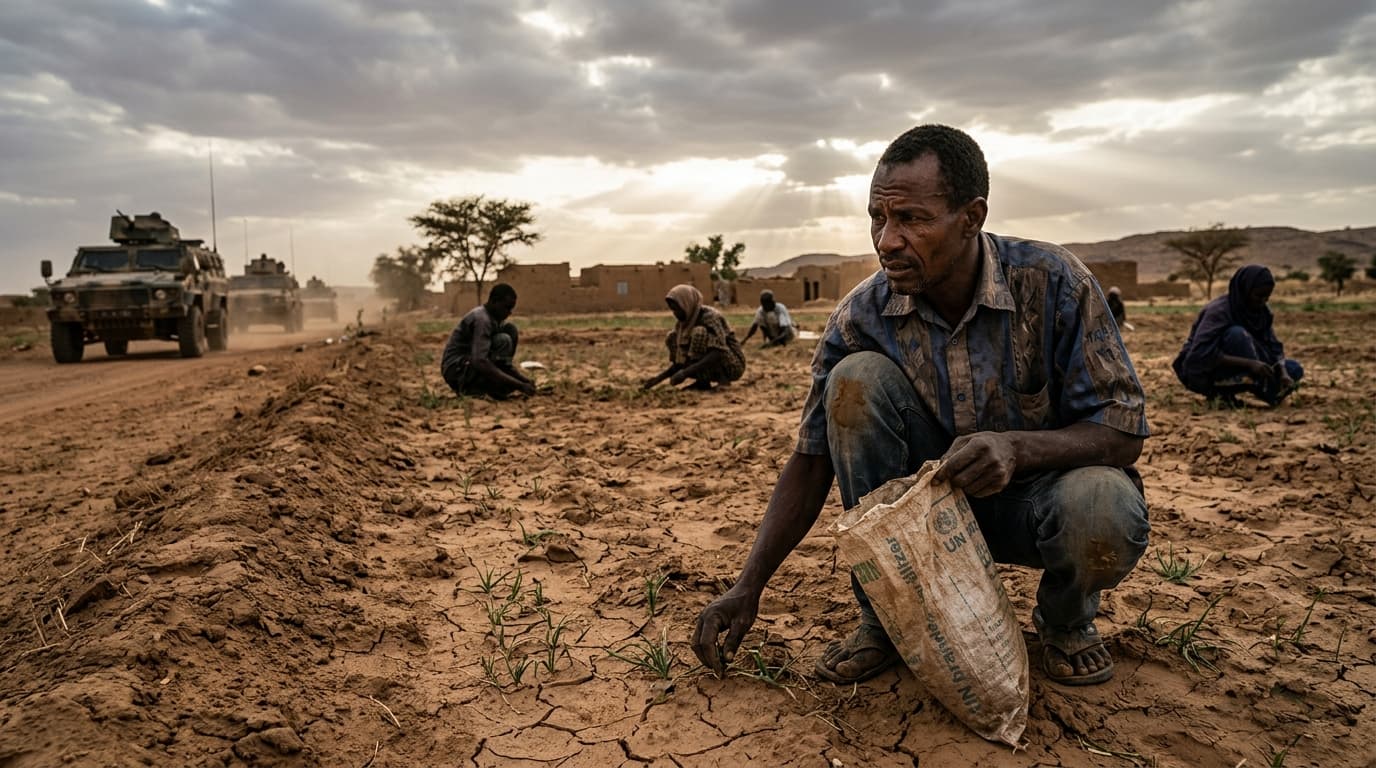
West Africa Food Crisis: Three Shocks in 2026
Conflict, climate extremes, and the Strait of Hormuz closure drive a severe food crisis in West and Central Africa, with fertilizer prices surging 80% and millions displaced.