Iran's Gulf Threats Endanger Middle East Ceas
Iran's warning to tankers escalates US-Iran tensions.
Model Diplomat8 min readMiddle East
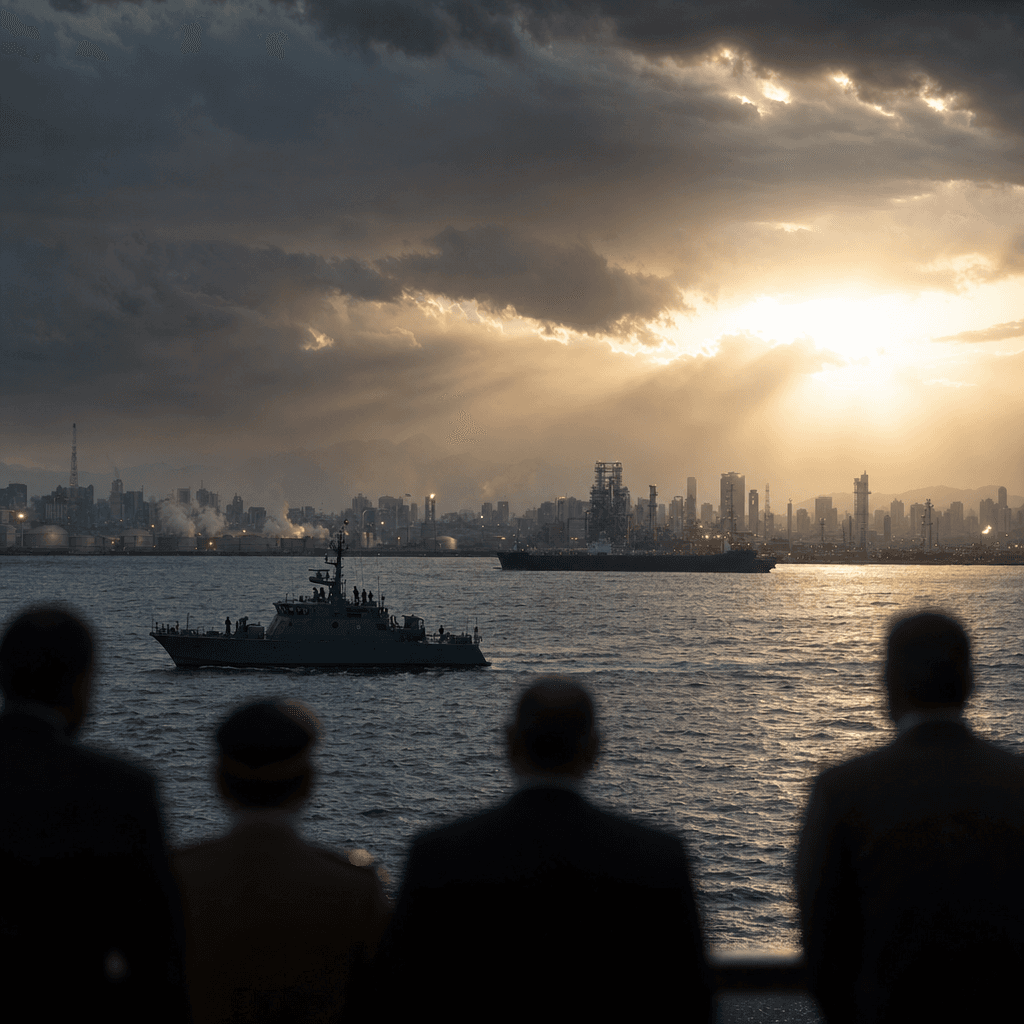
Iran's Hormuz Ultimatum Endangers Middle East Ceasefire
Iran's July 2026 warning to tankers in the Strait of Hormuz has moved the US-Iran ceasefire from fragile to conditional, with the whole peace track hostage to one waterway.
Iran's joint military command warned on July 2, 2026 that any tanker crossing the Strait of Hormuz outside a route it personally approves will face a "forceful response" — a threat issued hours after Qatari mediators announced "positive progress" in indirect US-Iran talks in Doha. The ultimatum is not really about ships. It is Tehran's attempt to convert a battlefield leverage point into a permanent legal fact before US envoy Steve Witkoff returns to the table, and it is the clearest sign yet that the 14-point Islamabad Memorandum of Understanding signed on June 17 is being renegotiated in the water, not on paper. If Washington accepts a de facto Iranian tollbooth in the Gulf, the ceasefire holds. If it doesn't, the war restarts on Iran's chosen terrain.
The ultimatum and what it actually says
Iran's Khatam al-Anbiya Central Headquarters — the joint operational command that runs the country's conventional and Revolutionary Guard forces — declared that "the only authorised route" through the strait is the corridor announced by the Islamic Republic, and that vessels using any other passage would be "dealt with." According to Al Jazeera, the statement singled out a new corridor recently laid out by Oman with the International Maritime Organization that hugs the Musandam Peninsula and bypasses Iranian territorial waters.
The dispute is legal as much as military. Under Article 38 of the UN Convention on the Law of the Sea, ships enjoy a right of transit passage through international straits that a coastal state cannot suspend. The International Maritime Organization has said publicly that "no toll restrictions should be imposed." US Secretary of State Marco Rubio, on a Gulf tour last month, told reporters in Bahrain that "no country on Earth has the right to charge for the use of international waterways,"
per Al Jazeera.
Iran does not accept that framing. The Persian Gulf Strait Authority (PGSA), created in May, published transit terms on June 19: "No vessel is permitted to pass through the Strait of Hormuz without a valid passage permit issued by the PGSA," according to the BBC. Iranian lawmaker Hamidreza Haji Babaei has already claimed the first toll receipts — reportedly at rates of up to $2 million per vessel — have been deposited with Iran's central bank, though the BBC could not verify the claim.
The MoU is being renegotiated in the water
The Islamabad MoU, whose 14 points were read verbatim to reporters by a US official and published by the BBC, is unusually explicit. Point 5 commits Iran to use "best efforts for the safe passage of commercial vessels with no charge for 60 days." Point 4 requires the US to lift its naval blockade within 30 days. Point 8 has Iran reaffirming it "shall not procure or develop nuclear weapons," with 440kg of 60% enriched uranium to be "down-blended on site" under IAEA supervision. Point 6 dangles a $300 billion reconstruction plan.
The document does not say what happens on day 61. Iran's chief negotiator, parliament speaker Mohammad Bagher Ghalibaf, told domestic media the day the MoU was announced that "the Strait of Hormuz will not return to pre-war conditions" and Iran will "receive a fee for services," per Al Jazeera. Mostafa Khoshcheshm, a Tehran-based analyst, put it more bluntly to the same outlet: "According to the MoU, Iran is not going to charge service fees for 60 days, but afterwards, Iran is definitely going to do that."
That is the trap Washington now sits in. If it lets the 60-day window expire without a settlement, Iran begins charging. If the US tries to force the issue militarily, Iran closes the strait — as Bandar Abbas's mayor told the BBC would happen "for sure" if the ceasefire collapsed.
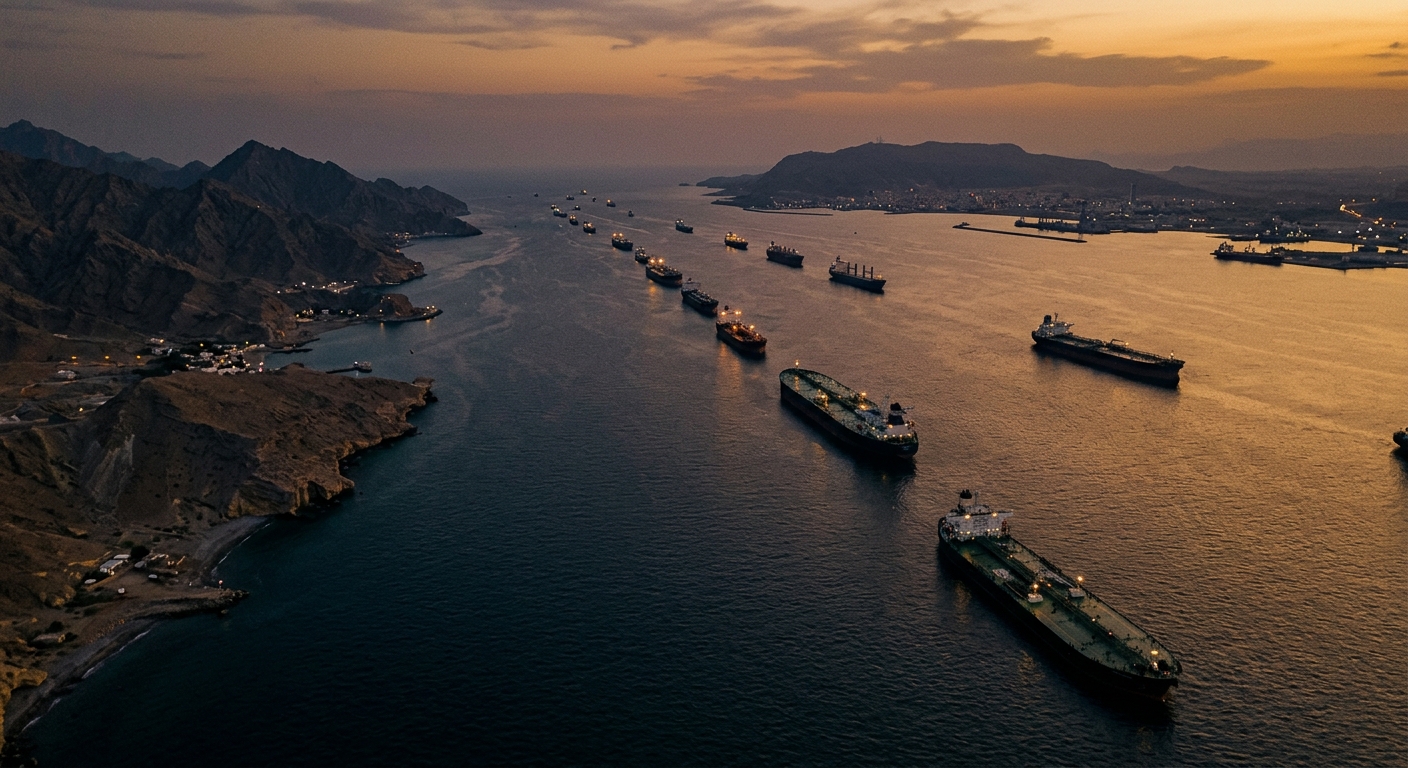
Traffic tells the real story
Iran's leverage does not depend on actually sinking ships. It depends on insurers refusing to underwrite them. War-risk premiums that hovered at 0.25% of hull value before the war peaked at 5% during it and remain in a 1–3% range — "structurally elevated," in the words of one analyst quoted by Al Jazeera. Phillip Belcher of Intertanko, which represents more than half the world's tanker fleet, said his members are still being advised not to use the strait because "an attack could take place at any time,"
per the BBC.
The numbers are unforgiving. There were 38 confirmed transits on July 2, 2026, down from 48 the day before and from roughly 130 daily crossings pre-war, according to MarineTraffic data cited by Al Jazeera. More than 550 ships remain stranded in the Gulf. Two container ships seized by the IRGC in April — the MSC Francesca and the Epaminondas — have not been released despite the ceasefire, the BBC reported after a visit to Bandar Abbas. OPEC+ has announced a fifth consecutive monthly production increase, but Brent settled at $72 on July 6 — essentially the pre-war level — only because the market has priced in that the strait will not fully reopen for months.
The second-order consequence is the point. Iran does not need to sink a tanker. It needs shippers to keep needing an Iranian permit — and it needs the US Treasury's own OFAC advisory warning that paying Tehran risks sanctions to remain the reason non-Iranian tankers cannot easily comply. The result is a chokepoint that is neither closed nor open, which is exactly the ambiguity Tehran wants written into the final deal.
Who's really at the table
The July 2 threat coincided with two things Washington cannot ignore. The first is the six-day funeral procession for Ali Khamenei, which began July 3 and ends July 9 with burial in Mashhad. Trump told Axios the talks are "paused for a week"; Iran has not formally confirmed a pause. The second is that Iran's new supreme leader, Mojtaba Khamenei, has not been seen in public since his selection in March. He was reportedly wounded in the February 28 strike that killed his father and communicates only through written statements — statements that, according to Al Jazeera, have made "maintaining control over the Strait of Hormuz" the single non-negotiable red line.
That is why Hormuz has become the whole game. President Masoud Pezeshkian and Ghalibaf are running the negotiation, but the hardline camp around former SNSC negotiator Saeed Jalili and the IRGC-aligned Kayhan newspaper has framed any concession on the strait as surrender. A written statement from Mojtaba Khamenei reportedly conditioned his approval of the deal on three-quarters of the SNSC voting in favour, and on Iran refusing "excessive demands" — a coded veto over Hormuz. The Assembly of Experts–approved son has hardline legitimacy and no public track record to spend; he cannot afford to be the leader who signed away the waterway.
Meanwhile, the UK and France have quietly built the enforcement tool. On May 12, 2026, London and Paris convened defence ministers from 38 nations — including Bahrain, Qatar, Japan, South Korea, Germany, and Canada — to endorse a Multinational Military Mission for the strait, per the UK Ministry of Defence. Britain has committed HMS Dragon, Typhoon jets, autonomous mine-hunters, and £115 million in counter-drone funding. On July 3, hours after Iran's ultimatum, Keir Starmer and Emmanuel Macron issued a joint statement placing the mission on standby:
"The UK and France also stand ready to deploy the wider Multinational Military Mission to support freedom of navigation in the Strait of Hormuz."
according to the UK government release. Oman, which controls the southern side of the strait, has agreed to work with London and Paris to keep its territorial waters open. That is a European hedge against a US-Iran deal that quietly concedes Iranian sovereignty over the waterway — and it puts NATO capitals, not the White House, on the frontline if Tehran acts on its threat.
The historical parallel that reframes this
The template Iran is copying is not the Suez Canal, despite Trump's own comparison. It is the Houthi model from 2023–24 in the Red Sea, where Yemen's Iranian-aligned rebels charged unspecified "safe-passage" fees to selected vessels while attacking others. Jack Kennedy of S&P Global Market Intelligence told NPR that Iran's tollbooth "is likely based on a model set by the Iranian-aligned Houthis." The difference is scale. The Bab el-Mandeb carries about 12% of global trade; Hormuz carries a fifth of the world's oil. If a permit regime formalises in Hormuz, Ian Ralby of Auxilium Worldwide warned NPR, "we will likely see other states in other parts of the world around key chokepoints start to think similarly."
That is the strategic prize Tehran is chasing: not the $2 million per ship, but the precedent. Under Article 26 of UNCLOS, and reflected in 22 U.S. Code § 1980a, the United States has statutory language declaring transit fees "inconsistent with international law." Codifying Iranian control over Hormuz would rip out one of the pillars of the postwar maritime order. The winners are Iran and any coastal state that has ever eyed a chokepoint. The losers are the shipping industry, insurers, and the two Gulf monarchies — Bahrain and Kuwait — that took Iranian missiles on June 27 and have no interest in a permanent Iranian veto over their exports.
What to watch
- July 9, 2026 — Khamenei burial in Mashhad. Talks are expected to resume the following week. Watch whether Mojtaba Khamenei makes any public appearance; his continued absence hands the hardline camp more room to define the Iranian position.
- Around August 16, 2026 — 60-day MoU deadline. Point 3 allows extension "with mutual consent." If no final deal is reached and Iran begins charging PGSA fees, the ceasefire's central premise collapses.
- UN Security Council follow-up to July 2 emergency session. US envoy Mike Waltz called Hormuz closure "unacceptable" at Bahrain's request. A draft resolution reaffirming freedom of navigation would force China and Russia — both major beneficiaries of discounted Iranian oil — to reveal their hand.
- Multinational Military Mission activation criteria. UK MoD statements say operations begin "in a permissive environment." A single confirmed strike on an unapproved tanker would test what "permissive" means in practice.
The Bottom Line
Iran has converted the Strait of Hormuz from a war-fighting weapon into a diplomatic asset it will not give back. The July 2 ultimatum is a demand that Washington accept, in writing, what Tehran already exercises in practice: a permit regime, a fee structure, and de facto sovereignty over a fifth of the world's oil flow. If the Trump administration signs a final deal that leaves that architecture standing, Iran wins the war it lost on the battlefield — and every chokepoint state on earth takes notes.
Discover more

Global Politics
US Seizes Iranian Ship, Tensions Surge
The US seizure of the Iranian ship Touska highlights a shift in control over the Strait of Hormuz, favoring Iran's strategic position.

Conflict & Security
Drone Warfare Killing Aid Workers at Unprec
Over 1,000 humanitarian workers killed in three years as cheap armed drones collapse legal protections. Gaza, Sudan, Ukraine, and DRC see deliberate targeting of aid convoys and hospitals with zero prosecutions.

Global
World Normalises Taliban as Afghan Women Eras
UN data shows Afghan women erased from public life as Russia recognises the Taliban, EU hosts officials in Brussels, and ICC warrants for gender persecution go unenforced.
Conflict & Security
West Africa Food Crisis: Three Shocks in 2026
Conflict, climate extremes, and the Strait of Hormuz closure drive a severe food crisis in West and Central Africa, with fertilizer prices surging 80% and millions displaced.