Iran's De-confliction Cells Face Lebanon Test
US-Iran ceasefire negotiations hinge on Lebanon's stability.
Model Diplomat3 min readMiddle East
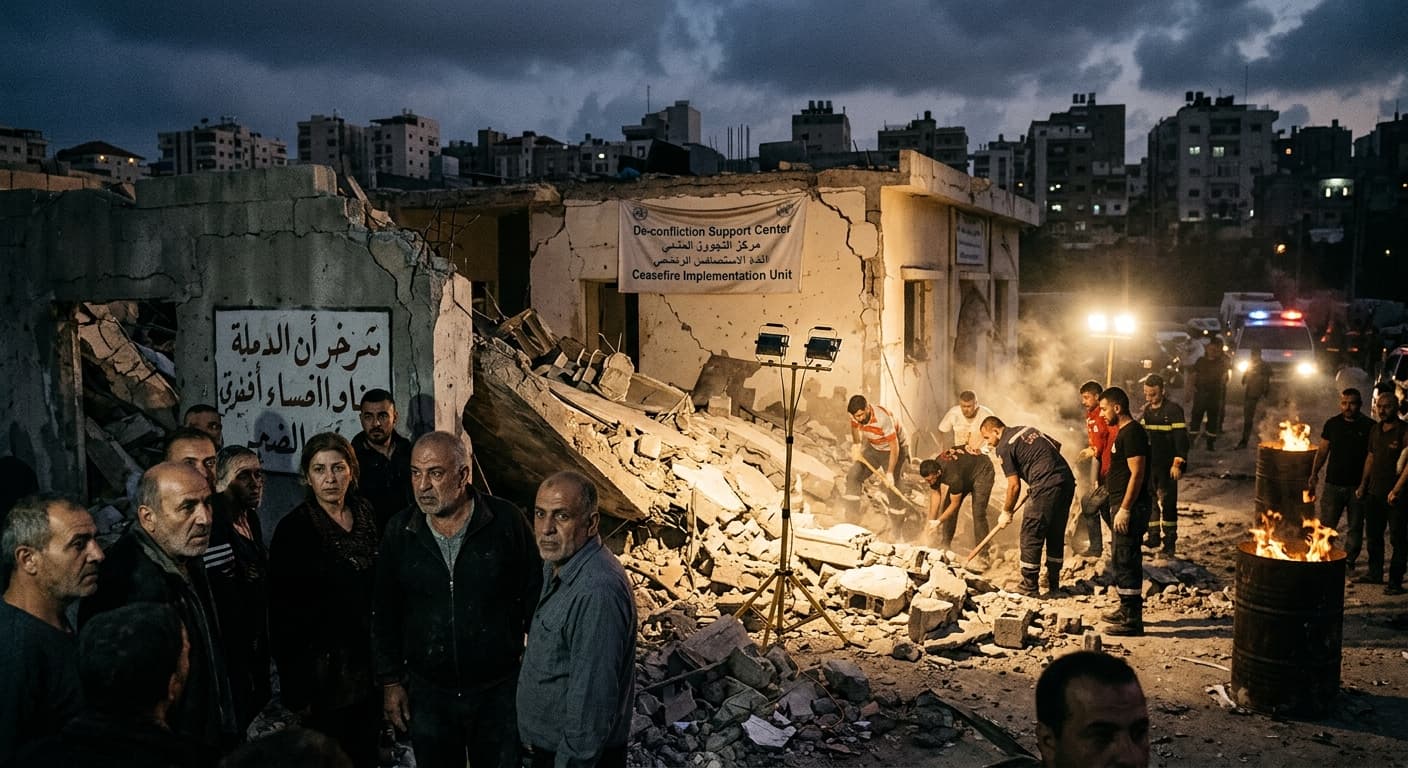
Iran Bets on de-confliction cells as Lebanon ceasefire faces its first real test
US-Iran first round ends with 60-day roadmap, but Israel's continued Lebanon strikes threaten the entire deal.
Al Jazeera reported on June 22 that the first round of US-Iran ceasefire negotiations concluded with "encouraging progress" — a breakthrough that masks a critical vulnerability. While mediators Pakistan and Qatar announced a 60-day roadmap to a final deal and the establishment of a high-level oversight committee, the real test is happening on the ground in Lebanon, where Israel's military shows no sign of withdrawing despite the week-old agreement.
The talks, held in Switzerland's Burgenstock resort, produced the mechanics of diplomacy: a "de-confliction cell" pooling US, Iranian, and Lebanese officials to monitor the ceasefire; a communication line on the Strait of Hormuz to prevent incidents; and working groups on nuclear issues and sanctions. BBC News reported that Iranian Foreign Minister Abbas Araghchi called the de-confliction cell "the first real test" — a telling phrase that frames the coming days as a trial of whether either side will enforce its own commitments.
But the deal's architecture has a fatal gap: it collapses the moment ceasefire violations on one front derail talks on others. Press Trust of India, cited by Kashmir Reader noted that Iran made clear before the talks began that "before anything, however, Iran wants to discuss Lebanon, where Israel's military has been fighting the Iranian-backed Hezbollah militant group, since the deal halts conflict on all fronts." That priority reflects Tehran's leverage problem: the ceasefire agreement explicitly requires the termination of hostilities "on all fronts," yet
Al Jazeera reported Israeli strikes in Lebanon have killed at least 67 people since the June 18 memorandum of understanding, while Hezbollah attacks have killed five Israeli soldiers.
Vice President JD Vance leads the US side, but Trump's threats—posted during the talks themselves—have undercut American credibility as an honest broker. Trump warned Iran it would face renewed strikes if it didn't control Hezbollah's actions in Lebanon, injecting volatility into negotiations that require steady messaging. Yet the US and Iran do share an interest in preventing escalation that destabilizes oil markets — Brent crude spiked above $100 per barrel during the initial crisis — meaning both sides have incentive to see the technical talks through the week.
The real leverage now flows to Israel, which has shown it will continue operations in southern Lebanon despite the ceasefire framework. Israeli Defense Minister Israel Katz told BBC News that forces will remain in southern Lebanon "as long as necessary." Israel is not a signatory to the US-Iran deal, yet Article 1 of the agreement stipulates that Lebanon operations must cease. This disconnect — between a US-Iran commitment and Israel's continued occupation — creates the scenario both parties fear: Iran will claim the US failed to deliver; the de-confliction cell becomes a face-saving fiction; and technical talks grind to a halt.
The next flashpoint is this week. India Today reported that technical negotiations will continue at Burgenstock through the week, with working groups tackling frozen assets ($300 billion according to
BBC News), sanctions relief on Iranian oil, and nuclear enrichment limits. But these talks depend on the ceasefire holding in Lebanon. If Israeli operations intensify, Iran can walk — claiming the US broke the foundational commitment. If fighting eases, both sides can point to the de-confliction cell as proof the framework works.
The 60-day roadmap is not a finish line; it's a deadline for facing the hard choices. The question is whether a de-confliction cell, staffed by officials with no authority over Israel, can survive the next week.
Discover more
Global Politics
Trump's Conflicting Messages on Iran War
Trump's mixed messages on Iran reflect a strategy of audience management, benefiting Tehran amid a complex geopolitical landscape.

International Relations
Pakistan's Key Role in US-Israel-Iran Meddle
Pakistan is seeking to mediate the US-Israel-Iran conflict, balancing high-stakes diplomacy against severe economic pressures and steep regional challenges.

Global Politics
US Seizes Iranian Ship, Tensions Surge
The US seizure of the Iranian ship Touska highlights a shift in control over the Strait of Hormuz, favoring Iran's strategic position.

Conflict & Security
Drone Warfare Killing Aid Workers at Unprec
Over 1,000 humanitarian workers killed in three years as cheap armed drones collapse legal protections. Gaza, Sudan, Ukraine, and DRC see deliberate targeting of aid convoys and hospitals with zero prosecutions.