Iran Reinstates Strait of Hormuz Restrictions
Iran reinstates strict toll regime on oil transit routes.
Model Diplomat8 min readMiddle East

Iran Reinstates Strait of Hormuz Restrictions as Toll Regime Bites
Iran has reimposed strict transit rules on the Strait of Hormuz, forcing ships onto IRGC-approved routes and paid permits — a de facto tollbooth the US-Iran ceasefire failed to dismantle.
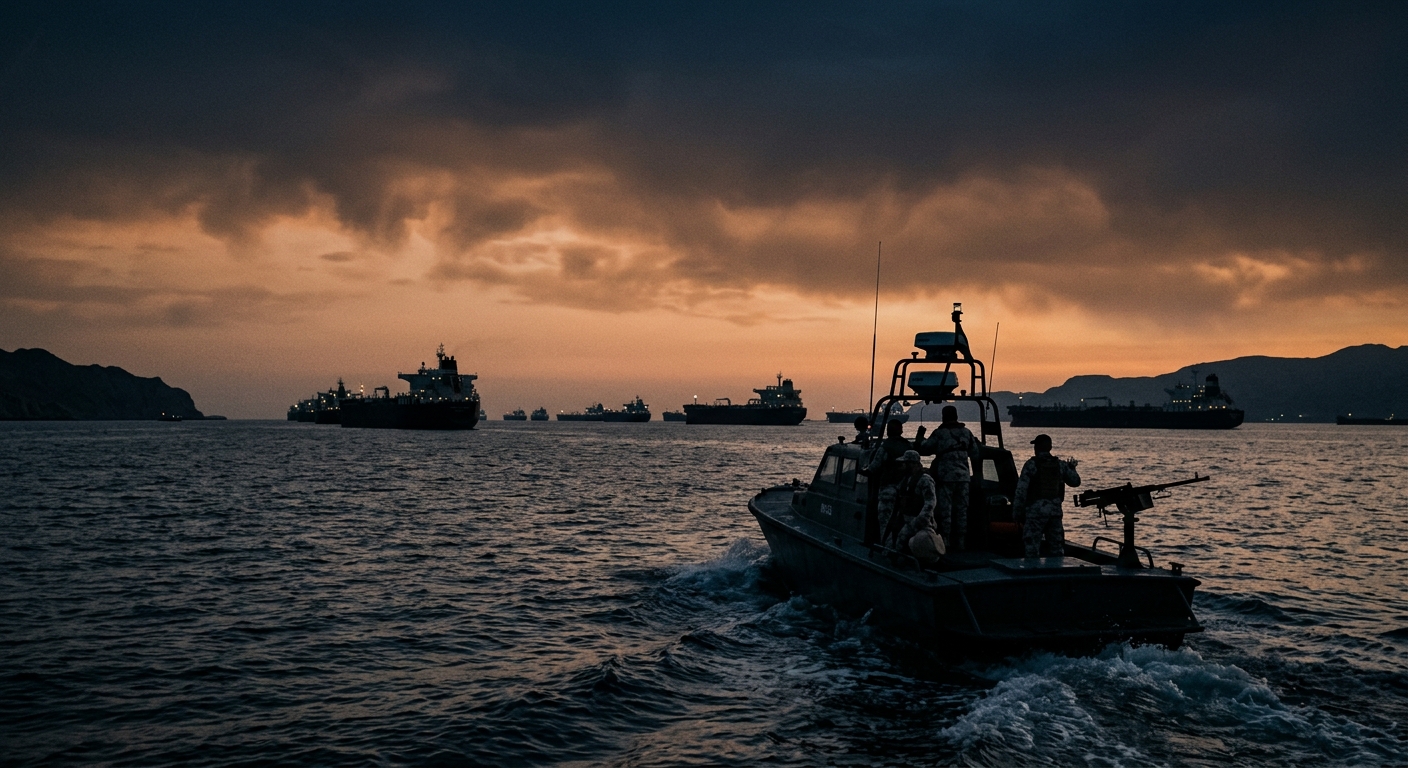
Iran's Khatam al-Anbiya Central Headquarters warned on July 3, 2026 that any commercial vessel deviating from Tehran-designated shipping lanes in the Strait of Hormuz would face an "immediate and forceful response" — a threat made good four days later, when a projectile set a liquefied natural gas tanker ablaze off Limah, Oman. The reimposition of restrictions, layered on top of the Persian Gulf Strait Authority's permit-and-fee regime, is not a return to the wartime closure of February–April. It is something more durable: a coercive tolling architecture that the June 17 US-Iran memorandum quietly failed to dismantle, and that now hands Tehran the leverage it lost on the battlefield.
The story to watch is not whether the strait is "open" or "closed." It is that Iran has succeeded in redefining passage through the world's most important oil chokepoint as a permitted activity, priced by an IRGC-adjacent authority, differentiated by a country's political alignment with Tehran — and that Washington, Beijing and the Gulf capitals are steadily accommodating themselves to that reality even as they publicly reject it.
What actually changed — and what didn't
The June 17 memorandum of understanding signed in Switzerland was sold as a reopening. Iran committed, in its own words, to make its "best efforts for the safe passage of commercial vessels with no charge for 60 days"; the United States lifted the naval blockade of Iranian ports it had imposed on April 13. US Central Command confirmed the end of the blockade on X, keeping "some US vessels" in the general area. Traffic returned, but partially:
BBC Verify put transits at 172 vessels in the first week of the deal against a prewar norm of roughly 138 crossings a day, with more than 200 tankers still holding inside the Gulf.
That was the high-water mark of the détente. Within eight days, the Islamic Revolutionary Guard Corps had rejected an Omani transit corridor coordinated with the International Maritime Organization, insisting that "the only authorised transit routes through the Strait of Hormuz are those designated by the Islamic Republic of Iran," according to Al Jazeera. On June 26, the US struck Iranian targets after a drone attack on the Singapore-flagged Ever Lovely. On July 3, the Khatam al-Anbiya command formalised the threat against "unapproved" routing. By July 7, US officials told Axios that Iran had
fired at least two missiles at commercial ships transiting the strait, hitting two.
The Persian Gulf Strait Authority — the institution that matters — never went away. Iran's Supreme National Security Council stood it up on May 18, before the ceasefire. Brookings' Bruce Jones notes in a
July analysis that "they have not taken that authority down" — the fee waiver runs only for the 60-day negotiating window, after which Tehran retains the machinery to reinstate charges. NPR's Jackie Northam reported in May that a ship master seeking transit now emails the IRGC over
40 fields of information — origin, cargo, crew nationality, vessel value — and receives a green or red light, with payment settled by radio.
The tollbooth as strategy
The pricing is where the coercion becomes strategy. Bloomberg reporting cited by Al Jazeera puts wartime "authorisation" fees as high as $2 million per voyage. Bruegel calculates that a $2 million charge on a VLCC works out to roughly $1 per barrel — small enough that Gulf exporters absorb 80–95% of the toll while the world oil price rises only $0.05–$0.40,
according to its April 2026 model. At those numbers, paying is rational for almost every shipowner in the Gulf. Iran has priced the toll below the point where anyone will fight over it.
That is not a bug. It is the design.
Under a service-fee framework analogous to Turkey's Montreux regime on the Bosphorus, SOAS economists Karshenas, Pesaran and Smith estimated that a $0.58-per-barrel Iranian charge on 20 million daily barrels would generate roughly $4.3 billion in annual revenue — a sum that would materially rewire Iran's post-war fiscal picture without triggering a shipper revolt. Tehran's own state media, cited by Fars, has floated a broader insurance-and-verification package that Iran claims could exceed $10 billion a year.
Washington's counter is legal, not commercial. Secretary of State Marco Rubio, on tour in the UAE in late June, said flatly: "It's an international waterway. No country is allowed to charge tolls or fees on an international waterway." The US Treasury has already put the question on a sanctions footing: on May 1, the Office of Foreign Assets Control published an alert titled
"Sanctions Risks of Iranian Demands for Strait of Hormuz Passage," formally warning banks, insurers and shipowners that paying the IRGC-linked PGSA could trigger secondary sanctions exposure. Ian Ralby of Auxilium Worldwide, quoted by NPR, went further: "Payment to the proposed authority would potentially be considered funding of terrorism under international financing of terrorism laws."
The law bends where geography insists
The legal argument favours Washington — but only up to a point. Under the UN Convention on the Law of the Sea, the strait is subject to the non-suspendable right of transit passage. A 2025 study in the International Journal of Research and Innovation in Social Science concludes that any Iranian closure "would likely breach the non-suspendable right of transit passage that is essential for global maritime navigation." An earlier SSRN analysis,
"The Legal Vortex in the Strait of Hormuz," notes the deeper problem: neither Iran nor the United States is party to UNCLOS, leaving both parties to argue from customary international law and their own interpretations — a legal vacuum that makes the strait unusually susceptible to unilateral rewriting.
That vacuum is what Iran is filling. Because the strait's shipping lanes lie entirely within Iranian and Omani territorial waters, and because Iran has physically demonstrated the ability to interdict any vessel that ignores its rules, the customary right of transit passage is being tested against operational reality. Twelve fee-paying tankers on the Iran-approved route do more to establish practice than any Rubio press conference. The Bruegel authors concede as much: "Iran charging a toll would violate international law" — even as they model the world price impact as trivial.
Iran's China envoy sharpened the geometry on July 5, promising "special" treatment through Hormuz for "friendly countries." That is the second-order effect Washington cannot easily counter. Before the June ceasefire,
BBC reporting documented bilateral safe-passage arrangements struck by Pakistan (20 ships), India, Malaysia, the Philippines and China. Beijing publicly thanked "relevant parties" for allowing three Chinese vessels to transit. What began as wartime improvisation is hardening into a political-tier system: friends of Tehran get discounted, expedited passage; the rest queue behind sanctions risk and mine warnings.
Who wins, who loses
The obvious loser is US freedom-of-navigation doctrine. For 70 years, Washington's Middle East posture rested on the premise that the Fifth Fleet guarantees Hormuz for everyone at no charge. That model has been shattered by seven weeks of war and a permit regime that Washington cannot dismantle without either a new war or a diplomatic concession it has refused to make.
The less obvious losers are the Gulf Arab states. The Bruegel incidence analysis is unambiguous: Saudi Arabia, the UAE, Kuwait and Qatar absorb roughly 85% of any Hormuz toll, because Gulf oil is stuck behind the chokepoint while the rest of the world can substitute supply. That is why Rubio's July 2 CENTCOM security dialogue in Bahrain leaned hard on regional commitment to "free flow of commerce" — and why Iran's foreign ministry, in the person of Deputy Minister Kazem Gharibabadi, rejected it within hours as a construct that "cannot establish legal order and security for the Persian Gulf."
China is the quiet winner. It receives discounted, guaranteed passage, buys Iranian crude at war-discount prices under OFAC's General License W wind-down window, and gets to broker future arrangements from a position of near-monopoly demand. Iran is the loud winner — but only if the tolling regime survives the 60-day clock, which expires in mid-August. Tehran's leverage is the strait itself; without it,
as analyst Andrew Peek put it, "Iran has decided that the measure of victory has become control of the Strait of Hormuz."
What to watch next
- August 16, 2026: End of the 60-day fee-waiver window under the US-Iran MoU. If Iran reimposes charges through the PGSA at that point, the confrontation reopens on commercial rather than military ground.
- Doha negotiating round: Qatari mediators reported "positive progress" on July 2. Iranian officials say formal talks are paused pending former Supreme Leader Ali Khamenei's burial in Qom this week.
- Mine-clearing timeline: The Joint Maritime Information Center warns the central strait remains mined; Brookings' Jones says European demining assets will need "months and months." Until that route is verified clear, the Omani southern corridor — the one Iran has just declared unsafe — is the only working alternative.
- CENTCOM freedom-of-navigation operations: Watch whether the US Navy escorts a non-permitted vessel through the strait to test Iran's threat. That is the trip-wire.
Diplomat View
The reinstated restrictions are not an escalation — they are the consolidation of Iran's core wartime gain. Tehran fought the US-Israel war to a stalemate at the water's edge, and it emerged with a permit authority, an insurance vehicle, an approved route, and a friends-and-enemies pricing menu that the June memorandum only paused. The strait will not return to its pre-February 28 status; that page is turned. The forecast: within 12 months, a tacit multi-tier transit regime becomes the operating norm, with China, India, Pakistan and Malaysia paying Iran directly or through Omani intermediaries, and Western-flagged vessels routed under CENTCOM escort or rerouted around the Cape. The forecast changes if two things happen together — a comprehensive US-Iran deal that includes an internationally administered Hormuz authority co-managed with Oman and the GCC, and OFAC waivers that let insurers underwrite the transit without secondary-sanctions exposure. Absent both, the tollbooth stays. Iran built it under fire; it has no reason to take it down under peace.
The Bottom Line
Iran's reinstated restrictions on the Strait of Hormuz are not a temporary tactic — they are the installation of a permanent Iranian veto over the world's most important oil chokepoint, priced low enough that shipowners will pay and shielded by a legal ambiguity that neither UNCLOS nor US sanctions can dispel. The June ceasefire ended the war but ratified the leverage. Whatever comes out of Doha next, the pre-2026 free-transit norm is finished; what replaces it will be negotiated in tolls, not treaties.
Discover more
Global
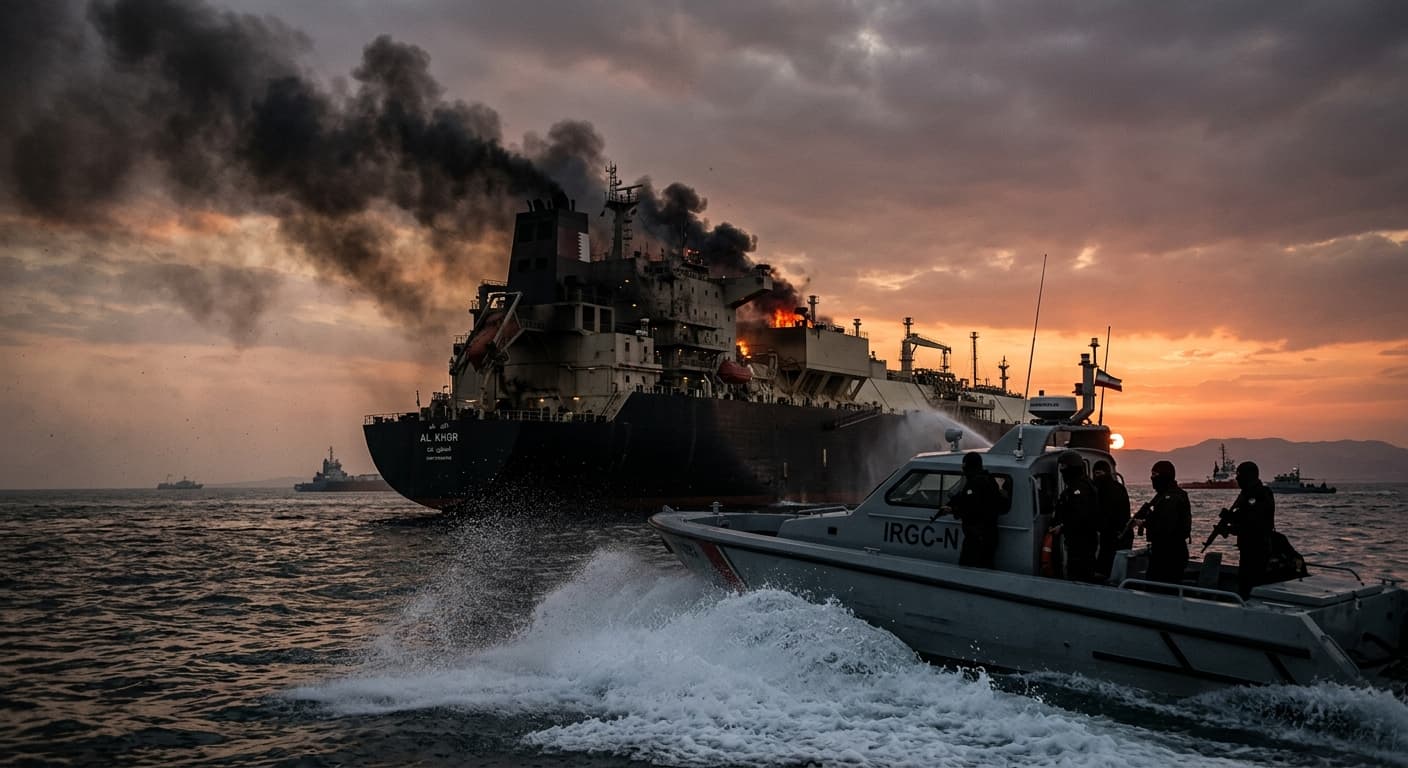
Qatari Tanker Strike Exposes Hormuz Tensions
A Qatari tanker was struck off Oman, revealing the fragility of the Hormuz ceasefire and Iran's influence over maritime security.
Global
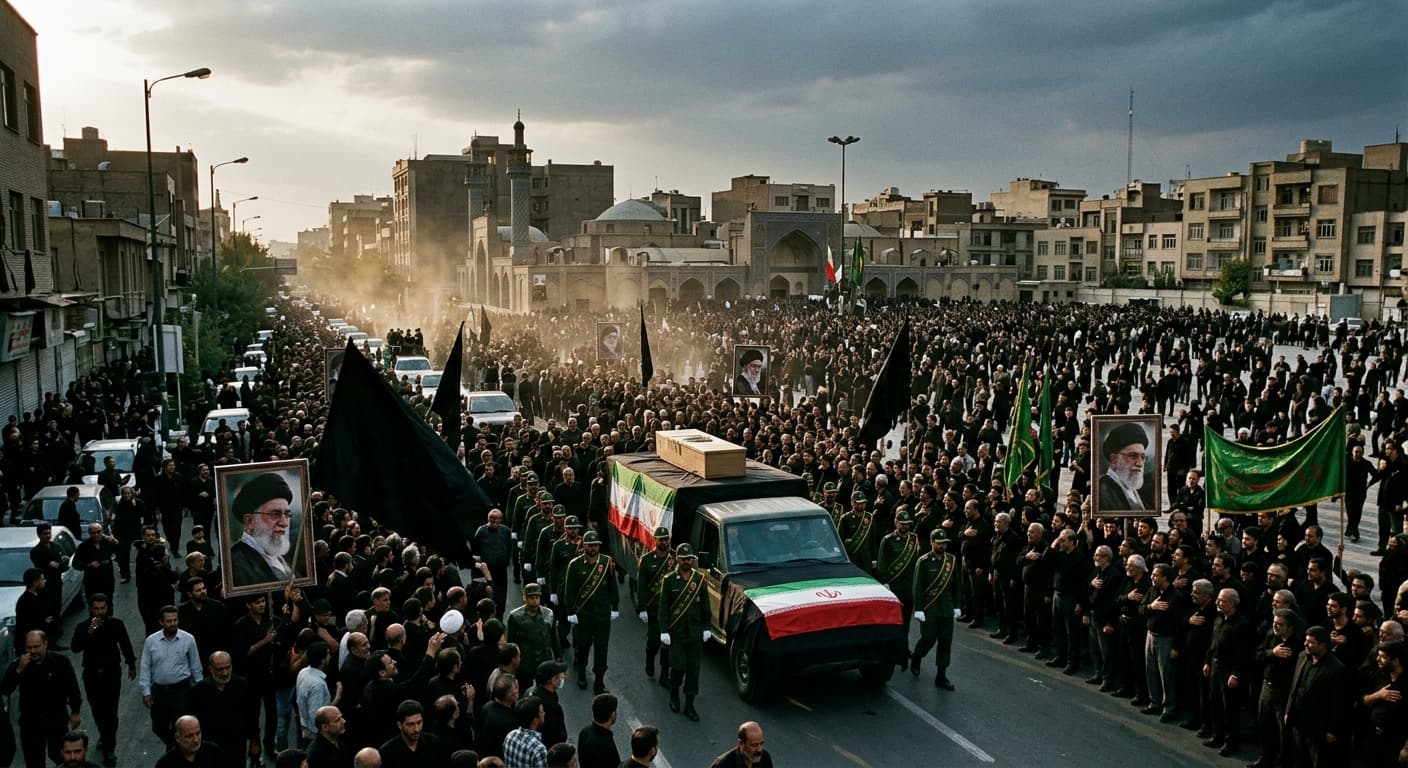
Khamenei's Funeral Signals Iran's Decline
The funeral of Ayatollah Khamenei highlights Iran's diminished influence in the Gulf, with regional powers now dictating terms.
Global
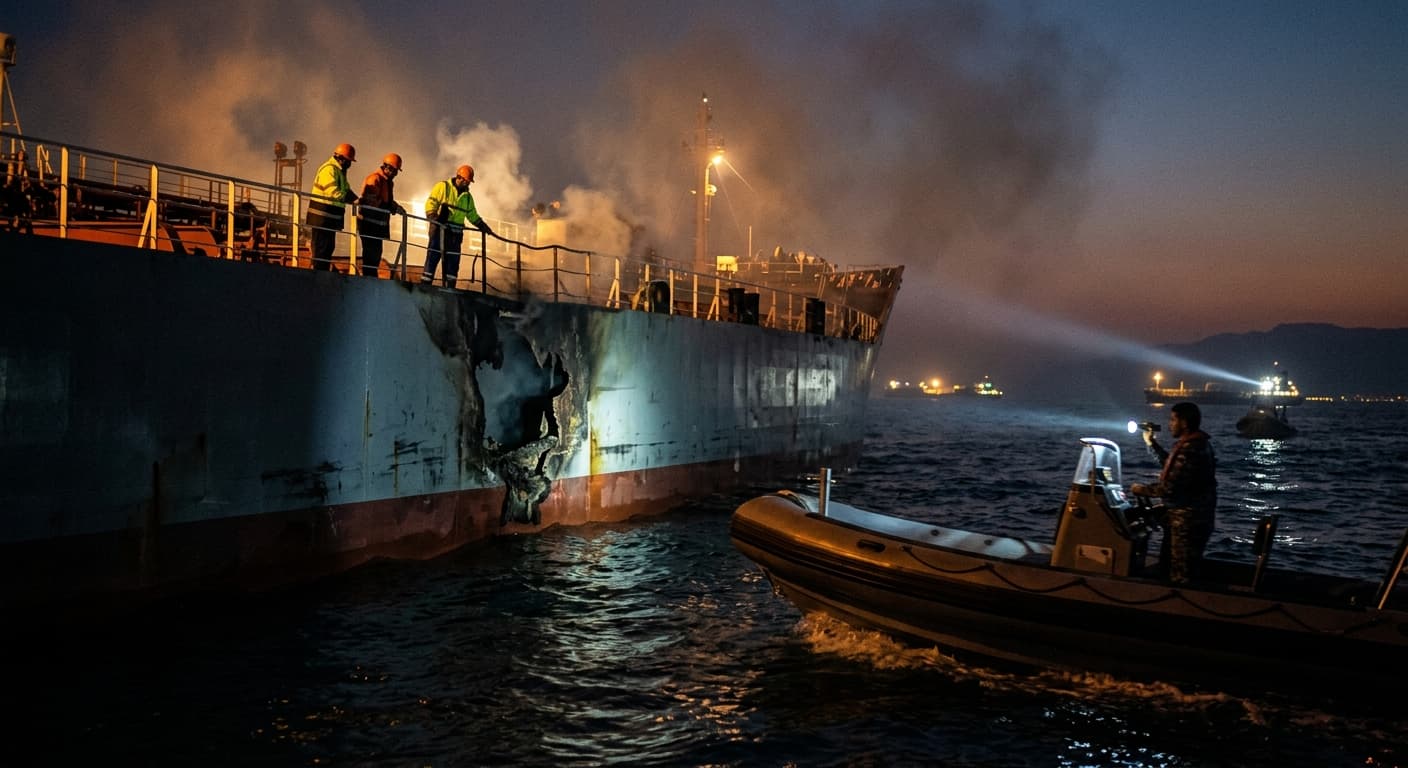
Iran's Hormuz Missile Strikes: A Toll Booth
Iran's missile attack on a Qatari-linked tanker highlights Tehran's strategy to control the Strait of Hormuz, impacting Gulf states and maritime law.

Tech Policy
Iran's Cavern Manticore Targets Israel's IT
Cavern Manticore, an Iran-linked hacking group, targets Israeli IT vendors, prompting a shift in Israel's cybersecurity policy and legislative efforts.