Iran's Strait of Hormuz Restrictions Renewed
Iran re-imposes tanker traffic restrictions in Hormuz Strait.
Model Diplomat7 min readMiddle East
Iran's Hormuz Route Restrictions Renewed as Deal Frays
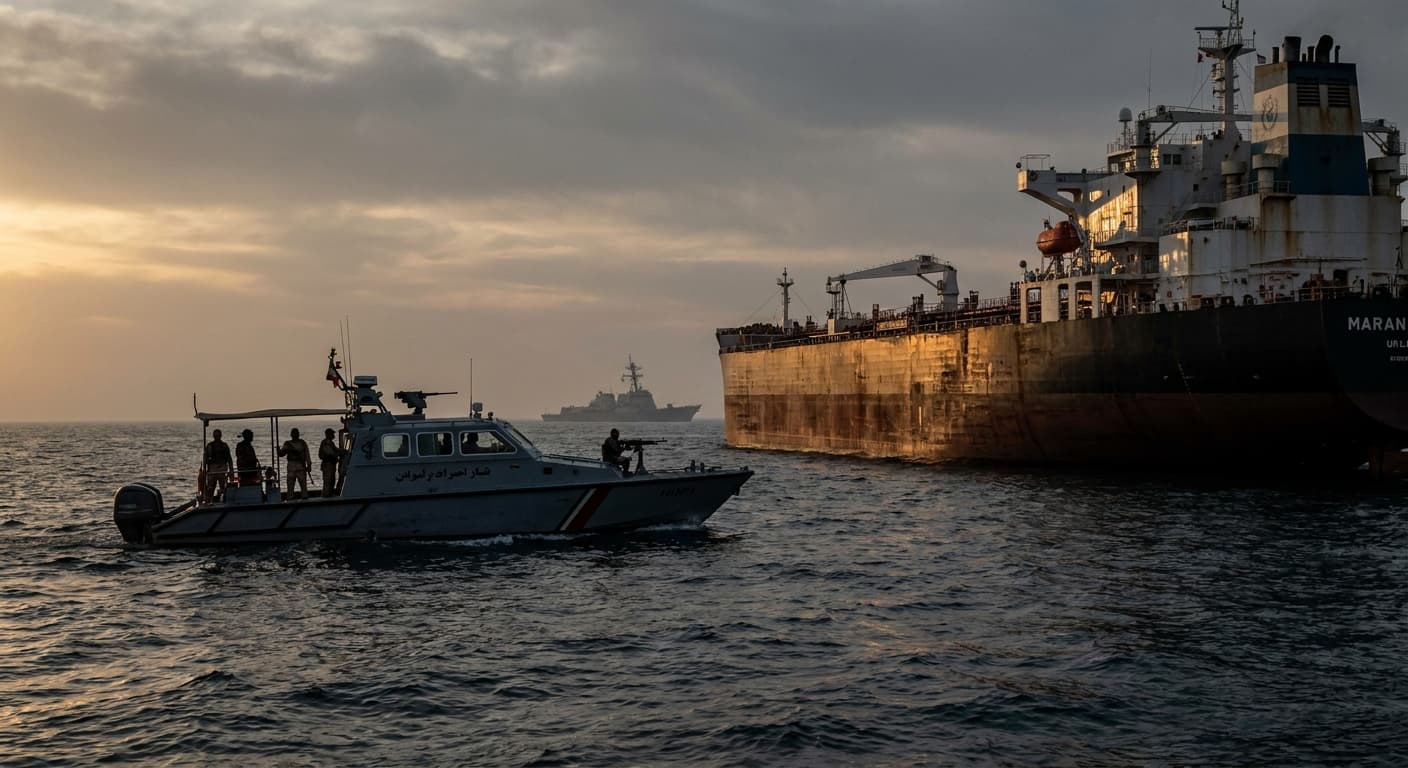
Iran's joint military command has re-imposed approved-route restrictions on Strait of Hormuz tanker traffic, testing the 60-day US-Iran deal signed at Versailles on June 18, 2026.
Iran's joint military command on July 2, 2026 ordered every oil tanker moving through the Strait of Hormuz to use Tehran-approved lanes or face a "forceful response" — the second such warning in a week, and the sharpest challenge yet to the interim US-Iran deal signed at Versailles on June 18. The renewed restrictions turn a temporary ceasefire clause into a permanent regulatory regime — one whose primary beneficiary is not Iran, but China. Tehran is using the 60-day toll-free window, which expires around August 17, to entrench a "Persian Gulf Strait Authority" (PGSA) that filters vessels by flag and nationality — locking in Beijing's discount access to Iranian crude while making transit for everyone else a permission-based transaction with an IRGC-linked, US-sanctioned entity.
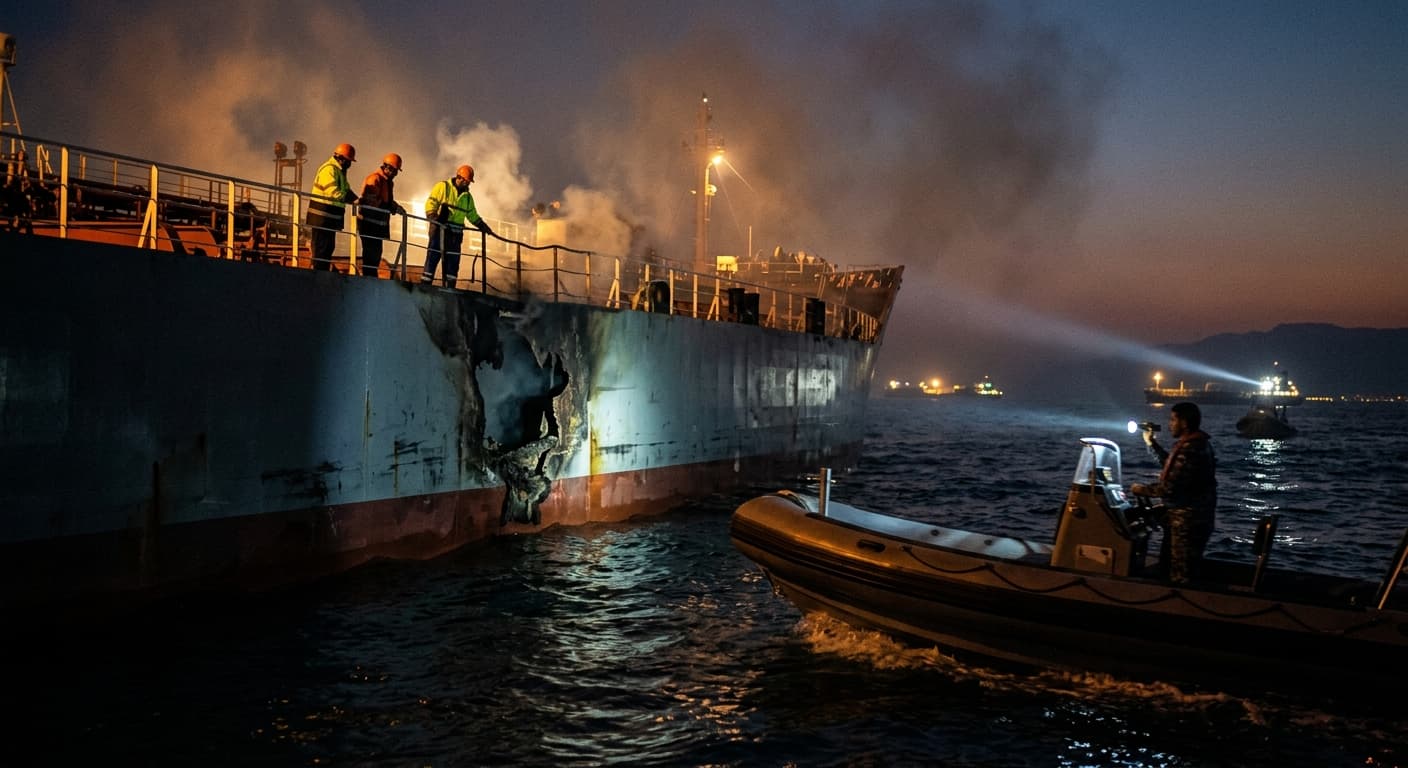
The immediate trigger is on the water. On July 7, the UK's Maritime Trade Operations reported that an "unknown projectile" hit a tanker off the coast of Oman, setting it on fire, according to Al Jazeera. It was the third attack on shipping in two weeks, following a June 26 drone strike on the Singapore-flagged container ship Ever Lovely that
Al Jazeera reported drew retaliatory US strikes on Iranian targets and a public rebuke from CENTCOM. Traffic through the strait is running at roughly 42 crossings on a peak day,
BBC Verify reported using Kpler data, against a pre-war baseline near 138.
What Iran actually changed
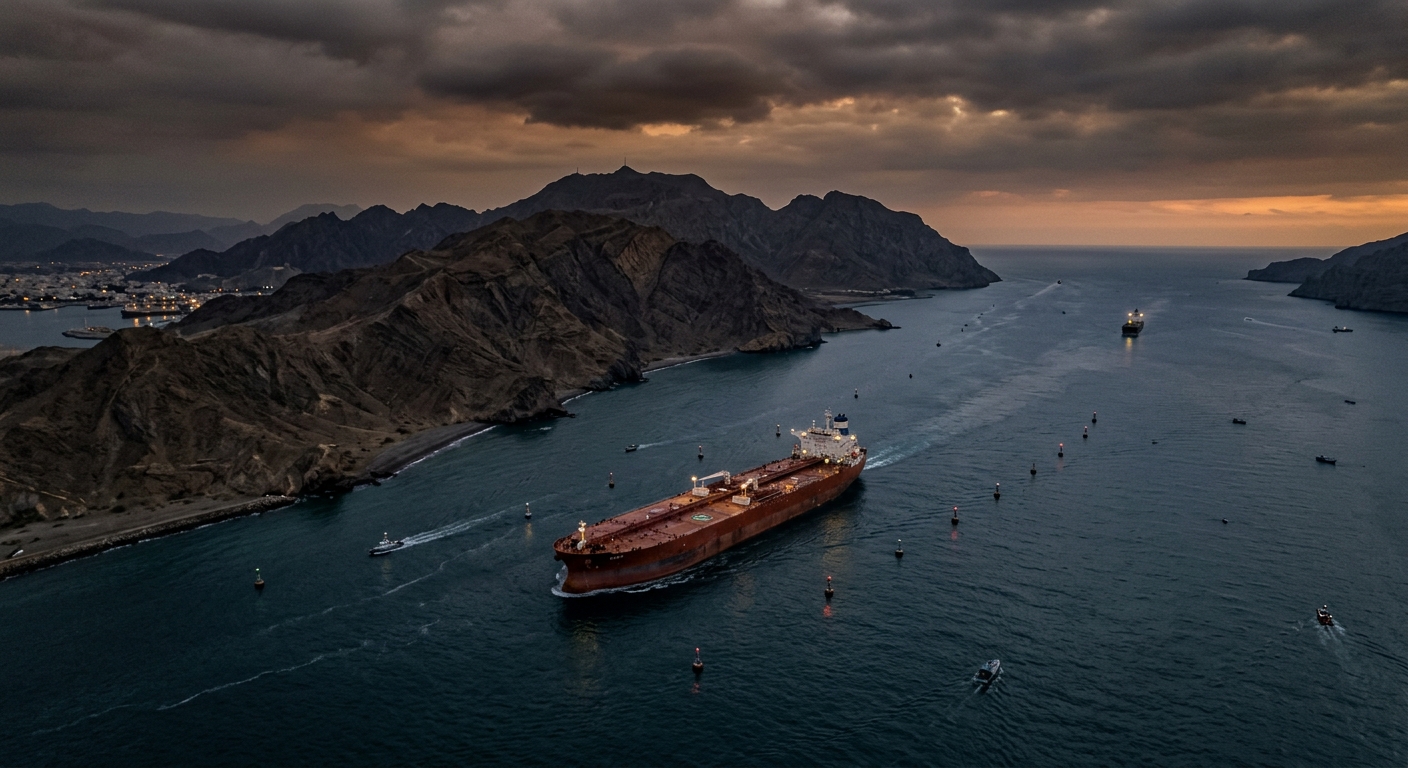
The June 18 memorandum is the pivot. Its fifth point, whose verbatim text was read to reporters and published by Al Jazeera, commits Iran to "make arrangements using its best efforts for the safe passage of commercial vessels with no charge for 60 days only." That language does two things Washington has not fully priced in. It defines the toll-free regime as a time-limited concession — not a restoration of freedom of navigation — and it hands Iran a mandate to "conduct dialogue with the Sultanate of Oman to define the future administration and maritime services" of the strait. The memorandum thus concedes, on paper, that Hormuz has a future administrator. The only remaining fight is who runs it.
Iran has now answered. On the day the deal was signed, Tehran stood up the Persian Gulf Strait Authority, which published passage-permit terms requiring vessels to email the IRGC with more than 40 data points on cargo, ownership, flag and crew nationality before receiving a "green light or red light," Obsidian Risk Advisors' Brett Erickson
told NPR. Parliamentary speaker Mohammad Bagher Ghalibaf told state TV,
per the BBC, that the strait "will not return to pre-war conditions" and that fees will follow the 60-day window. Iran's ambassador in Beijing, speaking at the World Peace Forum,
confirmed to FXStreet that new "service fees" are being drafted, with "special treatment" for states that backed Iran in the war.
The July 2 route-restriction order is the enforcement layer. Iran's Islamic Revolutionary Guard Corps rejects the alternative southern corridor charted by Oman with the International Maritime Organization along the Musandam Peninsula, which the Joint Maritime Information Center says is the only lane confirmed clear of Iranian mines. Almost every transit since June 18 has instead used Iran's northern lane hugging its own coast, ship-tracking data cited by the BBC shows. Every one of those transits is, functionally, a permission granted by Tehran.
The numbers that make it hurt
Roughly 20 million barrels of oil per day — 27% of global seaborne oil trade and about 20% of world petroleum consumption in 2024 — moved through Hormuz, according to the Congressional Research Service. Qatari and Emirati liquefied natural gas exports amounting to 22% of world LNG trade have no other outlet. Brent crude, which spiked above $114 in early May when Iran fired on shipping during the war,
Al Jazeera reported, has since eased as transits resumed — but Kpler's Dimitris Ampatzidis told the BBC the commercial system will "normalise gradually," not on a political schedule.
The volume gap is the leverage. More than 250 tankers and 440 cargo vessels remain inside the Gulf, more than 80% of the tankers stationary, BBC Verify found. Insurance underwriters, watching two mines already flagged in the central lane and floating debris warnings from Oman's Maritime Security Centre, are not treating the strait as reopened; they are pricing it as reopened conditionally on Iranian permission. That is a regime change disguised as a ceasefire clause.
The legal vortex — and why it favours Tehran this time
Neither the United States nor Iran is a party to the 1982 UN Convention on the Law of the Sea. Washington argues transit passage through international straits is customary international law; Tehran does not accept that. The gap is not academic. As James Kraska laid out in his frequently cited paper The Legal Vortex in the Strait of Hormuz, "until or unless it joins UNCLOS, the United States enjoys only the right of nonsuspendable innocent passage in the Strait of Hormuz" — a weaker regime than the transit passage US officials publicly assert.
Innocent passage lets a coastal state regulate — even suspend, in the case of warships, on some readings — traffic that it deems non-innocent. That is precisely the doctrine the PGSA is engineered to exploit. A more recent law-of-the-sea analysis in Ocean Development & International Law by Alexander Lott concludes that transit passage applies in Hormuz — but only "where the territorial sea of the strait states overlaps." The narrowness of the doctrine is the point: Iran's argument is not that international law does not exist, but that the version binding on Iran is thinner than Washington claims.
Secretary of State Marco Rubio's line in Bahrain — that "no country on Earth has the right to charge for the use of international waterways," reported by Al Jazeera — is legally defensible but strategically brittle. It requires either Iran's cooperation or the standing US naval commitment to enforce it. The June 18 memorandum trades away the second in exchange for the first.
Who benefits: the Beijing dividend
The Brookings Institution's Samantha Gross and Ryan Beane put the second-order effect bluntly: Iran is establishing that "access to key maritime chokepoints may be conditioned on political relationships rather than established norms of open transit," they wrote. Iran's ambassador in Beijing has explicitly promised "special treatment" for wartime partners. Russia, Pakistan and India benefit at the margins. The structural winner is China.
Beijing buys roughly 90% of Iran's exported oil, US Treasury Secretary Scott Bessent said on Fox News, as Al Jazeera recorded. Independent Kpler data cited by Al Jazeera's coverage of China's
"teapot" refineries puts Chinese purchases at over 80% of Iran's shipped crude in 2025, at 1.4 million barrels per day. A PGSA regime that filters by flag and crew nationality is a mechanism to convert China's yuan-settled discount trade with Iran into a formalised chokepoint privilege — and to price non-aligned tankers, especially those bound for European and East Asian democracies, out of the fastest lane. This is a sanctions-inversion. The United States sanctions Iran; Iran now sanctions everyone else's transit.
The US Office of Foreign Assets Control has responded with a sanctions alert warning any shipping company that pays the PGSA that it faces "significant sanctions risk," as the BBC reported, because the authority is IRGC-linked. That is the trap: a Greek or Japanese owner must either pay an OFAC-sanctioned entity, or take the slower, mine-adjacent southern lane and hope Iran does not read that as an "unauthorised" transit. Chinese owners, already outside the dollar-clearing system for these cargoes, absorb the fee without the same regulatory penalty.
Diplomat View
Iran is not trying to close the Strait of Hormuz. It is trying to own it — and the June 18 memorandum is the instrument, not the antidote. The renewed route restrictions on July 2 are a stress test of Washington's tolerance for a Hormuz regime in which China transits cheaply, sanctioned Iranian tankers move freely under IRGC pilotage, and Western-flagged vessels navigate a compliance minefield policed by a US-sanctioned authority. If the 60-day clock runs out on August 17 without either a permanent Hormuz protocol or a US decision to walk from the deal, the PGSA calcifies into the default administrator of one-fifth of the world's seaborne oil. The forecast changes if one of three things happens: a second commercial vessel takes casualties and Trump orders CENTCOM to run escorted convoys down the Omani corridor; Beijing publicly conditions its purchases on a return to pre-war passage rules (unlikely); or Iran's parliament formalises a fee schedule before August 17, forcing Washington to abandon the memorandum rather than legitimise it. The base case is drift — and drift favours Tehran and Beijing.
What to watch
- August 17, 2026 — expiry of the 60-day toll-free window in the US-Iran MoU. Iran has signalled fees will follow; Ghalibaf has said so on state TV.
- Next tanker incident — a second projectile strike with casualties would test whether CENTCOM's "safe passage" pledge translates into escorted convoys, which the Pentagon has so far resisted.
- PGSA fee schedule publication — Iran's ambassador in Beijing has confirmed one is being drafted. Its release will force a US decision on whether paying it triggers secondary sanctions in practice, not just in advisory.
- G20 or GCC-US ministerial statements — a joint Gulf-US call already rejected "any tolls, fees, or attempts to assert control" over the strait; whether that language survives the negotiating deadline will indicate how much Riyadh and Abu Dhabi are willing to spend to keep Washington on the maximalist line.
The bottom line: Iran's renewed Hormuz restrictions are not a ceasefire violation — they are the ceasefire's business model. Washington signed a memorandum that concedes Iran a role in "administering" the strait and has spent the three weeks since discovering what that means in practice. The party best positioned by the new regime is the one that was not in the room at Versailles: China.
Discover more
Global
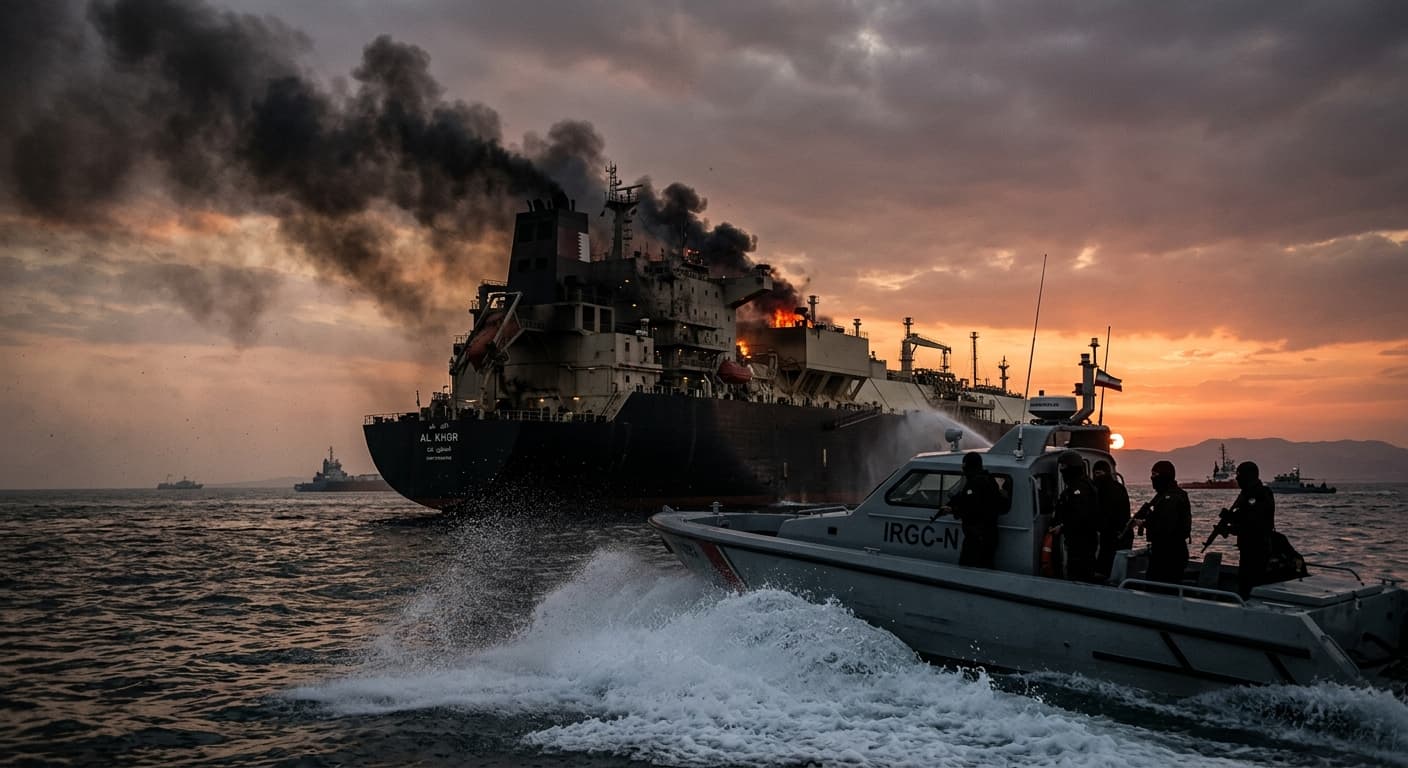
Qatari Tanker Strike Exposes Hormuz Tensions
A Qatari tanker was struck off Oman, revealing the fragility of the Hormuz ceasefire and Iran's influence over maritime security.
Global
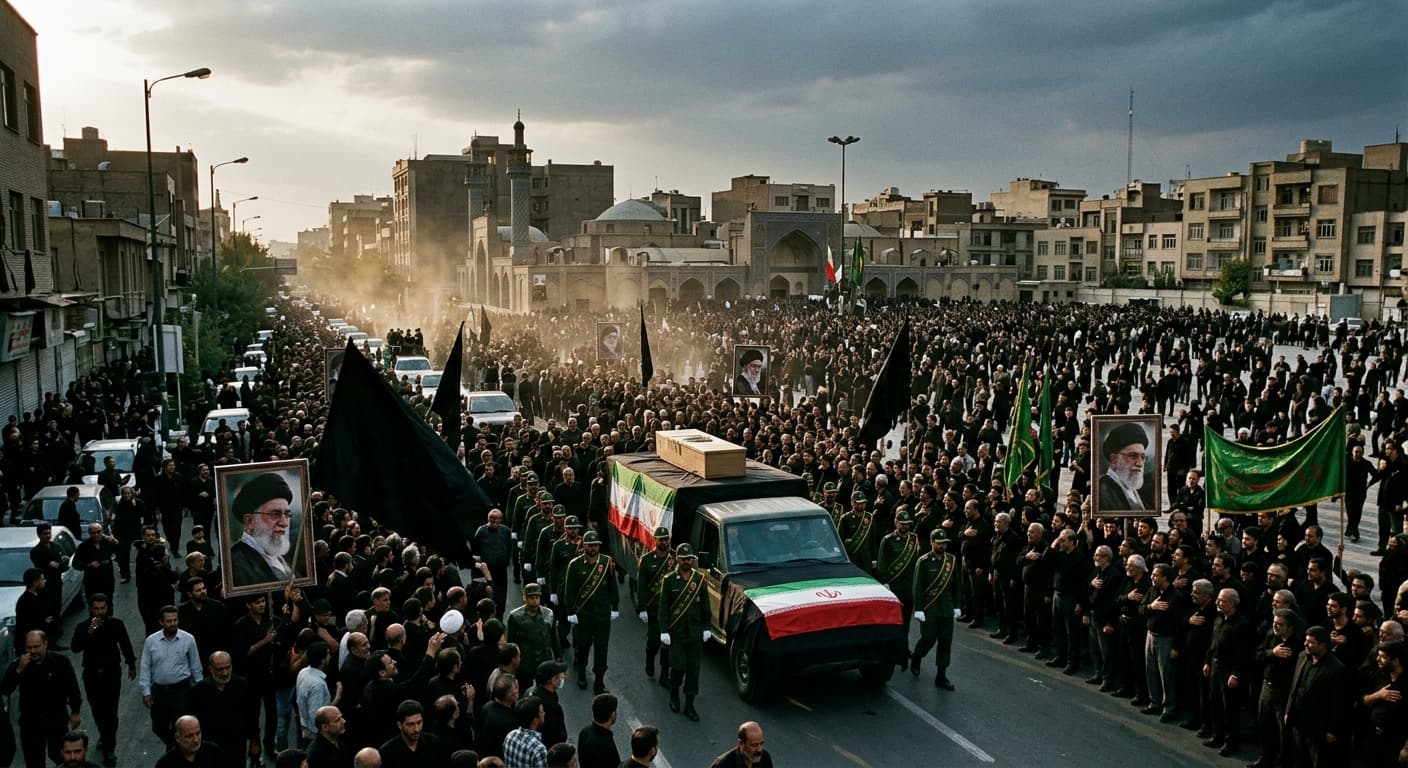
Khamenei's Funeral Signals Iran's Decline
The funeral of Ayatollah Khamenei highlights Iran's diminished influence in the Gulf, with regional powers now dictating terms.
Global
Iran's Hormuz Missile Strikes: A Toll Booth
Iran's missile attack on a Qatari-linked tanker highlights Tehran's strategy to control the Strait of Hormuz, impacting Gulf states and maritime law.

Tech Policy
Iran's Cavern Manticore Targets Israel's IT
Cavern Manticore, an Iran-linked hacking group, targets Israeli IT vendors, prompting a shift in Israel's cybersecurity policy and legislative efforts.