Iran Oil Shock Reshapes COP31 Agenda
Energy security takes center stage at COP31 in Antalya.
Model Diplomat8 min readGlobal
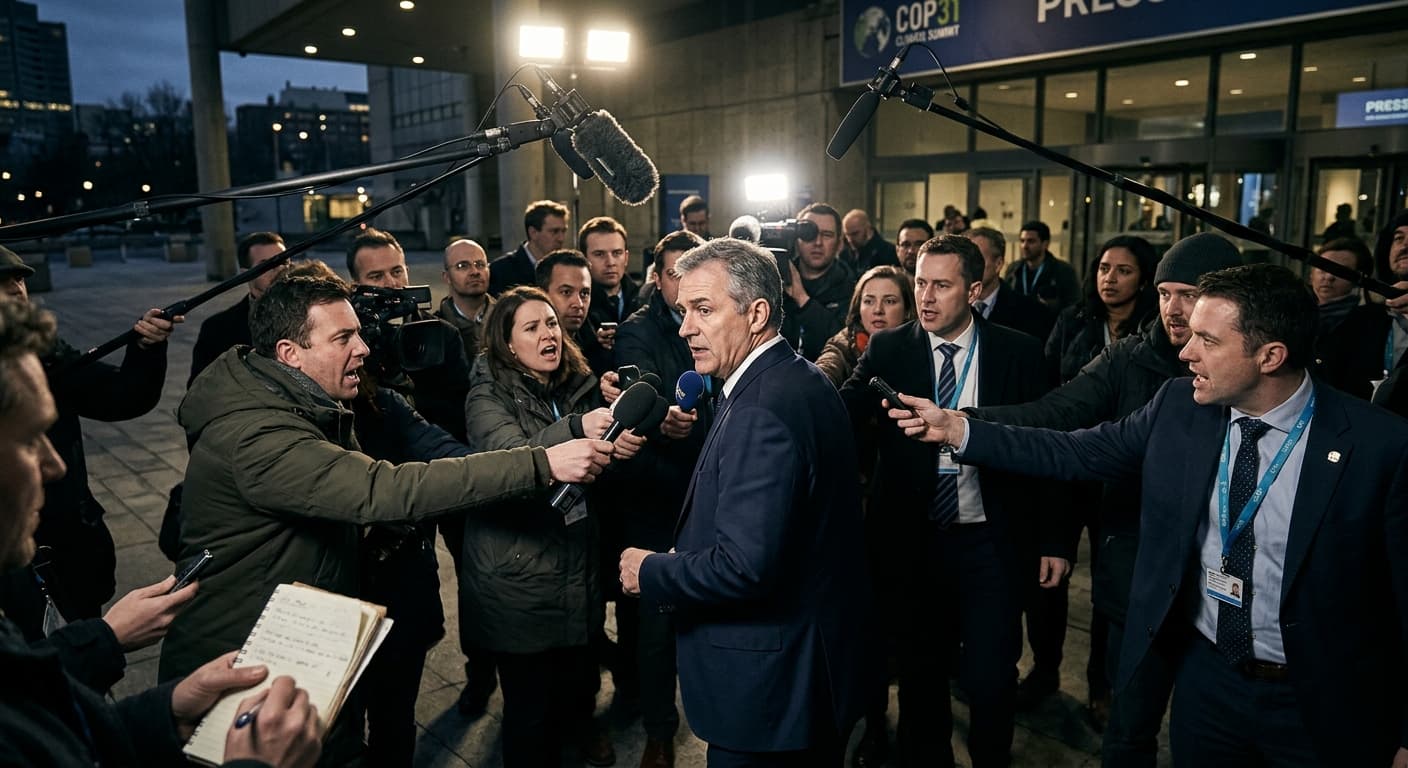
The Iran Oil Shock Is Rewriting the COP31 Agenda in Antalya
How the largest supply disruption in oil market history is pushing energy security to the top of the November 2026 UN climate summit — and reshaping who wins the transition.
The 11-million-barrel-a-day hole the war on Iran punched in global oil supply is the reason electrification, not fossil-fuel phase-out language, will be the load-bearing question when COP31 opens in Antalya on November 9, 2026. The International Energy Agency calls it the biggest supply shock in the history of the oil market. The COP31 presidency has already responded: Türkiye and Australia are converting an energy-security emergency into a diplomatic lever, betting that governments burned by a $116-a-barrel spring will accept harder decarbonisation commitments framed as sovereignty, not sacrifice. The winners will be the countries — and firms — that treated 2022 as a warning and pre-positioned for a second shock. The loser is the "orderly transition" thesis that dominated Baku and Belém.
The shock: worse than 1973, 1979 and Ukraine combined
The war began on February 28, 2026 when the United States and Israel struck Iran, killing Supreme Leader Ali Khamenei and triggering Iranian retaliation across the Gulf. Tehran mined the Strait of Hormuz, attacked commercial vessels and effectively closed the chokepoint through which roughly 20% of global oil and LNG normally transit, according to a Brookings analysis by Kari Heerman and David Wessel.
At peak in March, IEA Executive Director Fatih Birol told the National Press Club in Canberra that the crunch removed roughly 11 million barrels per day of oil supply and 140 billion cubic metres of LNG — a shortfall he said exceeded the 1973 and 1979 oil shocks and the 2022 Ukraine gas crisis combined. Brent hit $116, US gasoline reached $4.31 a gallon, and the IEA coordinated the
largest strategic-reserve release in its history — 400 million barrels, roughly a third of member holdings.
A US-Iran memorandum of understanding on June 17, 2026 reopened the strait on paper, but only fragile passage has followed. As the Council on Foreign Relations noted on July 8, the MoU is unravelling: the US has re-imposed sanctions, Iran claims a permanent regulatory role in the strait, and traffic is a fraction of pre-war levels. Al Jazeera reported oil prices
surging again on July 8 after fresh US strikes.
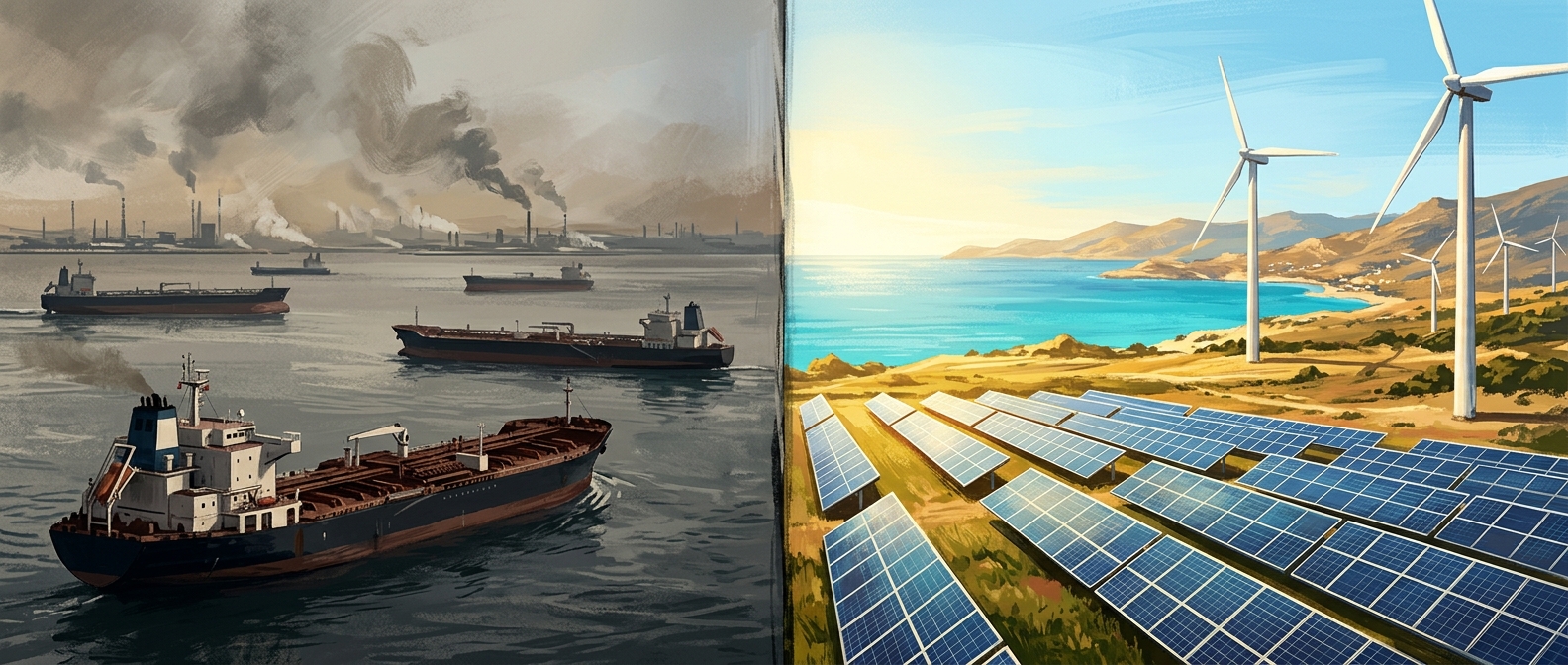
The pivot: Antalya's electrification bet
Türkiye and Australia inherited COP31 through an unusual arrangement finalised at COP30 in Belém on November 20, 2025. Under the deal — confirmed by the BBC and detailed by the
UN Resident Coordinator's office in Ankara — Türkiye holds the presidency and controls the Action Agenda, while Australia's climate minister Chris Bowen chairs the negotiations with authority to appoint co-facilitators, prepare draft text and issue the cover decision.
Environment Minister Murat Kurum, appointed COP31 President, told an Istanbul press conference the summit's five priorities in order: clean energy transition, zero waste and methane, resilient cities, an implementation mechanism, and green industrialisation. According to BBC Türkçe, Kurum committed to work with the IEA on renewables, cooling, heating and digitalisation — a marked shift for a country still building coal plants.
The reason for the shift is baked into Türkiye's balance sheet. Energy Minister Alparslan Bayraktar told Al Jazeera Arabic that a $1 rise in the oil price costs Ankara roughly $400 million, and he described the war as "the mother of all crises". The
World Bank's Country Climate and Development Report for Türkiye had already argued the point in cold arithmetic: even without a carbon constraint, new coal plants are "neither needed nor the least-cost option" for Turkish electricity, and domestic solar-plus-storage is the least-cost path to energy security.
Bowen, freshly bruised by losing the hosting bid, is running with the same argument. In a series of interviews he has framed the Iran war as the second energy shock in four years — after the Russian one — and insisted parties "need to get off fossil fuels." He is expected to push cover-decision language linking the UAE Consensus phase-down to national implementation timelines. The Turkish presidency, meanwhile, is quietly repositioning itself: UN Türkiye confirms Ankara wants Antalya to be a summit of "concrete roadmaps and inclusive action" — code for implementation rather than headline pledges.
The angle: energy security is the new decarbonisation
The non-obvious point analysts keep missing: the political economy of the transition has flipped. Ministers no longer need to sell renewables as a climate virtue; they can sell them as a strategic weapon. That is the case Bowen and Birol will bring to Antalya, and it materially changes what a COP31 cover decision can extract.
Foreign Affairs, in a May 2026 essay by Jason Bordoff and Meghan O'Sullivan, argued the war has produced "a political awakening" that "energy independence is a form of political independence." Indonesia's President Prabowo Subianto has already called the crisis a "rude wake-up call" and pledged 100 gigawatts of new solar in three years, alongside eliminating fuel subsidies. Vietnam has approved more than 80 major renewable projects in six years. Even Chatham House hosted
Birol arguing that the UK should not develop new North Sea oil because "it is a price taker, not a price maker" — a message aimed squarely at European treasuries considering post-shock stimulus for hydrocarbons.
That case is empirically live. The IEA's 2026 World Energy Investment tracker, cited by the UK government, reports about $2.2 trillion flowing to clean energy this year against $1.2 trillion for oil, gas and coal — nearly two-to-one. The
UN's 2025 energy transition report recorded 585 GW of renewable capacity added globally in 2024, a 15.1% growth rate that made up 92.5% of all power additions.
The counterpoint — the case COP31 negotiators cannot dismiss — comes from the Council on Foreign Relations, which warned that "change doesn't just happen." Hormuz is a catalyst, not a solution. Italy has extended coal-plant licences by 13 years. The Philippines is authorising higher-emission fuels. Germany is reportedly considering restarting idled coal capacity. As Economist Impact reported in a
June analysis, the risk is that "security" becomes a licence to double down on any domestic hydrocarbon — the same phenomenon that produced Europe's LNG scramble after 2022.
The winner nobody wants to name: China
The uncomfortable truth for a Turkish-Australian presidency is that the country best positioned to convert the Iran shock into strategic gain is China. Beijing controls roughly 80% of global solar module production and dominates the battery supply chain. Every rooftop solar programme Indonesia, Thailand or Türkiye accelerates in the name of energy sovereignty deepens dependence on Chinese hardware.
Brookings' Middle East programme noted that China's official read of the 12-day war validated its long-standing view that its Middle East oil interests are "susceptible but not vulnerable" — because Iran would not shut its own lifeline. That gives Beijing space to keep buying discounted Iranian crude (China, India, Malaysia and Pakistan are cutting bilateral deals to move oil through the strait, per
CFR) while simultaneously exporting the technology that displaces oil demand elsewhere.
This is the strategic geometry Bowen and Kurum inherit. The COP31 electrification agenda is objectively pro-China even as it is sold as pro-sovereignty. The presidencies' quiet task is to build enough Western critical-minerals and manufacturing capacity language into the cover decision to soften that dependence — without giving parties an excuse to slow deployment. Watch for text on "diversified clean-tech supply chains" and grid interconnection, which is where the fight will actually happen.
The peer-reviewed reality check
A sober academic anchor is worth naming. A Nature Energy paper published in April 2026 by researchers using the PROLONG model projects solar reaching a median 22.8% of global electricity by 2040, with 25.6% by 2050. The COP28 tripling pledge sits near the 95th percentile of that projection — technically possible, historically unprecedented, and only achievable if every major region exceeds 2.7 percentage-point-per-year additions. India has hit 2.4 pp/yr under central government scenarios. Nobody has sustained China's 2024 record.
The Antalya presidency's implementable ambition therefore sits below the tripling headline but well above business as usual. A UN SDG7 progress report co-authored by the IEA, IRENA, the World Bank, WHO and the UN Statistics Division estimates the world needs $4.2–4.5 trillion in annual energy-transition investment by 2030 — roughly double the current run rate. Any COP31 cover decision that does not put finance architecture at its centre will not survive contact with the numbers.
What to watch
Three catalysts will tell you where this is heading:
- October 2026: Pre-COP in the Pacific. Australia, per the
UN's arrangement summary, will convene Pre-COP in a Pacific island state alongside a dedicated session on climate finance for Small Island Developing States and the Pacific Resilience Facility. If Bowen secures explicit fossil-fuel transition language there, it will land in the Antalya cover text.
- November 9–20, 2026: COP31 in Antalya. Leaders' summit expected in Istanbul; negotiations in Antalya Expo Center. Test: does the cover decision include a dated coal phase-out timeline, which WWF Türkiye and Beyond Fossil Fuels are pressing Ankara to accept?
- Rolling: The Hormuz MoU. Every week the US-Iran memorandum survives is a week oil prices normalise and the political urgency drains from Antalya's electrification pitch. Every fresh strike, as on July 8, revives it.
Diplomat View
The presidency's calculated bet is that the Iran shock has finally welded energy security to decarbonisation in enough capitals to unlock a substantive Antalya cover decision — one that goes beyond COP28's phase-down language into implementation timelines, grid buildout targets and electrification finance. That bet is defensible but not safe. If Brent stays below $75 through October and the US-Iran MoU holds, the political oxygen for hard commitments drains and COP31 becomes another Baku: procedural, thin, contested. If the strait re-closes or oil spikes back above $100 during the summit, Bowen has the mandate to force a text most fossil-fuel exporters cannot afford to veto. The forecast to revise: watch Saudi Arabia and the UAE. Gulf officials are privately talking, per CFR, about "diversifying their allegiances" and living alongside Iran. If Riyadh signals it can accept transition language in exchange for Western capital for its Vision 2030 renewables projects — the tell will come at Pre-COP — Antalya delivers. If it doesn't, the electrification agenda ships as an aspirational annex, and the real winner of the Iran shock is the manufacturer in Hefei, not the negotiator in Antalya.
Reporting draws on primary UN and World Bank documents, IEA statements, and analysis from Brookings, CFR, Chatham House and Foreign Affairs. For related coverage see Global Politics.
Discover more
Global Politics
Xi Jinping Calls China-Russia Ties 'Precious'
Xi Jinping's description of China-Russia ties as 'precious' reflects a strategic imbalance, with Beijing dictating terms in the partnership.

US Politics
House Ethics Committee Pushes Sexual Miscond.
The House Ethics Committee has shifted responsibility for sexual harassment settlement records to the Office of Congressional Workplace Rights, complicating disclosure efforts.
India
UN Expert Albanese: India Violates Law
UN Rapporteur Francesca Albanese accuses India of breaching international law, spotlighting human rights concerns in Kashmir and prompting diplomatic pushback.

Conflict & Security
Drone Warfare Killing Aid Workers at Unprec
Over 1,000 humanitarian workers killed in three years as cheap armed drones collapse legal protections. Gaza, Sudan, Ukraine, and DRC see deliberate targeting of aid convoys and hospitals with zero prosecutions.