Narges Mohammadi Transferred to Tehran Care
Nobel laureate's health care raises political stakes in Iran
Model Diplomat3 min readMiddle East
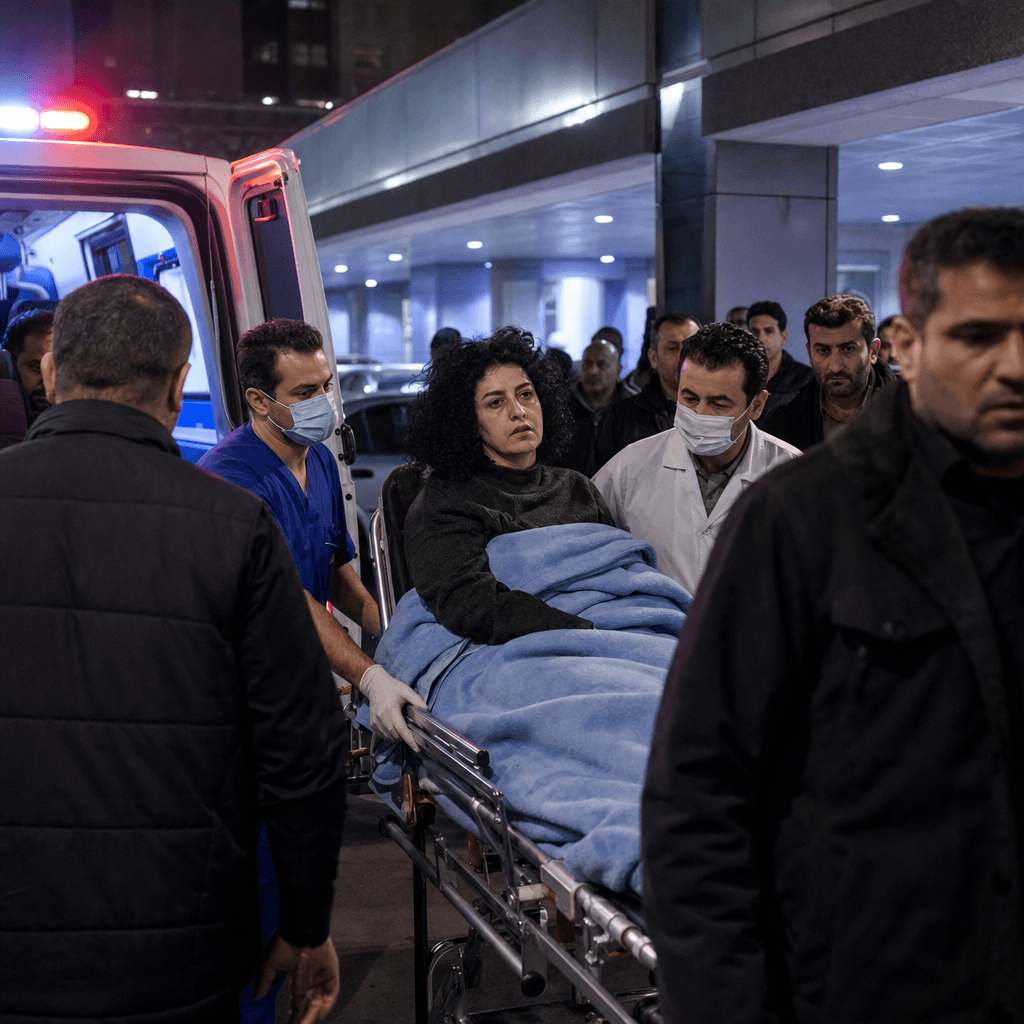
Iran Moves Narges Mohammadi to Tehran Hospital After Delay
[A transfer to Tehran eases the optics but not the leverage: the state still controls whether Nobel laureate Narges Mohammadi gets specialist care or goes back to prison.]
Narges Mohammadi was moved by ambulance from Zanjan to a hospital in Tehran after a delay in executing her sentence for treatment, BBC Persian reported. Her lawyer said the transfer followed repeated episodes of loss of consciousness and severe blood-pressure fluctuations, while Reuters reported that her family had been pressing for her to be moved to Tehran for specialist care, and that authorities had initially resisted doing so (BBC Persian;
Reuters).
The state still holds the stronger hand
The key power dynamic is simple: Iran’s prison and security system controls Mohammadi’s access to treatment. Moving her to Tehran does not end that leverage; it just relocates the point of pressure. Reuters quoted her husband, Taghi Rahmani, saying the family feared that if she returned to prison after treatment her condition would worsen, and that security officials were reluctant to let her go back to Evin because she remains politically active (Reuters).
That matters because the authorities are not just managing a medical case. They are managing a symbol. Mohammadi, who won the 2023 Nobel Peace Prize for campaigning on women’s rights and against the death penalty, is one of the most recognizable political prisoners in the system (Reuters). If the state allows durable specialist care, it concedes a point. If it sends her back too soon, it takes the heat but preserves coercion.
Why the transfer matters beyond one prisoner
The immediate beneficiary is Mohammadi’s health, if the Tehran hospital actually provides the cardiac and neurological care her family says Zanjan could not (BBC Persian). But the deeper political effect is on the regime’s credibility. When a high-profile laureate has to be transferred only after public pressure, the case becomes evidence of how Iranian authorities handle detainees: treatment is not a right, it is a concession.
That is why the campaign around her has drawn in more than her family. Reuters reported that the Nobel Committee said her life was at risk and urged Tehran to ensure proper medical care (Reuters). In this kind of case, international attention does not remove the state’s control, but it can raise the cost of visible neglect. For Tehran, the calculation is not humanitarian; it is reputational and disciplinary. For Mohammadi and her supporters, the transfer is a partial win only if it breaks the cycle of prison, collapse, and rushed temporary care.
For broader context on how coercion, detention, and state power interact, see Global Politics and
Conflict.
What to watch next
The next decision point is whether Iranian authorities let the Tehran hospital stay turn into genuine specialist treatment or treat it as a short pause before returning her to Zanjan. Reuters said officials had agreed to keep her in hospital for a week, which makes the end of that window the crucial date to watch (Reuters). If she is sent back without full care, the health risk becomes the story again — and the pressure campaign will resume.
Discover more

Global Politics
US Seizes Iranian Ship, Tensions Surge
The US seizure of the Iranian ship Touska highlights a shift in control over the Strait of Hormuz, favoring Iran's strategic position.

Conflict & Security
Drone Warfare Killing Aid Workers at Unprec
Over 1,000 humanitarian workers killed in three years as cheap armed drones collapse legal protections. Gaza, Sudan, Ukraine, and DRC see deliberate targeting of aid convoys and hospitals with zero prosecutions.

Global
World Normalises Taliban as Afghan Women Eras
UN data shows Afghan women erased from public life as Russia recognises the Taliban, EU hosts officials in Brussels, and ICC warrants for gender persecution go unenforced.
Conflict & Security
West Africa Food Crisis: Three Shocks in 2026
Conflict, climate extremes, and the Strait of Hormuz closure drive a severe food crisis in West and Central Africa, with fertilizer prices surging 80% and millions displaced.